Asian Rice Pot, Kelana Jaya: South Indian mixed rice that’s still a neighbourhood favourite 20 years on亚洲米饭锅,格拉那再也:20年来一直是附近居民最爱的南印度什锦饭
PETALING JAYA, Oct 4 — What is the function of a restaurant? Plainly, it is a business that serves food and beverages to customers.But beyond the commercial and financial...
The Asian Rice Pot Restaurant, a South Indian eatery located in Kelana Jaya, has become a community staple since its inception in 2006.
Known for its cozy, vintage charm, the restaurant serves as more than a dining venue—it offers a place where familial bonds are nurtured.
The eatery, renowned for its diverse offerings of curries and varuval, attracts a loyal, multi-generational clientele who appreciate its authentic flavors and welcoming atmosphere.
Founded by Avilin Rose, the restaurant is celebrated as a family business, exemplifying the deeper communal and restorative roles that dining establishments can play.
PETALING JAYA, Oct 4 — What is the function of a restaurant? Plainly, it is a business that serves food and beverages to customers.
But beyond the commercial and financial incentives behind any business, restaurants are unique in how widely they vary: from bare-bones operations where the relationship between customer and business is purely transactional, like a fast-food outlet, to high-concept, luxury establishments where dessert comes with a side of discourse, and then the bill.
Restaurants often serve more than one purpose, though.
The oldest, and perhaps most essential, can be gleaned from the word itself, taken from the French restaurer , “to restore”.
Restaurants feed us in a physical sense, yes, but they also nourish us, and those that become pillars of their communities nurture the public at large.
Asian Rice Pot Restaurant, a South Indian eatery in Kelana Jaya, struck me as exactly such a pillar on a recent visit.
It has stood on the same quiet row of shops beside Wisma FAM since 2006, and it looks every bit its 20 years: cosy and charmingly dated.
I arrived at 10am on a weekday, when most diners were at least twice my age, sipping Bru coffee or masala chai as they waited.
With the body language of a helpless newcomer, I moseyed around the room, scanning trays of curry, dal and varuval , letting my nose guide me as much as my eyes.
Eventually, a staff member noticed my aimless wandering and correctly deduced that I did not know the drill.
Everyone else was seated, he explained, waiting for the rice and big-ticket items like mutton to come out, which would take about half an hour.
He gestured me to a table and asked me to order a drink first.
Pots and trays kept flying out of the kitchen as the clock ticked towards the half-hour mark.
Then the rest of the restaurant began shuffling over to form a queue at the starting point: large pots of white and brown rice, and massive clay pots of chicken, mutton, crab, fish and vegetable curry.
The next station held the non-vegetarian dishes, such as egg masala , fried chicken, prawn sambal and mutton varuval , followed by the equally bountiful vegetarian station.
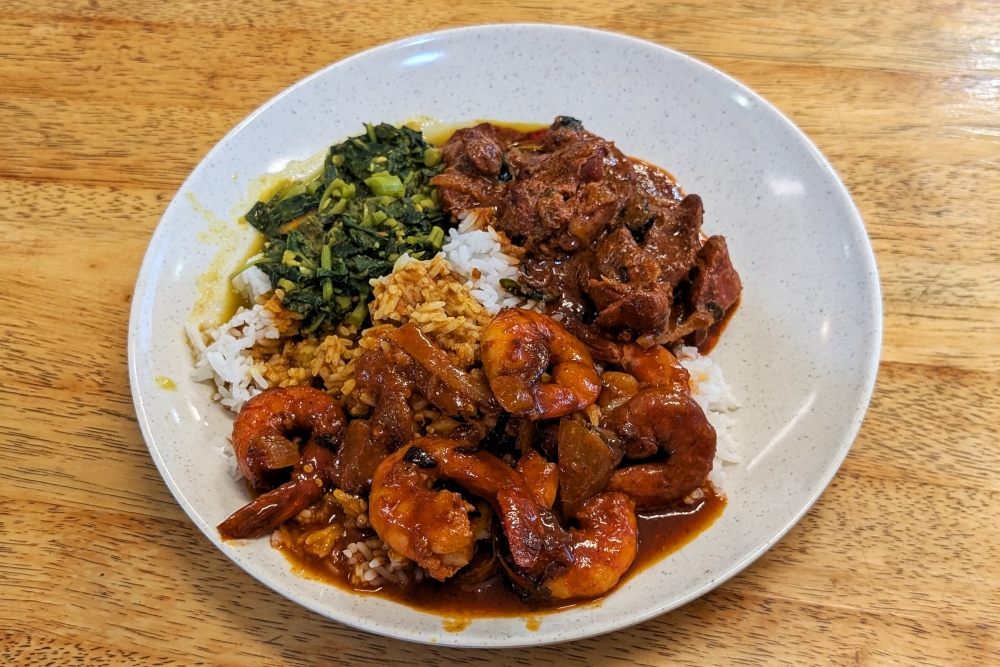
I sat down with a plate of rice laden with fish curry, prawn sambal , chicken liver curry and keerai (spinach and lentil) curry (RM16.80).
The prawns, firm and meaty, slipped out of their shells with ease, and the sambal packed heat with a surprising aromatic sweetness from a shedload of fried onions.
The livers were creamy and coated in a rich, addictive gravy, though after the third piece the metallic notes began to compound, as expected.
This is where the keerai stepped up: spinach and lentils came together in a mild, mellow curry that took all that robust heat and tempered it.
To that I added a portion of mutton varuval (RM20), which seemed steep at first glance until I realised it was completely boneless.
Mutton is usually the priciest item at a restaurant like this, and I tend to feel slightly swindled when more than half the plate is bone.
This was the opposite. Each bite of bouncy mutton was doubly satisfying, and the thick masala clinging to each cube was boldly spiced, nutty and evocative of caramelised toast.
Nobody else in the room needed to be told when the rice was ready. Every one of them was recognised by the staff, and I stood out not because I was a young Chinese guy, but because I had clearly never been there before.
It didn’t matter; I was welcomed all the same.
Avilin Rose opened the restaurant about 20 years ago, her son told me over text afterwards.
They call it a family business because they all grew up in it, and because of the relationships they have built with their customers, many of whom are families themselves.
“When Mum opened this place, this row was much quieter,” he said. “Much has changed since.”
Asian Rice Pot has been around long enough to be more than just somewhere to eat; it is a dining room where family is celebrated, and lives are lived.
The diners twice my age certainly aren’t there for the novelty. They are there because, 20 years on, this is still where they come to be fed.
Asian Rice Pot Restaurant
SS 3, Petaling Jaya,
Open daily, 7.30am – 9pm
Facebook: Asian Rice Pot
Instagram: @ asianricepot
* This is an independent review where the writer paid for the meal.
* Follow us on Instagram @ eatdrinkmm for more food gems.
* Follow Ethan Lau on Instagram @ eatenlau for more curry-and-rice stories.
Hunt down this truly hidden backstreet ‘kopitiam’ in Semenyih for ‘nam yu’ fried pork and Hakka ‘zhar yoke’ noodles
Want a taste of Pangkor Island ‘nasi lemak’? Alee Kopitiam in Taman Sri Segambut is the place to go for that plus awesome stuffed chili fish, yam cake and ‘tong sui’
A day in Bengaluru: Flower markets, Andhra bhojanam and Farmlore, a produce-driven restaurant set on a 33-acre farm at the edge of India’s Silicon Valley
After F1 and KL Marathon, October’s only getting busier with Melaka election dates on Wednesday and Budget Friday
Petros assurance rings hollow amid challenge to Petronas, says Zaid
JPJ hunts illegal motorcycle ride operators ferrying passengers to Sepang F1 circuit
位于格拉那再也的亚洲米饭锅餐厅是一家南印度餐馆,自 2006 年开业以来,已成为当地社区的重要组成部分。
这家餐厅以其温馨复古的魅力而闻名,它不仅仅是一个用餐场所,更是一个培养家庭感情的地方。
这家餐馆以其种类繁多的咖喱和瓦鲁瓦尔菜肴而闻名,吸引了一批忠实的多代顾客,他们欣赏其正宗的口味和温馨的氛围。
这家餐厅由 Avilin Rose 创立,被誉为家族企业,体现了餐饮场所能够发挥的更深层次的社区和疗愈作用。
八打灵再也,10月4日讯——餐厅的功能是什么?简而言之,它是一家为顾客提供食品和饮料的场所。
但除了任何企业背后的商业和财务动机之外,餐厅的独特之处在于它们之间的差异之大:从顾客与企业之间关系纯粹是交易的简陋经营场所(例如快餐店),到概念高端、豪华的餐厅(甜点会附带一些谈话内容,然后是账单)。
不过,餐厅通常不止一种用途。
最古老、或许也是最根本的答案可以从这个词本身找到,它源自法语 restaurer,意为“修复”。
餐厅不仅在物质上满足我们的需求,更重要的是,它们还能滋养我们,而那些成为社区支柱的餐厅更能惠及广大公众。
最近我去位于格拉那再也的亚洲米饭锅餐厅(一家南印度餐馆)用餐,这家餐馆给我的印象正是这样一家支柱企业。
自 2006 年以来,它一直矗立在 Wisma FAM 旁边那排安静的店铺里,看起来完全符合它 20 年的历史:温馨舒适,又带着迷人的年代感。
我工作日早上 10 点到达,当时大多数食客的年龄至少是我的两倍,他们一边啜饮着 Bru 咖啡或玛萨拉奶茶一边等候。
我摆出一副无助的新来者的姿态,在房间里闲逛,扫视着盛着咖喱、扁豆和瓦鲁瓦尔的托盘,让鼻子和眼睛一样引导着我。
最终,一名工作人员注意到我漫无目的地闲逛,并正确地推断出我不了解工作流程。
他解释说,其他人都已经入座,等着米饭和羊肉等贵重菜肴上桌,这大概需要半个小时。
他示意我到一张桌子旁坐下,并让我先点杯饮料。
随着时钟滴答作响,半小时的钟声越来越近,锅碗瓢盆不断地从厨房飞出。
然后,餐厅里的其他人开始陆续走到队伍的起点,排成一列:大锅白米饭和糙米饭,以及巨大的陶罐鸡肉、羊肉、螃蟹、鱼和蔬菜咖喱。
下一个摊位供应荤菜,如鸡蛋玛萨拉、炸鸡、虾仁桑巴和羊肉瓦鲁瓦尔,之后是同样丰盛的素食摊位。
我坐下来,面前摆着一盘米饭,上面浇着鱼咖喱、虾仁叁巴酱、鸡肝咖喱和菠菜扁豆咖喱(16.80 马币)。
虾肉紧实饱满,很容易就从虾壳里滑了出来;叁巴酱辣味十足,还带着一丝令人惊喜的香甜,这都归功于大量的炸洋葱。
鸡肝口感绵密,裹着浓郁的肉汁,令人欲罢不能;不过,正如预期的那样,吃了三块之后,金属味就开始加重了。
这时,菠菜和扁豆就派上了用场:它们融合在一起,做成了一道温和柔和的咖喱,中和了咖喱的辛辣味。
我还加了一份羊肉瓦鲁瓦尔(RM20),乍一看价格似乎很高,直到我意识到它是完全无骨的。
在这样的餐厅里,羊肉通常是最贵的菜品,如果盘子里一半以上的都是骨头,我往往会觉得有点被坑了。
情况恰恰相反。每一口弹牙的羊肉都令人无比满足,裹在每一块羊肉上的浓稠玛萨拉酱汁香料浓郁,带有坚果香气,让人联想起焦糖吐司。
房间里其他人都不需要被告知米饭已经煮好了。服务员都认得他们每一个人,而我之所以显得格格不入,不是因为我是个年轻的中国人,而是因为我显然是第一次来这里。
没关系,我依然受到了热烈欢迎。
艾维琳·罗斯大约 20 年前开了这家餐厅,她的儿子事后通过短信告诉我。
他们称之为家族企业,因为他们都是在这里长大的,而且他们与客户建立了良好的关系,其中许多客户本身也是家庭。
“我妈刚开这家店的时候,这条街比现在安静得多,”他说。“现在变化太大了。”
亚洲米饭锅已经存在了足够长的时间,它不仅仅是一个吃饭的地方;它是一个庆祝家庭聚会、体验生活的餐厅。
这些年纪是我两倍的食客们当然不是为了图个新鲜才来的。他们来这里是因为,20年过去了,这里仍然是他们吃饭的地方。
亚洲米饭锅餐厅
SS 3,八打灵再也,
每日营业时间:上午7:30至晚上9:00
Facebook:亚洲米饭锅
Instagram:@asianricepot
* 这是一篇独立评论,作者自行支付了餐费。
* 关注我们的Instagram账号@eatdrinkmm,获取更多美食资讯。
* 关注 Ethan Lau 的 Instagram 账号 @eatenlau,了解更多咖喱饭的故事。
在士毛月(Semenyih)的后街,找到这家真正隐秘的“咖啡店”(kopitiam),品尝南鱼炸肉和客家“扎肉面”。
想尝尝邦咯岛的椰浆饭吗?那就去斯里塞甘布花园的Alee Kopitiam吧,那里不仅有椰浆饭,还有美味的酿辣椒鱼、芋头糕和糖水。
班加罗尔一日游:鲜花市场、安得拉邦特色餐厅 (Andhra bhojanam) 和 Farmlore 餐厅——一家位于印度硅谷边缘,占地 33 英亩的农场内,以农产品为主要食材的餐厅
继F1赛事和吉隆坡马拉松之后,十月将更加繁忙,周三是马六甲州选举日,周五是财政预算案日。
Zaid表示,在Petronas面临挑战之际,Petros的保证显得空洞无物。
陆路交通局 (JPJ) 严查非法摩托车客运司机,这些司机将乘客运送到雪邦F1赛道。