HIV and AIDS still lurk behind the neon signs of Thailand’s sex industry especially as it moves online艾滋病毒和艾滋病仍然潜伏在泰国色情行业的霓虹灯招牌背后,尤其是在其转向网络化之后。
Thailand’s neon sex trade hides a deepening HIV danger as online prostitution bypasses regular health checks. Nearly 60,000 infections may be undiagnosed, while 620,000 people… Read More ›
新闻视频
September 3, 2026 at 1:28 pm
in Crime , Living , Media , Thailand
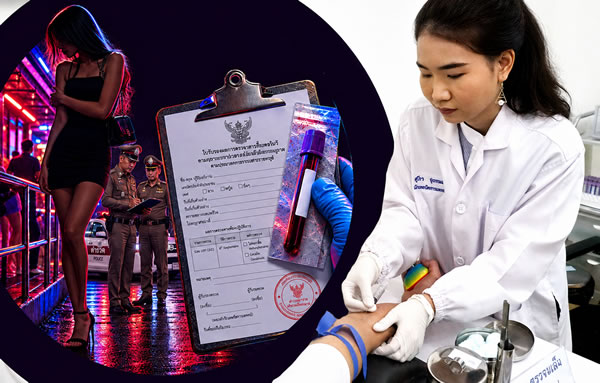
Behind the neon signs of Thailand’s vast nightlife industry, HIV remains a deadly and deeply entrenched threat. Prostitutes and customers increasingly arrange paid sex through websites, applications and private messages. They then meet inside hotels, rented rooms or homes, bypassing medical checks once imposed through established sex venues. UNAIDS estimates that 620,000 people nationwide now carry HIV, while almost 60,000 may remain undiagnosed. Thailand’s infection rate is twice the American level and four times that across the European Union. Meanwhile, 10,217 AIDS-related deaths were projected for 2025, alongside 8,862 new infections. Bangkok carries the largest burden, while sex workers, transgender women and men who have sex with men face elevated risks. Thailand now remains almost nine times above its target of fewer than 1,000 annual infections by 2030.
Thailand’s online sex trade bypasses old HIV checks as 60,000 cases remain hidden across Thailand. UNAIDS counts 620,000 infections, while AIDS kills over 10,000 Thais yearly. ( Source: Aidsmap )
Thailand’s HIV epidemic now centres on three hard figures. More than 500,000 people live with the virus nationwide. Almost 60,000 may not know they are infected. Meanwhile, AIDS-related illnesses still kill over 10,000 Thais annually.
The sex industry presents another major pressure point. Its migration online and onto the streets has weakened long-established screening arrangements. Previously, many workers underwent regular examinations inside recognised venues. Today, private digital transactions can bypass that entire structure.
Thailand’s Department of Disease Control estimates that 565,600 people currently live with HIV. About 495,800 receive antiretroviral treatment. By contrast, almost 60,000 may remain unaware of their status. That hidden population cannot begin treatment or achieve confirmed viral suppression.
UNAIDS estimates 620,000 HIV cases as infections stall and Thailand falls far behind its 2030 target
Separately, UNAIDS estimates that 620,000 people live with HIV in Thailand. Its modelling range extends from 560,000 to 690,000. Different methods, definitions and reporting periods explain much of the variation. Even so, every dataset identifies a substantial and persistent epidemic.
These figures do not represent half a million recent infections. Rather, they count people living through an epidemic spanning more than 40 years. Modern medicine allows treated patients to survive much longer. As a result, the accumulated caseload remains high despite earlier declines in transmission.
At the same time, new infections have stopped falling quickly enough. Thailand continues recording an estimated 8,000 to 9,000 infections annually. The Department of Disease Control estimated 8,862 infections during 2025. Against this backdrop, Thailand’s 2030 target remains below 1,000 annual infections.
The present rate is therefore eight or nine times that target. Progress has remained largely stalled for five or six years. More significantly, the department projected 10,217 AIDS-related deaths during 2025. The projected death toll exceeded the estimated number of new infections.
Effective treatment is already available across Thailand. Yet thousands still die from illnesses linked to advanced HIV. Some patients enter treatment after extensive immune-system damage. Others remain undiagnosed and receive no medicine at all.
Almost 60,000 HIV cases remain undiagnosed as late treatment leaves patients and partners exposed
In practical terms, the estimated 60,000 undiagnosed cases form a major breach. These patients cannot suppress a virus they do not know they carry. Consequently, their health can deteriorate before treatment begins. Their sexual partners may also remain unaware of possible exposure.
Successful antiretroviral treatment can reduce HIV to undetectable levels. At that stage, the patient cannot transmit the virus through sex. This principle is called “undetectable equals untransmittable,” or U=U. Crucially, it requires testing, diagnosis, medication and continuing viral suppression.
Without diagnosis, none of those steps can begin. Late detection also gives HIV more time to damage the immune system. Accordingly, some infections are discovered only after serious illness develops. Treatment can manage HIV but cannot always reverse earlier physical damage.
Thailand’s former sex-industry health system drove infections down through screening and condoms
Thailand’s commercial sex industry has long occupied a central place in this history. Decades ago, the government introduced strict screening and prevention measures. Prostitution remained illegal under Thai law. Nonetheless, state agencies worked directly with businesses operating across the industry.
Thailand’s HIV epidemic is concentrated heavily among men who have sex with men, including homosexual and bisexual men. Transgender women also face disproportionately high infection rates. However, the supplied figures do not establish that these groups account for most people currently living with HIV.
Geographically, Bangkok records Thailand’s largest estimated number of new infections. The capital combines a large population with extensive nightlife and commercial sex markets. Consequently, people living in Bangkok and those with multiple sexual partners face elevated exposure.
Sex workers and their customers also remain disproportionately affected. Meanwhile, online and street-based sex can bypass the regular screening once conducted through established venues. Infections can then spread to customers and their other partners without detection.
Officials worked with bars, clubs, massage premises and sex-for-sale establishments. Workers underwent regular health examinations. In addition, many required medical certification before working inside recognised venues. This arrangement placed much of the visible trade within a recurring screening system.
Health teams knew where workers could be reached. They could return to the same establishments and conduct further examinations. As part of this, condoms and sexual-health information could be distributed through venue networks. Managers also knew workers were expected to hold medical certification.
The programme never covered every sex worker. Nor did it make prostitution legal. Still, it created a practical disease-control structure across much of the visible industry. Regular contact linked many workers with healthcare services.
That programme contributed to Thailand’s sharp reduction in HIV transmission. During the 1990s, annual infections reportedly approached 170,000 at their peak. Subsequently, the figure fell below 10,000. Condom promotion and direct engagement with sex venues formed key parts of that response.
The structure of commercial sex has since changed markedly. Websites, mobile applications and social media now connect workers directly with customers. Private messages can arrange meetings without any established venue. In turn, the transaction may escape every former workplace health check.
Online and street-based sex bypasses the health checks once built around Thailand’s established venues
Online meetings can occur inside hotels, rented rooms or private homes. No bar, club or massage premises need be involved. Likewise, no venue manager may request health certification. The earlier screening structure therefore has no automatic point of contact.
On another front, parts of the industry have moved directly onto Thailand’s streets. Workers may change locations and operate without links to recognised businesses. Under those conditions, recurring health checks become harder to maintain. Contact with specialist services may also become irregular.
The former system depended on concentration. Health teams could visit known venues containing identifiable groups of workers. Conversely, the current market is dispersed across digital accounts and temporary locations. Thousands of private arrangements can remain largely invisible.
That transformation has weakened a system built for another commercial model. Fixed premises once provided entry points for screening and prevention. Now, smartphones can remove both workers and customers from those networks. The industry has expanded beyond many of its former health controls.
Notably, this change has coincided with stalled reductions in annual HIV transmission. Thailand remains near 9,000 estimated infections each year. Its 2030 target requires a fall below 1,000. The remaining gap is wide and the deadline is approaching.
Private online sex market leaves infections hidden as Bangkok and 15 provinces carry the heaviest burden
The online market also cuts across traditional categories. Female, male and transgender workers can all advertise privately. Similarly, customers can arrange encounters without entering an entertainment venue. No formal business relationship may ever exist.
An undiagnosed worker may therefore meet multiple customers before learning of an infection. Those customers may later expose other sexual partners. In parallel, none may view themselves as connected to a recognised higher-risk group. Testing can then be delayed across several linked relationships.
The available statistics do not identify every occupation among the undiagnosed population. They cannot show how many sell or purchase sexual services. Nonetheless, almost 60,000 infections remain outside confirmed diagnosis. The fragmented sex market creates further opportunities for infections to stay hidden.
Thailand’s epidemic remains concentrated among particular populations. Men who have sex with men are disproportionately affected. Transgender women, sex workers and people who inject drugs also face higher infection rates. Their sexual partners may face greater exposure as well.
Geographically, Bangkok records the country’s largest estimated number of new infections. Half of all estimated new infections occur across only 15 provinces. Thus, the epidemic is not evenly distributed across Thailand. The heaviest burden falls on particular locations and populations.
Bangkok’s changing sex trade tests prevention services as infections rise sharply among younger Thais
Bangkok also contains a large and varied commercial sex market. Established venues continue operating alongside online and street-based activity. Unlike fixed businesses, informal operators may have no continuing relationship with health services. This makes consistent screening more difficult.
Associate Professor Opas Putcharoen works at the Thai Red Cross AIDS and Infectious Diseases Research Centre. He says Thailand does not lack preventive tools. Instead, services fail to reach enough people who need them. Testing, condoms and preventive medicines are already available.
Pre-exposure prophylaxis can prevent infection before contact with HIV. Post-exposure treatment is available following possible contact. Despite this, uptake remains inadequate. Pre-exposure prophylaxis remains concentrated among people already connected to specialist services.
Elsewhere, many people underestimate their personal exposure. Shame and fear of disclosure also discourage testing. For that reason, some infections remain undiscovered until symptoms appear. The delay increases the possibility of advanced disease.
Younger people represent another prominent concern. Reports suggest that about one-third of recent recorded infections involve those aged 15 to 24. However, annual estimates vary between reports. One economic and social assessment cited approximately 13,000 cases.
Disease data reveals unsafe sex among young Thais as 60,000 HIV infections remain outside treatment
The Department of Disease Control’s model produced a figure closer to 9,000. This discrepancy may reflect differences between diagnosis and infection dates. For example, somebody diagnosed during 2025 may have contracted HIV years earlier. Newly diagnosed cases therefore cannot automatically represent recent transmission.
Other sexually transmitted infections provide a clearer measure of unsafe sexual contact. Over five years, recorded syphilis cases among young people rose sharply. The number climbed from 4,326 to 11,813. In comparison, recorded gonorrhoea cases increased from 3,912 to 9,897.
Both totals more than doubled during the period. Syphilis cases came close to tripling. Taken together, the figures confirm continuing unprotected sexual activity among young people. They also strengthen concerns about further HIV transmission.
HIV is no longer widely perceived as immediately fatal. Advances in treatment have changed that perception. On the other hand, condom use has weakened among some younger people. Many also underestimate the likelihood of personal exposure.
Sexual health education remains inconsistent. Additionally, youth-friendly clinics do not reach everybody requiring their services. Fear of disclosure can further delay testing. These gaps allow infections to remain unknown and untreated.
The 60,000 undiagnosed cases sit at the centre of this problem. Each represents a person outside confirmed treatment and viral suppression. Some may have carried HIV for years. During that period, serious illness and further transmission remain possible.
Thailand treats almost 496,000 HIV patients but late diagnosis still drives more than 10,000 deaths
Of Thailand’s estimated 565,600 infected people, about 495,800 receive antiretroviral medicine. That leaves a substantial gap between infection and treatment. In effect, effective drugs coexist with tens of thousands of hidden cases. The projected annual death toll shows the consequences of delayed or absent care.
Treatment generally continues throughout the patient’s life. Regular medicine suppresses the virus and protects the immune system. Furthermore, patients require viral-load monitoring and reliable healthcare access. Each new infection therefore creates another long-term treatment requirement.
Longer survival partly explains why the national caseload remains above 500,000. Patients receiving successful treatment can live for decades. Simultaneously, another 8,000 to 9,000 infections enter the total each year. The combination prevents a decisive fall in overall prevalence.
The projected 10,217 AIDS-related deaths provide a separate measure. HIV medicine is effective, yet fatal outcomes continue at substantial levels. In many cases, late diagnosis leaves less time for treatment. Advanced infection can already have caused severe immune damage.
Thailand’s HIV prevalence exceeds Asian, American and European rates despite Africa lifting world average
Measured internationally, Thailand’s burden remains high. Adult prevalence stands at approximately 0.8% among those aged 15 to 49. The corresponding global rate is near 0.7%. At first glance, the difference appears limited.
That global benchmark requires qualification. Eastern and southern Africa lift the worldwide average substantially. Across Africa, adult prevalence is approximately 2.9%. In several southern African countries, it exceeds 10% or even 20%.
Thailand remains far below those levels. Outside Africa, though, a prevalence rate near 1% is unusually high. The kingdom exceeds the Western Pacific regional average. It also stands above most neighbouring Asian countries.
The comparison with America is more direct. Around 1.2 million people live with HIV in the United States. America therefore has about twice Thailand’s infected population. Yet its overall population is nearly five times larger.
The American caseload represents approximately 0.36% of the total population. Thailand’s corresponding figure is close to 0.8%. Hence, Thailand’s rate is roughly twice the American level. National risk still varies sharply between communities in both countries.
Europe presents an even wider difference. Adult prevalence across the European Union and European Economic Area has historically stood near 0.2%. Thailand’s rate is about four times higher. This comparison excludes Russia and higher-prevalence Eastern European countries.
Thailand carries an outsized global HIV burden as online sex weakens its former screening safeguards
The broader World Health Organisation European Region includes Russia, Ukraine and parts of Central Asia. Those countries carry heavier HIV burdens than Western Europe. As such, their inclusion raises the regional average. Thailand still remains far above the European Union level.
Thailand contains approximately 0.9% of the world’s population. Nevertheless, it accounts for an estimated 1.4% to 1.5% of people living with HIV. Its share of the global caseload therefore exceeds its population share. The difference amounts to roughly 50% to 70%.
The national epidemic now combines an old caseload with continuing new transmission. Treatment keeps hundreds of thousands alive. At the same time, almost 9,000 estimated infections are added annually. More than 10,000 AIDS-related deaths are still projected each year.
Within this picture, the changing sex industry carries particular significance. Thailand’s earlier strategy relied heavily on recognised venues and recurring medical checks. Online and street-based work can bypass both. The former system now reaches less of the commercial market.
Previously, regular screening created repeated contact between workers and health services. Certification also placed responsibility inside established premises. Today, independent workers can operate without either arrangement. Customers may never know whether any recent health examination occurred.
Hidden HIV cases, weaker sex-industry checks and 10,217 annual deaths define Thailand’s continuing crisis
This fragmented market exists alongside almost 60,000 undiagnosed infections. It also operates while annual transmission remains far above Thailand’s target. Moreover, rising sexually transmitted infections reveal continuing unprotected sex among younger people. These pressures now overlap within the same national epidemic.
Thailand has the medicines needed to control HIV after diagnosis. It also has testing, condoms and preventive treatments. What the figures show is a substantial coverage gap. Nearly 60,000 infected people remain beyond confirmed diagnosis.
The death toll supplies the hardest measure. The Department of Disease Control projected 10,217 AIDS-related deaths during 2025. That figure stands despite decades of prevention programmes and modern treatment. It also exceeds the department’s estimate of 8,862 new infections.
Thailand is not facing 500,000 recent infections. It is supporting more than half a million people accumulated across four decades. Even then, the present figures remain severe. Transmission has stalled, hidden infections remain widespread and deaths exceed 10,000 annually.
Three linked facts now define the position. The sex industry has moved beyond many former screening controls. Almost 60,000 people may carry HIV without knowing it. Finally, AIDS-related illnesses continue killing over 10,000 Thais every year.
Procedural move in parliament may well stall the Sex Workers Act making prostitution in Thailand legal
Sex tourism from the United Kingdom to Thailand spotlighted in BBC documentary series just aired
More assault incidents linked with Pattaya Beach and transgender sex workers in the notorious resort city
Japanese tourist warns Pattaya visitors about sexy transgender gang after failed gold snatch on Soi 6
Pattaya punters preyed upon by transgender sex workers in a rash of hotel robberies while showering
60 year old disabled Brit robbed by three ladies of the night at his Pattaya hotel after taking a shower beforehand
Australian wheelchair user cheated by Thai woman he met on Pattaya’s beachfront on Thursday morning
Two young women robbed at gunpoint on Sunday in South Pattaya. Suspect arrested by police in 48 hours
Gay man hideously murdered and tortured in Pattaya. Naked body discovered by his friends on Wednesday
Death sentences for the gruesome Pattaya murder of German property mogul Mr Ralter Mack in July 2023
Joseph Anthony is an expat from Ireland who has lived in Thailand for the last decade. He has worked extensively in the media including editorial positions in Ireland and Thailand. He is focused on economic and business stories in Thailand as well as the expat lifestyle.
All posts by Joseph O' Connor
Thailand wins Asian Women’s Volleyball title for the third time in a thrilling win over China on Sunday August 30, 2026 Thailand’s volleyball queens conquer China 3-2 on
PM Anutin raises questions about Tuesday’s Songkhla cabinet meeting after renewed insurgency violence August 30, 2026 Pattani gunmen storm Global House, clear shoppers,
Underage woman ran up 60,000 baht tab at host bar after pursuing a man. Bill paid by shaving her hair August 30, 2026 A Bangkok host-bar manager shaves an 18-year-old
Thai government pushes AI in two programmes one aimed at the public and the other aimed at startups August 29, 2026 Yotsanan brings OpenAI’s first official Asian
Nationalist group meets Minister urging probes into illegal activity linked to foreigners on Koh Samui August 29, 2026 Polpeera receives Thai Mai Thon’s dossier on
Norway’s King Haakon VIII ascends the throne in Oslo after death on Friday of much loved King Harald V August 29, 2026 King Harald V dies peacefully at 89 as Haakon VIII
Israeli Embassy urges the media to be accurate about reporting nationalities after Phuket dine and dash August 29, 2026 Israel’s embassy demands false reports be removed
Police probing Chinese woman’s kidnapping on the trail of human trafficking gang. More victims feared August 28, 2026 Photos of bound Chinese people found on a suspect’s
Anutin as Interior Minister assigns himself sweeping powers to deport foreigners under new regulations August 28, 2026 Anutin unleashes fast-track deportations against
Thailand’s evil serial killer of women Somkid was released in 2019 and murdered a woman in months August 27, 2026 Death and life sentences collapsed into early freedom
Police launch investigation into leaked DSI files thought to be linked to opposition Senate revelations August 27, 2026 Thailand’s Senate scandal deepens as authentic
Mae Hong Son governor highlights a transport policy failure as a small airline shelves short flights to popular spots August 27, 2026 Northern flight plans collapse as Ezy Airline faces a
As pressure mounts Prime Minister Anutin says he’ll fight Senate election collusion allegations in court August 26, 2026 Anutin tells iLaw director Yingcheep Atchanon to fight
US sanctions on Iran must be taken seriously in Bangkok. Time to cut exposure to the Islamic Republic August 26, 2026 Scott Bessent’s “Operation Economic Outcast”
Am Cyanide sentenced to death for fourth time as judges convict her of poisoning a friend and creditor August 26, 2026 Serial poisoner “Am Cyanide” receives her fourth
Crackdown on smaller foreign investors in Thailand has wider implications for external investment going forward August 26, 2026 Island raids become a nationwide foreign business
Another southern insurgency attack saw a 7-Eleven store burnt out in Pattani on Monday as PM responds August 25, 2026 Gunmen order shoppers from a Pattani 7-Eleven, bomb
Bangkok storm’s nightlife charts to be crowned the World’s number one and the most visited city on earth August 30, 2026
Pattaya police operation targets street sex workers ahead of expected arrival of US sailors on Wednesday August 30, 2026
Thailand approaches a seminal moment in politics as Senate collusion case decision set for September 14 August 30, 2026
Thailand’s America’s Got Talent star returned home on Friday ahead of her September date with destiny August 30, 2026
Myanmar authorities remain tight lipped over death of US diplomat in May and his jailed Thai partner August 29, 2026
New face of Thailand’s Tourism Police. Minister visits HQ and speaks of a new era of high tech security August 29, 2026
Police respond within 10 minutes to drunk foreign tourist attacking and breaking into ATM for lost card August 29, 2026
Huge fire in central Bangkok at a major electronics retail centre. Governor Chadchart was on the scene August 29, 2026
Pheu Thai leader Julapun insists coalition government is ‘very strong’ at Government House on Friday August 28, 2026
Police cordon off mountain area to manhunt for man who murdered his lover’s husband after affair ended August 28, 2026
Tourism Authority of Thailand (TAT) turns to railway to boost the appeal of Thailand to foreign tourists August 27, 2026
Koh Samui zoo dispute morphs into wider protest at Israelis and foreigners misbehaving in Thailand August 27, 2026
Tourism chiefs monitor Chinese media after rescue of young woman by Kamphaeng Phet police. 4 arrested August 27, 2026
Central bank holds interest rate steady at 1% as real economy strains and investment targets technology August 26, 2026
Immigration Koh Tao raids see UK and Spanish diving instructors arrested for working on DTV visas August 26, 2026
US Navy Aircraft carrier group to descend on Pattaya after taking part in ‘Epic Fury’ and blockading Iran August 26, 2026
Tourists to be briefed on Thai laws before departure. Minister says Israeli man’s visa has been revoked August 25, 2026
Opposition alleging a potential whitewash by Election Commission on Friday over Senate election case August 25, 2026
Thaksin back at centre of politics as Pheu Thai power play with the Kla Tham Party is speculated upon August 25, 2026
Two men arrested after Chinese tourist is abducted, tied up and taken to Mae Sot near the Thai Burmese border August 24, 2026
Radio star’s fall from fame led him to being homeless and murder in a Bangkok park. Family shocked August 24, 2026
Scammer who worked for Cambodian gang in Poipet arrested by Bangkok police on Friday over Phuket case August 24, 2026
© 2026 Thai Examiner. All rights reserved.
2026年9月3日下午1点28分
在“犯罪”、“生活”、“媒体”、“泰国”类别下
在泰国庞大的夜生活产业霓虹闪烁的背后,艾滋病毒仍然是一个致命且根深蒂固的威胁。妓女和嫖客越来越多地通过网站、应用程序和私信安排性交易。他们随后在酒店、出租房间或住宅内见面,绕过了以往在正规性交易场所必须接受的体检。联合国艾滋病规划署估计,目前泰国全国有62万人感染艾滋病毒,另有近6万人可能尚未确诊。泰国的感染率是美国的两倍,是欧盟平均水平的四倍。与此同时,预计到2025年,泰国将有10217人死于艾滋病,同时新增感染病例8862例。曼谷的感染负担最为沉重,而性工作者、跨性别女性和男男性行为者面临着更高的风险。泰国目前的感染率几乎是其2030年每年新增感染病例低于1000例目标的九倍。
泰国的网络性交易绕过了以往的艾滋病毒检测机制,导致泰国境内仍有6万例艾滋病毒感染病例未被发现。联合国艾滋病规划署统计,泰国共有62万例艾滋病毒感染病例,每年有超过1万名泰国人死于艾滋病。(来源:Aidsmap)
泰国的艾滋病疫情如今主要集中在三个严峻的数字上。全国有超过50万人感染艾滋病毒。近6万人可能并不知道自己已被感染。与此同时,每年仍有超过1万名泰国人死于艾滋病相关疾病。
性产业是另一个主要的压力点。它向线上和街头转移,削弱了长期以来建立的审查机制。过去,许多从业者会在指定的场所接受定期检查。而如今,私密的数字交易可以绕过整个审查体系。
泰国疾病控制厅估计,目前有565,600人感染艾滋病毒。其中约495,800人接受抗逆转录病毒治疗。相比之下,近60,000人可能并不知道自己已感染。这部分隐性感染者无法开始治疗,也无法实现病毒抑制。
联合国艾滋病规划署估计,泰国目前有62万例艾滋病毒感染病例,感染人数增长停滞不前,远未达到其2030年目标。
此外,联合国艾滋病规划署估计泰国约有62万艾滋病毒感染者。其模型预测的范围在56万至69万之间。不同的方法、定义和报告周期是造成这种差异的主要原因。即便如此,所有数据集都表明,泰国的艾滋病疫情规模庞大且持续存在。
这些数字并非指近期新增的五十万例感染病例,而是指经历了长达四十余年的疫情的累计感染人数。现代医学使得接受治疗的患者能够存活更长时间。因此,尽管疫情传播一度有所下降,但累计病例数仍然居高不下。
与此同时,新增感染病例的下降速度已不再足够快。泰国每年仍记录约8000至9000例感染病例。疾病控制厅预计2025年将有8862例感染病例。在此背景下,泰国2030年的目标仍然是每年感染病例低于1000例。
因此,目前的进展速度是目标的八到九倍。过去五六年里,进展基本停滞不前。更重要的是,卫生部预测2025年将有10217人死于艾滋病。预计的死亡人数超过了估计的新增感染人数。
有效的治疗方法在泰国已经普及。然而,仍有数千人死于与晚期艾滋病相关的疾病。一些患者在免疫系统严重受损后才接受治疗。另一些患者则未被确诊,也未接受任何药物治疗。
由于治疗延误,近6万例艾滋病毒感染病例仍未确诊,导致患者及其伴侣面临感染风险。
实际上,估计有6万例未确诊病例,这构成了一个重大漏洞。这些患者无法抑制自己携带的病毒,因为他们对此毫不知情。因此,他们的健康状况可能在治疗开始前就已恶化。他们的性伴侣也可能仍然不知道自己可能已经接触过病毒。
成功的抗逆转录病毒治疗可以将HIV病毒载量降低到检测不到的水平。此时,患者无法通过性行为传播病毒。这一原则被称为“检测不到=不传染”,或简称U=U。至关重要的是,这需要进行检测、诊断、药物治疗以及持续的病毒抑制。
如果没有诊断,所有这些步骤都无法开始。晚期发现也会给艾滋病毒更多时间来损害免疫系统。因此,有些感染只有在病情严重后才被发现。治疗可以控制艾滋病毒,但并非总能逆转早期造成的身体损伤。
泰国过去利用性产业的卫生系统,通过筛查和使用安全套降低了感染率。
泰国的商业性产业在泰国历史上一直占据着核心地位。几十年前,政府出台了严格的审查和预防措施。卖淫在泰国法律下仍然是非法的。然而,政府机构却直接与该行业的企业合作。
泰国的艾滋病疫情主要集中在男男性行为者中,包括同性恋和双性恋男性。跨性别女性的感染率也异常高。然而,现有数据并不能证明这些群体占目前艾滋病病毒感染者的绝大多数。
从地理位置上看,曼谷是泰国新增感染病例最多的城市。这座首都城市人口众多,夜生活丰富,性交易市场也十分活跃。因此,居住在曼谷的人以及拥有多个性伴侣的人面临着更高的感染风险。
性工作者及其顾客仍然受到不成比例的影响。与此同时,网络和街头性交易可以绕过以往在正规场所进行的常规筛查。感染随后可能在不被发现的情况下传播给顾客及其其他性伴侣。
官员们与酒吧、俱乐部、按摩院和性交易场所合作。从业人员定期接受健康检查。此外,许多人在进入正规场所工作前还需要提供医疗证明。这种安排将大部分公开的性交易活动纳入了定期筛查体系。
卫生团队知道在哪里可以联系到员工。他们可以返回同一场所进行进一步检查。作为其中的一部分,可以通过场所网络分发避孕套和性健康信息。管理人员也知道员工需要持有健康证明。
该计划从未覆盖所有性工作者,也未使卖淫合法化。然而,它确实在大部分公开的性产业中建立了一套切实可行的疾病控制体系。定期联系使许多性工作者能够获得医疗保健服务。
该项目促成了泰国艾滋病毒传播的大幅下降。据报道,20世纪90年代,泰国每年新增感染人数高峰接近17万例。随后,这一数字降至1万例以下。推广使用安全套以及与性交易场所的直接沟通是这一应对措施的关键组成部分。
商业性交易的结构已经发生了显著变化。网站、移动应用程序和社交媒体现在可以直接将性工作者与顾客联系起来。私信可以安排见面,而无需任何固定的场所。反过来,这种交易也可能绕过以往工作场所的所有健康检查。
网络和街头性交易绕过了泰国传统性交易场所曾经建立的健康检查机制。
在线会议可以在酒店、租住的房间或私人住宅内进行,无需涉及酒吧、俱乐部或按摩场所。同样,任何场所的管理者都不得要求提供健康证明。因此,之前的筛查机制没有自动联系点。
另一方面,部分性传播疾病已直接转移到泰国街头。从业人员可能频繁更换地点,且不隶属于任何正规机构。在这种情况下,定期健康检查变得更加困难,与专业机构的联系也可能变得不规律。
以往的系统依赖于集中性。医疗团队可以前往已知的、聚集着特定人群的场所。相反,当前的市场分散在数字账户和临时场所。成千上万的私人交易可能难以被发现。
这种转变削弱了原本为另一种商业模式构建的系统。过去,固定场所是筛查和预防的入口。如今,智能手机可以将员工和顾客都从这些网络中移除。该行业已经超越了许多以往的健康控制措施。
值得注意的是,这一变化恰逢艾滋病毒年传播率下降停滞。泰国每年估计仍有近9000例感染病例。其2030年的目标是将感染病例降至1000例以下。目前差距仍然很大,而最后期限也即将到来。
私人网络性交易市场掩盖了感染病例,曼谷和15个府承受着最沉重的负担。
网络市场也打破了传统分类的界限。女性、男性和跨性别工作者都可以私下发布广告。同样,顾客无需进入娱乐场所即可安排见面。双方可能根本不存在任何正式的商业关系。
因此,未确诊的员工可能在得知自己感染之前接触过多位顾客。这些顾客之后可能会将病毒传染给其他性伴侣。与此同时,他们可能都不认为自己属于已知的风险人群。这样一来,多条相关关系中的检测工作就可能被延误。
现有统计数据无法识别未确诊人群中的所有职业,也无法显示有多少人从事性服务买卖。然而,仍有近6万例感染病例未被确诊。分散的性交易市场为感染病例的隐匿提供了更多机会。
泰国的疫情仍然集中在特定人群中。男男性行为者受影响尤为严重。跨性别女性、性工作者和注射吸毒者也面临更高的感染率。他们的性伴侣也可能面临更大的感染风险。
从地理位置上看,曼谷的新增感染病例估计数量在全国最高。估计新增感染病例的一半集中在15个府。因此,疫情在泰国的分布并不均匀。某些地区和人群承受着最沉重的负担。
随着泰国年轻人感染人数急剧上升,曼谷不断变化的性交易考验着预防服务。
曼谷也存在着规模庞大且形式多样的性交易市场。正规场所与线上和街头性交易活动并存。与固定场所不同,非正规经营者可能与医疗服务机构没有持续的联系,这使得定期筛查更加困难。
奥帕斯·普查伦副教授在泰国红十字会艾滋病和传染病研究中心工作。他表示,泰国并不缺乏预防工具,而是相关服务未能覆盖到足够多的需要者。检测、避孕套和预防药物等资源其实早已普及。
暴露前预防可在接触艾滋病毒之前预防感染。接触后治疗可在可能发生接触后进行。尽管如此,其普及率仍然不足。暴露前预防主要集中在已接受专科服务的人群中。
另一方面,许多人低估了自身感染风险。羞耻感和害怕暴露身份也阻碍了人们进行检测。因此,一些感染病例直到出现症状才被发现。这种延误增加了病情发展到晚期的可能性。
年轻人是另一个值得关注的群体。报告显示,近期记录的感染病例中,约有三分之一是15至24岁的年轻人。然而,不同报告给出的年度估计数字有所不同。一项经济和社会评估报告指出,该年龄段约有13000例感染病例。
疾病数据显示,泰国年轻人性行为不安全,另有6万例艾滋病毒感染者未接受治疗。
疾病控制部门的模型得出的数字接近9000例。这种差异可能反映了诊断日期和感染日期之间的差异。例如,2025年确诊的患者可能早在几年前就感染了艾滋病毒。因此,新确诊的病例并不能完全代表近期传播。
其他性传播感染更能清晰地反映不安全性行为。五年间,青少年梅毒病例记录急剧上升,从4326例增至11813例。相比之下,淋病病例记录从3912例增至9897例。
在此期间,两项总数均翻了一番以上。梅毒病例数几乎增加了两倍。综合来看,这些数据证实了年轻人中无保护性行为的持续存在,同时也加剧了人们对艾滋病毒进一步传播的担忧。
艾滋病毒感染不再被普遍认为是立即致命的。治疗技术的进步改变了这种看法。另一方面,一些年轻人使用安全套的频率有所下降。许多人也低估了自身感染的风险。
性健康教育仍然缺乏一致性。此外,面向青少年的诊所也无法覆盖所有需要服务的人。害怕泄露隐私可能会进一步延误检测。这些缺口导致感染病例无法被发现和治疗。
这6万例未确诊病例是问题的核心。每一例都代表着一个未接受确诊治疗且病毒未得到抑制的人。有些人可能携带艾滋病毒多年。在此期间,患者仍有可能罹患重病并进一步传播病毒。
泰国治疗了近49.6万名艾滋病患者,但由于诊断过晚,仍导致超过1万人死亡。
据估计,泰国约有565,600名感染者,其中约495,800人接受了抗逆转录病毒药物治疗。这造成了感染与治疗之间存在巨大的缺口。实际上,有效的药物与数万例隐性病例并存。预计的年度死亡人数反映了延误或缺乏治疗的后果。
治疗通常需要终身进行。定期服药可以抑制病毒并保护免疫系统。此外,患者还需要监测病毒载量并获得可靠的医疗保健服务。因此,每次新的感染都会带来新的长期治疗需求。
患者生存期延长是全国病例数持续高于50万的部分原因。接受有效治疗的患者可以存活数十年。与此同时,每年还有8000至9000例新增感染病例。这两种因素共同作用,阻碍了总体患病率的显著下降。
预计的10217例艾滋病相关死亡病例提供了一个独立的衡量标准。尽管抗艾滋病药物有效,但死亡率仍然居高不下。在许多情况下,诊断过晚导致治疗时间不足。晚期感染可能已经造成严重的免疫损伤。
尽管非洲的艾滋病毒感染率高于世界平均水平,但泰国的艾滋病毒感染率仍高于亚洲、美洲和欧洲的水平。
从国际标准来看,泰国的艾滋病负担仍然很高。15至49岁人群的成人患病率约为0.8%,而全球平均水平接近0.7%。乍一看,两者之间的差异似乎不大。
这一全球基准需要加以限定。东非和南部非洲的患病率显著拉高了全球平均水平。整个非洲的成人患病率约为2.9%。在一些南部非洲国家,这一比例超过10%甚至20%。
泰国的感染率远低于这些水平。不过,在非洲以外,接近1%的感染率仍然异常高。泰国的感染率高于西太平洋地区的平均水平,也高于大多数邻近的亚洲国家。
与美国的比较更为直接。美国约有120万人感染艾滋病毒。因此,美国的感染人数约为泰国的两倍。然而,美国的总人口却几乎是泰国的五倍。
美国的病例数约占总人口的0.36%。泰国的相应数字接近0.8%。因此,泰国的感染率大约是美国的两倍。两国不同社区的感染风险仍然存在显著差异。
欧洲的情况则更为显著。欧盟和欧洲经济区的成人患病率历来接近0.2%。泰国的患病率约为其四倍。此比较不包括俄罗斯和患病率较高的东欧国家。
泰国在全球艾滋病毒感染负担中占比过高,因为网络性交易削弱了其原有的筛查保障措施。
世界卫生组织欧洲区域涵盖俄罗斯、乌克兰和中亚部分地区。这些国家的艾滋病毒感染负担比西欧更重。因此,将它们纳入欧洲区域会提高该区域的平均水平。泰国的感染率仍然远高于欧盟水平。
泰国人口约占世界总人口的0.9%。然而,据估计,泰国艾滋病毒感染者人数占全球总人口的1.4%至1.5%。因此,泰国的艾滋病毒感染病例占全球总病例数的比例超过了其人口比例。两者之间的差距约为50%至70%。
目前,全国范围内的艾滋病疫情既有原有病例,又有持续不断的新增病例。治疗挽救了数十万人的生命。与此同时,估计每年新增感染病例近9000例。预计每年仍有超过1万人死于艾滋病相关疾病。
在此背景下,性产业的变迁尤为重要。泰国早期的性交易策略主要依赖于正规场所和定期体检。而线上和街头性交易则可以绕过这些环节。如今,原有的体系已难以触及商业市场。
过去,定期体检导致从业人员与医疗机构频繁接触。认证也使责任限定在特定机构内。如今,独立从业人员无需任何安排即可开展工作。顾客可能永远不会知道他们最近是否接受过健康检查。
隐匿的艾滋病毒感染病例、薄弱的性产业监管以及每年10217例死亡病例,构成了泰国持续不断的危机。
这个分散的市场与近6万例未确诊感染病例并存。与此同时,泰国每年的性传播感染率仍然远高于其目标值。此外,性传播感染病例的上升表明,年轻人中无保护性行为的现象依然普遍存在。这些压力如今交织在同一场全国性疫情之中。
泰国拥有确诊后控制艾滋病所需的药物,也提供检测、安全套和预防性治疗。但数据显示,覆盖范围存在巨大缺口,近6万名感染者尚未确诊。
死亡人数是最难衡量的指标。美国疾病控制与预防中心预测,2025年将有10217人死于艾滋病。尽管数十年来开展了预防项目并采用了现代治疗方法,但这一数字仍然居高不下。此外,死亡人数也超过了该部门估计的8862例新增感染病例。
泰国目前面临的并非50万例新增感染病例,而是过去四十年间累计超过50万例感染病例。即便如此,目前的疫情形势依然严峻。病毒传播虽然有所停滞,但隐性感染仍然普遍存在,每年死亡人数超过1万人。
三个相互关联的事实构成了当前的立场。首先,性产业已经超越了许多以往的筛查控制措施。其次,近6万人可能携带艾滋病毒却不自知。最后,每年仍有超过1万名泰国人死于艾滋病相关疾病。
议会的程序性举措很可能会阻碍《性工作者法》的通过,该法案旨在使泰国的卖淫合法化。
BBC最新纪录片聚焦英国赴泰国性旅游问题
在臭名昭著的度假城市芭堤雅,与海滩和变性性工作者有关的袭击事件再度增多
日本游客在芭堤雅6巷抢劫未遂后,警告其他游客提防性感变性人团伙。
芭堤雅酒店发生多起抢劫案,变性性工作者趁嫖客洗澡时行凶。
一名60岁的英国残疾男子在芭堤雅的酒店洗澡后,被三名妓女抢劫。
一名澳大利亚轮椅使用者周四上午在芭堤雅海滩偶遇一名泰国女子后遭到欺骗。
周日,芭堤雅南部两名年轻女子遭持枪抢劫。嫌犯在48小时内被警方抓获。
一名同性恋男子在芭堤雅惨遭残忍杀害和折磨。他的朋友周三发现了他的裸体尸体。
因2023年7月在芭堤雅发生的德国房地产大亨拉尔特·马克先生的残忍谋杀案,凶手被判处死刑。
约瑟夫·安东尼是一位来自爱尔兰的侨民,过去十年一直居住在泰国。他曾在爱尔兰和泰国的媒体行业担任过编辑职务,拥有丰富的媒体从业经验。他主要关注泰国的经济和商业新闻,以及侨民的生活方式。
约瑟夫·奥康纳的所有帖子
2026年8月30日星期日,泰国女排在与中国队的比赛中以3比2的比分险胜,第三次夺得亚洲女子排球锦标赛冠军。
2026年8月30日,在叛乱暴力事件再次爆发后,阿努廷总理对周二的宋卡府内阁会议提出质疑。北大年武装分子冲进环球大厦,清空购物者。
2026年8月30日,一名未成年女子在一家男招待酒吧消费6万泰铢,因追求一名男子而被酒吧经理剃光头发以支付账单。
泰国政府推出两项人工智能计划,一项面向公众,另一项面向初创企业。2026年8月29日,Yotsanan 出席了 OpenAI 的首个亚洲官方会议。
民族主义团体会见部长,敦促调查与外国人在苏梅岛有关的非法活动(2026年8月29日);Polpeera收到泰国Mai Thon提交的档案。
挪威国王哈康八世于2026年8月29日星期五在奥斯陆登基,此前深受爱戴的哈拉尔五世国王去世。哈拉尔五世国王安详辞世,享年89岁,哈康八世继位。
以色列大使馆敦促媒体在报道普吉岛“吃霸王餐”事件后准确描述涉事人员的国籍(2026年8月29日)。以色列大使馆要求删除不实报道。
警方正在调查一起中国女子被绑架案,并追踪人口贩卖团伙。担心会有更多受害者。2026年8月28日,在一名嫌疑人身上发现了被捆绑的中国人的照片。
阿努廷就任内政部长后,根据新规赋予自己广泛的权力驱逐外国人(2026年8月28日) 阿努廷启动快速驱逐程序
泰国连环杀人犯颂基(Somkid)于2019年获释,几个月后,他于2026年8月27日再次杀害一名女性。此前,他被判处死刑和终身监禁,但最终却提前获释。
警方对泄露的DSI文件展开调查,这些文件被认为与反对派在参议院的爆料有关(2026年8月27日)。随着真实性调查的展开,泰国参议院丑闻进一步加深。
湄宏顺府府尹指出交通政策失误,一家小型航空公司取消了飞往热门景点的短途航班(2026年8月27日)。由于易捷航空面临困境,北部航线计划搁浅。
随着压力不断增加,总理阿努廷表示,他将在2026年8月26日就参议院选举舞弊指控提起诉讼。阿努廷指示iLaw主任英奇普·阿查农进行抗争。
曼谷必须认真对待美国对伊朗的制裁。是时候减少对伊朗伊斯兰共和国的投资了。2026年8月26日,斯科特·贝森特的《经济弃儿行动》
“氰化物”阿姆第四次被判处死刑,法官认定她毒害了一位朋友和债主。2026年8月26日,连环投毒犯“氰化物”阿姆第四次被判处死刑。
泰国打击小型外国投资者的行动对未来的外商投资有着更广泛的影响 2026年8月26日 岛屿突击搜查演变为全国性的外国企业活动
8月25日,南部叛乱分子再次发动袭击,北大年府一家7-Eleven便利店被烧毁。总理就此作出回应。枪手命令北大年府一家7-Eleven便利店的顾客,随后引爆炸弹。
曼谷夜生活风靡全球,有望在2026年8月30日荣膺世界第一和全球游客最多的城市。
芭堤雅警方在美军预计于2026年8月30日星期三抵达前夕,针对街头性工作者展开行动。
泰国政治即将迎来一个关键时刻,参议院串谋案的判决将于9月14日公布(2026年8月30日)。
这位来自泰国的《美国达人秀》明星于周五返回家乡,准备迎接她9月份的命运之约(2026年8月30日)。
缅甸当局对5月份美国外交官的死亡及其被监禁的泰国同伴的事件(2026年8月29日)保持沉默。
泰国旅游警察迎来新面貌。部长视察总部,谈及高科技安保新时代(2026年8月29日)
2026年8月29日,一名醉酒的外国游客袭击并撬开自动取款机寻找丢失的银行卡,警方在10分钟内赶到现场。
曼谷市中心一家大型电子产品零售中心发生大火。查查特府于2026年8月29日赶赴现场。
为泰党领袖朱拉蓬于2026年8月28日星期五在总理府坚称联合政府“非常强大”。
2026年8月28日,警方封锁山区,追捕一名男子,该男子在与情人分手后谋杀了情人的丈夫。
泰国旅游局(TAT)转向铁路以提升泰国对外国游客的吸引力 2026年8月27日
苏梅岛动物园纠纷演变为针对以色列人和外国人在泰国不当行为的更大规模抗议活动 2026年8月27日
旅游部门负责人密切关注中国媒体,此前甘烹碧府警方解救了一名年轻女子。4人于2026年8月27日被捕。
央行维持利率在1%不变,实体经济承压,投资重点转向科技领域 2026年8月26日
2026年8月26日,移民局突击检查了涛岛,逮捕了多名持DTV签证在岛上工作的英国和西班牙潜水教练。
美国海军航母战斗群在参与“史诗狂怒”演习并封锁伊朗后,将于2026年8月26日进驻芭堤雅。
游客出发前将接受泰国法律简报。部长称,一名以色列男子的签证已于2026年8月25日被吊销。
反对派指责选举委员会周五可能对2026年8月25日举行的参议院选举案进行粉饰。
他信重回政治中心,为泰党与克拉探党之间的权力博弈引发猜测(2026年8月25日)
2026年8月24日,两名男子因绑架、捆绑并带走一名中国游客至泰缅边境附近的湄索而被捕。
电台明星陨落后流落街头,最终在曼谷公园被谋杀。家人震惊不已。2026年8月24日
2026年8月24日,曼谷警方周五逮捕了一名在波贝为柬埔寨诈骗团伙工作的诈骗犯,该案与普吉岛诈骗案有关。
© 2026 Thai Examiner。版权所有。