Backed by France, Macron sees Germany as nuclear-deterrence ‘vanguard’ in Europe在法国的支持下,马克龙将德国视为欧洲核威慑的“先锋”。
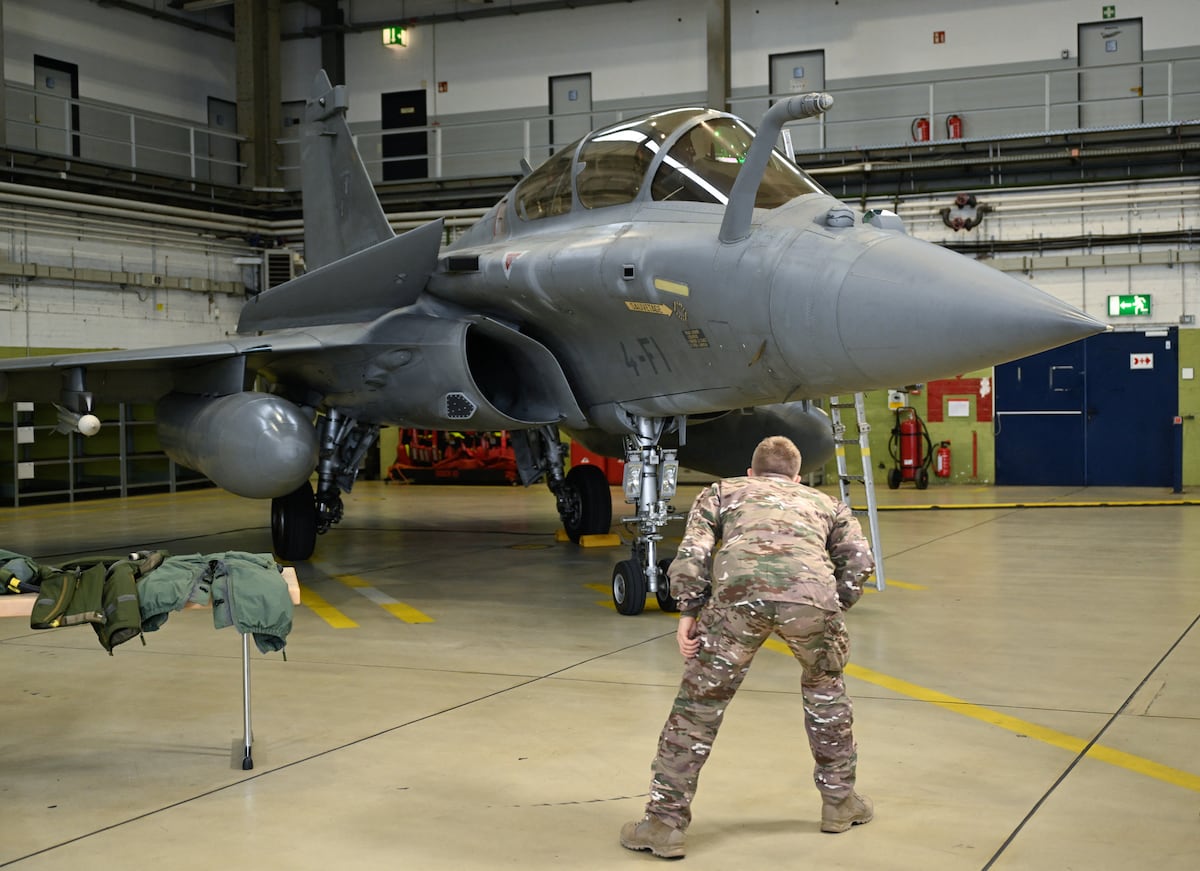
A French nuclear-capable Rafale jet had been temporarily hosted at a German air base − specifically at Nörvenich near Cologne.
VIENNA — Nuclear cooperation between France and Germany has moved from words to first actions, with French nuclear-capable bombers visiting a German airfield this month and joint exercises on the calendar.
The leaders in Paris and Berlin had formed a “nuclear steering group” in March to coordinate the countries’ closer integration in atomic strategic matters. It is part of a major French doctrinal shift billed as “forward deterrence,” in which France promises to extend its nuclear umbrella to other countries in Europe.
Germany was among the first to sign up for the new scheme four months ago. A total of nine countries spanning from Norway to Greece have joined the initiative so far.
Speaking to the press alongside French president Emmanuel Macron on Jul. 17, German chancellor Friedrich Merz officially confirmed reports that Germany would be participating in upcoming French nuclear exercises with its own conventional forces.
The exercise has been identified as the French “Poker” maneuver, which is set to take place in September, Politico reported.
Additionally, Macron said that for the first time ever, a French nuclear-capable Rafale jet had been temporarily hosted at a German air base − specifically at Nörvenich near Cologne, where the Franco-German Defence and Security Council met on Jul. 17.
A day earlier, French Rafales had been refuelled while airborne alongside German Eurofighters in a symbolic kickoff to the two countries’ nuclear strategic cooperation.
The meeting at Nörvenich was the first major high-level defense meeting since the collapse of the joint Future Combat Air System, or FCAS, project that has caused a strain in relations and bad blood between French and German defense contractors.
Nonetheless, the attitude the leaders presented to the press was forward-looking and cooperative.
“We are charting a new, shared course in deterrence,” Merz said, though he also emphasized that he did not want it to be seen as competition to NATO nuclear sharing, but rather as a supplement to it.
“This complements our commitment to NATO’s nuclear sharing and deterrence arrangements, which we continue to uphold,” Merz said.
Under NATO’s current, U.S.-led nuclear sharing arrangement, Germany hosts American nuclear bombs on its soil and operates dual-capable aircraft able to deliver the weapons to their targets if the U.S. president authorizes their use. Belgium, the Netherlands, Italy and Turkey similarly host U.S. nuclear bombs.
While sovereignty over the weapons and all decision-making related to the use of the bombs will remain in Paris under the new doctrine, conventional tasks may be taken on by Germany and other allies under the forward deterrence scheme. It may also see French fighter jets operating out of other European countries’ air bases.
Macron said he saw Germany as playing a “vanguard role” in European deterrence.
France is the only European Union country with its own nuclear arsenal following the U.K.’s departure from the bloc in 2020. Alongside announcing the new forward deterrence strategy in March, Macron also announced that his country would increase its nuclear stockpile, contributing to a larger trend of unraveling longtime effective Cold War-era arms control arrangements and nuclear restraint.
The steering group will continue to work out details for how Germany will fit into the picture of French nuclear deterrence going forward, including determining avenues for collaboration and what forces could be used.
From the French side, inviting Germany into the fold would entail “explaining some aspects of how we operate, sharing certain closely held practices, offering joint exercises, developing joint initiatives and partnerships and fostering greater … trust among our teams, experts and military personnel,” Macron said in Nörvenich.
Linus Höller is Defense News' Europe correspondent and OSINT investigator. He reports on the arms deals, sanctions, and geopolitics shaping Europe and the world. He holds master’s degrees in WMD nonproliferation, terrorism studies, and international relations, and works in four languages: English, German, Russian, and Spanish.
维也纳——法国和德国之间的核合作已经从口头上走向实际行动,法国具备核能力的轰炸机本月访问了德国的一个机场,联合演习也已提上日程。
今年3月,巴黎和柏林的领导人成立了一个“核战略指导小组”,旨在协调两国在原子战略领域的更紧密合作。这是法国一项重大战略转变的一部分,该战略被称为“前沿威慑”,法国承诺将其核保护伞扩展到欧洲其他国家。
四个月前,德国率先加入了这项新计划。迄今为止,包括挪威和希腊在内的共九个国家已加入该计划。
7月17日,德国总理弗里德里希·默茨与法国总统埃马纽埃尔·马克龙一同出席新闻发布会,正式证实了有关德国将携其常规部队参加即将举行的法国核演习的报道。
据 Politico 报道,此次演习被确认为法国的“扑克”演习,定于 9 月举行。
此外,马克龙表示,有史以来第一次,一架具备核打击能力的法国“阵风”战斗机临时驻扎在德国空军基地——具体来说是在科隆附近的诺尔韦尼希空军基地,法德国防与安全委员会于 7 月 17 日在那里举行了会议。
前一天,法国的“阵风”战斗机与德国的“台风”战斗机在空中进行了空中加油,象征性地启动了两国的核战略合作。
在诺尔韦尼希举行的这次会议是自未来作战空中系统(FCAS)联合项目崩溃以来,法德两国国防承包商之间关系紧张、关系恶化以来,首次举行的重要高级别防务会议。
然而,这些领导人对媒体表现出的态度是积极进取、乐于合作的。
“我们正在制定一条新的、共同的威慑路线,”梅尔茨说,但他同时强调,他不希望这被视为与北约核共享竞争,而是将其视为对其的补充。
“这体现了我们对北约核共享和威慑安排的承诺,我们将继续坚持这一承诺,”梅尔茨说。
根据北约目前由美国主导的核共享安排,德国在其境内部署了美国核弹,并拥有可在美国总统授权下将核武器投放至目标的双用途飞机。比利时、荷兰、意大利和土耳其也同样部署了美国核弹。
根据新战略,虽然武器主权和所有与使用炸弹相关的决策权仍归巴黎所有,但常规任务可能会根据前沿威慑计划由德国和其他盟国承担。此外,法国战斗机也可能从其他欧洲国家的空军基地起飞作战。
马克龙表示,他认为德国在欧洲威慑中扮演着“先锋角色”。
2020年英国脱欧后,法国成为欧盟唯一拥有自己核武库的国家。今年3月,马克龙在宣布新的前沿威慑战略的同时,也宣布法国将增加核武库,这加剧了长期以来行之有效的冷战时期军控安排和核克制机制瓦解的更大趋势。
指导小组将继续制定德国未来如何融入法国核威慑体系的细节,包括确定合作途径和可以使用哪些力量。
马克龙在诺尔韦尼希表示,从法国方面来看,邀请德国加入将意味着“解释我们运作方式的某些方面,分享一些密切保密的做法,提供联合演习,制定联合倡议和伙伴关系,并在我们的团队、专家和军事人员之间促进更大的……信任”。
林努斯·霍勒是《防务新闻》的欧洲记者和开源情报调查员。他报道影响欧洲乃至全球的军火交易、制裁和地缘政治。他拥有大规模杀伤性武器不扩散、恐怖主义研究和国际关系三个硕士学位,并精通英语、德语、俄语和西班牙语四种语言。