Glaring Holes In UK Air Defense Take Center Stage In New “Britannia Shield” Proposal英国防空体系的明显漏洞成为新“不列颠之盾”提案的焦点
The opposition Conservatives want a new network to defend Britain’s critical infrastructure and military bases. The opposition Conservatives want a new network to defend Britain’s critical infrastructure and military bases.
新闻视频
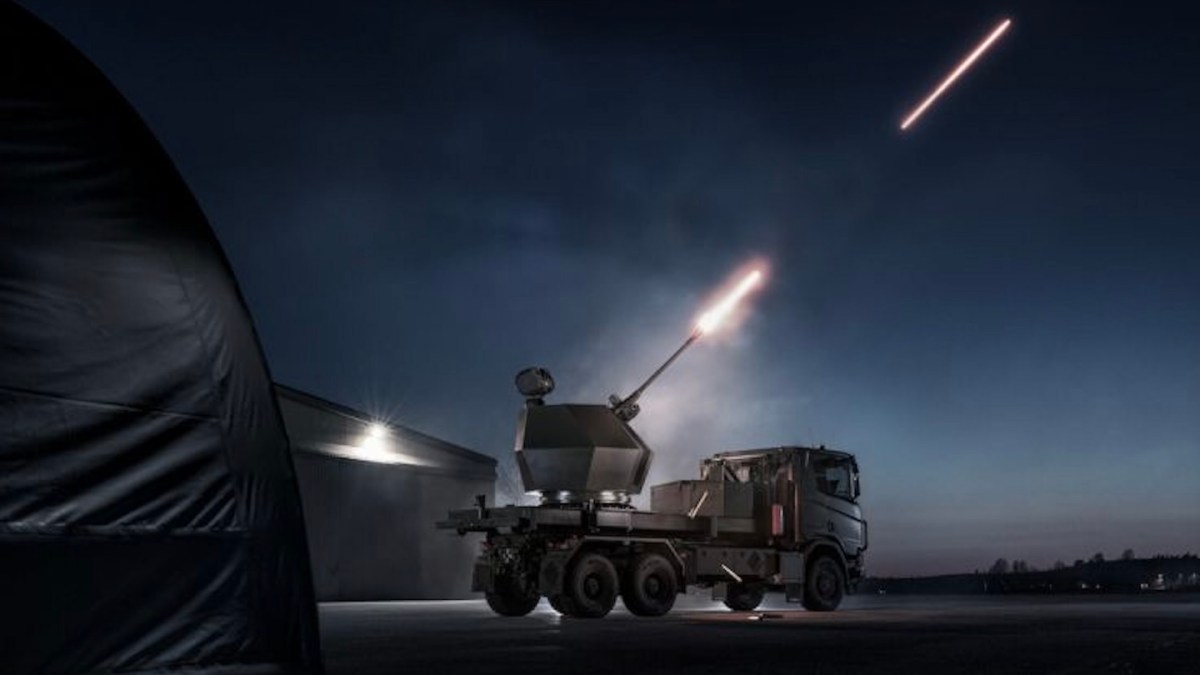
Published Oct 6, 2026 4:44 PM EDT
Screenshot BAE Systems
The United Kingdom could be heading toward its most significant expansion of ground-based air defense in generations, under a plan announced by the Conservative Party. For now, however, with the Conservatives in opposition, the proposed £10 billion (about $13.3 billion) “Britannia Shield” exists only as a policy commitment rather than an approved government program. At the same time, it highlights the seriousness of U.K. military deficiencies in this area, as the threat from the air continues to grow.
The world is becoming more dangerous. We will always do what is necessary to keep our country safe. pic.twitter.com/Z4EblxrGn7 — Conservatives (@Conservatives) October 6, 2026
The world is becoming more dangerous. We will always do what is necessary to keep our country safe. pic.twitter.com/Z4EblxrGn7
Today the @Conservatives are announcing ‘Britannia Shield’ – our £10bn plan to protect the UK from drone & missile attack. This is only possible because @KemiBadenoch is willing to take tough decisions to fund 3% on Defence. pic.twitter.com/tLrF2KSOHw — James Cartlidge MP 🇬🇧 🇺🇦 (@jcartlidgemp) October 6, 2026
Today the @Conservatives are announcing ‘Britannia Shield’ – our £10bn plan to protect the UK from drone & missile attack. This is only possible because @KemiBadenoch is willing to take tough decisions to fund 3% on Defence. pic.twitter.com/tLrF2KSOHw
The proposal will move into the U.K. Ministry of Defense acquisition system if the party returns to government following the next general election and then follows through on the funding and procurement decisions required to turn the pledge into an operational capability. The party has proposed spreading the investment over a decade, with an initial capability intended to emerge during the first term of a future Conservative government and the wider network established after that.
Britannia Shield comes with the character of the air threat facing Europe having changed dramatically over the last decade. Russia’s war in Ukraine has demonstrated the scale at which relatively inexpensive drones can be employed alongside cruise and ballistic missiles, while recent fighting in the Middle East has clearly shown the costs involved in maintaining a sophisticated, layered air defense system under sustained attack. At the same time, the threat is no longer confined to weapons fielded by major state militaries. Small, widely available drone technologies can be weaponized with relative ease by non-state actors, providing a cheap and potentially highly scalable means of attack.
Operating in the Red Sea in 2024, the Type 45 destroyer HMS Diamond uses its Sea Viper missile system to shoot down a missile fired by the Iranian-backed Houthis from Yemen. Crown Copyright
For Britain, which has traditionally relied heavily on fighter aircraft, naval air defense, and the protection provided by geography and NATO, it is increasingly doubtful whether those capabilities provide enough coverage for the infrastructure that would be most important to keep functioning during a major conflict.
While a party press release refers to it directly, Conservative leader Kemi Badenoch has made efforts to distinguish Britannia Shield from a British version of Israel’s Iron Dome .
Iron Dome has become one of the best-known elements of Israel’s layered air defense network , having been developed primarily to deal with short-range rockets, artillery, and mortar rounds threatening populated areas. The system has evolved, however, and newer configurations can also engage threats including cruise missiles and drones. Importantly, Israel’s Iron Dome systems protect a country a twelfth of the size of United Kingdom and deal with only a portion of the potential threats in critical areas.
Mention should also be made of the U.S. Golden Dome missile defense initiative , which envisions integrating sensors, interceptors, and other defensive capabilities as part of an enormous architecture with a greater emphasis on protecting the U.S. against a range of aerial and missile threats, up to and including intercontinental ballistic missiles.
Talking to the BBC , Badenoch argued that Britain does not face the same kind of persistent rocket and missile threat as Israel and therefore does not require an equivalent level of coverage. Instead, the Conservative proposal is intended to combine improved radar, command and control, interceptor missiles, and counter-drone capabilities into an integrated network designed around the threats Britain is considered most likely to face.
Britain already has some of the components that such a system could leverage. Royal Navy Type 45 destroyers — when they are available — provide a highly capable long-range air-defense layer through Sea Viper missiles , while the Army’s Sky Sabre system uses CAMM missiles for shorter-range engagements. The RAF provides combat aircraft and airborne surveillance capabilities, and Britain is integrated into NATO’s wider air and missile defense architecture. The problem is that these capabilities were not designed to provide a dense, permanent defensive umbrella over critical infrastructure, and the ground-based component in particular remains relatively limited when compared with the scale of the potential target set. There is also the reality that these assets are required to defend locales far from the British Isles themselves.
A British Army Sky Sabre battery. Crown Copyright
The government’s own 2025 Strategic Defense Review acknowledged that changing threat environment, allocating up to £1 billion in new funding for homeland air and missile defense and calling for improvements to the United Kingdom’s wider integrated air and missile defense architecture. Britannia Shield would therefore be a much larger political commitment to expanding and integrating capabilities that already exist, while adding new layers intended to deal with the growing drone and missile threat.
The £10 billion figure provides little idea of the scope of capabilities. The scale of the proposed system will determine whether that additional money represents a major expansion or simply the beginning of a much larger requirement.
Gen. Sir Richard Barrons has previously estimated that an entry-level system of the kind outlined could cost around £80 billion over a decade, illustrating how quickly the cost can rise once the requirement expands from protecting selected sites to providing something approaching comprehensive national coverage.
2/ Estimates suggest north of £80bn for the full cost of a perfect system, so we almost certainly need to think differently than a “dome” solution. A layered air defence will include a number of elements, including the ability to deter and strike back at an adversary. — Greg Bagwell (@gregbagwell) October 6, 2026
2/ Estimates suggest north of £80bn for the full cost of a perfect system, so we almost certainly need to think differently than a “dome” solution. A layered air defence will include a number of elements, including the ability to deter and strike back at an adversary.
Badenoch’s description of the threat instead points toward a system in which Britain would identify the infrastructure and military facilities most important to national resilience and then build increasingly dense layers of protection around them. That would include major airbases, ports, energy infrastructure, communications facilities, and other critical nodes, rather than attempting to create a continuous defensive bubble over the entire country.
RAF No. 617 Squadron F-35B jets at RAF Marham in England. Crown Copyright
Such a system would also have to account for the fact that the location of the launch platform can be as critical as the weapon itself. Badenoch described a scenario in which an adversary could operate in the English Channel to launch drones or missiles against targets in Britain. The resulting reduction in warning time would place greater demands on sensors and command systems, but it would also mean that the defensive problem could begin well before an incoming weapon reached British airspace. Maritime surveillance, intelligence collection, fighter aircraft, and naval forces could all potentially contribute to detecting or disrupting a launch platform before it had the opportunity to fire.
A Russian Kilo class submarine, its accompanying tugboat (center), and the RFA fast fleet tanker Tidesurge (background), as seen from a Merlin helicopter from 814 Naval Air Squadron. The helicopter and RFA tanker shadowed the submarine and tugboat as they sailed westward from the North Sea, through the Strait of Dover and into the English Channel in 2025. Crown Copyright
That broader approach is particularly important because the economics of countering drones are fundamentally different from those associated with conventional air defense targets. A system that responds to inexpensive drones by firing a sophisticated interceptor costing hundreds of thousands or millions of dollars would rapidly become unsustainable during a large attack. Any serious British architecture would therefore need several layers, with electronic warfare, guns, low-cost interceptors, and other counter-drone systems , potentially including directed-energy weapons , dealing with the lower end of the threat wherever possible. Meanwhile, more expensive surface-to-air missiles would be preserved for cruise missiles, aircraft and other targets that cannot be economically engaged by cheaper means.
A British Army Wolfhound armored vehicle, seen here with a mounted portable Laser Directed Energy Weapon (LDEW). This was the first high-powered laser energy weapon to be successfully fired from a British Army combat vehicle. Crown Copyright
The recent situation at RAF Fairford adds another dimension to that problem. The United States recently withdrew a dozen B-1 bombers from the Gloucestershire base amid reported concerns about a possible Iran-backed attack, after U.S. officials said commanders had received new information about a potential plot. British authorities maintained that the base was safe , while British sources reportedly questioned whether Iran could reproduce the kind of complex operation carried out by Ukraine against Russian airfields in 2025. The episode nevertheless demonstrated the degree to which even a major military installation can become a concern when an adversary is believed to be looking for unconventional ways to reach it.
A B-1B Lancer assigned to the 9th Expeditionary Bomb Squadron parks on the flightline at RAF Fairford, United Kingdom, in 2023. U.S. Air Force Photo by Senior Airman Ryan Hayman
That brings Operation Spiderweb into the discussion, although there is no public evidence that Iran is preparing a comparable operation against Britain. Ukraine’s June 2025 attack was prepared over roughly 18 months and involved small drones being moved deep into Russia inside containers carried by trucks before being launched remotely against military airfields. The operation illustrated that once relatively cheap drones have been positioned close to their targets, the defender may have little opportunity to intercept them through traditional long-range air defense means. This is exactly a scenario we have been warning of for many years.
Today, Ukrainian intelligence reportedly launched 117 attack drones from trucks that had been placed near Russian air bases. I tasked several collects this morning via @umbraspace and my first images have already started processing. What a remarkable success in a well-executed… pic.twitter.com/LzXulw8jnK — Chris Biggers (@CSBiggers) June 2, 2025
Today, Ukrainian intelligence reportedly launched 117 attack drones from trucks that had been placed near Russian air bases. I tasked several collects this morning via @umbraspace and my first images have already started processing. What a remarkable success in a well-executed… pic.twitter.com/LzXulw8jnK
For Britannia Shield, that means protecting an airbase such as RAF Fairford cannot simply be a matter of installing missile batteries. Physical security, counter-intelligence, surveillance of access routes, low-level drone detection, electronic warfare and the ability to identify suspicious activity before an attack begins would all become part of the same defensive problem. Hardened infrastructure would also be essential, helping to protect aircraft, fuel, munitions, command facilities and other critical assets from attacks that penetrate the outer layers of the defense. The distinction is increasingly important as military aircraft themselves become more valuable and as relatively inexpensive unmanned systems demonstrate their ability to threaten aircraft on the ground without ever having to penetrate the surrounding air defense network.
The new British proposal also becomes more complicated because its intended coverage extends beyond the British mainland. Badenoch has specifically referred to defending installations in Cyprus and the Falkland Islands , which introduces a very different set of operational and logistical requirements. A network supporting critical infrastructure in Britain can draw on dense communications infrastructure, nearby industrial support and the wider NATO system, whereas a defensive capability at RAF Akrotiri or in the Falklands requires its own radar coverage, launchers, personnel, ammunition stocks, and sustainment arrangements. Extending the same architecture across those locations would therefore consume considerably more resources.
An RAF 1435 Flight Typhoon FGR4 pair flying over West Falkland island during a routine training flight. Crown Copyright
A similar problem exists with ammunition stocks. Ukraine has repeatedly demonstrated that sophisticated air defenses can come under sustained pressure during large missile and drone attacks, while Western countries have struggled to replenish some categories of precision-guided weapons at anything approaching wartime consumption rates. A British system that looks impressive on paper but has only a small stockpile of interceptors would provide much less meaningful protection during a prolonged campaign, particularly if an adversary deliberately attempted to exhaust the defenses through repeated attacks using inexpensive drones.
Ukraine also offers lessons for how Britain could organize such a network. Mobile air defense teams , distributed sensors, acoustic detection systems , and digital applications that connect air defense operators with military units and civilian spotters have all become increasingly important in Ukraine, where defenders have had to detect and respond to large numbers of drones and missiles across a wide area. There are echoes here of the distributed air defense networks developed during the World War II, when observers, radar operators, fighter controllers, and anti-aircraft units were linked together to provide early warning and direct defensive responses. As in 1940, Britain would need an air defense network that is distributed, mobile, and adaptable to new threats.
An RAF Regiment light anti-aircraft gun team man their Bofors 40mm gun in a rain-sodden emplacement in southeast England, to help defend London from flying bombs in World War II. Crown Copyright
The most revealing details of Britannia Shield are yet to be provided. The number of defended sites, the types and numbers of radars, the number of launchers, the size of interceptor stocks, and the proportion of the budget devoted to counter-drone capabilities all remain unclear for now. The same applies to the money required for training, maintenance, software, communications, and replenishment across the life of the system.
There is also a straightforward political limitation to the proposal. The Conservatives have pledged to invest in Britannia Shield as part of a broader plan to increase defense spending, but that money is not currently sitting in a government procurement account waiting to be spent and defense budgets are increasingly stretched by other big-ticket programs. The Conservatives would first have to return to government, establish the program as a formal requirement, and then make the associated spending and procurement decisions. Even if those steps were taken quickly, the most capable elements of the system would take years to design, procure, integrate, and deploy.
A rendering of of the new Dreadnought class of ballistic submarines for the Royal Navy, representing the largest British defense investment of recent years. Crown Copyright
Whether £10 billion would ultimately be sufficient depends on the mission the future government assigns to the system. If Britannia Shield were expected to provide nationwide protection against sustained attacks involving ballistic missiles, cruise missiles, and large numbers of drones, the budget would fall far short, particularly once interceptor stocks and long-term sustainment are included. If it is designed as a layered network protecting a defined group of critical infrastructure sites and military bases, integrated with the RAF, Royal Navy, Army, and NATO systems already in place, the proposal becomes more realistic, but it wouldn’t address higher-end threats, like longer-range ballistic missiles .
That limitation is particularly significant when considering Russia, which remains the most serious military threat to the United Kingdom and its European allies. From what we know so far, Britannia Shield is heavily focused on drones and shorter-range missile threats, but Russia possesses a much broader strike arsenal that includes ballistic missiles, cruise missiles, and hypersonic weapons . A British air defense program that concentrates primarily on the lower and middle tiers of the threat therefore leaves a significant gap at the upper end of the spectrum.
Russian Yars Intercontinental ballistic missiles travel through central Moscow during a rehearsal for the Victory Day parade in 2025. Photo by Alexander NEMENOV / AFP
The United Kingdom is also not considering this problem in isolation. Across Europe, governments are increasingly pursuing multinational efforts to strengthen air and missile defenses, as the return of large-scale state-on-state warfare and the experience of the war in Ukraine have made the vulnerability of European infrastructure and military forces much more tangible. Nearly three decades after the end of the Cold War, ballistic and cruise missile defense has once again become a central European security requirement. Britannia Shield would therefore need to be considered not only as a national counter-drone and air-defense program, but as part of a much broader European effort to rebuild layered air and missile defenses against the full range of modern threats.
The experience of Ukraine and the Middle East suggests that Britain is unlikely to solve this problem simply by buying more surface-to-air missiles. Increasingly, air warfare relies on complex networks that find the attacker, identify the weapon, choose the appropriate response, and undertake this all at a cost that can be sustained throughout a conflict. That network also has to extend beyond the airspace itself, because the threat may involve a launch platform approaching the coast, a drone operator operating near a military installation, or small drones already hidden inside the defender’s security perimeter.
Last line of defense: British Army riflemen testing a Mossberg 590M Counter SUAS shotgun (foreground) and handheld Counter-Unmanned Aerial System effectors against drones. Crown Copyright
With their proposed reorientation of Britain’s air defense priorities, the Conservatives have put a financial value and a recognizable name around a capability gap that has become increasingly difficult to ignore. If they return to government, there will be many tougher questions to address, including which sites should receive protection, how many layers are required, how much ammunition must be held in reserve, and how the system can be sustained on a wartime footing.
The recent concerns surrounding RAF Fairford, together with the lessons of Operation Spiderweb, underline why that question is becoming more complicated. The next serious attack on a British military installation may not arrive as a large formation of aircraft or a visible wave of missiles crossing the Channel. It could involve a mixture of long-range weapons, cheap drones, electronic warfare, and hybrid warfare activity taking place much closer to the target. A future Britannia Shield would have to be designed around that reality, and would come with a price tag to match.
Contact the author: thomas@thewarzone.com
Comments couldn’t be loaded. Please refresh the page.
发布于美国东部时间2026年10月6日下午4:44
BAE系统公司截图
根据保守党公布的一项计划,英国可能正朝着几代人以来规模最大的地面防空扩张迈进。然而,目前由于保守党处于在野党地位,这项名为“不列颠之盾”(Britannia Shield)的100亿英镑(约合133亿美元)计划目前仅停留在政策承诺层面,尚未获得政府批准。与此同时,随着空中威胁的不断增长,该计划也凸显了英国在这一领域军事能力的严重不足。
世界正变得越来越危险。我们将始终采取一切必要措施来保障国家安全。 pic.twitter.com/Z4EblxrGn7 — 保守党 (@Conservatives) 2026年10月6日
世界变得越来越危险。我们将始终采取一切必要措施来保障国家安全。pic.twitter.com/Z4EblxrGn7
今天,保守党宣布了“不列颠之盾”计划——一项耗资100亿英镑的计划,旨在保护英国免受无人机和导弹袭击。这完全得益于凯米·巴德诺克(Kemi Badenoch)愿意做出艰难的决定,将3%的财政收入用于国防。 pic.twitter.com/tLrF2KSOHw — James Cartlidge MP 🇬🇧 🇺🇦 (@jcartlidgemp) October 6, 2026
今天,保守党宣布了“不列颠之盾”计划——一项耗资100亿英镑的计划,旨在保护英国免受无人机和导弹袭击。这完全得益于凯米·巴德诺克(Kemi Badenoch)愿意做出艰难的决定,将3%的财政收入用于国防。 pic.twitter.com/tLrF2KSOHw
如果保守党在下届大选后重新执政,并落实必要的资金和采购决策,将这项承诺转化为实际作战能力,那么该提案将纳入英国国防部的采购体系。保守党提议将投资分十年进行,初期能力计划在未来保守党政府的首个任期内建立,更广泛的网络则在此之后逐步构建。
“不列颠之盾”计划的出台,正值欧洲面临的空中威胁在过去十年间发生巨大变化之际。俄罗斯在乌克兰的战争表明,相对廉价的无人机可以与巡航导弹和弹道导弹并肩作战,而近期在中东的冲突则清晰地展现了在持续攻击下维持一套复杂、多层次防空系统所需的高昂成本。与此同时,威胁不再局限于主要国家军队部署的武器。小型、广泛应用的无人机技术可以被非国家行为体相对容易地武器化,从而提供一种廉价且可能高度可扩展的攻击手段。
2024年,在红海执行任务的45型驱逐舰“钻石”号使用其“海毒蛇”导弹系统击落了一枚由伊朗支持的也门胡塞武装发射的导弹。(英国皇家版权所有)
对于传统上严重依赖战斗机、海军防空以及地理位置和北约提供的保护的英国来说,这些能力是否足以保障在重大冲突期间保持运转至关重要的基础设施,这一点越来越令人怀疑。
虽然政党新闻稿直接提到了它,但保守党领袖凯米·巴德诺赫一直努力将“不列颠之盾”与英国版的以色列“铁穹”区分开来。
“铁穹”系统已成为以色列多层防空网络中最为人熟知的组成部分之一,其最初研发目的是为了应对威胁人口稠密地区的短程火箭弹、火炮弹和迫击炮弹。然而,该系统不断发展演进,新型配置还能应对巡航导弹和无人机等威胁。值得注意的是,以色列的“铁穹”系统保护着面积仅为英国十二分之一的国家,却只能应对关键区域潜在威胁的一部分。
还应该提及美国的“金穹顶”导弹防御计划,该计划设想将传感器、拦截器和其他防御能力整合到一个庞大的架构中,更加注重保护美国免受各种空中和导弹威胁,包括洲际弹道导弹。
巴德诺克在接受BBC采访时辩称,英国面临的火箭弹和导弹威胁与以色列截然不同,因此无需同等程度的覆盖。相反,保守党的提案旨在将改进的雷达、指挥控制系统、拦截导弹和反无人机能力整合到一个综合网络中,以应对英国最有可能面临的威胁。
英国已经拥有此类系统可以利用的部分组件。皇家海军的45型驱逐舰(在可用时)可通过“海毒蛇”导弹提供高效的远程防空屏障,而陆军的“天空佩刀”系统则使用CAMM导弹进行近程打击。皇家空军提供作战飞机和空中监视能力,英国也已融入北约更广泛的防空和导弹防御体系。问题在于,这些能力并非旨在为关键基础设施提供密集、永久性的防御保护伞,尤其是地面防御组件,与潜在目标的规模相比仍然相对有限。此外,这些资产还需用于防御远离不列颠群岛的地区。
英国陆军空中佩刀战斗机连。版权所有。
英国政府在其2025年战略防御评估报告中承认了不断变化的安全威胁环境,并拨款高达10亿英镑用于国土防空和导弹防御,同时呼吁改进英国更广泛的综合防空和导弹防御体系。因此,“不列颠之盾”计划将是一项更为重大的政治承诺,旨在扩展和整合现有能力,并增加新的防御层级以应对日益增长的无人机和导弹威胁。
100亿英镑的数字并不能完全体现其功能范围。拟建系统的规模将决定这笔额外资金是代表着一次重大扩张,还是仅仅预示着更大需求的开始。
理查德·巴伦斯爵士将军此前估计,像这样的入门级系统在十年内可能耗资约 800 亿英镑,这表明一旦需求从保护特定地点扩展到提供接近全面的全国覆盖范围,成本就会迅速上升。
2/ 据估计,一套完美防空系统的全部造价将超过800亿英镑,因此我们几乎肯定需要跳出“穹顶”式解决方案的窠臼。多层防空系统将包含多个要素,包括威慑和反击敌方的能力。——格雷格·巴格韦尔(@gregbagwell)2026年10月6日
2/ 据估计,一套完美防空系统的全部造价将超过800亿英镑,因此我们几乎肯定需要跳出“穹顶式”解决方案的窠臼。多层防空系统将包含多个要素,包括威慑和反击敌方的能力。
巴德诺赫对威胁的描述则指向一种新的体系:英国将识别对国家韧性至关重要的基础设施和军事设施,然后在这些设施周围构建日益密集的防护层。这包括主要空军基地、港口、能源基础设施、通信设施和其他关键节点,而不是试图在全国范围内建立一个连续的防御屏障。
英国皇家空军第617中队的F-35B战斗机驻扎在英国马勒姆皇家空军基地。版权所有
这样的系统还必须考虑到发射平台的位置与武器本身同样重要。巴德诺赫描述了这样一种情景:敌方可能在英吉利海峡活动,向英国目标发射无人机或导弹。由此导致的预警时间缩短将对传感器和指挥系统提出更高的要求,但也意味着防御问题可能在来袭武器进入英国领空之前就已经开始。海上监视、情报收集、战斗机和海军力量都有可能在发射平台有机会发射之前对其进行探测或干扰。
图中可见一艘俄罗斯基洛级潜艇、其护航拖船(位于画面中央)以及英国皇家辅助舰队快速油轮“潮汐涌动”号(位于背景中)。此画面由英国海军第814航空中队的一架“梅林”直升机拍摄。2025年,这架直升机和“潮汐涌动”号油轮尾随潜艇和拖船从北海向西航行,穿过多佛尔海峡,最终进入英吉利海峡。版权所有。
这种更广泛的策略尤为重要,因为反无人机的经济效益与应对传统防空目标的经济效益截然不同。如果一套系统仅仅依靠发射价值数十万甚至数百万美元的精密拦截器来应对廉价无人机,那么在大规模攻击中,这种成本很快就会变得难以承受。因此,任何切实可行的英国防空体系都需要多层防御,包括电子战、火炮、低成本拦截器和其他反无人机系统(可能包括定向能武器),尽可能地应对低端威胁。与此同时,更昂贵的地对空导弹则应保留下来,用于拦截巡航导弹、飞机以及其他无法用更经济的方式打击的目标。
图中所示为一辆英国陆军“猎狼犬”装甲车,车上搭载了一门便携式激光定向能武器(LDEW)。这是英国陆军首次成功从作战车辆上发射高功率激光能量武器。版权所有
英国皇家空军费尔福德基地最近发生的事件,使这个问题更加复杂。据报道,美国官员称指挥官收到了有关潜在阴谋的新情报,出于对伊朗可能发动袭击的担忧,美国近期从格洛斯特郡的该基地撤回了十几架B-1轰炸机。英国当局坚称该基地安全,但有报道称,英国消息人士质疑伊朗是否能够重现乌克兰在2025年对俄罗斯机场实施的那种复杂行动。尽管如此,这一事件表明,即使是大型军事设施,一旦被认为有敌方正在寻找非常规手段攻击,也会变得令人担忧。
2023年,一架隶属于美国空军第9远征轰炸机中队的B-1B“枪骑兵”轰炸机停放在英国皇家空军费尔福德基地的停机坪上。美国空军高级飞行员瑞安·海曼摄
这就引出了“蜘蛛网行动”的讨论,尽管目前尚无公开证据表明伊朗正在准备对英国发动类似的行动。乌克兰2025年6月的袭击行动筹备了大约18个月,行动中小型无人机被装入卡车运输的集装箱,深入俄罗斯境内,然后远程发射攻击军用机场。该行动表明,一旦相对廉价的无人机部署在目标附近,防御方可能几乎没有机会通过传统的远程防空手段进行拦截。这正是我们多年来一直警告的情况。
据报道,乌克兰情报部门今天从停放在俄罗斯空军基地附近的卡车上放飞了117架攻击无人机。我今天早上通过@umbraspace 发送了几组图像采集请求,我的第一批图像已经开始处理了。这是一次精心策划的行动,取得了显著的成功…… pic.twitter.com/LzXulw8jnK — Chris Biggers (@CSBiggers) June 2, 2025
据报道,乌克兰情报部门今天从停放在俄罗斯空军基地附近的卡车上放飞了117架攻击无人机。我今天早上通过@umbraspace 发送了几组图像,我的第一批图像已经开始处理了。这是一次执行得非常成功的行动…… pic.twitter.com/LzXulw8jnK
对于“不列颠之盾”计划而言,保护像费尔福德皇家空军基地这样的设施,绝不仅仅是部署导弹阵地那么简单。实体安全、反情报、进出通道监控、低空无人机探测、电子战以及在攻击发生前识别可疑活动的能力,都将成为同一防御体系的一部分。加固的基础设施也至关重要,它有助于保护飞机、燃料、弹药、指挥设施和其他关键资产免受突破防御外围防线的攻击。随着军用飞机本身价值的不断提升,以及相对廉价的无人系统展现出无需突破现有防空网络即可威胁地面飞机的能力,这种区分变得愈发重要。
英国的新方案也变得更加复杂,因为其覆盖范围超出了英国本土。巴德诺赫特别提到了对塞浦路斯和福克兰群岛设施的防御,这带来了截然不同的作战和后勤需求。支持英国关键基础设施的网络可以利用密集的通信基础设施、附近的工业支持以及更广泛的北约体系,而位于阿克罗蒂里皇家空军基地或福克兰群岛的防御能力则需要独立的雷达覆盖、发射装置、人员、弹药储备和保障机制。因此,将相同的架构扩展到这些地点将消耗更多的资源。
英国皇家空军第1435飞行队的两架台风FGR4战斗机正在西福克兰岛上空进行例行训练飞行。版权所有
弹药储备也存在类似的问题。乌克兰已多次证明,即使是先进的防空系统,在遭受大规模导弹和无人机袭击时也会面临持续的压力。而西方国家在补充某些类型的精确制导武器方面,始终难以达到战时消耗速度。英国的防空系统纸面上看起来令人印象深刻,但如果拦截弹储备不足,那么在持久战中,其防护作用将大打折扣,尤其是在敌方蓄意利用廉价无人机反复攻击,试图耗尽其防御能力的情况下。
乌克兰的经验也为英国如何构建类似的防空网络提供了借鉴。在乌克兰,移动防空小组、分布式传感器、声学探测系统以及连接防空人员、军事单位和民用观察员的数字应用都变得日益重要。乌克兰的防空人员必须在广阔的区域内探测并应对大量无人机和导弹的袭击。这与二战期间建立的分布式防空网络有异曲同工之妙。当时,观察员、雷达操作员、战斗机管制员和防空部队相互连接,提供预警和直接防御响应。正如1940年一样,英国也需要一个分布式、移动式且能够适应新威胁的防空网络。
二战期间,英国皇家空军团的一支轻型防空炮小组在英格兰东南部一个被雨水浸透的阵地上操作着他们的博福斯40毫米高射炮,以保卫伦敦免受飞弹袭击。(英国皇家版权所有)
“不列颠之盾”系统的关键细节尚未公布。防御站点的数量、雷达的类型和数量、发射装置的数量、拦截弹的储备规模,以及用于反无人机能力的预算比例,目前都还不清楚。同样,该系统整个生命周期内所需的培训、维护、软件、通信和补给资金也尚未可知。
该提案还存在一个显而易见的政治限制。保守党已承诺投资“不列颠之盾”系统,作为其增加国防开支的更广泛计划的一部分,但目前这笔资金并未存入政府采购账户待用,而且国防预算正因其他大型项目而日益捉襟见肘。保守党首先必须重返执政,将该项目正式列为一项必要要求,然后才能做出相关的支出和采购决策。即便这些步骤能够迅速完成,该系统中最关键的组件也需要数年时间进行设计、采购、集成和部署。
这是英国皇家海军新型“无畏”级弹道导弹潜艇的效果图,代表了英国近年来最大的国防投资。版权所有。
100亿英镑最终是否足够,取决于未来政府赋予该系统的任务。如果“不列颠之盾”系统旨在提供全国范围的防御,抵御弹道导弹、巡航导弹和大量无人机的持续攻击,那么预算将远远不够,尤其是在考虑到拦截导弹储备和长期维护成本之后。如果将其设计为一个多层网络,用于保护特定区域的关键基础设施和军事基地,并与英国皇家空军、皇家海军、陆军和北约现有的系统整合,那么该方案就更切合实际,但它无法应对更高端的威胁,例如远程弹道导弹。
考虑到俄罗斯仍然是英国及其欧洲盟友面临的最严重军事威胁,这一局限性尤为显著。就我们目前所知,“不列颠之盾”防空系统主要侧重于无人机和短程导弹威胁,但俄罗斯拥有更为广泛的打击武库,包括弹道导弹、巡航导弹和高超音速武器。因此,英国的防空计划如果主要集中于应对低级和中级威胁,就会在高端威胁方面留下明显的漏洞。
俄罗斯“亚尔斯”洲际弹道导弹在2025年胜利日阅兵彩排期间飞越莫斯科市中心。图片来源:Alexander NEMENOV / 法新社
英国也并未孤立地看待这个问题。在整个欧洲,各国政府正日益寻求多边合作,以加强防空和导弹防御。大规模国家间战争的重燃以及乌克兰战争的经验,使得欧洲基础设施和军事力量的脆弱性更加显而易见。冷战结束近三十年后,弹道导弹和巡航导弹防御再次成为欧洲安全的核心需求。因此,“不列颠之盾”计划不仅应被视为一项国家层面的反无人机和防空计划,更应被视为一项更广泛的欧洲努力的一部分,旨在重建多层次的防空和导弹防御体系,以应对各种现代威胁。
乌克兰和中东的经验表明,英国不太可能仅仅通过购买更多地对空导弹来解决这个问题。空战越来越依赖于复杂的网络,这些网络能够发现攻击者、识别武器、选择合适的应对措施,并且所有这些工作都必须在冲突期间持续进行。此外,该网络还必须扩展到空域之外,因为威胁可能来自逼近海岸的发射平台、在军事设施附近活动的无人机操作员,或者已经隐藏在防御方安全警戒线内的小型无人机。
最后一道防线:英国陆军步枪兵正在测试莫斯伯格590M型反无人机系统霰弹枪(前景)和手持式反无人机系统武器,以对抗无人机。版权所有
保守党提出的英国防空优先事项调整方案,实际上是将一个日益凸显的能力缺口量化,并赋予其一个易于识别的名称。如果他们重返执政,将面临诸多更为棘手的问题,例如哪些地点应该得到保护、需要多少层防护、需要储备多少弹药,以及如何在战时维持该系统的正常运转。
最近围绕费尔福德皇家空军基地的种种担忧,以及“蜘蛛网行动”的教训,都凸显了这个问题为何变得愈发复杂。下一次针对英国军事设施的严重袭击,或许并非以大规模机群或一波波可见的导弹跨越英吉利海峡的形式出现,而是可能涉及远程武器、廉价无人机、电子战以及混合战争等多种手段,且攻击地点可能更靠近目标。未来的“不列颠之盾”系统必须基于这种现实情况进行设计,其成本也将相应增加。
联系作者:thomas@thewarzone.com
评论加载失败,请刷新页面。