Human rights shouldn’t be a box-ticking exercise, Azalina tells businesses阿扎利娜告诉企业,人权不应该只是走过场。
KUALA LUMPUR, Oct 7 — Malaysia must now move from policy to practice on business and human rights, said Minister in the Prime Minister’s Department (Law and Institutional...
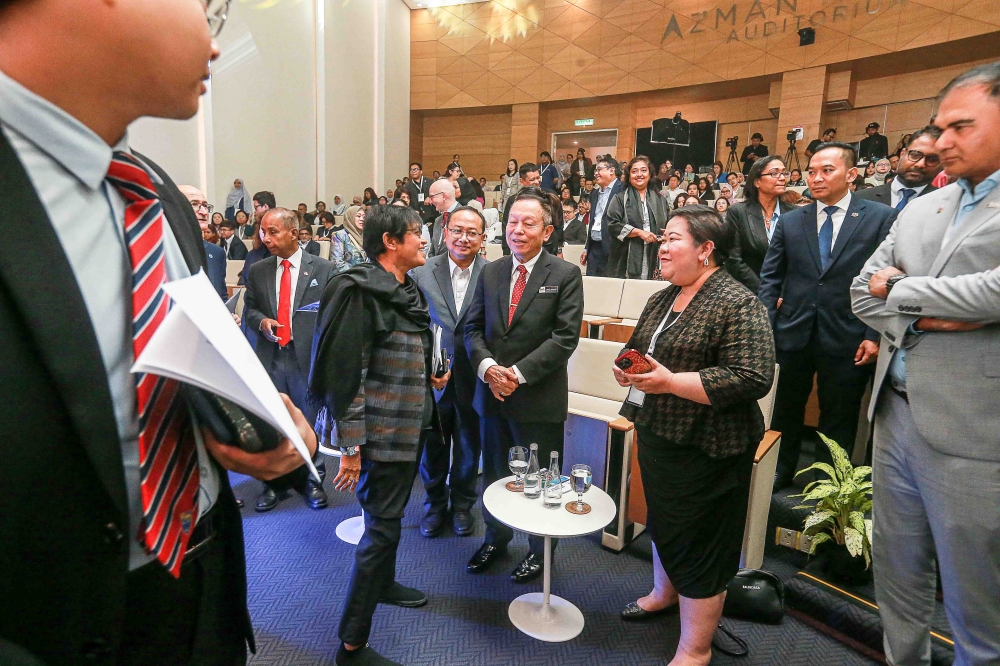
In her address at the National Conference on Business and Human Rights 2026, Minister Datuk Seri Azalina Othman Said emphasized Malaysia's need to shift from policy formulation to practical implementation concerning business and human rights.
She highlighted the importance of the National Action Plan on Business and Human Rights 2025-2030 in achieving tangible outcomes through its 135 strategic actions.
The introduction of a Human Rights Due Diligence Guide for Businesses provides a practical framework for addressing human rights impacts, tailored to both multinational corporations and small enterprises.
Azalina stressed that integrating human rights into corporate operations augments trust and resilience, underscoring the necessity of inclusive policymaking and viewing responsible business conduct as a fundamental component of a modern economy.
KUALA LUMPUR, Oct 7 — Malaysia must now move from policy to practice on business and human rights, said Minister in the Prime Minister’s Department (Law and Institutional Reform) Datuk Seri Azalina Othman Said.
She said the next phase must focus on turning policy commitments into tangible results under the National Action Plan on Business and Human Rights 2025-2030 (NAPBHR), launched in 2025 with 135 strategic actions covering governance, labour and environment.
“By 2030, our success will not be measured by the meetings we held or the reports we produced, but by the meaningful difference we make for our workers, communities, businesses and people,” she said in her keynote address at the National Conference on Business and Human Rights 2026 today.
At the conference, she also launched the Human Rights Due Diligence Guide for Businesses in Malaysia, which gives companies a practical process to identify, prevent, mitigate and address potential adverse human rights impacts.
The guide takes a risk-based and proportionate approach, recognising that multinational corporations and small and medium-sized enterprises do not necessarily have the same resources or exposure to risk.
Azalina urged businesses of all sizes to use the guide as a management and decision-making tool rather than merely another compliance document.
She said 11 immediate actions had been identified for the first year, with a National Steering Committee supported by three Technical Committees to oversee implementation.
She said the government did not want to create regulation or compliance “for the sake of compliance”.
Instead, respect for human rights should become part of how good businesses operate, from corporate policies to supply chains and decision-making, she said.
“Responsible business conduct should not be viewed merely as a cost.
“It strengthens trust, it strengthens resilience and it protects reputation,” she said.
She added that the government had been engaging regulators, industry and communities in Kuala Lumpur, Sabah and Sarawak, covering issues such as strategic lawsuits against public participation and the rights of Indigenous Peoples.
She stressed that such engagement was important because good policy could not be developed from Putrajaya alone.
“We must listen to those who implement our policies, those who are affected by them, and those whom these policies are intended to protect,” she said.
Azalina described the NAPBHR as a “living and evolving national commitment” that would require continued learning and adaptation through 2030.
“Business and Human Rights is not about choosing between economic growth and human dignity.
“A modern economy must be capable of delivering both,” she said.
Polisas student believed killed by boyfriend: JPPKK vows to cooperate in probe
FT Minister: Cabinet to be briefed on findings from vagrancy, child welfare ops
Sexual harassment probe continues after motivational speaker released on bail
Fish deaths in Sungai Perak under investigation, says state exco
Schools, kindergartens and childcare centres in Batu Pahat to close amid hazardous air quality
在 2026 年全国商业与人权大会上,拿督斯里阿扎丽娜·奥斯曼·赛义德部长强调,马来西亚需要将商业与人权方面的政策制定转向实际执行。
她强调了《2025-2030 年企业与人权国家行动计划》的重要性,该计划通过 135 项战略行动实现了切实成果。
《企业人权尽职调查指南》的推出,为应对人权影响提供了一个切实可行的框架,该框架既适用于跨国公司,也适用于小型企业。
阿扎利娜强调,将人权纳入企业运营可以增强信任和韧性,这凸显了包容性政策制定的必要性,并将负责任的商业行为视为现代经济的基本组成部分。
吉隆坡,10月7日讯——首相署(法律及体制改革)部长拿督斯里阿扎丽娜·奥斯曼·赛义德表示,马来西亚现在必须在商业和人权方面从政策转向实践。
她表示,下一阶段必须集中精力将政策承诺转化为切实成果,落实到2025-2030年国家商业与人权行动计划(NAPBHR)中。该计划于2025年启动,包含135项战略行动,涵盖治理、劳工和环境等领域。
“到 2030 年,衡量我们成功的标准将不再是我们召开了多少次会议或撰写了多少报告,而是我们为员工、社区、企业和人民带来了哪些有意义的改变,”她在今天举行的 2026 年全国商业与人权大会的主题演讲中说道。
在会议上,她还发布了《马来西亚企业人权尽职调查指南》,该指南为企业提供了一个实用的流程,以识别、预防、减轻和应对潜在的不利人权影响。
该指南采取基于风险和相称的方法,认识到跨国公司和中小企业不一定拥有相同的资源或面临相同的风险。
阿扎利娜敦促各种规模的企业将该指南用作管理和决策工具,而不仅仅是另一份合规文件。
她表示,第一年已确定了 11 项立即行动,并成立了国家指导委员会,由三个技术委员会支持,负责监督实施。
她说,政府不想“为了合规而合规”地制定法规或规定。
她表示,尊重人权应该成为优秀企业运营方式的一部分,从公司政策到供应链和决策都应体现这一点。
“负责任的商业行为不应仅仅被视为一种成本。”
“它能增强信任,增强韧性,并保护声誉,”她说。
她补充说,政府一直在与吉隆坡、沙巴和砂拉越的监管机构、行业和社区进行沟通,讨论诸如针对公众参与的战略诉讼和原住民权利等问题。
她强调,这种参与非常重要,因为好的政策不能仅靠布城制定。
“我们必须倾听政策执行者、政策影响者以及政策旨在保护者的意见,”她说。
阿扎利娜将 NAPBHR 描述为一项“鲜活的、不断发展的国家承诺”,需要持续学习和适应,直至 2030 年。
“商业与人权并非要在经济增长和人类尊严之间做出选择。”
“现代经济必须能够同时实现这两点,”她说。
波利萨斯一名学生据信被男友杀害:JPPKK誓言配合调查
英国《金融时报》大臣:内阁将听取有关流浪者和儿童福利行动调查结果的简报
励志演讲者获准保释后,性骚扰调查仍在继续
霹雳州行政议员表示,霹雳河鱼类死亡事件正在调查中。
由于空气质量恶劣,峇株巴辖的学校、幼儿园和托儿中心将关闭。