Venezuela’s Maduro never escaped his predecessor’s shadow委内瑞拉的马杜罗始终未能摆脱其前任的阴影。
Maduro, who rose from bus driver to Venezuelan president and oversaw his country’s democratic undoing, was captured Saturday during an attack by US forces.
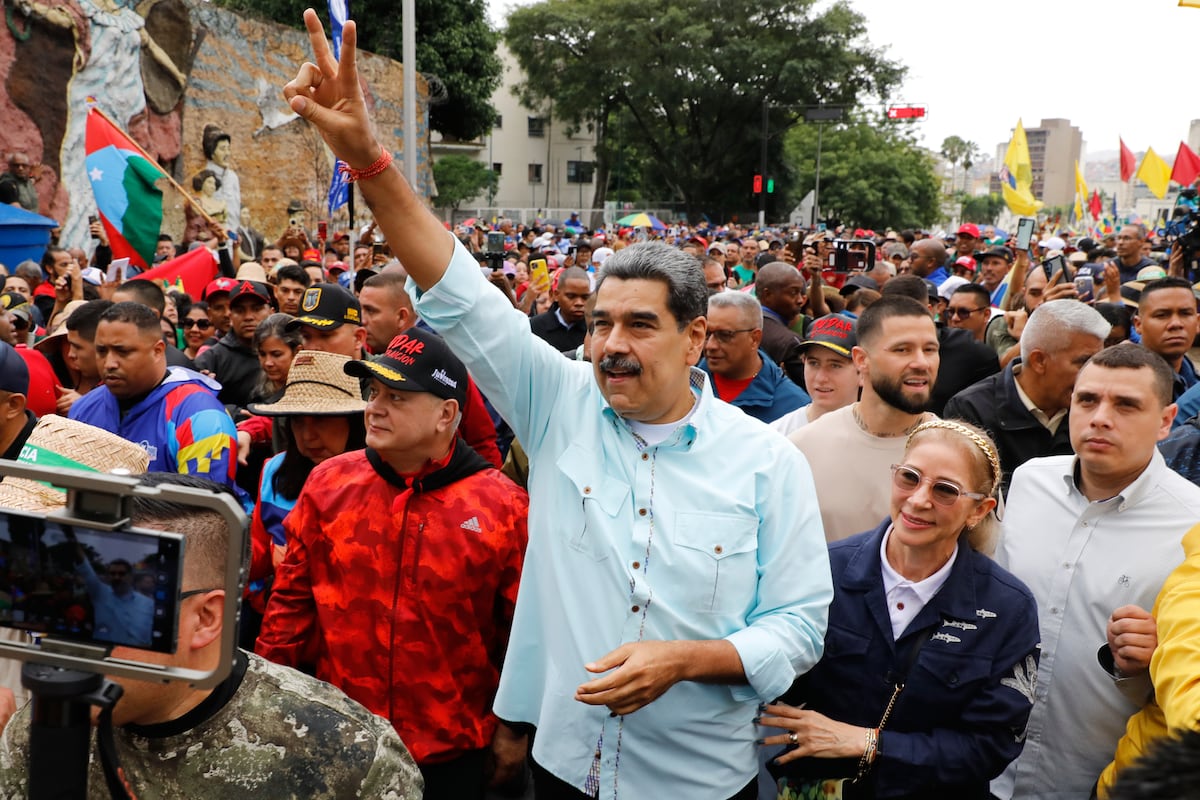
Nicolás Maduro , who rose from unionized bus driver to Venezuelan president and oversaw his country’s democratic undoing and economic collapse, was captured Saturday during an attack by U.S. forces on his capital.
U.S. President Donald Trump , in an early morning social media post, announced Maduro’s capture. Venezuela’s vice president, Delcy Rodríguez, later announced that the whereabouts of Maduro and his wife, Cilia Flores, remained unknown. Trump’s attorney general, Pam Bondi, said Maduro and Flores, would face charges after an indictment in New York.
Maduro’s fall was the culmination of months of stepped-up U.S. pressure on various fronts.
He had spent the last months of his presidency fueling speculation over the intentions of the U.S. government to attack and invade Venezuela with the goal of ending the self-proclaimed socialist revolution that his late mentor and predecessor, Hugo Chávez, ushered in 1999.
Maduro, like Chávez, cast the United States as Venezuela’s biggest threat , railing against Democratic and Republic administrations for any efforts to restore democratic norms.
Maduro’s political career began 40 years ago. In 1986, he traveled to Cuba to receive a year of ideological instruction, his only formal education after high school. Upon his return, he worked as a bus driver for the Caracas subway system, where he quickly became a union leader. Venezuela’s intelligence agencies in the 1990s identified him as a leftist radical with close ties to the Cuban government.
Maduro eventually left his driver job and joined the political movement that Chávez organized after receiving a presidential pardon in 1994 for leading a failed and bloody military coup years earlier.
After Chávez took office, the former youth baseball player rose through the ranks of the ruling party, spending his first six years as a lawmaker before becoming president of the National Assembly. He then served six years as foreign minister and a couple months as vice president.
President Nicolas Maduro addresses supporters during a rally, Dec. 10, 2025. (Ariana Cubillos/AP)
Appointed the political heir to Chávez
Chávez used his last address to the nation before his death in 2013 to anoint Maduro as his successor, asking his supporters to vote for the then-foreign affairs minister should he die.
The choice stunned supporters and detractors alike. But Chávez’s enormous electoral capital delivered Maduro a razor-thin victory that year, giving him his first six-year term, though he would never enjoy the devotion that voters professed for Chávez.
Maduro married Flores, his partner of nearly two decades, in July 2013, shortly after he became president. He called her the “first combatant,” instead of first lady, and considered her a crucial adviser.
Maduro’s entire presidency was marked by a complex social, political and economic crisis that pushed millions into poverty, drove more than 7.7 million Venezuelans to migrate and put thousands of real or perceived government opponents in prison, where many were tortured, some at his direction. Maduro complemented the repressive apparatus by purging institutions of anyone who dared dissent.
Venezuela’s crisis took hold during Maduro’s first year in office. The political opposition, including the now-Nobel Peace Prize winner María Corina Machado , called for street protests in Caracas and other cities. The demonstrations evidenced Maduro’s iron fist as security forces pushed back protests, which ended with 43 deaths and dozens of arrests.
Maduro’s United Socialist Party of Venezuela would go on to lose control of the National Assembly for the first time in 16 years in the 2015 election. Maduro moved to neutralize the opposition-controlled legislature by establishing a pro-government Constituent Assembly in 2017, leading to months of protests violently suppressed by security forces and the military.
More than 100 people were killed and thousands were injured in the demonstrations. Hundreds were arrested, causing the International Criminal Court to open an investigation against Maduro and members of his government for crimes against humanity. The investigation was still ongoing in 2025.
In 2018, Maduro survived an assassination attempt when drones rigged with explosives detonated near him as he delivered a speech during a nationally televised military parade.
Bedeviled by economic problems
Maduro was unable to stop the economic free fall. Inflation and severe shortages of food and medicines affected Venezuelans nationwide. Entire families starved and began migrating on foot to neighboring countries. Those who remained lined up for hours to buy rice, beans and other basics. Some fought on the streets over flour.
Ruling party loyalists moved the December 2018 presidential election to May and blocked opposition parties from the ballot. Some opposition politicians were imprisoned; others fled into exile. Maduro ran virtually unopposed and was declared winner, but dozens of countries did not recognize him.
Months after the election, he drew the fury after social media videos showed him feasting on a steak prepared by a celebrity chef at a restaurant in Turkey while millions in his country were going hungry.
Under Maduro’s watch, Venezuela’s economy shrank 71% between 2012 and 2020, while inflation topped 130,000%. Its oil production, the beating heart of the country, dropped to less than 400,000 barrels a day, a figure once unthinkable.
A woman walks past graffiti against Venezuelan President Nicolas Maduro in Caracas on Feb. 6, 2019. (Juan Barreto/AFP via Getty Images)
The first Trump administration imposed economic sanctions against Maduro, his allies and state-owned companies to try to force a government change. The measures included freezing all Venezuelan government assets in the U.S. and prohibiting American citizens and international partners from doing business with Venezuelan government entities, including the state-owned oil company.
Out of options, Maduro began implementing a series of economic measures in 2021 that eventually ended Venezuela’s hyperinflation cycle. He paired the economic changes with concessions to the U.S.-backed political opposition with which it restarted negotiations for what many had hoped would be a free and democratic presidential election in 2024.
Maduro used the negotiations to gain concessions from the U.S. government, including the pardon and prison release of one of his closest allies and the sanctions license that allowed oil giant Chevron to restart pumping and exporting Venezuelan oil. The license became his government’s financial lifeline.
Losing support in many places
Negotiations led by Norwegian diplomats did not solve key political differences between the ruling party and the opposition.
In 2023, the government banned Machado, Maduro’s strongest opponent, from running for office. In early 2024, it intensified its repressive efforts, detaining opposition leaders and human rights defenders. The government also forced key members of Machado’s campaign to seek asylum at a diplomatic compound in Caracas, where they remained for more than a year to avoid arrest.
Hours after polls closed in the 2024 election, the National Electoral Council declared Maduro the winner. But unlike previous elections, it did not provide detailed vote counts. The opposition, however, collected and published tally sheets from more than 80% of electronic voting machines used in the election. The records showed Edmundo González defeated Maduro by a more than 2-to-1 margin.
Protests erupted. Some demonstrators toppled statues of Chávez. The government again responded with full force and detained more than 2,000 people. World leaders rejected the official results, but the National Assembly swore in Maduro for a third term in January 2025.
Trump’s return to the White House that same month proved to be a sobering moment for Maduro. Trump quickly pushed Maduro to accept regular deportation flights for the first time in years.
By the summer, Trump had built up a military force in the Caribbean that put Venezuela’s government on high alert and started taking steps to address what it called narco-terrorism.
For Maduro, that was the beginning of the end.
尼古拉斯·马杜罗从一名工会公交车司机一路晋升为委内瑞拉总统,并亲眼目睹了该国民主的瓦解和经济的崩溃。周六,美军袭击委内瑞拉首都时,马杜罗被俘。
美国总统唐纳德·特朗普清晨在社交媒体上宣布马杜罗被捕。委内瑞拉副总统德尔西·罗德里格斯随后表示,马杜罗及其妻子西莉亚·弗洛雷斯的下落仍然不明。特朗普的司法部长帕姆·邦迪表示,马杜罗和弗洛雷斯将在纽约被起诉后面临指控。
马杜罗的下台是美国数月来在各个方面加大施压力度的最终结果。
在他总统任期的最后几个月里,他不断煽动外界猜测美国政府意图攻击和入侵委内瑞拉,目的是结束他已故的导师和前任乌戈·查韦斯于 1999 年开启的自称社会主义革命。
马杜罗和查韦斯一样,将美国视为委内瑞拉最大的威胁,抨击民主党和共和党政府为恢复民主规范所做的任何努力。
马杜罗的政治生涯始于40年前。1986年,他前往古巴接受为期一年的意识形态教育,这是他高中毕业后接受的唯一正规教育。回国后,他在加拉加斯地铁系统担任公交车司机,并很快成为工会领导人。20世纪90年代,委内瑞拉情报机构认定他是一名与古巴政府关系密切的左翼激进分子。
马杜罗最终辞去了司机的工作,加入了查韦斯在 1994 年获得总统赦免后组织的政治运动。此前,他曾领导了一场失败且血腥的军事政变。
查韦斯就任总统后,这位前青年棒球运动员在执政党内步步高升,先是担任了六年议员,之后成为国民议会议长。随后,他担任了六年外交部长,并担任了几个月的副总统。
2025年12月10日,尼古拉斯·马杜罗总统在一次集会上向支持者发表讲话。(Ariana Cubillos/AP)
任命查韦斯的政治继承人
查韦斯在 2013 年去世前发表的最后一次全国讲话中,指定马杜罗为他的继任者,并要求他的支持者在他去世后投票支持当时的外交部长。
这一选择令支持者和反对者都感到震惊。但查韦斯巨大的选举资本使马杜罗在那一年以微弱优势获胜,获得了他的第一个六年任期,尽管他再也没有享受到选民对查韦斯那样的忠诚。
马杜罗于2013年7月与相恋近二十年的伴侣弗洛雷斯结婚,当时他刚刚就任总统不久。他称她为“第一战士”,而不是第一夫人,并将她视为至关重要的顾问。
马杜罗的整个总统任期都笼罩在复杂的社会、政治和经济危机之中,这场危机使数百万人陷入贫困,迫使超过770万委内瑞拉人流离失所,并将数千名真正的或被认为是政府反对派的人投入监狱,其中许多人遭受酷刑,有些酷刑甚至是马杜罗亲自下令实施的。为了强化镇压机器,马杜罗还清洗了各机构中所有敢于表达异议的人。
委内瑞拉危机在马杜罗执政的第一年爆发。包括如今的诺贝尔和平奖得主玛丽亚·科琳娜·马查多在内的政治反对派呼吁在加拉加斯和其他城市举行街头抗议。这些示威活动体现了马杜罗的铁腕统治,安全部队镇压抗议活动,最终导致43人死亡,数十人被捕。
在2015年的选举中,马杜罗领导的委内瑞拉统一社会主义党16年来首次失去了对国民议会的控制权。2017年,马杜罗成立了亲政府的制宪议会,试图削弱反对派控制的立法机构,导致持续数月的抗议活动遭到安全部队和军队的暴力镇压。
示威活动中,超过100人丧生,数千人受伤。数百人被捕,导致国际刑事法院对马杜罗及其政府成员展开反人类罪调查。截至2025年,调查仍在进行中。
2018 年,马杜罗在一次暗杀未遂事件中幸存下来。当时,他正在全国电视直播的阅兵式上发表讲话,装有炸药的无人机在他附近引爆。
饱受经济问题困扰
马杜罗无力阻止经济自由落体式下滑。通货膨胀和食品、药品严重短缺影响了委内瑞拉全国人民。许多家庭忍饥挨饿,开始徒步逃往邻国。留下来的人则要排几个小时的队才能买到大米、豆类和其他基本生活用品。有些人甚至为了争抢面粉而在街头大打出手。
执政党支持者将2018年12月的总统选举提前至5月举行,并阻止反对党参选。一些反对派政治人物被监禁,另一些则流亡海外。马杜罗几乎没有遇到竞争对手,被宣布为获胜者,但数十个国家不承认他的合法性。
选举数月后,社交媒体上的视频显示,他正在土耳其一家餐厅享用名厨烹制的牛排,而与此同时,他的祖国却有数百万人挨饿,这激起了众怒。
在马杜罗的统治下,委内瑞拉经济在2012年至2020年间萎缩了71%,通货膨胀率高达13万%。作为国家经济命脉的石油产量下降到每天不足40万桶,这在以前是难以想象的。
2019年2月6日,一名女子走过委内瑞拉首都加拉加斯针对委内瑞拉总统尼古拉斯·马杜罗的涂鸦。(Juan Barreto/AFP via Getty Images)
特朗普第一届政府曾对马杜罗、其盟友和国有企业实施经济制裁,试图迫使委内瑞拉政权更迭。这些措施包括冻结委内瑞拉政府在美国的所有资产,并禁止美国公民和国际伙伴与委内瑞拉政府实体(包括国有石油公司)进行商业往来。
走投无路之下,马杜罗于2021年开始实施一系列经济措施,最终结束了委内瑞拉的恶性通货膨胀。与此同时,他还向美国支持的政治反对派做出让步,重启了双方就2024年自由民主总统选举的谈判,许多人曾希望此次选举能够如期举行。
马杜罗利用谈判从美国政府那里获得了让步,包括赦免并释放他的一位最亲密的盟友,以及允许石油巨头雪佛龙公司恢复开采和出口委内瑞拉石油的制裁许可。该许可成为其政府的财政生命线。
多地失去支持
由挪威外交官主导的谈判未能解决执政党和反对党之间的关键政治分歧。
2023年,加纳政府禁止马查多(马杜罗最强劲的反对者)参选。2024年初,政府加大了镇压力度,拘留反对派领导人和人权捍卫者。政府还强迫马查多竞选团队的关键成员前往加拉加斯的外交机构寻求庇护,他们在那里滞留了一年多以避免被捕。
2024年总统大选投票结束后数小时,国家选举委员会宣布马杜罗获胜。但与以往选举不同的是,此次选举委员会并未公布详细的计票结果。然而,反对派收集并公布了超过80%电子投票机的计票单。记录显示,埃德蒙多·冈萨雷斯以超过2比1的优势击败了马杜罗。
抗议活动爆发。一些示威者推倒了查韦斯的雕像。政府再次采取强力镇压,拘留了2000多人。世界各国领导人拒绝承认官方公布的选举结果,但国民议会于2025年1月宣誓就职,马杜罗将开启他的第三个总统任期。
特朗普当月重返白宫,对马杜罗而言无疑是一个警醒的时刻。特朗普迅速敦促马杜罗接受多年来首次定期遣返航班。
到了夏天,特朗普在加勒比地区建立了一支军事力量,这让委内瑞拉政府高度戒备,并开始采取措施应对其所谓的毒品恐怖主义。
对马杜罗来说,那是他政治生涯走向终结的开始。