Philippine Navy scrambles to shield vital undersea cables from spies菲律宾海军紧急采取措施保护重要海底电缆,防止间谍活动。
Numerous submarine cables crisscross the Philippines’ underwater domain, connecting Southeast Asia to the United States, India and Hong Kong.
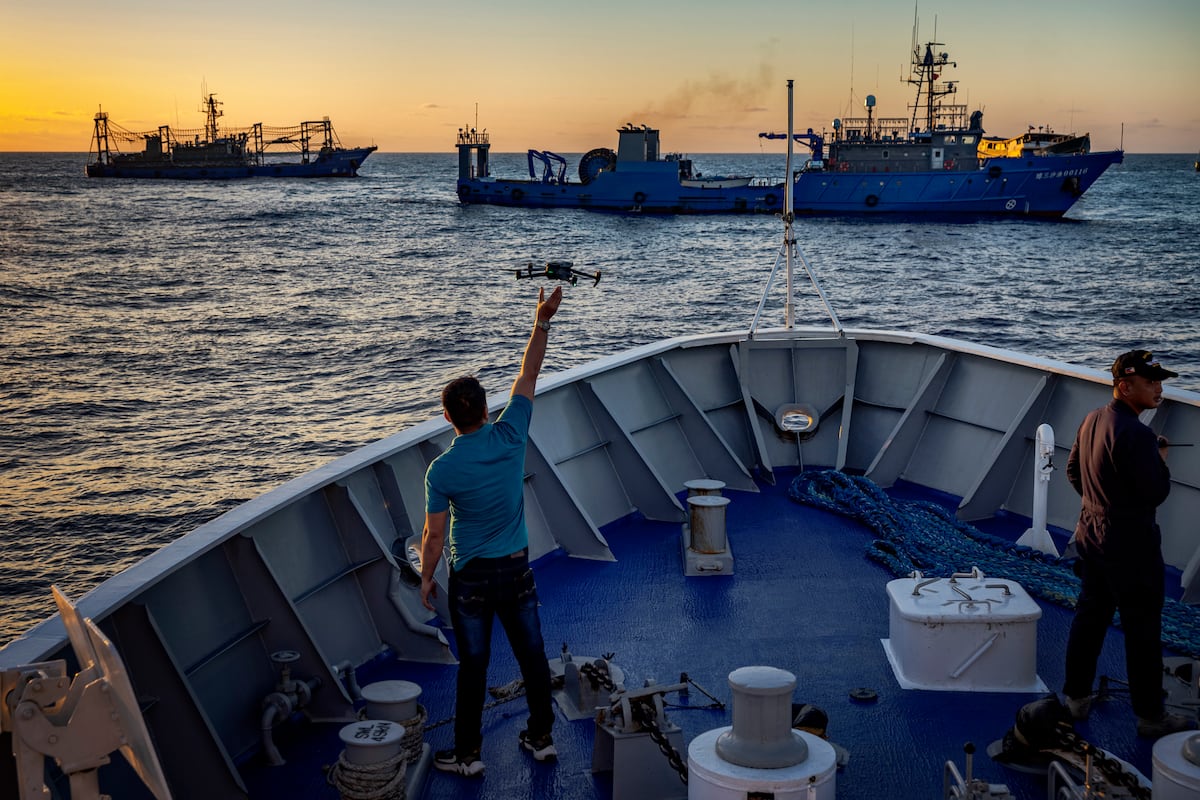
MANILA, Philippines — The Philippine Navy is exploring ways to monitor subsea cables as part of larger efforts to protect underwater infrastructure from sabotage and spying.
Numerous submarine cables crisscross the Philippines’ underwater domain, including cables that connect Southeast Asia to the United States, India and Hong Kong. Data that passes through these channels is vital for economics, trade and communications.
Navies across Southeast Asia have raised concerns over cable-cutting incidents reported in the Taiwan Strait, the Red Sea and the Baltic Sea.
For Philippine authorities, the sheer volume of reported incidents “exceeds the scope of accidents that are expected to be natural or incidental,” said Nestor Gerico, deputy director general of the Philippines’ National Security Council.
“These incidents are not random,” Gerico said. “These are potential acts of aggression.”
High-level policy discussions between the government and the country’s security forces about countermeasures have already begun, according to Navy inspector general Rear Adm. Roy Vincent Trinidad. Ultimately, the responsibility of protecting subsea infrastructure will fall under the purview of the sea service.
While specific capabilities have not been disclosed, Trinidad said that surveillance would entail capturing detailed imagery of underwater terrains to establish seabed profiles and monitor environmental changes over time.
“That would give us further reasons to focus on specific areas,” Trinidad said. “It is still in the exploratory stages, but we have been conducting exercises on this with other navies, especially with our defense treaty ally, the United States,” he added.
In 2024, the Philippines acquired four MANTAS T-12 unmanned surface vessels from the United States to boost maritime surveillance. The small, electric, submersible drones are capable of monitoring underwater territories and are equipped with cameras, sonars, lidars and modems.
Besides the outright destruction of seafloor lines of communication, the Philippine Navy is wary of another threat: adversaries hacking or tapping into the cables to steal data flowing through them.
Although reports are limited, submarine cable tapping has taken place in the Mediterranean Sea, and according to Trinidad, this could also happen in the Philippines.
Forensic investigations of underwater drones discovered along key maritime corridors could be linked to the apprehension of suspected sleeper agents and espionage operations across the archipelago in previous years, he said.
“There are ways to listen to what is being transferred in different undersea cables. And hostile groups could tap into those cables,” Trinidad said.
Lawmakers here have claimed to have information on a large network of sleeper agents from China and the presence of members of the People’s Liberation Army within the country.
The Chinese Embassy in Manila called the allegations“baseless speculation and accusation.”
After a pivot to external defense, the Philippines has undertaken several measures to protect critical infrastructure. In 2024, the defense department and the military banned the use of Chinese social media apps among soldiers, a prelude to a long-running crackdown on espionage activities.
Local courts are currently adjudicating cases involving 13 Chinese nationals, along with five Filipino and one Cambodian accomplice, who have been apprehended on suspicion of espionage.
Suspects were caught taking photos of critical military infrastructures in Luzon and of American ships docking in Subic Bay.
The underwater domain faces similar threats, authorities say, after six to seven drones with Chinese markings were washed ashore and collected by fishermen in previous years.
The Navy had received reports of drone activities as early as five years ago, but incidents only raised suspicions in 2023 after a drone was sighted in the Kalayaan Island Group, a chain of Philippine-controlled maritime features including Pag-asa Island (Thitu Island) in the South China Sea.
Drones have also been collected from the Philippine Sea in the country’s east, which flows into the East China Sea and the Pacific. The waterways saw increased traffic from Chinese research vessels and warships, including the PLA Navy’s Liaoning aircraft carrier.
Forensic investigation indicates that one of these drones sent information to a private firm in China. The naval drones collect dual-use information which could be used for research. But experts believe they are being released in Philippine waters to map out major mobility corridors for military use.
That data is a prerequisite for naval assets, like submarines, to safely enter Philippine waters, Rommel Jude Ong, professor at the Manila-based Ateneo de Manila University, told Defense News. Ong is a former rear admiral of the Philippine Navy and retired as vice commander in 2019.
“If the drones are for scientific purposes and launched without malice, operators should have claimed them after military reports, but nobody came out and claimed the drones, so it’s not for scientific reasons — these are covertly released for naval and military reasons,” Ong said.
In recent years, the Navy here has increased surveillance and monitoring operations and has steadily expanded its surface fleets and missile systems. The military has developed drone units and officials mentioned plans to acquire counter-drone tech, but specifics are sparse.
The defense department did not disclose planned acquisitions in the ongoing third phase of its modernization plan. But Trinidad said the shopping list includes both manned and unmanned platforms for subsea monitoring since the “underwater domain is a necessary capability.”
Leilani Chavez is an Asia correspondent for Defense News. Her reporting expertise is in East Asian politics, development projects, environmental issues and security.
菲律宾马尼拉——菲律宾海军正在探索监控海底电缆的方法,这是保护水下基础设施免受破坏和间谍活动的更大努力的一部分。
菲律宾海底遍布众多海底电缆,其中包括连接东南亚与美国、印度和香港的电缆。通过这些电缆传输的数据对经济、贸易和通信至关重要。
东南亚各国海军对台湾海峡、红海和波罗的海发生的电缆切割事件表示关切。
菲律宾国家安全委员会副总干事内斯托·杰里科表示,对于菲律宾当局而言,报告的事件数量之多“已经超出了预期的自然或偶然事故的范围”。
“这些事件并非偶然,”杰里科说。“这些是潜在的侵略行为。”
据海军监察长罗伊·文森特·特立尼达少将称,政府与国家安全部队之间已就应对措施展开高级别政策讨论。最终,保护海底基础设施的责任将落在海军的管辖范围之内。
虽然具体能力尚未公开,但特立尼达表示,监视将包括捕捉水下地形的详细图像,以建立海底剖面并监测环境随时间的变化。
特立尼达表示:“这将使我们更有理由专注于特定领域。”他补充说:“目前仍处于探索阶段,但我们一直在与其他国家海军,特别是我们的防务条约盟友美国,就此进行演习。”
2024年,菲律宾从美国采购了四艘MANTAS T-12型无人水面艇,以加强海上监视能力。这些小型电动潜水艇能够监测水下区域,并配备了摄像头、声呐、激光雷达和调制解调器。
除了彻底破坏海底通信线路外,菲律宾海军还担心另一种威胁:敌方入侵或窃听电缆,窃取其中传输的数据。
虽然相关报道有限,但地中海已经发生过海底电缆窃听事件,据特立尼达称,这种情况也可能发生在菲律宾。
他表示,对在主要海上航道沿线发现的水下无人机的法医调查可能与前几年在群岛各地抓获的疑似潜伏特工和间谍行动有关。
特立尼达说:“有很多方法可以监听不同海底电缆传输的内容。敌对组织可能会窃听这些电缆。”
这里的立法者声称掌握了来自中国的庞大潜伏特工网络以及中国人民解放军成员在该国活动的情报。
中国驻马尼拉大使馆称这些指控是“毫无根据的猜测和指责”。
在转向对外防御之后,菲律宾采取了多项措施来保护关键基础设施。2024年,国防部和军方禁止士兵使用中国社交媒体应用程序,这标志着一项长期打击间谍活动的行动正式展开。
当地法院目前正在审理涉及 13 名中国公民以及 5 名菲律宾人和 1 名柬埔寨同伙的案件,他们因涉嫌从事间谍活动而被捕。
嫌疑人被抓获时正在拍摄吕宋岛的重要军事基础设施和停靠在苏比克湾的美国军舰。
当局表示,水下领域也面临类似的威胁,此前几年曾有六七架带有中国标记的无人机被冲上岸,并被渔民收集起来。
海军早在五年前就收到了有关无人机活动的报告,但直到 2023 年,在南海卡拉延群岛(菲律宾控制的一系列海上岛礁,包括帕加萨岛(蒂图岛))发现无人机后,才引起了人们的怀疑。
在菲律宾东部的菲律宾海(该海域流入东海和太平洋)也发现了无人机残骸。此外,中国科考船和军舰(包括解放军海军辽宁号航空母舰)在该水域的航行活动有所增加。
法证调查显示,其中一架无人机向中国一家私营公司发送了信息。这些海军无人机收集的军民两用信息可用于科研。但专家认为,它们被投放到菲律宾水域是为了绘制重要的军事机动通道地图。
马尼拉雅典耀大学教授罗梅尔·裘德·翁告诉《防务新闻》,这些数据是海军舰艇(例如潜艇)安全进入菲律宾水域的先决条件。翁曾任菲律宾海军少将,于2019年以副司令身份退役。
“如果这些无人机是出于科学目的且并非出于恶意而发射,那么操作人员应该在收到军方报告后认领这些无人机,但没有人出来认领,所以这不是出于科学目的——这些无人机是出于海军和军事目的而秘密释放的,”翁说。
近年来,驻扎于此的海军加强了监视和监控行动,并稳步扩充了水面舰艇和导弹系统。军方已发展无人机部队,官员们也曾提及采购反无人机技术的计划,但具体细节尚不清楚。
国防部并未透露正在进行的第三阶段现代化计划的具体采购方案。但特立尼达表示,采购清单包括用于水下监测的有人和无人平台,因为“水下领域是一项必要的能力”。
莱拉尼·查韦斯是《防务新闻》的亚洲记者。她的报道专长是东亚政治、发展项目、环境问题和安全。