After US move on Venezuela, analysts see rules-based order at risk美国对委内瑞拉采取行动后,分析人士认为基于规则的秩序面临风险
Defense News asked analysts in Europe and elsewhere to comment on the impact on the global rules-based order, the NATO alliance and Europe.
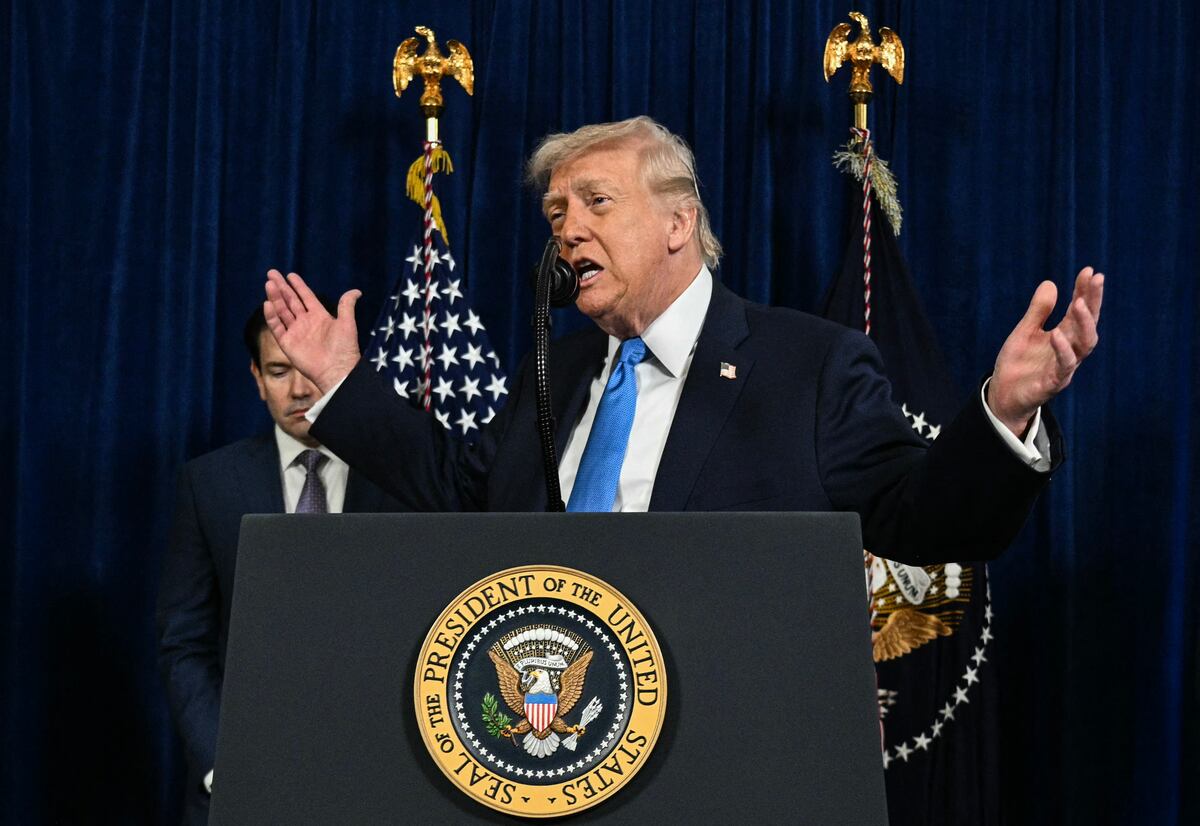
PARIS — Following the United States capture of Venezuelan President Nicolás Maduro in a strike over the weekend, and renewed comments by U.S. President Donald Trump claiming Greenland, Defense News asked analysts in Europe and elsewhere to comment on the impact on the global rules-based order, the NATO alliance and Europe. Below is a selection of comments gathered via email and by phone, and some posted on social media:
How the U.S. action impacts the rules-based international order:
“This is a flagrant violation of international law, which was developed to ensure peace and security in the world,” said Jean-Pierre Maulnay, deputy director at the French Institute for International and Strategic Affairs, or IRIS. “Beyond the legal aspects, the political consequences could be very damaging, specifically for us Europeans. It is now impossible to promote the message that Western democracies are meant to be held up as a model.”
“In kidnapping Maduro, the Trump administration purposely puts itself outside the international order,” said Sven Biscop, acting director-general of the Egmont Institute. “Instead of a multilateral order in which all states have a say (even though, of course, some are more equal than others), Trump seeks to divide the world between the U.S., Russia, and China.”
“If Europe wants to maintain a rule-based order, it will have to act itself to save it. Stop being afraid of the U.S. reaction, therefore: Trump’s NSS (National Security Strategy) is already a declaration of hostilities against the EU. The all too prudent reactions following Maduro’s kidnapping are a grave error of judgement: this is not about Venezuela, but about Trump’s strategy for the world.”
“It suffices to say that other states could be more emboldened to carry out actions to remove hostile foreign leaders — although few have the capabilities to pull it off as cleanly as the U.S. did,” said Giuseppe Spatafora, a research analyst at the European Union Institute for Security Studies.
“It is highly likely that recent U.S. action in Venezuela will embolden authoritarian states,” wroteTong Zhao, a senior fellow at the Carnegie Endowment for International Peace, in a post on X . “U.S. actions like the Venezuela operation allow authoritarian states to lower their threshold of acceptable behavior. (…) When international public opinion shifts toward tolerating more problematic behavior in general, authoritarian states are likely to act more boldly.”
“I’m not one to cite Thucydides all the time, but the saying, ”The strong do what they can and the weak suffer what they must,” bears repeating these days. Europe’s decision makers should take note,” said Fabian Hoffmann, doctoral research fellow at the Oslo Nuclear Project, University of Oslo, in a post on Bluesky .
“You cannot cheer America’s illegal attack on Venezuela while condemning Russia’s invasion of Ukraine and China’s threats against Taiwan,” wrote Jessica Berlin, a non-resident senior fellow at the Center for European Policy Analysis, on Bluesky . “Selective application of international law means no rule of law.”
The consequences for NATO:
“The trans-Atlantic partnership is only relevant as long as it serves U.S. interests,” said Hans Peter Michaelsen, an independent defense analyst and former member of the Royal Danish Air Force. “This means that European NATO allies must find a much closer cooperation and try to act together as the Euro pillar of NATO.”
“The United States’ security guarantee within NATO is becoming increasingly illusory,” said Maulnay at IRIS.
“NATO may continue to exist, but since Trump sees Russia as a partner rather than a threat, the alliance is not actually important to him,” said Biscop at the Egmont Institute.
“Minimizing public infighting among NATO allies is crucial, any visible discord plays right into Kremlin’s hands,” said Roger Hilton, a research fellow at GLOBSEC.
On the implications for Europe:
“Europeans should be reacting just like the group of Latin American countries are,” said Nathalie Tocci, Director at the Istituto Affari Internationali. “Through our ambiguity and silence we’re behaving as colonies, which can only tickle Trump’s imperial ambitions.”
“Europe’s stakes in the region go beyond Greenland: the Caribbean region includes EU territories such as Aruba, Curacao and French Guyana,” said Spatafora at the EUISS. “Also, the majority of cocaine flowing out of Colombia and Venezuela goes to Europe via the South Atlantic. Hence, Europe should be concerned about future developments, especially the risk of regional instability if Venezuela collapses or if other countries are targeted.”
“After this episode, it is becoming illusory to bring Vladimir Putin to the negotiating table to negotiate a balanced peace in Ukraine,” said Maulnay at IRIS. “It is a huge threat for European Union security.”
“Greenland remains a concern, even though the U.S. has not recently made any military moves towards the region,” said Spatafora. “It would be best for Europeans to show to the U.S. that attempting to foment a change in Greenland would be costly to Washington, it would be a disaster for allied cooperation and would be a gift to the Chinese and Russian presence in the region which the U.S. claims is a national security risk. All the U.S. goals can be attained through cooperation with Denmark and Europe. This may need to be shown not just in words but in actions.”
“Denmark has already begun revitalizing Greenland’s strategic capability through recent infrastructure and defense, benefitting both U.S. Arctic cooperation and economic opportunities,” said Hilton at GLOBSEC. “These and the prospect for deeper U.S.-Danish collaboration should be communicated to Trump’s special envoy Jeff Landry, who could help demonstrate that Denmark is taking concrete steps to address strategic gaps.”
On the impact for Taiwan:
“China was very surprised despite such a deployment of U.S. forces, because they saw it as a scare tactic similar to what they are doing with Taiwan,” said Francesco Sisco, director of the Appia Institute. Still, the country won’t see the U.S. action as a green light to invade Taiwan, he said. “The Chinese know that Taiwan is not a semi-failed state like Venezuela, they know that the U.S. and Japan are close to Taiwan – much closer than China was to Venezuela – and they know this was a surgical strike, which is beyond China’s capabilities. A full scale invasion of Taiwan would be a different ball game.”
“China already does not view a military takeover as violating international law, since it defines Taiwan as an internal matter,” said Zhao at the Carnegie Endowment for International Peace. |”Still, watching the international community accept recent U.S. actions will almost certainly convince Beijing that a military move against Taiwan would be far easier for the world to swallow.”
“For Trump, peace in Ukraine is not an objective in its own right, but an instrument to normalize relations with Russia,” said Biscop at the Egmont Institute. “For Putin, therefore, this American strategy is very good news. Has Trump indicated red lines to Putin? He certainly seems willing to sacrifice large parts of Ukraine.
“Thus far, Europe has been able to avoid a deal that would force too many concessions upon Ukraine. But what if for Trump even the sovereignty of certain current EU and NATO members is not a red line? Even if a peace agreement for Ukraine could be concluded, none of this serves to durably contain Russian ambitions.”
Rudy Ruitenberg is a Europe correspondent for Defense News. He started his career at Bloomberg News and has experience reporting on technology, commodity markets and politics.
Elisabeth Gosselin-Malo was a Europe correspondent for Defense News. She covers a wide range of topics related to military procurement and international security, and specializes in reporting on the aviation sector. She is based in Milan, Italy.
Tom Kington is the Italy correspondent for Defense News.
巴黎——继美国周末空袭抓获委内瑞拉总统尼古拉斯·马杜罗,以及美国总统唐纳德·特朗普再次声称对格陵兰岛拥有主权之后,《防务新闻》邀请欧洲及其他地区的分析人士就此事对全球基于规则的秩序、北约联盟和欧洲的影响发表评论。以下是通过电子邮件和电话收集的部分评论,以及一些发布在社交媒体上的评论:
美国此举如何影响基于规则的国际秩序:
“这公然违反了旨在维护世界和平与安全的国际法,”法国国际与战略事务研究所(IRIS)副所长让-皮埃尔·莫奈表示,“除了法律层面,其政治后果也可能非常严重,尤其对我们欧洲人而言。现在,我们再也无法宣传西方民主国家应被奉为典范了。”
埃格蒙特研究所代理所长斯文·比斯科普表示:“特朗普政府绑架马杜罗,是故意将自己置于国际秩序之外。特朗普没有寻求一个所有国家都有发言权的多边秩序(当然,有些国家比其他国家更平等),而是试图将世界划分为美国、俄罗斯和中国三方。”
“如果欧洲想要维护基于规则的秩序,就必须采取行动来拯救它。因此,不要再害怕美国的反应:特朗普的《国家安全战略》实际上已经是对欧盟的敌对宣言。马杜罗被绑架后过于谨慎的反应是一个严重的判断失误:这并非关乎委内瑞拉,而是关乎特朗普的世界战略。”
“可以说,其他国家可能会更有勇气采取行动,罢免敌对的外国领导人——尽管很少有国家有能力像美国那样干净利落地完成这项行动,”欧盟安全研究所的研究分析师朱塞佩·斯帕塔福拉说。
卡内基国际和平研究院高级研究员赵彤在X网站上发表文章称:“美国近期在委内瑞拉的行动极有可能助长威权国家的气焰。像委内瑞拉行动这样的美国举措,使得威权国家可以降低其可接受行为的门槛。(…)当国际舆论总体上倾向于容忍更多问题行为时,威权国家很可能会采取更加大胆的行动。”
“我并非总是引用修昔底德的话,但‘强者为所欲为,弱者受苦’这句格言在今天仍然值得重申。欧洲的决策者们应该注意这一点,”奥斯陆大学奥斯陆核能项目博士研究员法比安·霍夫曼在Bluesky网站上发表的一篇文章中写道。
“你不能一方面为美国非法入侵委内瑞拉而欢呼,另一方面又谴责俄罗斯入侵乌克兰和中国威胁台湾,”欧洲政策分析中心非常驻高级研究员杰西卡·柏林在Bluesky网站上写道。“选择性地适用国际法就意味着没有法治。”
对北约的影响:
“跨大西洋伙伴关系只有在符合美国利益的情况下才有意义,”独立国防分析师、丹麦皇家空军前成员汉斯·彼得·米凯尔森表示,“这意味着欧洲北约盟国必须寻求更紧密的合作,并努力共同发挥北约欧洲支柱的作用。”
“美国在北约内部的安全保障正变得越来越虚幻,”IRIS 的 Maulnay 表示。
“北约可能会继续存在,但由于特朗普将俄罗斯视为伙伴而不是威胁,因此该联盟对他来说实际上并不重要,”埃格蒙特研究所的比斯科普说。
“尽量减少北约盟国之间的公开内讧至关重要,任何公开的不和都正中克里姆林宫的下怀,”全球安全组织 (GLOBSEC) 的研究员罗杰·希尔顿 (Roger Hilton) 说。
对欧洲的影响:
“欧洲人的反应应该和拉丁美洲国家一样,”国际事务研究所所长娜塔莉·托奇说。“我们的模棱两可和沉默,使我们的行为如同殖民地,这只会助长特朗普的帝国野心。”
“欧洲在该地区的利益远不止格陵兰岛:加勒比地区还包括欧盟领土,例如阿鲁巴、库拉索和法属圭亚那,”欧盟战略研究所的斯帕塔福拉表示。“此外,从哥伦比亚和委内瑞拉流出的大部分可卡因都经由南大西洋流入欧洲。因此,欧洲应该关注未来的发展,特别是如果委内瑞拉崩溃或其他国家成为攻击目标,该地区可能面临的不稳定风险。”
“在这次事件之后,让弗拉基米尔·普京回到谈判桌前,就乌克兰问题达成平衡和平的设想已经变得不切实际,”IRIS的莫尔奈表示。“这对欧盟安全构成了巨大威胁。”
“尽管美国近期并未对格陵兰地区采取任何军事行动,但格陵兰问题仍然令人担忧,”斯帕塔福拉说道。“欧洲人最好向美国表明,试图在格陵兰挑起事端将令华盛顿付出沉重代价,对盟国合作将是一场灾难,而且无异于为中国和俄罗斯在该地区的存在送上一份大礼——而美国声称中国和俄罗斯的存在对国家安全构成威胁。美国的所有目标都可以通过与丹麦和欧洲的合作来实现。这不仅需要体现在言辞上,更需要体现在行动上。”
“丹麦近期已开始通过基础设施和国防建设来重振格陵兰的战略能力,这既有利于美国的北极合作,也有利于其带来的经济机遇,”希尔顿在GLOBSEC会议上表示。“这些以及美丹深化合作的前景应该传达给特朗普的特使杰夫·兰德里,他可以帮助证明丹麦正在采取切实措施来弥补战略差距。”
对台湾的影响:
“尽管美军部署如此规模,中国仍然感到非常意外,因为他们认为这是一种类似于美军对台恐吓的策略,”阿皮亚研究所所长弗朗西斯科·西斯科表示。不过,他指出,中国不会将美国的行动视为入侵台湾的绿灯。“中国人知道台湾不像委内瑞拉那样是一个半失败国家,他们知道美国和日本与台湾的距离比中国与委内瑞拉的距离近得多,他们也知道这是一次外科手术式打击,超出了中国的能力范围。全面入侵台湾将是另一回事。”
赵在卡内基国际和平研究院表示:“中国并不认为军事接管违反国际法,因为它将台湾视为内政。” |“然而,看到国际社会接受美国近期的行动,几乎肯定会让北京相信,对台湾采取军事行动更容易被国际社会接受。”
埃格蒙特研究所的比斯科普表示:“对特朗普而言,乌克兰和平本身并非目标,而是实现与俄罗斯关系正常化的手段。因此,对普京来说,美国的这一战略无疑是个好消息。特朗普是否向普京划定了红线?他似乎确实愿意牺牲乌克兰的大片领土。”
“迄今为止,欧洲一直能够避免达成一项会迫使乌克兰做出过多让步的协议。但如果对特朗普来说,连某些欧盟和北约成员国的主权都不是他的底线呢?即便能够达成乌克兰和平协议,这一切也无法从根本上遏制俄罗斯的野心。”
鲁迪·鲁伊滕贝格是《防务新闻》的欧洲记者。他的职业生涯始于彭博新闻社,拥有报道科技、大宗商品市场和政治方面的经验。
伊丽莎白·戈斯林-马洛曾任《防务新闻》欧洲通讯员。她的报道涵盖军事采购和国际安全等广泛领域,尤其擅长航空领域的报道。她常驻意大利米兰。
汤姆·金顿是《防务新闻》驻意大利记者。