Swedish military sharpens its focus on submarine tech in 2024瑞典军方在2024年将重点放在潜艇技术上
The country's Navy wants new capabilities for its new submarine fleet and for countering sea mines.
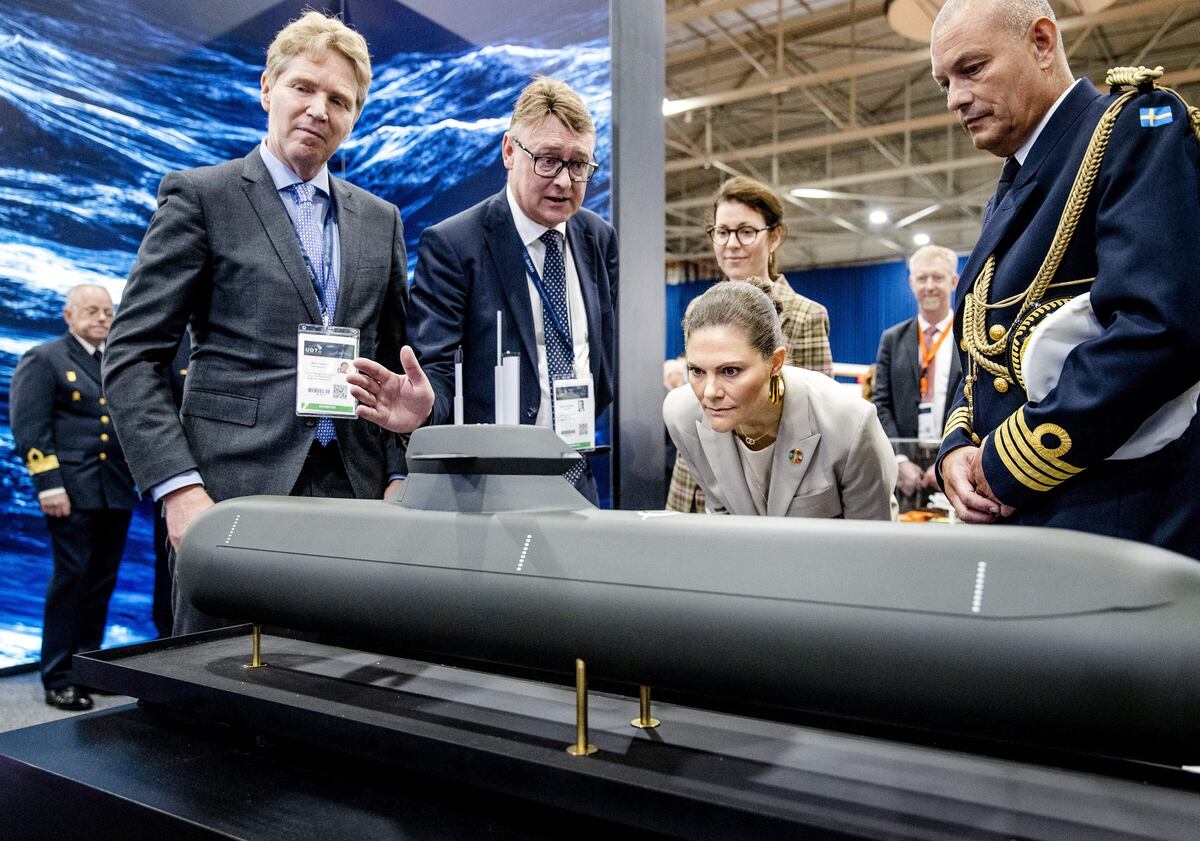
MILAN — Sweden plans to prioritize research on underwater technologies like mine countermeasures and submarine-related systems in 2024, with studies pending on the Navy’s capabilities in that domain.
Swedish defense contractor Saab announced Dec. 5 it had signed a contract with the country’s defense acquisition agency to conduct concept development studies focused on new technologies for submarine-related capabilities.
“This contract should be viewed as one step of a long-term plan to secure underwater capabilities for Sweden,” company spokesman Conal Walker told Defense News. “Saab will study needs and possibilities for the future underwater domain, and this will include various concepts and technologies related to both current and future capabilities.”
Meanwhile, the study’s results could find application in the company’s ongoing work on Sweden’s new submarines.
Saab signed a deal in 2015 with the Swedish Defence Materiel Administration to build two new Type A26 submarines for the country’s naval forces. The project has experienced several delays; the delivery date of the first submarine was initially scheduled for this year, but has reportedly been postponed to the 2027-2028 time frame.
If Sweden’s pending NATO membership is approved, one of the key defense assets Stockholm can contribute to the alliance is its experience in navigating the Baltic Sea, a vulnerable area shared with Russia.
The Swedish Navy currently operates five diesel-electric submarines. Once the new boats are completed, they will offer the capability to release unmanned underwater vehicles and special forces for improved subsurface operations.
Meanwhile, Swedish defense officials are also interested in the acquisition of light, autonomous, underwater vehicles to meet the mine countermeasure needs of its armed forces. A notice to that effect was published Dec. 4 by the Tenders Electronic Daily, an European online catalog of public procurements. It noted the envisioned underwater drones will cost about $14 million and must be light enough for crews to handle while riding in rigid inflatable boats.
Nations are increasingly turning to drones for the dangerous work of disabling sea mines.
NATO’s Centre for Maritime Research and Experimentation, based in Italy, has been conducting tests to determine how feasible the use of high-resolution sonars mounted on sea drones is for the identification and classification of mines.
Elisabeth Gosselin-Malo was a Europe correspondent for Defense News. She covers a wide range of topics related to military procurement and international security, and specializes in reporting on the aviation sector. She is based in Milan, Italy.
米兰——瑞典计划在 2024 年优先研究水下技术,例如水雷对抗措施和潜艇相关系统,目前正在研究海军在该领域的能力。
瑞典国防承包商萨博公司于 12 月 5 日宣布,已与该国国防采办机构签署合同,开展以潜艇相关能力新技术为重点的概念开发研究。
“这份合同应被视为瑞典水下作战能力长期计划中的一步,”公司发言人科纳尔·沃克告诉《防务新闻》。“萨博将研究未来水下领域的需求和可能性,这将包括与当前和未来能力相关的各种概念和技术。”
与此同时,该研究成果可应用于该公司正在进行的瑞典新型潜艇项目。
2015年,萨博公司与瑞典国防物资管理局签署协议,为瑞典海军建造两艘新型A26型潜艇。该项目曾多次延期;首艘潜艇原定于今年交付,但据报道已推迟至2027-2028年。
如果瑞典加入北约的申请获得批准,斯德哥尔摩能够为北约贡献的关键国防资产之一是其在波罗的海(与俄罗斯共享的脆弱海域)的航行经验。
瑞典海军目前拥有五艘柴电潜艇。新潜艇建成后,将具备释放无人水下航行器和特种部队的能力,从而提升水下作战能力。
与此同时,瑞典国防部长也对采购轻型自主水下航行器感兴趣,以满足其武装部队的扫雷需求。欧洲公共采购在线目录《招标电子日报》(Tenders Electronic Daily)于12月4日发布了相关公告。公告指出,拟购的水下无人航行器造价约为1400万美元,且必须足够轻便,以便乘员在硬壳充气艇上操作。
各国越来越多地使用无人机来执行清除水雷这项危险的工作。
位于意大利的北约海洋研究与实验中心一直在进行测试,以确定在海上无人机上安装高分辨率声呐用于识别和分类水雷的可行性。
伊丽莎白·戈斯林-马洛曾任《防务新闻》欧洲通讯员。她的报道涵盖军事采购和国际安全等广泛领域,尤其擅长航空领域的报道。她常驻意大利米兰。