Take A Rare Glimpse Inside The Navy’s Massive Blue Ridge Class Command Ships难得一见的美国海军巨型蓝岭级指挥舰内部景象
Inside what some would consider the most important vessels in the entire U.S. Navy and the nerve centers of the fleet.
新闻视频
Updated Jan 22, 2018 8:38 PM EST
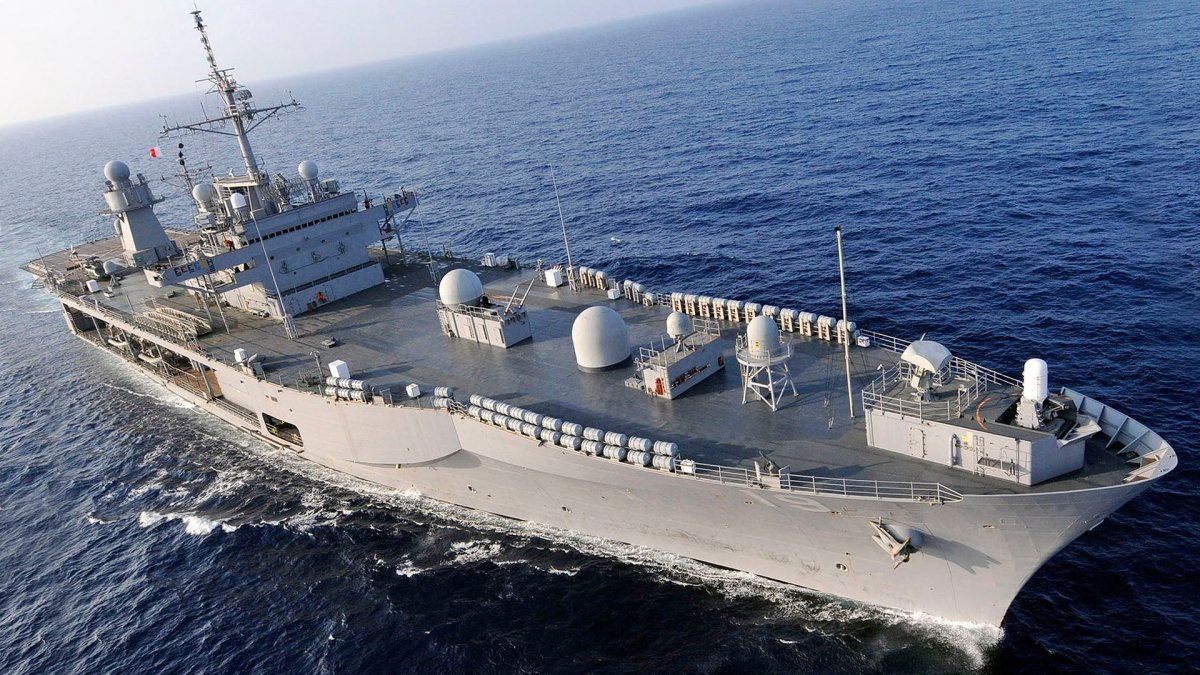
USS Blue Ridge (LLC-19), now the oldest ship in the U.S. Navy’s operational fleet, has just has just emerged from an extended dry-dock maintenance and upgrade period at its home port in Yokosuka, Japan. During the 19 month overhaul the ship received a slew of changes, including structural and mechanical modifications, and a major upgrade to her main battery—a massive ecosystem of state-of-the-art computer networks and interfaces, and the most advanced communications system in the fleet.
Namely the ship acquired the proprietary Consolidated Afloat Networks and Enterprise Services (CANES) system which will greatly enhance its capabilities, security, interoperability, and future adaptability. Overall the work will ensure that the ship remains viable for another two decades, by which time she will have been in active service for nearly 70 years.
The Blue Ridge class, which is made up of two ships, USS Blue Ridge and USS Mount Whitney, are in some ways the most antiquated of US Navy ships, but in other ways they are the most advanced. As a platform they are based around 1960s technology, but the computer systems and communications links they carry are leading-edge.
The ships were designed in the 1960s from the keel up to be command and control vessels with a heavily reliance on computer systems and high-end communications. Originally their mission was to command wide-scale amphibious operations, but over the years, as joint warfighting doctrine evolved, they became capable of much more than that and their importance has increased because of it.
Today the ships are spread between the western and eastern hemispheres, where the Japan-based USS Blue Ridge acts as the flagship of the 7th Fleet and USS Mount Whitney, which is based in Gaeta, Italy, acts as the flagship for the 6th Fleet and as a command ship for the NATO alliance.
The vessels are supposedly the most sophisticated Command, Control, Communications, Computer, and Intelligence (C4I) ships ever created, but the public really only sees their massive exteriors—measuring some 620 feet in length and displacing 18,400 tons—which are dotted with large satellite communications domes and antenna.
The question of what’s inside these ships has actually come up in more than a dozen separate emails I have received over the years, so I thought it would be finally worth digging into photo archives to see if I could build some sort of overall picture of what the interior of these ships is like.
Although images of the ships’ mission areas were very limited, what we found gave the depiction of a unique shipboard environment made up of multiple briefing and collaboration areas, as well as real-time situational awareness and command and control centers. One thing was common throughout all of these sections—there are lots and lots of computer terminals. This really isn’t surprising, but offers a little different atmosphere than the purpose-built proprietary consoles we are used to seeing in modern surface combatants’ glowing Combat Information Centers (CICs).
Basically, these ships are something loosely akin to the Combined Air Operations Centers (CAOCs) that are used to integrate air wars, and the ground war below to some degree, over wide geographical areas. And like CAOCs, the Blue Ridge class has been adapted to fully support coalition operations, with representatives from countries involved being deployed aboard during those operations. But the big difference is that CAOCs are based on land, not on roving ships, and they aren’t optimized for fighting in maritime and amphibious environments.
The vessels, which are based on the Iwo Jima class hullform and can keep up with an Amphibious Strike Group, are also comparatively spacious, and there are generous accommodations for flag officers and other higher-ups. According to this image the flag officer’s quarters even has a fireplace. But these are still fighting ships that would operate in the vicinity of a flotilla during combat, and are equipped with a pair of Phalanx close-in weapon systems, remote 25mm chain gun turrets, along with .50 caliber machine-gun stations for force protection. The ships also have decoy launchers and electronic warfare suites to help fend off anti-ship missile attacks.
An MH-60S is usually deployed aboard as well for logistics and liaison duties, although there isn’t a hangar. The ship can store a whopping 123,000 gallons of aviation fuel. Other features include fin-stabilizers for a smooth ride, kevlar armor, and the ability to carry a handful of small landing craft and boats.
But once again, these ships are giant floating warfighting brains of sorts, and their mission is to provide command and control and the best information possible to commanders who will have to make the hard calls as a battle unfolds. They can also redistribute key information they receive via their satellite communications systems to the fleet.
Considering that their C4I systems are so powerful, and increasingly so, you can see how these vessels could potentially play a new high-stakes combat role via cyber warfare in the future.
Commanders will have new weapons in their quiver to put to use during future conflicts, and it is very possible that they will be able to command the deployment of those weapons from these vessels, striking at the heart of the enemy’s own C4I capabilities using cyber warheads instead of explosive ones.
With this in mind, these ships, and the networks they rely on, will also be increasingly targeted by the enemy using their own forms of electronic warfare and cyber attacks. This makes agile implementation of defensive countermeasures, or even kinetically killing the enemy’s ability to deploy such attacks before they can occur, absolutely key. It is fairly logical to think that these half century old vessels, and the commanders that sail on them, are adapting to this changing combat reality.
We come back to the question of what does it look like inside an old ship that is capable of carrying out such a modern mission? Especially one that accommodates 250 officers and 1200 enlisted crew (but usually the ships sail with about half that complement for peacetime operations), and up to 3,000 people in an emergency. We’ve put together this tour of sorts of the Blue Ridge class, including pictures from both ships’ primary internal areas, to try an answer that question. Obviously there are areas in these ships that are classified, likely including the large server farms, intelligence exploitation areas, and other facilities that make them so capable. But still, what we could find is quite interesting.
First off, we discovered a couple good quality video showing some areas inside the ship:
The heart of the ship mission-wise is a command and control facility called the Joint Operations Center. It is here that much of the filtered and critical information collected by the ship’s C4I systems is displayed on large screens in a theater-type layout. This is likely where the flag officers would monitor major operations.
Mediterranean Sea (June 16, 2005) – Joint Operations Center watch standers review the latest battle assessment while participating in Combined Joint Task Force Exercise (CJTFEX) 04-2 aboard the command ship USS Mount Whitney (LCC 20)., USN
Bay of Gaeta, Italy (Aug. 21, 2006) – Members of Joint Task Force (JTF) Lebanon attend the commander’s update briefing in the Joint Operations Center aboard the amphibious command ship USS Mount Whitney (LCC/JCC 20). U.S. European Command has been directed by the Department of Defense to assume authority for U.S. military support operations in the vicinity of Lebanon and the eastern Mediterranean effective Aug. 23, 2006. Joint Task Force Lebanon will continue to assist the U.S. Embassy in Beirut and will be postured to support humanitarian relief operations., USN
Atlantic Ocean (Jan. 17, 2006) – USS Mount Whitney (LCC 20) Commanding Officer Captain Ladd Wheeler, provides the Liberian President Ellen Johnson-Sirleaf an overview of the ship’s capabilities from the Joint Operation Center. President Johnson-Sirleaf visited Mount Whitney the day after her inauguration, to thank the crew for making the journey in support of her countries inaugural ceremonies. President Johnson-Sirleaf is the first woman to be elected as head of an African state., USN
There are also smaller command centers scattered throughout the ship, like this one that focuses specifically on air operations called the Tactical Air Control Center.
Santa Rita, Guam (Apr. 22, 2003) — Aboard USS Blue Ridge (LCC-19), aircraft and ships are tracked on screen utilizing the Area Air Defense Coordinator. The Blue Ridge is one of many ships participating in Tandem Thrust ’03. Tandem Thrust ‘03 is a joint exercise conducted in the Marianas Islands. This exercise is a joint military exercise including forces from the United States, Canada and Australia., USN
Members of a joint U.S.-Australian civil affairs team discuss the logistics of a Red Cross contingent delivering supplies and humanitarian aid to a simulated refugee camp as part of exercise Talisman Saber 2007. During TS07, amphibious command ship USS Blue Ridge is the command and control center and provides personnel support. TS07 is a U.S. and Australian-led Joint Task Force exercise designed to demonstrate the U.S. and Australian commitment to our military alliance and regional security. Blue Ridge is forward deployed out of Yokosuka, Japan, and serves as the flagship for U.S. Seventh Fleet., USN
The operations elements are scattered around large rooms with individual computer workstations very similar to what could be found in a CAOC, with different focuses and representatives assigned to each station or clusters of stations. Foreign allies are also represented here as well when they are involved in an operation.
MEDITERRANEAN SEA (Jan. 30, 2009) A multi-service planning team embarked aboard the amphibious command ship USS Mount Whitney (LCC 20) prepare their portion of the planning phase of Austere Challenge 2009, a joint evolution designed to exercise U.S. capability across the full range of military operations in the European theater., USN
A large briefing room with a video wall also exists. This area seems to be used for both internal briefings and to brief members of the press if they are deployed aboard the ship during major operations.
Chief Yeoman Gabriel Sanchez teaches a Alcohol and Drug Abuse Managers (ADAMS) course on board the U.S. 7th Fleet flagship USS Blue Ridge (LCC 19). ADAMS is designed to inform supervisors about the dangers and effects of drugs and alcohol, and the prevention of alcohol and drug related incidents., USN
English: The Commanding Officer of U.S. 7th Fleet flagship USS Blue Ridge (LCC 19) Capt. Daniel Grieco, addresses a group of media from the Republic of the Philippines in the Fleet Conference room after the ship pulls into Manila for a port visit. While in port, Blue Ridge and embarked 7th Fleet staff sailors and Marines will strengthen ties between the two countries through community service events, combined military training and cultural exchanges., USN
Commander, U.S. 7th Fleet, Vice Adm. Doug Crowder speaks to reporters aboard amphibious command ship USS Blue Ridge (LCC 19) along with Australian army Major Gen. Richard Wilson. Crowder and Wilson, the two senior leaders of Talisman Saber 07 (TS07), held a press conference to discuss and answer questions about the bilateral exercise underway between the two countries. TS07 involves more than 30,000 troops and dozens of ships and aircraft., USN
Many other collaborative spaces seem to be scattered throughout the ship, including various boardroom-like environments.
MEDITERRANEAN SEA (March 21, 2011) Liaison officers from coalition countries meet with Joint Task Force Odyssey Dawn staff members aboard the amphibious command ship USS Mount Whitney (LCC/JCC 20) to discus command and control of military operations. Odyssey Dawn is the U.S. Africa Command task force established to provide operational and tactical command and control of U.S. military forces supporting the international response to the unrest in Libya and enforcement of United Nations Security Council Resolution (UNSCR) 1973., USN
SYDNEY, Australia (July 4, 2015) – Vice Adm. Robert L. Thomas, commander, U.S. 7th Fleet, speaks with senior navy and army enlisted leaders from Australia, New Zealand and the U.S 7th Fleet during a senior enlisted “roundtable” aboard the U.S. 7th Fleet flagship USS Blue Ridge (LCC-19) before the start of the Australia-U.S. exercise Talisman Saber 2015. Talisman Saber is a biennial combined joint exercise designed to improve Australian and U.S. combat readiness and interoperability, maximize combined training opportunities and demonstrate U.S. resolve to support the security operations of a key ally. , USN
SYDNEY, Australia (July 3, 2015) – Australian Prime Minister Tony Abbott, center, receives an introduction brief from Vice Adm. Robert Thomas, U.S. 7th Fleet commander, during a tour of the U.S. 7th Fleet flagship USS Blue Ridge (LCC-19) before the start of the Australia-U.S. exercise Talisman Saber 2015. Talisman Saber is a biennial combined joint exercise designed to improve Australian and U.S. combat readiness and interoperability, maximize combined training opportunities and demonstrate U.S. resolve to support the security operations of a key ally. , USN
Swedish armed forces Maj. Ebba Mårtensson delivers a weather report to the upper chain of command onboard USS Mount Whitney in support of Baltic Operations exercise 2009. When Mårtensson is not supporting joint naval operations, she is the weather forecaster for two national TV channels, the Swedish equivalent to America’s Public Broadcasting System. This is the 37th Iteration of BALTOPS and is intended to improve interoperability with partner countries by conducting realistic training at sea with the 12 participating nations. Mount Whitney, home ported in Gaeta, Italy, is the flagship for Commander, U.S. Sixth Fleet and routinely operates throughout the U.S. Sixth Fleet area of responsibility with a hybrid crew of U.S. Sailors and Military Sealift Command civilian mariners., USN
Beyond the ship’s mission areas, the bridge is something of a time capsule from earlier times. There is also a traditional Combat Information Center used to keep the vessel safe while performing its primary tasks and to integrate with the more heavily armed vessels in its vicinity.
SASEBO, Japan (Aug. 6, 2015) – Lee Helmsman, Seaman Joe Torres, attached to the U.S. 7th Fleet flagship USS Blue Ridge (LCC 19), monitors the ship’s speed and course as it arrives in Sasebo. Blue Ridge is conducting a port visit in Sasebo while patrolling the 7th Fleet area of operations strengthening and fostering relationships within the Indo-Asia Pacific region., USN
SINGAPORE – Capt. Kyle P. Higgins, commanding officer of the U.S. 7th Fleet flagship USS Blue Ridge, conducts a ship tour with Indonesian Rear Adm. Darwanto S.H., Tentara Nasional, Indonesia Eastern Fleet and Singaporean Col. Chuen Hong Lew, commander, Republic of Singapore Fleet. Blue Ridge is conducting a port visit in Singapore to build multilateral partnerships, volunteer through community service projects and explore everything Singapore has to offer, strengthening relationships with the people., USN
The big cheese’s seat on the bridge of the USS Blue Ridge., USN
Aboard USS Blue Ridge (LCC 19) Aug. 30, 2003 — Operations Specialist 3rd Class Ji Young An, from Frederick, Md., updates the bridge surface contact status board on the bridge of the amphibious command ship USS Blue Ridge (LCC 19)., USN
Operations specialist Petty Officer 3rd Class Glenn Mupas, assigned to the amphibious command ship USS Blue Ridge, changes the view on the camera to observe an approaching security boat while standing bridge status board watch as Blue Ridge pulls into Okinawa, Japan, during her routine spring patrol., USN
PACIFIC OCEAN (Oct. 19, 2009) Cryptologic Technician (Technical) Seaman Jennifer Pastor stands watch at the AN/SLQ-32A(V) Surface Electronic Support/Electronic Attack (ES/EA) console in the Combat Information Center (CIC) aboard the amphibious command ship USS Blue Ridge (LCC 19). The SLQ-32 or “slick thirty-two” is an anti-ship-missile-defense (ASMD) system. Blue Ridge is the flagship for Commander, U.S. 7th Fleet. , USN
Petty Officer 3rd Class Eric Castillo, operations specialist, plots course markings on a digital dead reckoning tracer in the combat information center aboard the U.S. 7th Fleet command ship USS Blue Ridge. Blue Ridge serves under Commander, Expeditionary Strike Group 7/Task Force 76, the Navy’s only forward deployed amphibious force., USN
Seaman Armando Ocampo, assigned to the amphibious command ship USS Blue Ridge (LCC 19), monitors air traffic on an air search radar in the ships’ combat information center., USN
Beyond its unique capabilities, USS Mount Whitney and USS Blue Ridge are a lot like any other Navy vessel, although they may be a bit more roomy in some areas. Here are some photos from day-to-day operations aboard the ships.
Petty Officer 2nd Class Jeffrey Bennett, information systems technician, left, and Petty Officer 2nd Class Joseph Camino, information systems technician, observe the proper configuration of a high-frequency radio aboard the amphibious command ship USS Mount Whitney. Mount Whitney is the U.S. 6th Fleet flagship homeported in Gaeta, Italy, and operates with a hybrid crew of U.S. sailors and Military Sealift Command civil service mariners., USN
U.S. Navy Gunner’s Mate 3rd Class James Vest fires a Mk 38 25 mm machine gun during a live-fire exercise aboard the U.S. 7th Fleet flagship USS Blue Ridge (LCC-19) in the South China Sea. Blue Ridge was on patrol in the South China Sea with embarked U.S. 7th Fleet staff., USN
Sailors and Marines assigned to the U.S. 7th Fleet flagship USS Blue Ridge honor guard, stand ready to parade the colors as the ship arrives in Jakarta, Indonesia. These port visits represent an opportunity for Blue Ridge to serve as goodwill ambassadors of the U.S.; promoting peace and stability in the region and demonstrating the commitment to regional partnerships and fostering relations., USN
Australian Prime Minister Tony Abbott visits the ship’s store of the U.S. 7th Fleet flagship USS Blue Ridge (LCC-19) during a tour before the start of the Australia-U.S. exercise Talisman Saber 2015. Talisman Saber is a biennial combined joint exercise designed to improve Australian and U.S. combat readiness and interoperability, maximize combined training opportunities and demonstrate U.S. resolve to support the security operations of a key ally., USN
JAVA SEA (May 30, 2014) U.S. 7th Fleet flagship USS Blue Ridge (LCC 19) conducts a replenishment-at-sea with the Military Sealift Command dry cargo and ammunition ship USNS Charles Drew (T-AKE 10). Blue Ridge is on patrol in the Java Sea. , USN
Machinist’s Mate Fireman Ruben Aguilar and Machinist’s Mate 3rd Class Jason Whitehead conduct a pressure check by reading gauges in the engine room aboard the amphibious command ship USS Blue Ridge (LCC 19) during sea trials. Sea trials are conducted after a ship’s repair availability to extend the life of the ship., USN
At sea aboard USS Mount Whitney (LCC/JCC 20) Apr. 5, 2003 — Mess Management Specialist Seaman Danielle Webb, from Due West, S.C., prepares a taco lunch on the mess line in Mount Whitney’s Enlisted Galley. Mount Whitney and her embarked staff are deployed to the Horn of Africa region, participating in Operation Enduring Freedom and the global war on terrorism. , USN
BALTIC SEA (Sept. 17, 2010) A Lithuanian MI-8 (Hip) military utility helicopter lands aboard the amphibious assault ship USS Mount Whitney (LCC/JCC 20) during deck landing qualification training as part of exercise Jackal Stone 2010 (JS10). JS10 is a 10-day special operations exercise intended to promote cooperation and interoperability between participating forces from Croatia, Latvia, Lithuania, Poland, Romania, Ukraine, and the United States., USN
PACIFIC OCEAN – Logistics Specialist 2nd Class Alex Flores, attached to the U.S. 7th Fleet flagship USS Blue Ridge, gets his hair cut by Ship’s Serviceman 3rd Class Xavier Johnson. Blue Ridge is currently underway conducting unit level training to assess the crew on damage control, force protection and seamanship in preparation for upcoming patrols in the 7th Fleet area of operation., USN
Small arms training on the fantail of USS Blue Ridge. , USN
At sea aboard USS Mount Whitney (LCC/JCC 20) Apr. 11, 2003 — Chief Photographer’s Mate Eric Hainey, from Sioux City, Iowa, is spotted by Illustrator Draftsman 2nd Class Ernie Dwight, from Queens N.Y., during a weight lifting workout in one of Mount Whitney’s gym facilities. Mount Whitney and her embarked staff are deployed to the Horn of Africa region, participating in Operation Enduring Freedom and the global war on terrorism. , USN
Machinist’s mates monitor gauges in the engine room aboard the amphibious command ship USS Blue Ridge (LCC 19) during sea trials. Sea trials are conducted after a ship’s repair availability to extend the life of the ship., USN
PACIFIC OCEAN Seaman Marlon Cook, assigned to the U.S. 7th Fleet flagship USS Blue Ridge, carries a net in preparation for a vertical replenishment certification. Blue Ridge is currently underway conducting unit level training to assess the crew on damage control, force protection and seamanship in preparation for upcoming patrols in the 7th Fleet area of operation., USN
Senior Chief Master-at-Arms Michael Goodfellow trains U.S. Navy Academy Midshipmen and Australian Navy officers on proper weapon handling aboard U.S. 7th Fleet flagship USS Blue Ridge (LCC 19). Blue Ridge currently on patrol in the Indo-Asia-Pacific with embarked 7th Fleet staff, Helicopter Sea Combat Squadron 12 and Marines from Fleet Antiterrorism Security Team Pacific., USN
Sailors attached to the U.S. 7th Fleet flagship USS Blue Ridge (LCC 19), engage a simulated fuel fire on the mess decks during a general quarters drill. Blue Ridge is patrolling within the U.S. 7th Fleet area of operations following a six-month selective restricted availability maintenance period., USN
At sea aboard USS Mount Whitney (LCC/JCC 20) Apr. 9, 2003 — Seaman Yolanda Munoz from Pharr, Texas, looks for a good book to read among the many available in the ship’s library. Mount Whitney and her embarked staff are deployed to the Horn of Africa region, participating in Operation Enduring Freedom and the global war on terrorism. , USN
Sailors attached to the U.S. 7th Fleet flagship USS Blue Ridge, sit down for a special meal with Commanding Officer, Capt. Kyle P. Higgins. Everyday underway, Blue Ridge recognizes one Sailor as the ‘Sea Warrior of the Day’ and in celebration of those Sailors, the commanding officer invites them for a celebratory meal., USN
SYDNEY, Australia (July 3, 2015) – Australian Prime Minister Tony Abbott, center, tours medical facilities of the U.S. 7th Fleet flagship USS Blue Ridge (LCC-19) led by Lt. Cmdr. Omar Saeed, ship’s medical officer, before the start of the Australia-U.S. exercise Talisman Saber 2015. Talisman Saber is a biennial combined joint exercise designed to improve Australian and U.S. combat readiness and interoperability, maximize combined training opportunities and demonstrate U.S. resolve to support the security operations of a key ally. , USN
Aboard USS Mount Whitney (LCC/JCC 20) Dec. 31, 2002 — A U.S. Navy Chaplain conducts religious services aboard ship. The Mount Whitney and her embarked Marines are deployed to the Horn of Africa region to conduct missions in support of Operation Enduring Freedom, USN
Photographer’s Mate Airman Deanna Whitlock from Palmdale, California swabs the USS Mount Whitney (LCC/JCC 20) logo on the ceremonial quarterdeck. Mount Whitney and embarked staff are deployed conducting operations in Operation Enduring Freedom., USN
It’s amazing to think that these vessels will serve for nearly seven decades, and who knows, they may even soldier on longer than that. Replacing them would likely be a very expensive proposition, even if an existing class, like the San Antonio class , or the upcoming LX(R) amphibious assault ship could be adapted for the mission. It seems that the class was built extremely tough, but their boiler-powered steam turbine propulsion is a relic of the past, and this could limit their use past their current planned lifespan.
In the meantime, during any major naval operation, yet alone a peer state conflict, rest assured that these ships will be standing off, acting as the neurological center of the fleet.
Contact the author: Tyler@thedrive.com
Comments couldn’t be loaded. Please refresh the page.
更新于美国东部时间2018年1月22日晚上8:38。
美国海军现役舰队中最老的舰艇“蓝岭”号(LLC-19)刚刚结束在日本横须贺母港的长期干船坞维护和升级。在为期19个月的检修期间,该舰进行了一系列改造,包括结构和机械方面的改进,以及对其主炮进行重大升级——此外,该舰还配备了一套庞大的尖端计算机网络和接口系统,以及舰队中最先进的通信系统。
具体而言,该舰配备了专有的舰载综合网络与企业服务(CANES)系统,这将极大地提升其性能、安全性、互操作性和未来适应性。总体而言,这项工作将确保该舰在未来二十年内仍能保持良好的作战能力,届时该舰的服役年限将接近70年。
蓝岭级护卫舰由两艘舰艇组成,分别是蓝岭号和惠特尼山号。在某些方面,它们是美国海军舰艇中最老旧的,但在其他方面,它们又是最先进的。虽然它们的平台基于上世纪60年代的技术,但它们搭载的计算机系统和通信链路却是最先进的。
这些舰艇从上世纪60年代设计之初就定位为指挥控制舰,高度依赖计算机系统和高端通信技术。最初,它们的任务是指挥大规模两栖作战,但随着联合作战理论的演进,它们的能力远不止于此,其重要性也因此日益凸显。
如今,这些舰艇分布在东西半球,其中驻扎在日本的“蓝岭”号是第七舰队的旗舰,“惠特尼山”号是驻扎在意大利加埃塔的第六舰队的旗舰,同时也是北约联盟的指挥舰。
这些舰艇据称是迄今为止建造的最先进的指挥、控制、通信、计算机和情报 (C4I) 舰艇,但公众实际上只能看到它们巨大的外观——长约 620 英尺,排水量 18400 吨——上面布满了大型卫星通信圆顶和天线。
多年来,我收到的十几封电子邮件中都提到了这些船内部的情况,所以我认为最终值得深入研究照片档案,看看我是否能构建出这些船内部的整体情况。
尽管舰艇任务区域的图像非常有限,但我们所找到的图像展现了一个独特的舰上环境,其中包含多个简报和协作区域,以及实时态势感知和指挥控制中心。所有这些区域都有一个共同点——大量的计算机终端。这其实并不令人意外,但与我们在现代水面作战舰艇上常见的专用控制台相比,这种环境略有不同。
基本上,这些舰艇与联合空中作战中心(CAOC)有些类似,后者用于整合广阔地理区域内的空中作战,并在一定程度上整合地面作战。与联合空中作战中心一样,“蓝岭”级也经过改装,可全面支持联军行动,参与国的代表会在行动期间部署在舰上。但最大的区别在于,联合空中作战中心以陆地为基地,而非移动舰艇,而且它们并非针对海上和两栖作战环境进行优化。
这些舰艇以硫磺岛级舰体为基础,能够跟上两栖打击群的航速,舰内空间也相对宽敞,为将官和其他高级军官提供了舒适的居住环境。从图片来看,将官的舱室甚至配备了壁炉。但这些仍然是作战舰艇,在战斗中会在舰队附近活动,并配备了两套“密集阵”近程防御系统、遥控25毫米链式炮炮塔以及用于自卫的.50口径机枪阵地。此外,这些舰艇还配备了诱饵发射器和电子战系统,以抵御反舰导弹的攻击。
通常情况下,舰上还会部署一架MH-60S直升机,用于后勤和联络任务,尽管舰上没有机库。该舰可储存高达12.3万加仑的航空燃油。其他特点包括用于平稳航行的尾翼稳定器、凯夫拉装甲,以及搭载少量小型登陆艇和船只的能力。
但这些舰艇本质上是巨大的海上作战大脑,它们的任务是为指挥官提供指挥控制和尽可能最佳的信息,以便指挥官在战斗展开过程中做出艰难的决策。它们还可以将通过卫星通信系统接收到的关键信息重新分发给舰队。
考虑到它们的 C4I 系统非常强大,而且越来越强大,不难理解这些舰艇未来如何可能通过网络战在新的高风险作战中发挥作用。
指挥官们将拥有新的武器库,可以在未来的冲突中使用,而且他们很可能能够从这些舰艇上指挥部署这些武器,使用网络弹头而不是爆炸弹头打击敌人的 C4I 能力的核心。
鉴于此,这些舰艇及其所依赖的网络也将日益成为敌方利用电子战和网络攻击手段的目标。因此,灵活部署防御反制措施,甚至在敌方发动此类攻击之前就以武力摧毁其部署能力,至关重要。这些服役半个世纪的舰艇及其指挥官正在适应这种不断变化的作战现实,这完全合乎情理。
我们又回到了最初的问题:一艘能够执行如此现代化任务的老式舰艇内部究竟是什么样子?尤其是一艘能够容纳250名军官和1200名士兵(但通常和平时期舰艇的编制只有一半左右),紧急情况下最多可容纳3000人的舰艇。为了解答这个问题,我们整理了一份蓝岭级巡洋舰的内部参观指南,其中包括两艘舰艇主要内部区域的照片。显然,这些舰艇内部有一些区域属于机密,很可能包括大型服务器机房、情报处理区以及其他使其具备强大能力的设施。但即便如此,我们发现的内容仍然相当有趣。
首先,我们发现了一些高质量的视频,展示了船内部的一些区域:
从任务角度来看,这艘舰艇的核心是一个名为联合行动中心的指挥控制设施。舰艇C4I系统收集的大量经过筛选的关键信息会在这里以剧院式布局显示在大型屏幕上。舰艇高级将领很可能在这里监控重大作战行动。
地中海(2005年6月16日)——联合行动中心值班人员在指挥舰“惠特尼山”号(LCC 20)上参加联合特遣部队演习(CJTFEX)04-2期间,正在查看最新的战况评估报告。(美国海军)
意大利加埃塔湾(2006年8月21日)——黎巴嫩联合特遣部队(JTF)成员在两栖指挥舰“惠特尼山”号(LCC/JCC 20)上的联合行动中心参加指挥官情况通报会。美国国防部已指示美国欧洲司令部自2006年8月23日起接管黎巴嫩附近及东地中海地区的美军支援行动。黎巴嫩联合特遣部队将继续协助美国驻贝鲁特大使馆,并随时准备支援人道主义救援行动。
大西洋(2006年1月17日)——“惠特尼山”号两栖指挥舰(LCC 20)舰长拉德·惠勒上校在联合行动中心向利比里亚总统埃伦·约翰逊-瑟利夫介绍了该舰的各项能力。约翰逊-瑟利夫总统在就职典礼次日访问了“惠特尼山”号,感谢舰员们为支持利比里亚的就职典礼而远道而来。约翰逊-瑟利夫总统是首位当选为非洲国家元首的女性。
舰上还散布着一些较小的指挥中心,例如这个专门负责空中作战的指挥中心,称为战术空中控制中心。
关岛圣丽塔(2003年4月22日)——在“蓝岭”号两栖指挥舰(LCC-19)上,舰员们正利用区域防空协调员系统在屏幕上追踪飞机和舰船的动向。“蓝岭”号是众多参与“串联推进2003”联合军事演习的舰艇之一。“串联推进2003”是在马里亚纳群岛举行的联合军事演习,参演部队来自美国、加拿大和澳大利亚。
在“护身军刀2007”(TS07)联合演习中,一支美澳联合民事事务小组正在讨论红十字会分遣队向模拟难民营运送物资和人道主义援助的后勤安排。TS07演习期间,两栖指挥舰“蓝岭”号(USS Blue Ridge)作为指挥控制中心,并提供人员支援。TS07是由美澳两国领导的联合特遣部队演习,旨在展现美澳两国对军事联盟和地区安全的承诺。“蓝岭”号前沿部署于日本横须贺,是美国第七舰队的旗舰。
作战部门分散在各个大型房间内,每个房间都设有独立的计算机工作站,与联合空中作战中心(CAOC)的配置非常相似,但每个工作站或工作站组都有不同的职责和代表。当外国盟友参与作战行动时,他们也会在此设立代表处。
地中海(2009年1月30日)一支多军种计划小组登上两栖指挥舰“惠特尼山”号(LCC 20),正在为“严峻挑战2009”演习的计划阶段做准备。“严峻挑战2009”是一项联合演习,旨在检验美国在欧洲战区开展全方位军事行动的能力。(美国海军)
船上还设有一间配备视频墙的大型简报室。该区域似乎既用于内部简报,也用于在重大行动期间向随船部署的媒体成员进行简报。
美国海军首席军士长加布里埃尔·桑切斯在第七舰队旗舰“蓝岭”号两栖指挥舰(LCC 19)上教授酒精和药物滥用管理人员(ADAMS)课程。ADAMS课程旨在让主管人员了解药物和酒精的危害和影响,以及如何预防与酒精和药物相关的事件。
美国第七舰队旗舰“蓝岭”号(LCC 19)舰长丹尼尔·格里科上校在舰队会议室会见了来自菲律宾共和国的媒体记者。此前,“蓝岭”号抵达马尼拉港进行访问。在访问期间,“蓝岭”号及其搭载的第七舰队官兵将通过社区服务活动、联合军事训练和文化交流,加强两国之间的联系。
美国第七舰队司令道格·克劳德海军中将与澳大利亚陆军少将理查德·威尔逊一同在两栖指挥舰“蓝岭”号(LCC 19)上向记者发表讲话。克劳德和威尔逊是“护身军刀07”(TS07)联合军演的两位高级指挥官,他们举行新闻发布会,讨论并回答有关两国正在进行的双边演习的问题。TS07演习动用了超过3万名官兵以及数十艘舰艇和飞机。
船上似乎散布着许多其他协作空间,包括各种类似会议室的环境。
地中海(2011年3月21日)——来自联军国家的联络官与“奥德赛黎明”联合特遣部队人员在两栖指挥舰“惠特尼山”号(LCC/JCC 20)上会面,讨论军事行动的指挥与控制。“奥德赛黎明”是美国非洲司令部为支持国际社会应对利比亚动乱和执行联合国安理会第1973号决议而设立的特遣部队,旨在对美军部队进行作战和战术指挥与控制。
澳大利亚悉尼(2015年7月4日)——美国第七舰队司令罗伯特·L·托马斯海军中将与来自澳大利亚、新西兰和美国第七舰队的海军和陆军高级士官在“蓝岭”号两栖指挥舰(LCC-19)上举行了一场高级士官圆桌会议,为即将开始的澳美联合军演“护身军刀2015”做准备。“护身军刀”是一项两年一度的联合军演,旨在提高澳大利亚和美国的作战准备和互操作性,最大限度地利用联合训练机会,并展现美国支持其重要盟友安全行动的决心。
澳大利亚悉尼(2015年7月3日)——在澳美联合军演“护身军刀2015”开始前,澳大利亚总理托尼·阿博特(中)参观了美国第七舰队旗舰“蓝岭”号两栖指挥舰(LCC-19),并听取了美国第七舰队司令罗伯特·托马斯海军中将的简要介绍。“护身军刀”是一项两年一度的联合军演,旨在提升澳美两国的作战准备和互操作性,最大限度地利用联合训练机会,并展现美国支持其重要盟友安全行动的决心。
瑞典武装部队少校埃芭·马滕松(Ebba Mårtensson)在“惠特尼山”号两栖攻击舰上向高级指挥系统汇报天气情况,以支援2009年波罗的海行动演习。马滕松少校平时是两家瑞典国家电视台的天气预报员,这两家电视台相当于美国的公共广播系统(PBS)。此次波罗的海行动演习是第37次,旨在通过与12个参演国进行海上实战训练,提高与伙伴国的互操作性。“惠特尼山”号以意大利加埃塔为母港,是美国第六舰队司令部的旗舰,其船员由美国海军水兵和军事海运司令部文职海员组成,在第六舰队责任区内执行日常任务。
除了舰艇的任务区域外,舰桥本身就像一个时光胶囊,保留着昔日的风貌。这里还有一个传统的作战信息中心,用于保障舰艇在执行主要任务时的安全,并与附近装备更精良的舰艇进行协同作战。
日本佐世保(2015年8月6日)——隶属于美国第七舰队旗舰“蓝岭”号两栖指挥舰(LCC 19)的舵手水兵乔·托雷斯正在监控舰艇抵达佐世保港时的速度和航向。“蓝岭”号此次访问佐世保港,是其在第七舰队作战区域巡逻期间进行的访问,旨在加强和促进印太地区内部关系。
新加坡——美国第七舰队旗舰“蓝岭”号两栖攻击舰舰长凯尔·P·希金斯上校陪同印尼东部舰队司令达尔万托海军少将和新加坡舰队司令刘传鸿上校参观了该舰。“蓝岭”号此次访问新加坡旨在建立多边伙伴关系,参与社区服务项目,探索新加坡的魅力,并加强与新加坡人民的联系。
美国海军蓝岭号航空母舰舰桥上最高指挥官的座位。
2003年8月30日,在“蓝岭”号两栖指挥舰(LCC 19)上——来自马里兰州弗雷德里克的作战三级军士长安智英(音译)正在更新舰桥上的水面接触状态指示牌。
隶属于两栖指挥舰“蓝岭”号的作战专家三级士官格伦·穆帕斯在舰桥值班时,调整摄像头视角观察一艘驶近的安保艇。当时,“蓝岭”号正进行例行春季巡逻,驶入日本冲绳港。
太平洋(2009年10月19日)——密码技术员(技术)水兵詹妮弗·帕斯托在两栖指挥舰“蓝岭”号(LCC 19)作战信息中心(CIC)的AN/SLQ-32A(V)水面电子支援/电子攻击(ES/EA)控制台值班。SLQ-32,又称“光滑三十二”,是一种反舰导弹防御(ASMD)系统。“蓝岭”号是美国第七舰队司令部的旗舰。
三级士官埃里克·卡斯蒂略(Eric Castillo)是一名作战专家,他正在美国第七舰队指挥舰“蓝岭”号(USS Blue Ridge)的作战信息中心,使用数字航位推算仪绘制航线标记。“蓝岭”号隶属于第七远征打击群/第76特遣部队司令部,这是美国海军唯一一支前沿部署的两栖部队。
隶属于两栖指挥舰“蓝岭”号(LCC 19)的水兵阿曼多·奥坎波在舰艇作战信息中心使用空中搜索雷达监控空中交通。
除了其独特的性能外,“惠特尼山”号和“蓝岭”号与其他海军舰艇并无太大区别,只是在某些方面可能更宽敞一些。以下是舰上日常运作的一些照片。
二级士官杰弗里·贝内特(左)和二级士官约瑟夫·卡米诺(右)正在两栖指挥舰“惠特尼山”号上检查高频无线电的正确配置。“惠特尼山”号是美国第六舰队的旗舰,母港位于意大利加埃塔,舰上人员由美国海军水兵和军事海运司令部文职人员组成。
美国海军三级炮手詹姆斯·韦斯特在南海的美国第七舰队旗舰“蓝岭”号两栖指挥舰(LCC-19)上进行实弹射击演习时,正在使用一挺Mk 38型25毫米机枪。“蓝岭”号当时正搭载美国第七舰队参谋人员在南海巡逻。
美国第七舰队旗舰“蓝岭”号两栖攻击舰仪仗队的官兵们严阵以待,准备在舰艇抵达印度尼西亚雅加达时进行升旗仪式。此次港口访问是“蓝岭”号作为美国亲善大使的一次重要机会,旨在促进地区和平与稳定,展现美国对区域伙伴关系和加强双边关系的承诺。
在澳美“护身军刀2015”联合军演开始前,澳大利亚总理托尼·阿博特参观了美国第七舰队旗舰“蓝岭”号两栖指挥舰(LCC-19)的舰上物资供应室。“护身军刀”是每两年举行一次的联合军演,旨在提升澳美两国的作战准备和互操作性,最大限度地利用联合训练机会,并展现美国支持其重要盟友安全行动的决心。
爪哇海(2014年5月30日)美国第七舰队旗舰“蓝岭”号两栖指挥舰(LCC 19)与美国海军海运司令部干货弹药补给舰“查尔斯·德鲁”号(T-AKE 10)进行海上补给。“蓝岭”号当时正在爪哇海巡逻。
在两栖指挥舰“蓝岭”号(LCC 19)的海试期间,机械师鲁本·阿吉拉尔和三级机械师杰森·怀特黑德正在机舱内读取压力表,进行压力检查。海试是在舰艇维修完毕后进行的,目的是延长舰艇的使用寿命。(美国海军)
2003年4月5日,在“惠特尼山”号两栖指挥舰(LCC/JCC 20)上,来自南卡罗来纳州杜韦斯特的餐饮管理专家水兵丹妮尔·韦伯正在“惠特尼山”号的士官餐厅的流水线上准备墨西哥卷饼午餐。“惠特尼山”号及其舰载人员部署在非洲之角地区,参与“持久自由行动”和全球反恐战争。
波罗的海(2010年9月17日)一架立陶宛米-8(河马)军用通用直升机在两栖攻击舰“惠特尼山”号(LCC/JCC 20)上降落,这是“豺狼石2010”(JS10)演习的一部分,该演习旨在进行甲板着舰资格训练。JS10是一项为期10天的特种作战演习,旨在促进克罗地亚、拉脱维亚、立陶宛、波兰、罗马尼亚、乌克兰和美国参演部队之间的合作与互操作性。(美国海军)
太平洋——隶属于美国第七舰队旗舰“蓝岭”号两栖攻击舰的二级后勤专家亚历克斯·弗洛雷斯正在接受三级舰员泽维尔·约翰逊的理发。“蓝岭”号目前正在进行舰艇级训练,以评估舰员的损管、部队防护和航海技能,为即将到来的在第七舰队作战区域的巡逻任务做准备。(美国海军)
在“蓝岭”号两栖攻击舰的舰尾进行轻武器训练。
2003年4月11日,在“惠特尼山”号两栖攻击舰(LCC/JCC 20)上,来自爱荷华州苏城的首席摄影师埃里克·海尼在舰上的健身房进行举重训练时,被来自纽约皇后区的二级绘图员厄尼·德怀特发现。“惠特尼山”号及其舰载人员被部署到非洲之角地区,参与“持久自由行动”和全球反恐战争。
在两栖指挥舰“蓝岭”号(LCC 19)的海试期间,机械师助理们正在机舱内监控仪表。海试是在舰艇完成维修保养后进行的,目的是延长舰艇的使用寿命。(美国海军)
太平洋海域,隶属于美国第七舰队旗舰“蓝岭”号的海军水兵马龙·库克正在携带一张渔网,准备接受垂直补给认证。“蓝岭”号目前正在进行舰艇级训练,以评估船员的损管、部队防护和航海技能,为即将到来的第七舰队作战区域巡逻任务做准备。
美国海军高级军士长迈克尔·古德费洛在第七舰队旗舰“蓝岭”号两栖指挥舰(LCC 19)上,为美国海军学院学员和澳大利亚海军军官讲解正确的武器操作方法。“蓝岭”号目前正在印太地区巡逻,舰上搭载了第七舰队参谋人员、第12直升机海上作战中队以及太平洋舰队反恐安全小组的海军陆战队员。
美国第七舰队旗舰“蓝岭”号(LCC 19)上的水兵在一次战斗演习中,于餐厅甲板上模拟扑灭燃油火灾。“蓝岭”号在完成为期六个月的选择性限制性维护后,正在美国第七舰队作战区域内巡逻。
2003年4月9日,在“惠特尼山”号两栖指挥舰(LCC/JCC 20)上,来自德克萨斯州法尔市的水兵约兰达·穆尼奥斯正在舰上图书馆里寻找一本好书。惠特尼山号及其舰上人员被部署到非洲之角地区,参与“持久自由行动”和全球反恐战争。
隶属于美国第七舰队旗舰“蓝岭”号的官兵们与舰长凯尔·P·希金斯上校共进一顿特别的晚餐。在航行期间,“蓝岭”号每天都会评选出一名“当日海上勇士”,为了表彰这些杰出的水兵,舰长会邀请他们共进庆祝餐。
澳大利亚悉尼(2015年7月3日)——在澳美联合军演“护身军刀2015”开始前,澳大利亚总理托尼·阿博特(中)在舰医官奥马尔·赛义德中校的陪同下参观了美国第七舰队旗舰“蓝岭”号两栖指挥舰(LCC-19)的医疗设施。“护身军刀”是一项两年一度的联合军演,旨在提升澳美两国的作战准备和互操作性,最大限度地利用联合训练机会,并展现美国支持其重要盟友安全行动的决心。
2002年12月31日,美国海军“惠特尼山”号两栖指挥舰(LCC/JCC 20)——一名美国海军牧师在舰上主持宗教仪式。“惠特尼山”号及其搭载的海军陆战队员部署在非洲之角地区,执行支援“持久自由行动”的任务。
来自加利福尼亚州帕姆代尔的空军摄影师迪安娜·惠特洛克正在仪式甲板上擦拭“惠特尼山”号两栖攻击舰(LCC/JCC 20)的舰徽。“惠特尼山”号及其舰上人员正在执行“持久自由行动”的作战任务。
令人惊叹的是,这些舰艇将服役近七十年,而且谁知道呢,它们或许还会服役更久。即使像圣安东尼奥级这样的现有舰艇,或者即将服役的LX(R)两栖攻击舰能够改装执行任务,替换它们也可能是一项非常昂贵的工程。该级舰艇似乎建造得极其坚固,但其锅炉驱动的蒸汽轮机推进系统已是过时的技术,这可能会限制它们在当前计划寿命之外的服役时间。
与此同时,在任何重大海军行动中,更不用说与势均力敌的国家发生冲突时,请放心,这些舰艇将保持警戒状态,充当舰队的神经中枢。
联系作者:Tyler@thedrive.com
评论加载失败,请刷新页面。