The Pentagon awarded $350M to a firm tied to a senior DOD official五角大楼向一家与国防部高级官员有关联的公司授予了3.5亿美元合同。
Experts expressed shock at a $281 million contract that was no-bid, enormous for consulting work, and set up as an OTA deal.
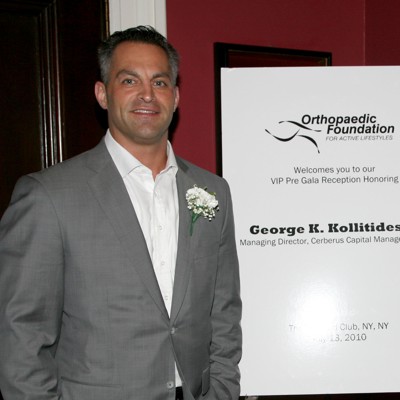
George K. Kollitides II, left, at a party honoring him at The Harvard Club in New York on July 13, 2010. AMBER De VOS/Patrick McMullan via Getty Images
Experts expressed shock at a $281 million contract that was no-bid, enormous for consulting work, and set up as an OTA deal.
Aaron C. Davis and Robert Faturechi , ProPublica
Among a cadre of Wall Street executives brought into the Pentagon during President Donald Trump’s second term, George K. Kollitides II has emerged as a powerbroker with a broad mandate to improve procurement of weapons and critical minerals.
The longtime partner at the private equity firm Alvarez & Marsal Capital has framed his tour of duty in government as a service to the country. But the work he’s leading has also been a boon to his old friends in the private sector, government procurement records show.
In April, months after Kollitides had started work at the Pentagon, he was listed on a securities filing as continuing to work for his old company as a senior adviser. Two months later, the Defense Department finalized a $281 million no-bid consulting contract with an affiliate firm, Alvarez & Marsal Federal, to advise Kollitides’ new Pentagon office, the records show.
That contract, large for consulting work even by Defense Department standards, is the second in a pair of deals that since December have awarded almost $350 million in military spending to the firm — about five times more than Alvarez & Marsal entities had received from all U.S. agencies combined in the two decades before Trump returned to office, according to federal spending data. Both of those contracts have been for work connected to Pentagon offices where Kollitides is the head or has a senior role.
The deals remain shrouded in secrecy, records show, because they were signed under an unusual contracting method the Defense Department uses to fund experimental weapons — work A&M has never claimed to do. They have begun to send unprecedented sums of taxpayer money to a company that boasts helping government agencies create a “customer-centric culture” and that is deeply intertwined with the private equity firm where Kollitides was a partner for almost 10 years. The two partner firms tag-team investment deals and share back-office support, company documents and federal filings show.
Kollitides was still working with A&M Capital when the deals were signed. It’s unclear if he will benefit financially from the windfall of military spending on A&M consulting. His employment at the Pentagon is under a special classification that allows him to keep his financial disclosures confidential.
Ethics experts said it’s generally illegal for executive branch officials to play a role in awarding contracts that would have a direct impact on their own finances, unless they were granted a waiver.
“It looks way too cozy to be legitimate. I think taxpayers should be appalled,” said Virginia Canter, a former federal government ethics lawyer. “There are a million consulting firms in D.C. and New York. Why would you sole-source this contract? They’re not sending replacement parts for a ship that is sinking.”
After ProPublica sent questions to the Pentagon, Kollitides and both A&M entities early this week, A&M Capital said Kollitides had just stopped working there days earlier.
In a statement, A&M Capital said it is a “separately capitalized and separately managed firm from the Alvarez & Marsal consulting business” and its “management and employees have no involvement in the day-to-day operations of the consulting business, and vice versa.” The firm said that none of Kollitides’ work for it related to the “defense industry, the Department of War or Mr. Kollitides’ government service.”
The Alvarez & Marsal consulting business did not answer any of ProPublica’s questions, including how it became aware of the possibility that it could seek the $281 million no-bid contract and what services it is providing to Kollitides’ Pentagon team. The Wall Street Journal on Thursday reported the existence of some of the Alvarez & Marsal contracting.
“We are proud to serve clients across all industries, and all levels of government,” the company said in a statement. “The common denominator is always the same: we help solve difficult problems.”
“It looks way too cozy to be legitimate. I think taxpayers should be appalled.” Virginia Canter, former federal government ethics lawyer
“It looks way too cozy to be legitimate. I think taxpayers should be appalled.”
Kollitides did not respond to questions about whether he played a role in A&M securing contracts to work for his office, but a Pentagon spokesperson replied for the department and on Kollitides’ behalf saying they both followed all applicable rules.
“The Department of War maintains a rigorous, multi-layered ethics framework that includes financial disclosure reviews, divestitures where appropriate, and screening to prevent conflicts of interest,” Deputy Pentagon Press Secretary Jacob Bliss wrote in an email. Kollitides, he added, “is in full compliance with all ethical laws and regulations. Any claims otherwise are false.”
There is widespread bipartisan agreement that the Pentagon’s procurement systems are in need of radical reform and private-sector know-how could help the country better secure supply lines and accelerate the development of new weapons to ensure the military is prepared to fight future wars.
But current and former defense officials say the massive spending for connected consultants is a reflection of a changed Defense Department under Trump. They say a clubby and politicized culture has taken hold in a wing of the Pentagon controlled by Kollitides and other former Wall Street executives recruited by Steve Feinberg, the billionaire private-equity titan who is now the deputy defense secretary. It’s an operation, they say, that favors people and companies that have close ties to the administration.
This year, ProPublica reported that the Office of Strategic Capital, a unit at the Pentagon that Kollitides helps lead, granted a small North Carolina startup linked to Donald Trump Jr. a $620 million loan after a top aide to the president intervened on the company’s behalf. A group of Democratic lawmakers accused the office of “a staggering level of corruption and influence peddling.”
ProPublica also reported that the same Pentagon unit was considering a loan to Unusual Machines, a second company connected to the president’s son. A defense official told ProPublica recently that the unit is now in the late stages of a $220 million loan for the Florida drone parts maker, where Trump Jr. sits on the advisory board and was granted a stake.
The Pentagon did not respond to a question about the advancing loan process for Unusual Machines and if Trump Jr.’s connections were playing a part. After the earlier loan to a Trump-connected company, the Pentagon said “no company receives preferential treatment” and “political connections play absolutely no role in the Department’s funding decisions.” Pentagon Press Secretary Kingsley Wilson pushed back on criticism, saying the Defense Department is conducting extensive due diligence on potential lending.
That Pentagon lending unit was launched during the Biden administration with an open application process for interested companies. Current and former officials and people who have interacted with the office say Kollitides and other leaders now rely more on their own personal networks to choose companies to fund — as well as the consultants to vet those deals.
Multiple Pentagon Hats
That reliance on personal networks is how Kollitides got to the Pentagon.
Feinberg first hired Kollitides more than two decades ago.
Then a rising private-equity star who had graduated from Columbia Business School, Kollitides moved up the ranks at Cerberus, Feinberg’s firm, taking the reins of its aerospace, defense and government groups. In 2012, Kollitides took on an especially sensitive and more public job for the private-equity giant. Kollitides was named chief executive of a Cerberus company combining Remington, the nation’s oldest gun maker, with more than a dozen other firearms and parts companies, eliminating hundreds of jobs from New York to Georgia to Montana.
After three years with the Cerberus-owned gunmaker, Kollitides left and became a partner at Alvarez & Marsal Capital, an offshoot of A&M consulting, whose co-founder also had long-standing business ties to Feinberg.
Some former business associates said they were not surprised that Kollitides jumped at the chance to rejoin Feinberg at the Pentagon. The two share a love for firearms and defense industry investments. They have also both described their work addressing the military’s most vexing supply chain issues as a patriotic calling.
“Americans need us at the Pentagon and our civilians and our contractors to do better,” Feinberg said last year. “We can’t fail, we can’t make excuses, we must succeed.”
On social media, Kollitides has shown the kind of partisanship long taboo in the Pentagon but now fostered in its ranks by Trump and Secretary of Defense Pete Hegseth. Kollitides has decried the “Democrat Party,” warned of the ills of socialism and posted that “the government cannot give to anybody anything that the government does not first take from somebody else.”
Over the last year, Feinberg has continued to heap responsibility on Kollitides: naming him his co-chief of staff and senior adviser; vice chairman of the Office of Strategic Capital’s investment committee; and director of two other new offices, the Economic Defense Unit and the Business Operators for National Defense, or BOND — the office with the $281 million no-bid contract.
His employment status allowing him to hold any of those roles at the Pentagon is somewhat of a mystery.
Unlike Feinberg, who was confirmed to his post by the Senate, Kollitides was reportedly first brought onto the federal government last year as a special government employee, or SGE, a designation that allows someone to work in government for no more than 130 days a year. Kollitides seemingly exceeded that cap several months ago.
But in the Pentagon’s email system, Kollitides’ name now carries an abbreviation signifying he has been designated an HQE, or highly qualified expert. His employment classification, which the Pentagon confirmed, is designed to hire people who bring “enlightened thinking and innovation” to Defense Department roles that can last up to six years.
That distinction brings a unique benefit for Kollitides. Financial disclosures filed by HQEs are generally confidential, while those of high-ranking SGEs are often subject to release once a person fills a government role for more than 60 days. It’s unclear if Pentagon ethics officials granted Kollitides a waiver to keep any disclosures confidential.
(ProPublica requested Kollitides’ financial disclosure forms in August, but the Pentagon has not yet responded.)
Kollitides’ continued tie to Alvarez & Marsal Capital surfaced in April in a securities filing by a second company with which the defense official was taking a leadership post.
Days after Feinberg named him the head of BOND, granting Kollitides deep visibility into weapons production rates of U.S. military contractors, Kollitides took a seat on the board of D. Boral Acquisition I, an offshore shell company whose affiliate D. Boral Capital has partnered with defense-related businesses. Bloomberg Government first reported the filing in July, and that Kollitides stepped down from the position at the end of September.
Kollitides’ biography in the filing described his current roles at the Pentagon, then added that “he is also a Senior Advisor” to Alvarez & Marsal Capital and that he previously was a partner and co-head of one the firm’s funds.
The A&M entity that Kollitides is described as still advising in the filing is essentially the private-equity partner of the sprawling Alvarez & Marsal firm that includes A&M Federal, which is now providing consulting services for his offices at the Pentagon.
Though the private-equity and consulting businesses are distinct, they work together, share back-office staff for human resources and tech support, and have overlapping ownership, according to company documents. The private-equity arm describes itself as having a “strategic relationship” with the consulting side of A&M. The firm boosts its investment decision-making by working with the consulting firm’s thousands of employees around the globe to assess particular companies. And after the fund takes a stake in a company, it deploys the consulting arm’s employees to improve that firm’s operations and make the company more valuable.
In other words, the fund’s success hinges on the consulting firm’s.
Whether Kollitides violated government ethics rules hinges on details that he and the Pentagon have declined to provide.
A Defense Department official told ProPublica that Kollitides “does not and has never had” any investments or financial relations with A&M consulting. The official said Kollitides is also “recused on any conflicted matters related to A&M Capital,” which could be referring to Defense Department decisions related to companies A&M Capital has a financial stake in.
Ethics experts said that without a written waiver, executive branch officials are generally barred from participating in decisions, such as the awarding of a contract, that would have a direct impact on their financial interests. That law, the experts said, could apply even if the official doesn’t have a stake in a company but just draws a salary — the rationale being that they’ve improved the odds that the company will be able to continue paying them.
The Pentagon official did not answer specific questions about whether Kollitides was being compensated by A&M Capital when the contracts were signed, if he played any role in the contract decision-making process or if he sought or received an exemption to do so.
A “Blank Sheet of Paper” Contract
A&M’s first contract with the Pentagon was signed in December, months after Kollitides joined the government. That $67.6 million deal was awarded to Alvarez & Marsal Federal through a Defense Department entity focused on efforts to strengthen the nation’s industrial base.
The full scope of work that A&M provided is unclear. But documents reviewed by ProPublica show that by late last year, the firm had begun helping to vet possible loan deals for the Office of Strategic Capital, the lending unit then run in part by Kollitides.
Like that first contract, the larger, $281 million deal that followed to advise Kollitides’ BOND office came in the form of what is called an OTA, or other transaction agreement, which allows agencies to bypass regular federal contracting rules on public disclosure and oversight.
Congress first authorized the Defense Department to use the contracting method in the 1980s to fund breakthrough technologies without publicly disclosing much about the work. The Pentagon has increasingly turned to OTA contracts over the last decade to quickly fund a broader range of one-time costs, including prototype weapons and urgent production needs, even as government auditors have lamented OTAs as a “blank sheet of paper” arrangement with little oversight or accountability.
Still, experts said an OTA contract for consulting work was extraordinary. That’s because consulting is one of the simplest services the military can buy, and it has a long history of doing so through competitive bidding. Firms often publish the hourly costs for their associates, managers, and other work before solicitations are posted.
But like black-box OTA contracts for secret weapons systems, the funding mechanism has hidden from public view details of what taxpayers are getting for the money.
The sheer size of the A&M contract stunned experts.
At $281,089,206.65, the consulting contract is among the largest OTAs funded through the Defense Department’s main support division in the last decade, including for top-secret semiconductor projects and underwater drones, records show.
The Pentagon has said little about the impact of BOND since Hegseth claimed in February that the new entity would revolutionize military purchasing.
The defense secretary said that under the program, the military would embed former corporate executives, or, as he put it, “elite, private-sector patriots” to help optimize and accelerate the manufacturing of critical munitions. Hegseth said he thought the exercise would help the Pentagon increase resiliency in supply chains. The “era of managed decline is over,” he said.
In private recruitment materials for those executives, as well as for candidates to fill posts in other Kollitides-run units, the stakes and the mission for BOND were described in even starker terms: Neoliberalism and trade deals have left the U.S. as a country that “can no longer manufacture ships, munitions or planes in a timely manner.”
The recruiting materials cast the job of fixing that systemic problem as part-time work: “Recently retired Fortune 100 executives spend five days per month solving public- and private-sector operational challenges,” read pages viewed by ProPublica.
Two people familiar with A&M’s work for BOND said the firm’s consultants have accompanied former executives on trips to review work at major defense contractors such as Lockheed, Boeing, RTX and BAE Systems. BAE acknowledged a visit by BOND representatives but declined to comment further. Lockheed, Boeing, RTX and other companies contacted by ProPublica did not respond to requests for comment.
Contracting experts said that A&M is likely not guaranteed the full amount, and that contracts like these typically span several years, but records show A&M has already been paid about $31 million.
Not everyone, however, is welcome to participate.
One former military officer who worked in the defense industry told ProPublica he was contacted by an outside recruiter for Kollitides’ new BOND office. The recruiter, he said, told him that all applicants would be asked who they voted for.
The former military officer, who spoke on the condition of anonymity because he feared retribution, said he expressed discomfort with that line of questioning. He received an email shortly after from the recruiter telling him he was no longer under consideration. The Pentagon did not respond to a question about the officer’s account.
“Getting more effective and efficient is not a political question,” the former officer said.
ProPublica is a nonprofit newsroom that investigates abuses of power.
NEXT STORY: The Pentagon’s autonomy command should draw on lessons old and new
2010年7月13日,乔治·K·科利蒂德斯二世(左)在纽约哈佛俱乐部参加一场为他举办的派对。图片来源:AMBER De VOS/Patrick McMullan via Getty Images
专家们对一份价值 2.81 亿美元的合同表示震惊,该合同未经招标,金额巨大,而且是咨询工作的 OTA 交易。
亚伦·C·戴维斯 (Aaron C. Davis) 和罗伯特·法图奇 (Robert Faturechi),ProPublica
在唐纳德·特朗普总统第二任期内被引入五角大楼的一批华尔街高管中,乔治·K·科利蒂德斯二世已成为一位权力掮客,拥有广泛的授权来改善武器和关键矿产的采购。
这位在私募股权公司阿尔瓦雷斯·马萨尔资本(Alvarez & Marsal Capital)担任多年的合伙人,将他在政府的任职经历描述为对国家的贡献。但政府采购记录显示,他领导的工作也让他在私营部门的老朋友们受益匪浅。
今年4月,在科利蒂德斯入职五角大楼几个月后,一份证券备案文件显示,他仍在原公司担任高级顾问。记录显示,两个月后,国防部与一家关联公司——阿尔瓦雷斯·马萨尔联邦公司(Alvarez & Marsal Federal)——签订了一份价值2.81亿美元的非公开招标咨询合同,由该公司为科利蒂德斯在五角大楼的新办公室提供咨询服务。
即使以国防部的标准来看,这份咨询合同金额也相当可观。这是自去年12月以来,该公司获得的两份合同中的第二份,这两份合同共计为该公司带来了近3.5亿美元的军费开支——根据联邦支出数据,这大约是特朗普上任前二十年间,阿尔瓦雷斯·马萨尔公司旗下各机构从美国所有机构获得的总金额的五倍。这两份合同都与科利蒂德斯担任负责人或高级职务的五角大楼办公室相关。
记录显示,这些交易仍然笼罩在秘密之中,因为它们是根据国防部用于资助实验性武器的特殊合同方式签署的——而德州农工大学从未声称从事过此类工作。该公司已开始向一家标榜帮助政府机构打造“以客户为中心的文化”的公司输送前所未有的巨额纳税人资金,而这家公司与科利蒂德斯曾担任合伙人近十年的私募股权公司有着千丝万缕的联系。公司文件和联邦备案文件显示,这两家合作公司联手进行投资交易,并共享后台支持。
科利蒂德斯在签署这些交易时仍在A&M Capital公司任职。目前尚不清楚他是否会从军方对A&M咨询公司的额外支出中获利。他在五角大楼的职位属于特殊级别,允许他对其财务披露保密。
伦理专家表示,行政部门官员参与授予会对其自身财务状况产生直接影响的合同通常是违法的,除非他们获得豁免。
“这看起来太不正规了。我认为纳税人应该感到震惊,”前联邦政府道德律师弗吉尼亚·坎特说。“华盛顿特区和纽约有上百万家咨询公司。为什么要把这份合同全部外包?他们又不是在给一艘正在下沉的船送替换零件。”
本周早些时候,ProPublica 向五角大楼、Kollitides 和 A&M 旗下两家实体发出质询后,A&M Capital 表示 Kollitides 几天前刚刚停止在那里工作。
A&M Capital在一份声明中表示,该公司是一家“独立于Alvarez & Marsal咨询业务的独立资本和管理公司”,其“管理层和员工不参与咨询业务的日常运营,反之亦然”。该公司还表示,Kollitides为其所做的任何工作都与“国防工业、战争部或Kollitides先生的政府职务”无关。
Alvarez & Marsal咨询公司没有回答ProPublica提出的任何问题,包括它是如何得知有可能获得这份价值2.81亿美元的非招标合同的,以及它正在向Kollitides的五角大楼团队提供哪些服务。《华尔街日报》周四报道了Alvarez & Marsal的部分合同存在。
该公司在一份声明中表示:“我们很荣幸能为各行各业、各级政府的客户提供服务。我们的共同点始终如一:我们致力于帮助客户解决难题。”
“这看起来太过舒适,根本不合法。我认为纳税人应该感到震惊。”——弗吉尼亚·坎特,前联邦政府道德律师
“这看起来太舒服了,肯定不合法。我觉得纳税人应该感到震惊。”
科利蒂德斯没有回应关于他是否在德州农工大学获得为其办公室工作的合同方面发挥了作用的问题,但五角大楼发言人代表该部门和科利蒂德斯回应说,他们都遵守了所有适用的规则。
五角大楼副新闻秘书雅各布·布利斯在一封电子邮件中写道:“美国战争部维持着一套严格的多层次道德框架,其中包括财务披露审查、在适当情况下剥离资产以及防止利益冲突的筛选。” 他补充说,科利蒂德斯“完全遵守所有道德法律法规。任何相反的说法都是不实的。”
两党普遍认为,五角大楼的采购系统需要彻底改革,私营部门的专业知识可以帮助国家更好地保障供应链,加快新武器的研发,以确保军队为未来的战争做好准备。
但现任和前任国防部官员表示,巨额资金用于聘请关系密切的顾问,反映了特朗普政府领导下的国防部发生了变化。他们指出,在五角大楼一个由科利蒂德斯和其他前华尔街高管掌控的部门中,一种小圈子式的政治化文化已经根深蒂固。这些高管是由亿万富翁私募股权巨头史蒂夫·范伯格招募的,范伯格目前担任国防部副部长。他们表示,这种运作方式偏袒与政府关系密切的人员和公司。
今年,ProPublica报道称,五角大楼战略资本办公室(科利蒂德斯参与领导的一个部门)在一位总统高级助手的斡旋下,向一家与小唐纳德·特朗普有关联的北卡罗来纳州小型初创公司发放了6.2亿美元的贷款。一群民主党议员指责该办公室存在“令人震惊的腐败和权钱交易”。
ProPublica 还报道称,五角大楼同一部门正在考虑向 Unusual Machines 公司提供贷款,该公司是与总统之子有关联的另一家公司。一位国防部官员近日告诉 ProPublica,该部门目前正处于向这家佛罗里达州无人机零部件制造商提供 2.2 亿美元贷款的最后阶段,小特朗普是该公司顾问委员会成员,并持有股份。
五角大楼没有回应关于“非凡机器”(Unusual Machines)公司贷款审批流程进展以及小特朗普的关系是否在其中发挥作用的问题。此前,五角大楼曾向一家与特朗普有关联的公司提供贷款,并表示“任何公司都不会获得特殊待遇”,而且“政治关系绝对不会影响国防部的拨款决策”。五角大楼新闻秘书金斯利·威尔逊反驳了这些批评,称国防部正在对潜在的贷款进行广泛的尽职调查。
五角大楼的这个贷款部门是在拜登政府时期成立的,当时面向所有感兴趣的公司开放申请。现任和前任官员以及与该部门有过接触的人士表示,科利蒂德斯和其他领导人现在更多地依赖自己的人脉关系来选择投资对象,以及聘请顾问来审核这些交易。
多顶五角形帽子
科利蒂德斯正是依靠人脉关系才得以进入五角大楼。
费恩伯格二十多年前首次聘用了科利蒂德斯。
科利蒂德斯毕业于哥伦比亚商学院,当时已是私募股权界冉冉升起的新星。他在范伯格所在的凯雷集团一路晋升,最终掌管了该集团的航空航天、国防和政府部门。2012年,科利蒂德斯接手了这家私募股权巨头一项更为敏感且更具公众关注度的工作。他被任命为凯雷集团旗下新公司的首席执行官,该公司将美国历史最悠久的枪支制造商雷明顿与十几家其他枪支和零部件公司合并,导致从纽约到佐治亚再到蒙大拿,数百个工作岗位被裁撤。
在 Cerberus 旗下的枪支制造商工作三年后,Kollitides 离开了公司,成为 Alvarez & Marsal Capital 的合伙人。Alvarez & Marsal Capital 是 A&M 咨询公司的分支机构,其联合创始人也与 Feinberg 有着长期的商业联系。
一些前商业伙伴表示,科利蒂德斯欣然接受重返五角大楼与范伯格共事的机会,他们并不感到意外。两人都热爱枪械和国防工业投资。他们也都曾表示,解决军方最棘手的供应链问题是一项爱国使命。
“美国人民需要我们五角大楼的官员、文职人员和承包商做得更好,”费恩伯格去年说。“我们不能失败,不能找借口,我们必须成功。”
在社交媒体上,科利蒂德斯展现出了五角大楼长期以来奉为禁忌的党派偏见,而这种偏见如今却在特朗普和国防部长皮特·赫格塞斯的推动下在五角大楼内部滋生。科利蒂德斯谴责“民主党”,警告社会主义的弊端,并发帖称“政府不能给予任何人任何东西,除非它首先从其他人那里拿走”。
在过去一年里,范伯格继续委以科利蒂德斯重任:任命他为联合幕僚长兼高级顾问;战略资本办公室投资委员会副主席;以及另外两个新办公室的主任,分别是经济防御部门和国防商业运营商(BOND)——该办公室获得了价值 2.81 亿美元的非招标合同。
他在五角大楼担任这些职务的雇佣身份多少有些令人费解。
与经参议院确认就职的范伯格不同,据报道,科利蒂德斯去年首次以特殊政府雇员(SGE)的身份加入联邦政府。SGE的身份允许某人每年在政府部门工作不超过130天。科利蒂德斯似乎在几个月前就超过了这一限制。
但在五角大楼的电子邮件系统中,科利蒂德斯的名字现在带有一个缩写,表明他已被任命为HQE,即高级专家。五角大楼证实,他的这一职位旨在聘用那些能为国防部带来“开明思维和创新”的人才,任期最长可达六年。
这一区别给科利蒂德斯带来了一项独特的优势。高级行政人员提交的财务披露通常是保密的,而高级政府官员的财务披露一旦任职超过60天,往往就会被公开。目前尚不清楚五角大楼的道德官员是否给予科利蒂德斯豁免,使其能够对所有披露内容保密。
(ProPublica 于 8 月份向五角大楼索取了 Kollitides 的财务披露表格,但五角大楼尚未作出回应。)
科利蒂德斯与阿尔瓦雷斯和马萨尔资本公司的持续联系在 4 月份浮出水面,当时这位国防官员在另一家公司提交的证券文件中披露了此事,他在该公司担任领导职务。
在费恩伯格任命科利蒂德斯为BOND负责人几天后,科利蒂德斯便加入了D. Boral Acquisition I的董事会。D. Boral Acquisition I是一家离岸空壳公司,其关联公司D. Boral Capital与多家国防相关企业建立了合作关系。费恩伯格的任命使科利蒂德斯得以深入了解美国军工承包商的武器生产速度。彭博政府新闻网7月份率先报道了这一消息,并指出科利蒂德斯已于9月底辞去了该职务。
科利蒂德斯在提交的文件中描述了他目前在五角大楼的职务,然后补充说,他还是阿尔瓦雷斯和马萨尔资本公司的“高级顾问”,并且他之前是该公司旗下某只基金的合伙人和联席主管。
文件中描述 Kollitides 仍在为其提供咨询服务的 A&M 实体,本质上是庞大的 Alvarez & Marsal 公司的私募股权合作伙伴,该公司旗下包括 A&M Federal,该公司目前正在为他在五角大楼的办公室提供咨询服务。
尽管私募股权和咨询业务各自独立,但根据公司文件,它们密切合作,共享人力资源和技术支持等后台人员,并且股权结构有所重叠。私募股权部门自称与A&M的咨询部门存在“战略合作关系”。该公司通过与咨询部门遍布全球的数千名员工合作评估特定公司,从而提升其投资决策的准确性。在基金投资某公司后,它会派遣咨询部门的员工来改善该公司的运营,并提升其价值。
换句话说,该基金的成功取决于咨询公司的成功。
科利蒂德斯是否违反了政府道德规范,取决于他本人和五角大楼拒绝提供的细节。
一位国防部官员告诉ProPublica,科利蒂德斯“现在没有,也从未”与A&M咨询公司有任何投资或财务关系。这位官员还表示,科利蒂德斯“在任何与A&M Capital相关的利益冲突事项上都处于回避状态”,这可能指的是国防部就A&M Capital持有股份的公司所作出的决定。
伦理专家表示,如果没有书面豁免,行政部门官员通常被禁止参与会直接影响其经济利益的决策,例如合同授予。专家指出,即使官员不持有公司股份,只是领取薪水,这条法律也可能适用——理由是,他们的参与提高了公司继续支付其薪水的可能性。
五角大楼官员没有回答有关科利蒂德斯在合同签署时是否从 A&M Capital 获得报酬、他是否在合同决策过程中发挥了任何作用,或者他是否寻求或获得了豁免权的具体问题。
一份“白纸”合同
A&M公司与五角大楼的首份合同于12月签署,当时距离科利蒂德斯加入政府仅数月。这份价值6760万美元的合同是通过国防部下属的一个机构授予阿尔瓦雷斯-马萨尔联邦公司的,该机构致力于加强国家工业基础。
A&M提供的全部工作范围尚不清楚。但ProPublica查阅的文件显示,到去年年底,该公司已开始协助战略资本办公室(当时由科利蒂德斯部分负责的贷款部门)审查可能的贷款交易。
与第一份合同一样,随后签订的价值 2.81 亿美元的更大合同,旨在为 Kollitides 的 BOND 办公室提供咨询,该合同采用的是所谓的 OTA(其他交易协议)的形式,允许机构绕过有关公共披露和监督的常规联邦合同规则。
上世纪80年代,国会首次授权国防部采用这种合同方式为突破性技术提供资金,但并未公开披露太多相关信息。过去十年,五角大楼越来越多地使用其他交易协议(OTA)合同来快速支付各种一次性费用,包括原型武器和紧急生产需求。然而,政府审计人员一直批评OTA合同如同“一张白纸”,缺乏监督和问责机制。
不过,专家们表示,通过其他交易协议(OTA)签订咨询合同实属罕见。这是因为咨询服务是军方可以购买的最简单的服务之一,而且长期以来,军方都是通过公开招标的方式进行采购。咨询公司通常会在发布招标公告之前,公布其员工、经理和其他工作的时薪。
但就像秘密武器系统的黑箱OTA合同一样,这种融资机制向公众隐藏了纳税人花钱究竟得到了什么。
A&M 合同的规模之大令专家们震惊。
记录显示,这份价值 281,089,206.65 美元的咨询合同是过去十年中国防部主要支持部门资助的最大 OTA 之一,其中包括绝密半导体项目和水下无人机项目。
自赫格塞斯在 2 月份声称新实体将彻底改变军事采购以来,五角大楼很少谈及 BOND 的影响。
国防部长表示,根据该计划,军方将吸纳前企业高管,或者用他的话说,“精英的、私营部门的爱国者”,以帮助优化和加速关键弹药的生产。赫格塞斯表示,他认为这项计划将有助于五角大楼提高供应链的韧性。他说,“有序衰退的时代已经结束了”。
在为这些高管以及其他由 Kollitides 运营的部门的候选人准备的私人招聘材料中,BOND 的利害关系和使命被描述得更加直白:新自由主义和贸易协定使美国成为一个“无法及时制造船舶、弹药或飞机”的国家。
招聘材料将解决这一系统性问题的工作描述为兼职工作:“最近从财富 100 强企业退休的高管每月花五天时间解决公共和私营部门的运营挑战,”ProPublica 查看的页面写道。
两名熟悉A&M公司为BOND公司提供服务的人士透露,该公司顾问曾陪同前高管前往洛克希德·马丁、波音、RTX和BAE系统公司等主要国防承包商进行考察。BAE系统公司承认BOND公司代表曾到访,但拒绝进一步置评。ProPublica联系的洛克希德·马丁、波音、RTX和其他公司均未回复置评请求。
合同专家表示,A&M 可能无法保证获得全额款项,而且此类合同通常持续数年,但记录显示 A&M 已收到约 3100 万美元的款项。
然而,并非所有人都欢迎参加。
一位曾在国防工业工作的退役军官告诉ProPublica,他接到了科利蒂德斯新成立的债券办公室的外部招聘人员的电话。他说,招聘人员告诉他,所有申请人都会被问及他们投票给了谁。
这位因担心遭到报复而要求匿名的前军官表示,他对这种提问方式感到不适。不久后,他收到征兵人员的电子邮件,告知他已不再被考虑。五角大楼没有回应有关这位军官所述情况的询问。
这位前官员表示:“提高效率和效能不是一个政治问题。”
ProPublica是一家非营利新闻机构,致力于调查滥用职权的行为。
下一篇报道:五角大楼的自主指挥部应汲取新旧经验教训。