European U740 Variant Of The XQ-58A Valkyrie Has Flown欧洲的U740型XQ-58A“女武神”已经试飞
A team-up of Airbus and Kratos has put the U740 into the sky as Germany races to field advanced air combat drones by 2029. Airbus and Kratos fly the U740 in Europe as Germany races to field combat drones by 2029.
新闻视频
Published Oct 12, 2026 1:58 PM EDT
Airbus and Kratos Defense & Security Solutions have completed the first flight of the U740 Valkyrie uncrewed combat aircraft, a Europeanized version of the XQ-58A Valkyrie , advancing their bid to deliver a combat-ready system to Germany by 2029. The flight comes as the German Air Force, or Luftwaffe, moves toward acquiring a new class of jet-powered combat drones, in what could become a major shift in the country’s traditionally limited armed-uncrewed-aircraft capabilities.
The ride of the Valkyrie ⚔️ With the successful first flight of the Airbus U740 Valkyrie in Europe, we are one step closer to introducing an operational uncrewed Collaborative Combat Aircraft (CCA) to the German and other European Armed Forces. The flight achieved all… pic.twitter.com/S2sFrtdmGA — Airbus Defence (@AirbusDefence) October 12, 2026
The ride of the Valkyrie ⚔️ With the successful first flight of the Airbus U740 Valkyrie in Europe, we are one step closer to introducing an operational uncrewed Collaborative Combat Aircraft (CCA) to the German and other European Armed Forces. The flight achieved all… pic.twitter.com/S2sFrtdmGA
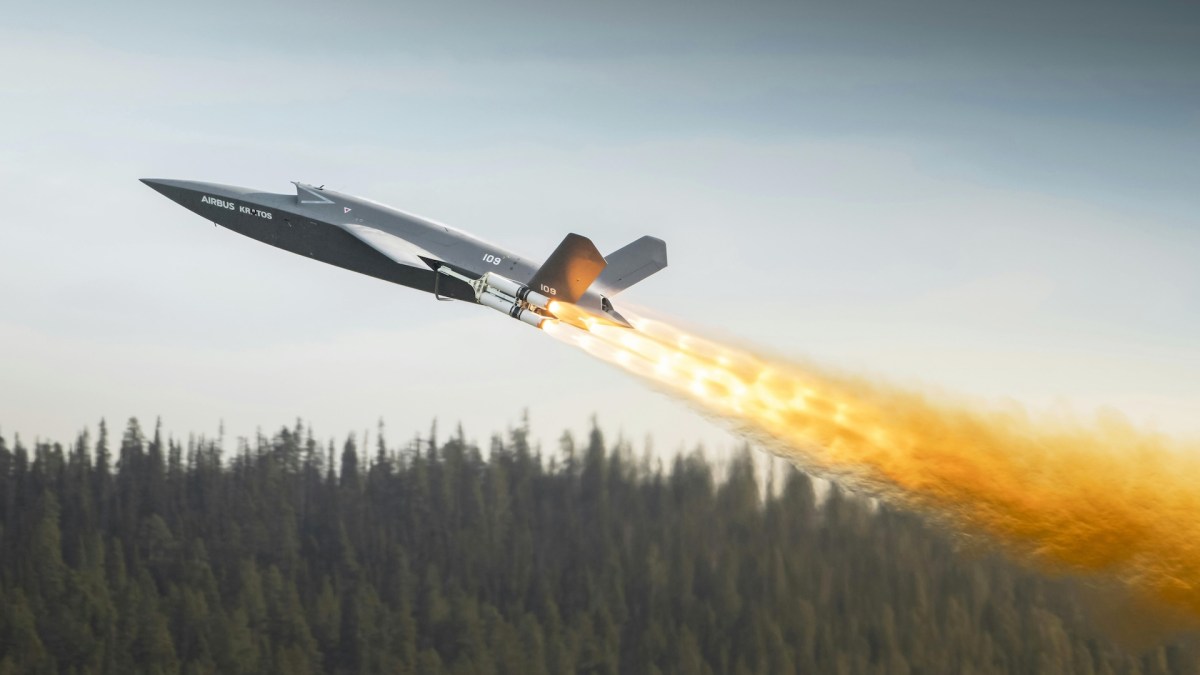
The flight took place at an unnamed test facility in northern Europe, Airbus announced on October 12. The aircraft conducted a rocket-assisted takeoff, maneuvers at different altitudes, and flight at speeds of up to Mach 0.8. The test also included in-flight mission adjustments, with Airbus reporting that all objectives were met.
The U740 Valkyrie uncrewed combat aircraft is prepared for launch. Airbus
The next phase will introduce Airbus’ Multi-platform Autonomous Reconfigurable and Secure (MARS) mission system, which is intended to provide the aircraft’s European-controlled software and mission-management architecture. Airbus says MARS will support autonomous operations and coordination between multiple uncrewed aircraft while retaining human oversight of critical decisions.
The U740 is based on Kratos’ American-developed XQ-58A , an uncrewed aircraft designed as a relatively affordable combat platform. Airbus is adapting the aircraft with its MARS mission system and presenting the combination as a way to provide Germany with a sovereign European capability without waiting for an entirely new airframe to mature.
The U740 Valkyrie on its launch trailer. Airbus
Published performance figures for the U740 include a maximum takeoff weight of around 3,000 kilograms (6,600 pounds). Airbus lists a range exceeding 5,000 kilometers (3,100 miles) and a service ceiling of 45,000 feet. It has an internal weapons bay and external payload stations beneath its wings.
A U.S. Marine Corps XQ-58A Valkyrie conducts a test flight with a U.S. Air Force F-16. U.S. Air Force photo
One distinctive feature is the U740’s rocket-assisted launch capability, which reduces its dependence on conventional runways. The original Valkyrie design is primarily recovered by parachute, but newer versions can take off with rocket assistance and land on a runway, offering greater flexibility in how and where they operate. That could help the Luftwaffe disperse operations or launch aircraft from locations where established airfields are unavailable or under threat. The XQ-58 family has also shown some potential for scaling to different requirements, as detailed in these earlier reports on runway launch and recovery and further platform development . In particular, the U.S. Marine Corps has been exploring ways to expand the XQ-58’s flexibility, including further development of the Valkyrie to m eet its own mission requirements .
If adopted, the rocket-assisted launch capability would provide an intriguing throwback to practical German studies during the Cold War, in which F-104G Starfighter fighter-bombers used the Zero-Length Launch (ZELL) system to take off from dispersed locations.
Airbus says the U740 will be able to operate autonomously or under the direction of crewed fighters such as the Eurofighter . The company sees it as a means of increasing the reach, firepower, and survivability of existing combat aircraft, with uncrewed platforms undertaking higher-risk missions.
With the MARS system, Airbus intends to give European customers control over mission applications, data, and key software functions, while enabling autonomous mission execution and coordination between aircraft. This is particularly relevant for Germany, which will likely want to integrate national weapons, sensors, and operational requirements without becoming dependent on a foreign-controlled mission architecture.
The U740 Valkyrie. Airbus
Since the underlying airframe is American, the degree of sovereignty Germany ultimately obtains will depend on the practical ability to control and modify software, integrate national systems, and support the aircraft throughout its service life.
The European flight is an important step for the Valkyrie program, but substantial work remains before it can be considered combat-ready. Mission-system integration, further testing, and the demonstration of effective cooperation with crewed aircraft will be central to meeting the companies’ 2029 target.
Another view of the U740 Valkyrie. Airbus
The effort is also unfolding as Germany develops its requirements for what has been described in press reports as a Jagdbomberdrohne , or fighter-bomber drone. The precise operational concept has yet to emerge publicly, including whether the Luftwaffe primarily wants an uncrewed aircraft to accompany crewed fighters or a platform capable of conducting independent long-range strike missions.
Germany has historically lagged behind several other major military powers in fielding armed uncrewed aircraft. Previous attempts to acquire larger reconnaissance drones encountered major technical and procurement difficulties, while political resistance to armed drones delayed the development of a strike capability for years.
The U740 Valkyrie seen moments after launch. Airbus
The Luftwaffe’s current larger uncrewed aircraft fleet remains limited to five leased Israeli-made Heron TP medium-altitude, long-endurance drones. Germany is also participating in the Eurodrone program, while uncrewed systems were expected to form part of the wider Future Combat Air System (FCAS), before that Franco-German-led effort hit the buffers earlier this year .
A German Air Force Heron TP at Jagel Air Base in 2024. Bundeswehr/Ann-Kathrin Steinbring
Russia’s full-scale invasion of Ukraine in 2022 and Germany’s subsequent military buildup have intensified pressure to address these gaps. Berlin has set a goal of being ready for war by 2029 , and reports indicate that the Luftwaffe wants a new combat-drone capability on a similarly ambitious timeline.
As well as Airbus and Kratos, the emerging competition reportedly includes Anduril, General Atomics partnered with Germany’s INTEC , as well as Lockheed Martin . Boeing and Rheinmetall are meanwhile pitching the larger, Block 3 version of the Australian-developed MQ-28 Ghost Bat , while Helsing and Hensoldt are pursuing the homegrown CA-1 Europa .
The CA-1 Europa from the German defense startup Helsing. Helsing
The various proposals reflect a broader shift toward uncrewed aircraft that can deliver additional weapons, sensors, and electronic warfare capabilities without putting a pilot at risk. But Germany’s terminology raises an important question about the intended role.
A conventional collaborative combat aircraft, or CCA, would be designed to work alongside crewed fighters, extending their reach and providing additional combat mass. A platform intended to operate independently against targets deep inside enemy territory would place greater emphasis on range and survivability. These roles are not mutually exclusive, but the Luftwaffe’s final requirements will shape the aircraft it chooses.
Germany may not be looking for a single drone to do everything. One option might be a split high-low approach that could pair more capable, longer-range systems for deep-strike missions with cheaper, attritable collaborative combat aircraft that can fly alongside crewed fighters. At this point, it should also be noted that CCAs could also give older fourth-generation fighters a new lease on life , boosting their lethality and survivability by extending their sensor reach, adding weapons capacity, and allowing uncrewed aircraft to take on more dangerous tasks.
Meanwhile, Airbus is also working on its larger U760 Ravenstorm , intended for service in the early 2030s. The Ravenstorm gives Airbus a longer-term path toward a more advanced European-designed uncrewed combat aircraft as it pursues the nearer-term Valkyrie effort.
The Airbus U760 Ravenstorm, a combat drone designed to operate alongside fighter aircraft in air-to-air combat, strike missions, and electronic warfare roles. Airbus
In the short term, the Luftwaffe will need to determine which capabilities must be available in an initial operational fleet and which can be introduced later. Even an aircraft based on an established design requires substantial integration, testing, training, and infrastructure before it can be employed effectively in combat.
Germany’s 2029 target leaves little time for a program that still has to integrate its mission system and demonstrate how the aircraft will be used operationally. That is a particular challenge for the Luftwaffe, which has little experience operating large uncrewed aircraft, let alone jet-powered systems intended for combat.
A rear view of the U740 Valkyrie. Airbus
The European flight gives Airbus and Kratos a head start in testing the U740 for German requirements, but the next major milestone will be flying it with the MARS mission system. How quickly that work progresses will help determine whether the Valkyrie can meet the Luftwaffe’s timetable.
Contact the author: thomas@thewarzone.com
Comments couldn’t be loaded. Please refresh the page.
发布于美国东部时间2026年10月12日下午1:58
空中客车公司和克拉托斯防务与安全解决方案公司完成了U740“女武神”无人作战飞机的首飞,该机是XQ-58A“女武神”的欧洲化版本,此举推进了双方在2029年前向德国交付可投入作战系统的计划。此次首飞正值德国空军(Luftwaffe)着手采购新型喷气式作战无人机之际,这可能成为该国传统上有限的武装无人机能力的一次重大转变。
女武神飞行之旅⚔️ 随着空客U740“女武神”在欧洲的首飞成功,我们距离向德国和其他欧洲国家的武装部队引进可投入作战的无人协同作战飞机(CCA)又近了一步。此次飞行取得了所有…… pic.twitter.com/S2sFrtdmGA — 空客防务 (@AirbusDefence) 2026年10月12日
女武神飞行之旅⚔️ 随着空客U740“女武神”在欧洲的首飞成功,我们距离向德国和其他欧洲国家的武装部队引入可作战的无人协同作战飞机(CCA)又近了一步。此次飞行取得了所有…… pic.twitter.com/S2sFrtdmGA
空客公司于10月12日宣布,此次飞行测试在北欧一处未公开名称的测试场地进行。飞机进行了火箭助推起飞、不同高度的机动飞行以及最高达0.8马赫的飞行速度。测试还包括飞行中任务调整,空客公司表示所有目标均已达成。
U740“瓦尔基里”无人战斗机已做好发射准备。空客
下一阶段将引入空客的多平台自主可重构安全(MARS)任务系统,该系统旨在为飞机提供欧洲控制的软件和任务管理架构。空客表示,MARS将支持多架无人飞机之间的自主运行和协调,同时保留对关键决策的人工监督。
U740无人机以克拉托斯公司(Kratos)的美国XQ-58A无人机为基础,XQ-58A是一款设计相对经济实惠的无人作战平台。空客公司正在为其配备MARS任务系统,并将此组合方案定位为一种无需等待全新机型成熟即可为德国提供自主欧洲作战能力的途径。
U740“女武神”运输机发布预告片。
已公布的U740性能数据包括约3000公斤(6600磅)的最大起飞重量。空客公司公布的航程超过5000公里(3100英里),实用升限为45000英尺。该机配备内置武器舱,机翼下方设有外挂点。
一架美国海军陆战队的XQ-58A“瓦尔基里”空中巡逻机与一架美国空军的F-16战斗机进行联合试飞。(美国空军照片)
U740的一大特色是其火箭助推起飞能力,这降低了它对传统跑道的依赖。最初的“女武神”无人机主要依靠降落伞回收,但新型号可以利用火箭助推起飞并在跑道上降落,从而在作战方式和地点方面提供了更大的灵活性。这有助于德国空军分散作战行动,或在现有机场无法使用或受到威胁的地点起飞飞机。正如之前关于跑道起降和平台进一步开发的报告中所述,XQ-58系列无人机也展现出满足不同需求的扩展潜力。特别是,美国海军陆战队一直在探索如何扩展XQ-58的灵活性,包括进一步开发“女武神”无人机以满足其自身的任务需求。
如果采用火箭助推发射能力,这将令人不禁回想起冷战时期德国的实用研究,当时 F-104G 星式战斗机轰炸机使用零长度发射 (ZELL) 系统从分散的地点起飞。
空客公司表示,U740无人机既可自主运行,也可在有人驾驶战斗机(例如欧洲战斗机)的指挥下运行。该公司认为,U740无人机能够提升现有作战飞机的作战范围、火力和生存能力,使无人平台能够执行风险更高的任务。
空客希望通过MARS系统,让欧洲客户能够掌控任务应用、数据和关键软件功能,同时实现飞机间的自主任务执行和协调。这对于德国尤为重要,因为德国可能希望整合本国的武器、传感器和作战需求,而无需依赖外国控制的任务架构。
U740“女武神”。空客
由于飞机的基础机身是美国制造的,德国最终获得的自主权程度将取决于其控制和修改软件、整合国家系统以及在飞机整个服役期内提供支持的实际能力。
欧洲试飞是“瓦尔基里”无人机项目的重要一步,但距离具备作战能力仍有大量工作要做。任务系统集成、进一步测试以及与有人驾驶飞机有效协同作战的验证,对于实现两家公司设定的2029年目标至关重要。
U740“女武神”轰炸机的另一视角。空客公司
与此同时,德国也在制定其对一种被媒体称为“战斗轰炸无人机”(Jagdbomberdrohne)的需求,这项研发工作也在进行中。目前,其具体的作战概念尚未公开,包括德国空军究竟是希望这种无人驾驶飞机主要用于伴随有人驾驶战斗机飞行,还是希望它能够独立执行远程打击任务。
德国在武装无人机的部署方面历来落后于其他几个主要军事强国。此前,德国在采购大型侦察无人机方面遭遇了重大的技术和采购难题,而对武装无人机的政治阻力也使德国打击能力的研发进程停滞多年。
U740“女武神”无人机发射后瞬间的景象 空客
德国空军目前规模较大的无人机机队仍然仅限于五架租赁的以色列制造的“苍鹭”TP型中空长航时无人机。德国也参与了欧洲无人机计划,而无人机系统原本有望成为更广泛的未来作战空中系统(FCAS)的一部分,但这项由法德主导的项目在今年早些时候陷入停滞。
2024 年,一架德国空军苍鹭 TP 停泊在雅格尔空军基地。德国联邦国防军/Ann-Kathrin Steinbring
俄罗斯在2022年全面入侵乌克兰,以及德国随后的军事集结,加剧了弥补这些差距的压力。柏林已设定目标,力争在2029年做好战争准备,有报道指出,德国空军也希望在同样雄心勃勃的时间表内研发出新的作战无人机能力。
据报道,除了空客和克拉托斯之外,新兴的竞争对手还包括安杜里尔、通用原子公司与德国INTEC公司的合作项目,以及洛克希德·马丁公司。与此同时,波音和莱茵金属公司正在推介澳大利亚开发的MQ-28“幽灵蝙蝠”无人机的更大型号——Block 3版本,而赫尔辛和亨索尔特则在研发国产CA-1“欧罗巴”无人机。
来自德国国防初创公司Helsing的CA-1 Europa。Helsing
这些提案反映出一种更广泛的趋势,即发展能够运送更多武器、传感器和电子战能力,且不会危及飞行员安全的专业飞机。但德国的措辞引发了一个关于其预期用途的重要问题。
传统的协同作战飞机(CCA)旨在与有人驾驶战斗机协同作战,扩展其作战半径并提供额外的作战力量。而旨在独立打击敌方纵深目标的平台则更注重航程和生存能力。这些角色并非相互排斥,但德国空军的最终需求将决定其选择的飞机类型。
德国或许并不寻求单一无人机来执行所有任务。一种可能的方案是采用高低结合的作战模式,将性能更强、航程更远的无人机系统用于纵深打击任务,同时配备成本更低、可消耗的协同作战飞机,使其能够与有人驾驶战斗机并肩作战。此外,值得注意的是,协同作战飞机还能让老旧的第四代战斗机焕发新生,通过扩展传感器探测范围、增加武器挂载能力以及允许无人机执行更危险的任务,从而提升其杀伤力和生存能力。
与此同时,空客也在研发更大的U760“渡鸦风暴”无人机,计划于2030年代初投入使用。“渡鸦风暴”为空客提供了一条更长远的途径,使其能够研发出更先进的欧洲设计的无人作战飞机,同时推进其近期的“女武神”项目。
空客U760“渡鸦风暴”是一款作战无人机,设计用于与战斗机协同执行空对空作战、打击任务和电子战任务。
短期内,德国空军需要确定初始作战机队必须具备哪些能力,哪些能力可以稍后引入。即使是基于成熟设计的飞机,在能够有效投入战斗之前,也需要大量的集成、测试、训练和基础设施建设。
德国设定的2029年目标时间非常紧迫,因为该项目仍需整合任务系统并演示飞机的作战用途。这对德国空军来说尤其具有挑战性,因为他们缺乏操作大型无人驾驶飞机的经验,更不用说用于作战的喷气式飞机了。
U740“女武神”轰炸机的后视图。空客公司
此次欧洲试飞使空客和克拉托斯公司在测试U740是否符合德国要求方面抢占了先机,但下一个重要里程碑将是搭载MARS任务系统进行飞行测试。这项工作的进展速度将决定“女武神”无人机能否按时交付德国空军。
联系作者:thomas@thewarzone.com
评论加载失败,请刷新页面。