Army to take a (cautious) step toward employing AI agents to defend networks: Official官方消息:陆军将谨慎地采取步骤,利用人工智能代理来防御网络。
The Army is making its first awards under Project Griffin, which eventually envisions AI prowling networks for malicious activity.
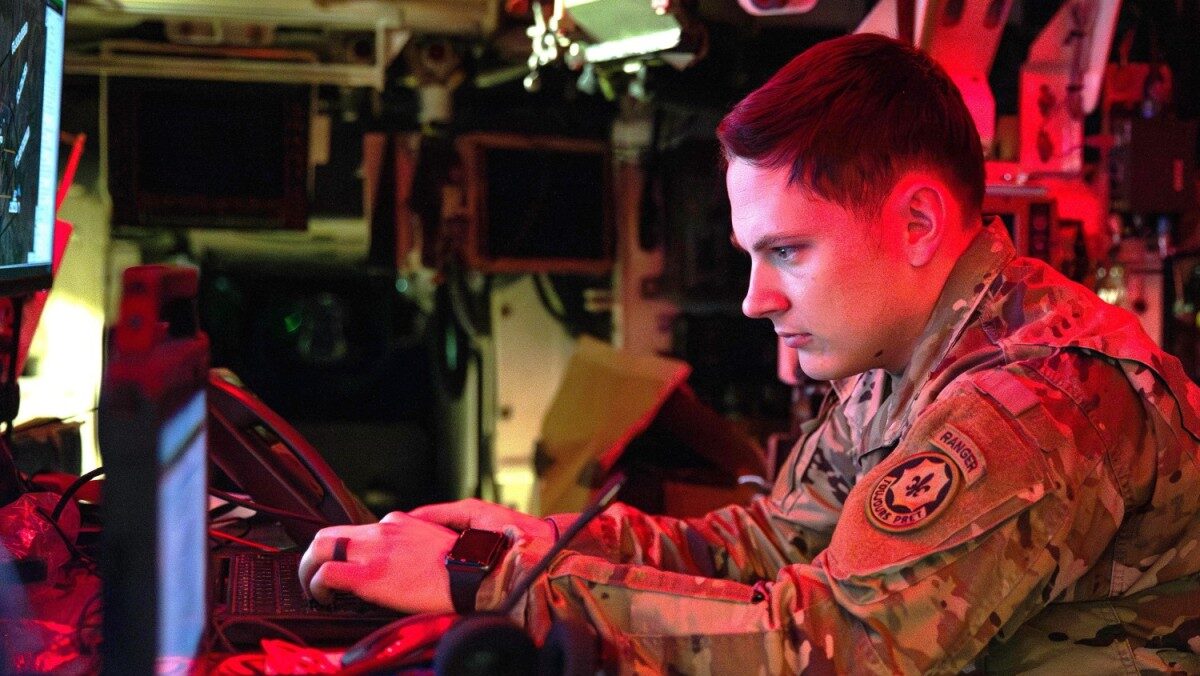
The Army continues to march forward with industry to meet its Unified Network effort goals, aligning the enterprise and tactical network programs to reduce network complexity and provide greater tactical mobility to support the Army’s division-centric warfighting at echelon. TEM 13 panelists discussed the efforts’ progress and pending milestones with industry attendees, providing updates on how the UN will underpin all modern network capabilities, including critical cyber security efforts such as Zero Trust. (U.S. Army Reserve photo by Spc. William Kuang)
WASHINGTON — The Army is poised to take its next step toward potentially unleashing defensive AI agents on its networks, as plans to award contracts to two companies by the end of the week, a key official said.
“The one that we plan to award on Friday is our take action element. So essentially, how are we not only autonomously detecting a potential adversary? How are we now doing something — having an autonomous response within prescribed parameters of a human operator, or even in conjunction with that?” Brandon Pugh, the service’s principal cyber advisor, said at the annual AUSA conference on Monday. “That is extraordinary. Something we haven’t done and we’re very excited about.”
Pugh declined to provide the names of the awardees ahead of the Friday announcement.
The network AI effort, dubbed Project Griffin , stemmed from a tabletop exercise with top industry executives and service leaders. The Army published a commercial solutions opening in August, spurring 108 submissions that were narrowed to 10 finalists.
Pugh explained that the Army has tools, such as its Panoptic Junction capability, that he said have a nearly 90 percent success rate at identifying malicious activity on the network. But they don’t currently have a way at remediating or remedying those threats, especially with limited humans.
Despite the award on Friday, officials said agents won’t begin work on government networks immediately.
“For us, it’s going to be: Are we as humans ready to let the agent actually take action? You think about that for how many years a human has been the person making the patch, remediating something, so we’re walking ourselves through what does it mean to have an agent to do that work and then how do you check that agent’s work. So a lot still to do in this space,” Lt. Gen. Christopher Eubank, commander of Army Cyber Command, told reporters at the conference.
He added that the service is working with companies to understand where what they can do in this space and determine what does it actually mean to take action, noting they’re working “hand in hand with the companies to build out what it looks like” and then put it through a deliberate process on the Army’s portion of the network. The two companies awarded could work in tandem on the effort or do their own thing.
Pugh said that using a commercial solutions opening to gather ideas was actually suggested by members of industry, as a way to keep responses broad as opposed to prescribing what companies should provide to the Army. Industry oftentimes has capabilities or ideas that aren’t even on the government’s radar, he said.
Given the big aperture, the Army wants to figure out what the companies are capable of providing as they put it through its paces.
陆军继续与业界携手推进其统一网络计划的目标,协调企业级和战术级网络项目,以降低网络复杂性,并提供更大的战术机动性,从而支持陆军以师为中心、层级分明的作战行动。TEM 13 的专家组成员与业界代表讨论了该计划的进展和即将达成的里程碑,并介绍了统一网络将如何支撑所有现代网络能力,包括零信任等关键网络安全措施。(美国陆军预备役下士 William Kuang 摄)
华盛顿——一位重要官员表示,陆军准备采取下一步行动,有可能在其网络上部署防御性人工智能代理,计划在本周末前将合同授予两家公司。
“我们计划在周五颁发的奖项是我们的行动要素。所以本质上,我们不仅能够自主检测潜在对手,还能在人类操作员预设的参数范围内,甚至与人类操作员协同工作,实现自主响应,”美国国防部首席网络顾问布兰登·普格周一在AUSA年度会议上表示。“这非常了不起。这是我们以前从未做过的事情,我们对此感到非常兴奋。”
在周五正式公布获奖者名单之前,普格拒绝透露获奖者姓名。
这项名为“格里芬计划”的网络人工智能项目源于一次由行业高管和军方领导人参与的桌面演练。陆军于8月发布了商业解决方案招标公告,共收到108份方案,最终筛选出10个入围方案。
普格解释说,陆军拥有一些工具,例如全景连接系统(Panoptic Junction),这些工具在识别网络恶意活动方面成功率接近90%。但他们目前还没有办法补救或消除这些威胁,尤其是在人手有限的情况下。
尽管周五获得了奖项,但官员们表示,特工们不会立即开始在政府网络上工作。
“对我们来说,关键在于:我们人类是否准备好让智能体真正采取行动?想想看,过去多少年都是由人类来修补漏洞、修复故障,所以我们正在思考,让智能体来完成这项工作意味着什么,以及如何检查智能体的工作。因此,在这个领域还有很多工作要做,”陆军网络司令部司令克里斯托弗·尤班克中将在会议上告诉记者。
他补充说,军方正在与各公司合作,了解它们在这个领域可以做些什么,并确定采取行动的实际意义。他指出,他们正“与各公司携手合作,共同构建方案”,然后在陆军的网络部分进行严谨的测试和实施。中标的两家公司可以协同合作,也可以各自独立开展工作。
普格表示,利用商业解决方案开放平台收集意见实际上是业内人士的建议,目的是为了保持反馈的广泛性,而不是规定企业应该向陆军提供什么。他说,企业往往拥有一些政府尚未考虑到的能力或想法。
鉴于该设备尺寸较大,陆军希望通过实际测试来了解各公司能够提供什么样的产品。