Lockheed eyes fresh PAC-3 interceptor production options for Ukraine, Europe洛克希德公司正考虑为乌克兰和欧洲提供新的PAC-3拦截机生产方案
“If we were to go forward with exploring any kind of production in Germany, we would likely do that with a company like Diehl,” a Lockheed executive said.
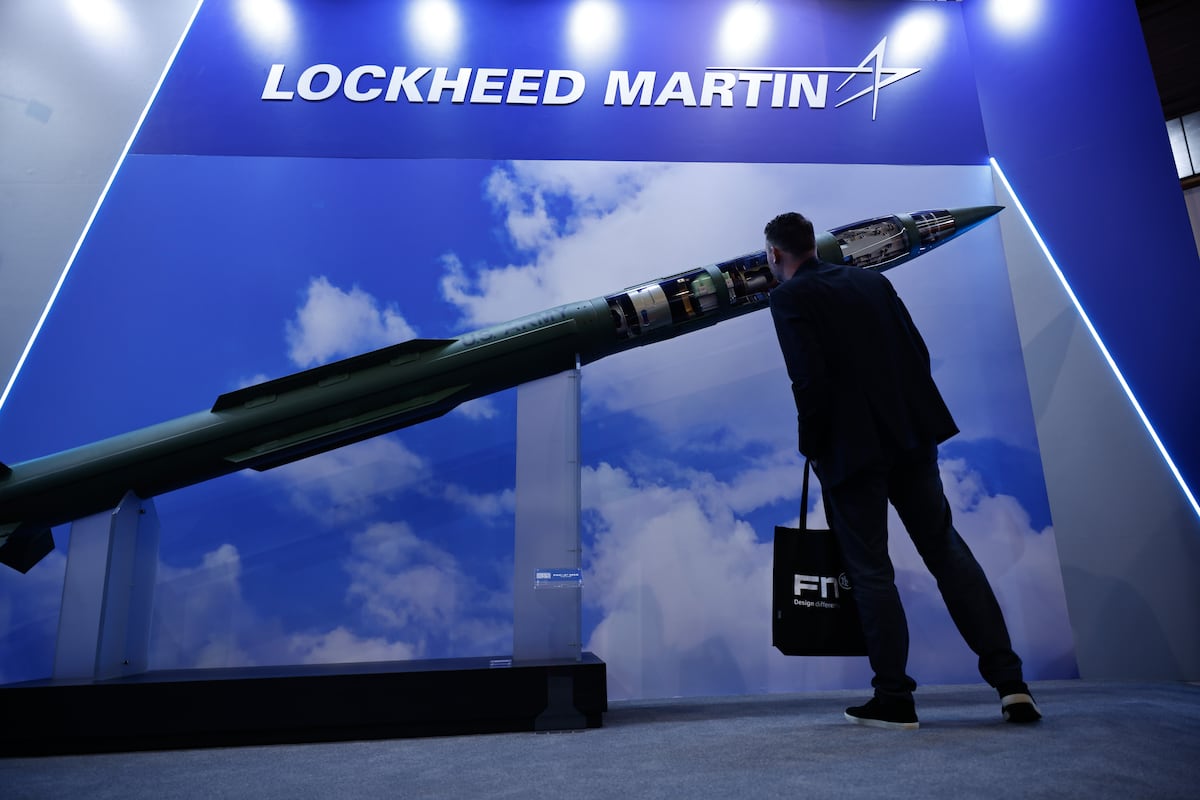
Lockheed Martin is weighing new industry partnerships to produce urgently needed PAC-3 Patriot interceptors in Europe, an avenue that could also help fill Ukraine’s shortfalls, a company executive said.
Discussions about producing more Patriot interceptors outside the United States have picked up steam since Ukrainian leaders said over the summer they were promised by the Trump administration a license to make them in Ukraine to defend against Russian missile and drone barrages.
U.S. government officials are still expected to make a decision, which could entail the production of PAC-2 interceptors, made by Raytheon, or Lockheed’s PAC-3.
“From a PAC-3 perspective, we’re absolutely willing to talk to Ukraine,” Jason Reynolds, vice president and general manager of the company’s integrated air and missile defense division, told Defense News in an interview at the Association of the United States Army annual convention.
“It’s really a matter of what’s their industrial capability, what’s the parts availability, those types of things,” he continued. “It might be something like an ACE, as opposed to an MSE, that we would start with for Ukraine.”
Lockheed announced development of an ACE variant during the summer, billing it as a cheaper option against relatively simple threats — at half the cost of an MSE missile designed to go against sophisticated missiles. The new interceptor will make do with a single-pulse motor, compared with a dual-pulse of the MSE interceptor, and utilize a blast fragmentation warhead, versus the direct hit-to-kill mechanics of the MSE missile.
Reynolds cautioned that setting up interceptor missile production of whatever variant in Ukraine comes with the risk of Russian attacks on the plant.
“The first question is, ‘Can we build a factory that’s survivable in a war zone?’” he said.
That’s why the company is considering options to make them in nearby safe countries instead, and quickly ferrying them into Ukraine as they are needed.
“There is a whole number of countries that are interested in potentially producing ACE,” Reynolds said. “If we can get that started, get the supply chain started and then migrate to Ukraine as an option, that would make a lot of sense to me.”
Germany is among the countries where leaders have offered to host PAC-3 production . Raytheon, in partnership with MBDA, already makes the PAC-2 product line in the country.
For an eventual PAC-3 production, Lockheed is considering partnering with Diehl Defence, with which there is a cooperation agreement on interceptor parts in place dating from October 2025, Reynolds said.
“If we were to go forward with exploring any kind of production in Germany, we would likely do that with a company like Diehl,” he told Defense News.
A Diehl spokesperson confirmed consultations ongoing with Lockheed Martin, pointing to the October 2025 agreement. The German company has been ramping up its production capabilities at all its sites, the spokesperson added.
A new facility is in the works in Lübben, Brandenburg, which comes with requisite licensing for explosives handling because it was used by the German Democratic Republic for military equipment manufacturing.
The U.S. government has the final say about where sensitive defense products can be produced outside the United States, including Patriot air-defense equipment.
“We at Lockheed don’t have the authority to just build factories wherever we want,” Reynolds noted.
Sebastian Sprenger is associate editor for Europe at Defense News, reporting on the state of the defense market in the region, and on U.S.-Europe cooperation and multi-national investments in defense and global security. Previously he served as managing editor for Defense News. He is based in Cologne, Germany.
洛克希德·马丁公司的一位高管表示,该公司正在考虑与新的行业伙伴合作,在欧洲生产急需的 PAC-3 爱国者拦截导弹,这条途径也有助于填补乌克兰的导弹缺口。
自乌克兰领导人在夏季表示特朗普政府承诺向乌克兰颁发许可证,允许其生产爱国者拦截器以防御俄罗斯导弹和无人机袭击以来,关于在美国境外生产更多爱国者拦截器的讨论愈演愈烈。
美国政府官员仍需做出决定,该决定可能涉及生产雷神公司生产的 PAC-2 拦截器,或者洛克希德公司的 PAC-3 拦截器。
“从PAC-3的角度来看,我们绝对愿意与乌克兰对话,”该公司综合防空和导弹防御部门副总裁兼总经理杰森·雷诺兹在美国陆军协会年会上接受《防务新闻》采访时表示。
他继续说道:“这实际上取决于他们的工业能力、零部件供应情况等等。对于乌克兰来说,我们可能会先从类似ACE(先进制造能力中心)而不是MSE(微型、小型、模块化)这样的模式入手。”
洛克希德公司在夏季宣布研发ACE导弹的改进型,并将其定位为应对相对简单威胁的更经济的选择——成本仅为用于对抗复杂导弹的MSE导弹的一半。新型拦截导弹将采用单脉冲发动机(MSE拦截导弹采用双脉冲发动机),并使用爆破破片战斗部(MSE导弹采用直接命中杀伤机制)。
雷诺兹警告说,在乌克兰建立任何型号的拦截导弹生产基地都存在俄罗斯袭击该工厂的风险。
他说:“第一个问题是,‘我们能否建造一座在战区能够生存下去的工厂?’”
因此,该公司正在考虑在附近的安全国家生产这些产品,并在需要时迅速将其运往乌克兰。
雷诺兹说:“有很多国家对生产ACE很感兴趣。如果我们能启动这个项目,建立起供应链,然后再考虑将生产转移到乌克兰,这对我来说就很有意义了。”
德国是已向部分国家提出承接PAC-3生产线的国家之一。雷神公司与MBDA公司合作,已在德国生产PAC-2产品线。
雷诺兹表示,为了最终生产 PAC-3,洛克希德公司正在考虑与迪尔防务公司合作,双方已于 2025 年 10 月签署了拦截器部件合作协议。
“如果我们要继续探索在德国进行任何形式的生产,我们很可能会与像迪尔这样的公司合作,”他告诉《防务新闻》。
迪尔公司的一位发言人证实,该公司正与洛克希德·马丁公司进行磋商,并提及双方于2025年10月达成的协议。该发言人补充说,这家德国公司一直在提升其所有生产基地的产能。
勃兰登堡州吕本正在兴建一座新工厂,该工厂已获得必要的爆炸物处理许可证,因为该工厂曾被德意志民主共和国用于制造军事装备。
美国政府对敏感国防产品(包括爱国者防空装备)在美国境外生产地点拥有最终决定权。
“我们洛克希德公司没有权力随心所欲地建厂,”雷诺兹指出。
塞巴斯蒂安·斯普伦格是《防务新闻》欧洲版副主编,负责报道该地区的防务市场状况,以及美欧在防务和全球安全领域的合作和多国投资。此前,他曾担任《防务新闻》执行主编。他现居德国科隆。