Meet the agency using AI to screen grant applicants for links to potential adversaries了解一下这个利用人工智能筛选拨款申请人与潜在对手有联系的机构
The Transportation Department is deepening its background checks on people and organizations that apply for research grants.
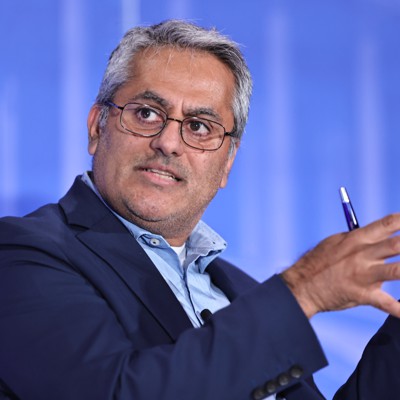
Transportation's senior advisor for AI, Neil Chaudhry, speaks Oct. 14 at the SAP Public Sector Summit in Washington, D.C. Zaid Hamid/Nextgov/FCW
The Transportation Department is deepening its background checks on people and organizations that apply for research grants.
Research & Development
The Department of Transportation has been using artificial intelligence to determine whether grant recipients have ties to adversarial nations, an agency official said on Wednesday.
The federal government has taken a variety of steps in recent years to limit hostile foreign governments’ access to American research, including restricting access to individuals or entities connected with countries like Iran or Russia. As the U.S. seeks to maintain its dominance over China in the global tech race, the Trump administration and Congress in particular have also been tightening the rules on collaborating with organizations or scientists who could conceivably share sensitive technologies or information with Beijing.
It’s not easy, however, for officials or research institutions to unravel these threads, particularly when bad actors are surreptitiously working on behalf of nation states. But new capabilities could help to better chart these connections.
Neil Chaudhry, senior advisor for AI at Transportation, said his agency has worked with partners to create “some really robust AI tools” to analyze the recipients of its research grants.
“When we get to a down-select from grants that are some really promising research projects, we sort of do a deep dive on the [principal investigators] in the grant that says … do they have direct links to the [Chinese Communist Party] leadership, or do they have links to Russian oligarchs?” Chaudhry said during a panel at the SAP Public Sector Summit in Washington, D.C.
“What we don't want to do is go on a fishing expedition,” he said, adding that identifying these kinds of relationships is “not based on the color of their skin and their nationality or something,” but on factors such as whether an individual or entity may be receiving funding from questionable sources.
“If it's a company that's funded by a [venture capital firm] in Silicon Valley, that VC is probably funded by another VC in the Middle East or in Malaysia, and that VC is then wholly funded by the Chinese industrial bank,” Chaudhry said. “And then when that startup goes out of business, we don't know what just happened to that IP that the U.S. government spent money developing.”
Transportation did not respond to a request for comment by the time of publication.
Transportation’s latest AI use-case inventory , which was published earlier this year, does not include the research grant-focused capability. Although other agencies have been using automation or more in-depth analysis tools to identify potential connections to foreign adversaries, Transportation’s use of AI seems to be relatively unique.
A November 2024 report from the Government Accountability Office found that reviewed agencies had taken a variety of steps to comply with federal requirements mandating that they better identify foreign risks in the Small Business Innovation Research and Small Business Technology Transfer programs. GAO noted that the programs, which were created to allow U.S. small businesses to engage in federally funded R&D, “face risks of foreign actors seeking to illicitly acquire federally funded research and technologies.”
The watchdog noted at the time that some agencies — like the Air Force, National Science Foundation and NASA — were taking some steps “either to automate the processing of due diligence disclosure forms or support the vetting of applicants and identify associated risks.”
NEXT STORY: Trump admin's retreat from foreign-influence fight is weakening US defenses, sources say
交通运输部人工智能高级顾问尼尔·乔杜里 (Neil Chaudhry) 于 10 月 14 日在华盛顿特区举行的 SAP 公共部门峰会上发表讲话。(图片来源:Zaid Hamid/Nextgov/FCW)
交通运输部正在加强对申请科研经费的个人和组织的背景调查。
研发
交通部一名官员周三表示,该部门一直在使用人工智能来确定拨款接受者是否与敌对国家有联系。
近年来,美国联邦政府采取了一系列措施,限制敌对外国政府获取美国研究成果,包括限制与伊朗或俄罗斯等国有关联的个人或实体获取信息。随着美国力图在全球科技竞争中保持对中国的领先地位,特朗普政府和国会尤其收紧了与可能向北京泄露敏感技术或信息的组织或科学家合作的规则。
然而,对于官员或研究机构而言,理清这些线索并非易事,尤其是在不法分子暗中为国家效力的情况下。但新的能力或许有助于更好地梳理这些关联。
交通运输部人工智能高级顾问尼尔·乔杜里表示,他的机构已与合作伙伴共同创建了“一些非常强大的人工智能工具”,用于分析其研究资助的接受者。
“当我们从众多极具前景的研究项目中筛选出最终入选的项目时,我们会对项目负责人进行深入调查,看看他们是否与中国共产党领导层有直接联系,或者是否与俄罗斯寡头有联系?”乔杜里在华盛顿特区举行的SAP公共部门峰会的一个小组讨论会上说道。
“我们不想进行漫无目的的调查,”他说,并补充说,识别这类关系“不是基于他们的肤色、国籍或其他因素”,而是基于诸如个人或实体是否可能从可疑来源获得资金等因素。
“如果一家公司是由硅谷的一家风险投资公司投资的,那么这家风险投资公司很可能又是由中东或马来西亚的另一家风险投资公司出资的,而这家风险投资公司最终可能完全由中国兴业银行提供资金,”乔杜里说。“然后,当这家初创公司倒闭时,我们就不知道美国政府花费资金开发的那些知识产权最终去了哪里。”
截至发稿时,交通运输部门尚未对此事作出回应。
交通运输部今年早些时候发布的最新人工智能应用案例清单中,并未包含以研究资助为重点的功能。尽管其他机构一直在使用自动化或更深入的分析工具来识别与外国敌对势力的潜在联系,但交通运输部对人工智能的应用似乎相对独特。
美国政府问责局 (GAO) 2024 年 11 月发布的一份报告指出,受审查的机构已采取多种措施,以遵守联邦政府关于更好地识别小型企业创新研究 (SBIR) 和小型企业技术转移 (SBTT) 项目中外国风险的要求。GAO 指出,这些旨在让美国小型企业参与联邦资助研发的项目“面临着外国行为体试图非法获取联邦资助的研究和技术的风险”。
当时的监管机构指出,一些机构——如空军、国家科学基金会和美国国家航空航天局——正在采取一些措施,“要么实现尽职调查披露表格处理的自动化,要么支持对申请人进行审查并识别相关风险”。
下一篇报道:消息人士称,特朗普政府在打击外国影响力方面的退缩正在削弱美国的防御能力。