Marines fielding new tech for prolonged medical care on the battlefield海军陆战队正在战场上部署新技术,以提供更长时间的医疗护理。
Mobile blood refrigeration, ultrasounds, and power generation will keep troops alive beyond the “golden hour.”
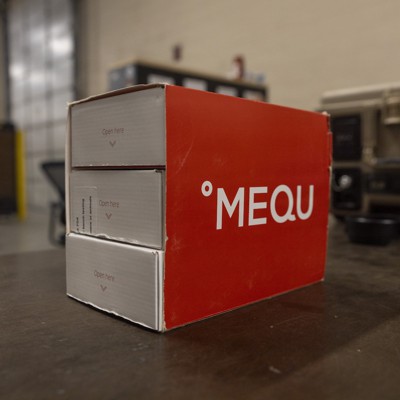
A blood warmer system at Marine Corps Base Camp Lejeune, North Carolina, Oct. 14, 2026. U.S. Marine Corps
Mobile blood refrigeration, ultrasounds, and power generation will keep troops alive beyond the “golden hour.”
The Marine Corps is preparing for a future battlefield on which the injuries are the same but the ability to quickly fly troops to a trauma hospital is very limited. To close that gap, the service is fielding new tech like mobile blood banks and ultrasounds, with a self-contained power source to keep them running.
The Expeditionary Medical Refrigeration Unit and Mobile and the MEQU mobile blood warmer were deployed to U.S. Central Command this year, where a unit set up a continuous mobile blood bank and sent their notes back to the Marine Corps on how to make it better, officials told reporters Friday during a media round table.
“We were told that the EMRU was instrumental to their ability to maintain a revolving blood bank to ensure that they had what they needed to be ready to care for injured service members,” said Navy Cmdr. Kyleigh Hupfl, clinic for Expeditionary Medical Systems.
The concept of the “ golden hour ,” the critical time period after a casualty that made all the difference in getting a wounded service member from the battlefield to hospital triage during the Global War on Terror, will be much more complicated in a near-peer fight.
While ground fighters could sometimes shoot down a medevac helicopter in Iraq or Afghanistan, an enemy with more sophisticated surveillance and missile technology will mean commanders have to wait to call in evacuations and work to stabilize casualties on site for much longer than in more recent conflicts.
“We're leaving the golden hour behind, and we're moving toward those longer patient-care hold times,” said Col. Paul Gillikin, program manager for Combat Support systems. “Again, fully recognizing the future fight against a peer competitor, over those great distances in the Pacific—we know that we're not going to have the developed [forward operating bases], the full mobility, the Iron Mountain .”
The No. 1 cause of battlefield death is severe bleeding, so being able to not only slow bleeding but give transfusions on site will be crucial.
“We need to be able to bring cold-chain distribution forward without relying on heavy generators, and we need to be able to do that in a sustainable way. We need to be able to warm that blood so that we don't get that patient in a worse-off situation,” Hupfl said. “We need to be able to see, after that, whether they have continued bleeding, so that the commander can make a risk decision on putting an evacuation asset at risk to get that patient out.”
That’s where the battery-powered EMRU and the associated blood warmer come in, as a mobile system that keeps blood products refrigerated, then heats them to body temp for quick transfusions. The Corps is also fielding the KOSMOS point-of-care ultrasound to assess internal bleeding, and the Marine Corps Squad Power Manager medical kit variant to keep them all running.
“We expect in the Marine Corps to be in distributed environments, where the evacuation will be delayed or contested,” said Brig. Gen. Tamara Campbell, deputy commander of Portfolio Acquisition Executive Marine Corps. “And so the equipment that we're looking at is to take that into account, regardless of the time it takes to apply that care. We need to do that at any time so that any of our soldiers, sailors, Marines—anybody that's within our operating environment needs that level of care.”
NEXT STORY: Meet the agency using AI to screen grant applicants for links to potential adversaries
2026年10月14日,北卡罗来纳州勒琼营海军陆战队基地的血液加温系统。美国海军陆战队
移动式血液冷藏、超声波和发电设备将使士兵们在“黄金一小时”之后仍能存活下来。
海军陆战队正在为未来的战场做准备,届时伤情将与以往相同,但快速将伤员空运至创伤医院的能力却非常有限。为了弥补这一缺口,海军陆战队正在部署移动血库和超声波设备等新技术,这些设备都配备了独立的电源以维持运行。
远征医疗冷藏单元和移动式医疗冷藏单元以及 MEQU 移动式血液加温器今年已部署到美国中央司令部,其中一个单元在那里建立了一个持续运行的移动血库,并将他们的笔记发回给海军陆战队,以便改进它。官员们在周五的媒体圆桌会议上告诉记者。
“我们被告知,EMRU 对他们维持循环血库的能力至关重要,以确保他们拥有所需的物资,随时准备照顾受伤的军人,”远征医疗系统诊所的海军指挥官凯利·赫普夫尔说。
“黄金一小时”的概念,指的是伤亡发生后至关重要的一段时间,它决定了伤员能否从战场上及时送往医院接受治疗。在与势均力敌的对手交战时,“黄金一小时”的概念将会变得更加复杂。
虽然地面部队有时可以在伊拉克或阿富汗击落医疗后送直升机,但敌人拥有更先进的监视和导弹技术,这意味着指挥官必须等待更长时间才能呼叫撤离,并且需要比最近的冲突更长的时间来稳定现场伤员的情况。
“我们正在告别黄金一小时,走向更长的病人救治等待时间,”作战支援系统项目经理保罗·吉利金上校说道。“再次强调,我们充分认识到未来将在太平洋地区与势均力敌的对手作战——我们知道我们不可能拥有完善的前沿作战基地、全面的机动能力以及‘铁山’(指强大的军事设施)。”
战场上死亡的首要原因是严重出血,因此不仅要能够减缓出血,还要能够在现场进行输血,这一点至关重要。
“我们需要在不依赖大型发电机的情况下推进冷链配送,而且必须以可持续的方式进行。我们需要能够给血液加温,以免患者情况恶化,”胡普夫说。“之后,我们需要观察患者是否仍在出血,以便指挥官能够做出风险决策,决定是否冒险动用救援资源将患者转移出去。”
这时,电池供电的紧急医疗救护车(EMRU)及其配套的血液加温器就派上了用场。这套移动系统能够保持血液制品的冷藏状态,并在需要时将其加热至体温,以便快速输血。海军陆战队还在部署KOSMOS床旁超声设备来评估内出血情况,并配备了海军陆战队班组电源管理医疗包,以确保所有设备正常运行。
“我们预计海军陆战队将处于分散的作战环境中,届时撤离行动可能会被延误或遭遇阻碍,”海军陆战队装备采购执行局副局长塔玛拉·坎贝尔准将说道。“因此,我们正在研究的装备必须考虑到这一点,无论需要多长时间才能提供救护。我们需要随时提供这种救护,以确保我们作战环境中的任何士兵、水兵、海军陆战队员——任何需要这种级别救护的人员——都能得到及时的救护。”
下一篇报道:了解一下这家利用人工智能筛选拨款申请人与潜在对手有联系的机构