What The Army’s Pacific Commanders Are Learning From Ukraine And Iran Conflicts陆军太平洋司令部从乌克兰和伊朗冲突中学到了什么
Conflicts far away are informing major changes to how the Army trains, equips and operates in the vast Pacific.
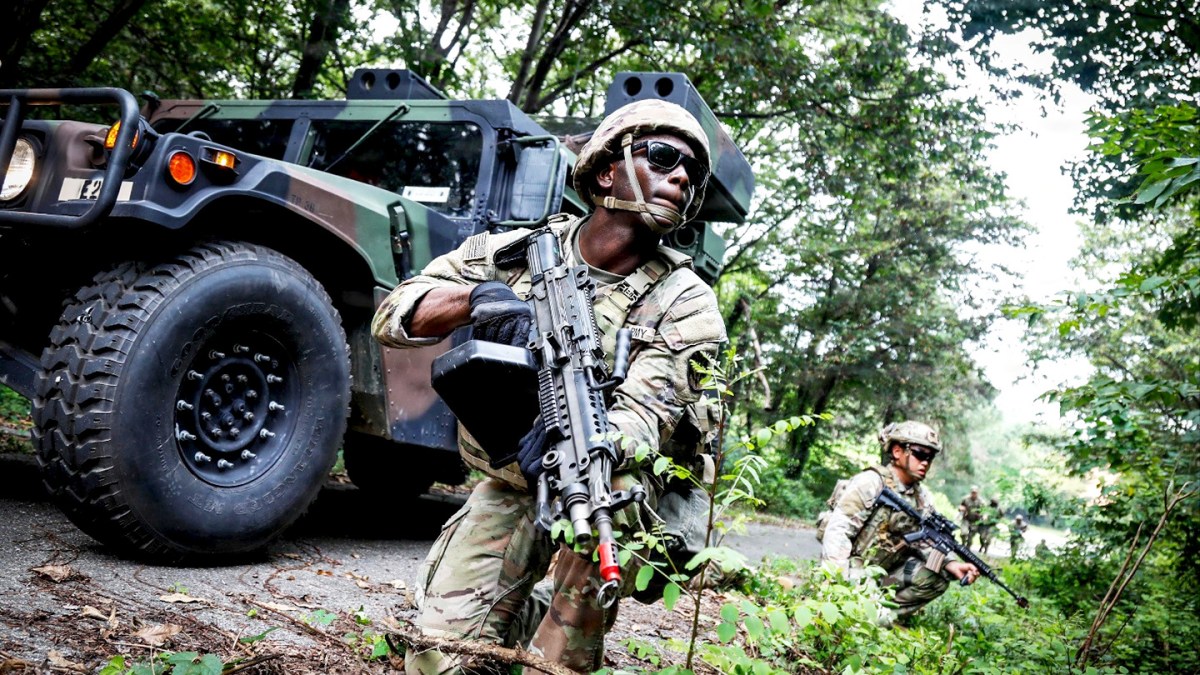
Published Oct 16, 2026 4:35 PM EDT
(U.S. Army photo by Cpl. Shin Haegyeom)
Army leaders preparing for a potential fight in the Pacific told us that some of the biggest lessons they’ve learned from the war in Ukraine and America’s now-paused fight against Iran are to move around assets that you can and find a better way to camouflage those that you can’t. While seemingly common sense, these lessons come from watching how war is now waged. The ubiquity of drones in Ukraine providing constant overwatch and strike capabilities and U.S. troops killed and equipment destroyed or damaged by massive Iranian barrages on static installations are informing changes to how the Army trains, equips and operates.
These conversations took place during the recently wrapped Association of the U.S. Army (AUSA) annual convention in Washington, D.C., which TWZ attended.
“A lot of the things that are happening right now in terms of long-range fires, integrated air and missile defense , and the lessons that we’re learning from them, we’re able to bring a lot of that to our potential challenges in the Pacific,” Gen. Ron Clark, commander of U.S. Army Pacific (USARPAC), told us at a media roundtable. “Specifically, I am thinking through mobility and camouflage. So it’s one of those age-old Army forgotten sciences of how to hide in plain sight and how to camouflage ourselves from observation , because the ability to be able to see surface entities is almost ubiquitous.”
“Our ability to be able to use electronic warfare , to be able to use just good old-fashioned camouflage, and the ability to deceive our adversary is a must,” Clark added. You can read more about the U.S. military’s camouflage and deception efforts in our story here .
U.S. Army soldiers of Brigade Engineer Battalion camoflages a Humvee while conducting preperations during exercise Combined Resolve VII at the U.S. Army’s Joint Multinational Readiness Center in Hohenfels Germany. (U.S. Army photo by Pfc. Randy Wren) Spc. Randy Wren
As we have frequently reported about the Ukraine war, both sides have been using a variety of “old-fashioned” tactics to duck, dodge and hide. They range from practices like smokescreens to hide from drones to updates on measures from the past like paint schemes designed to obfuscate vehicles and other equipment from AI-enabled targeting systems.
A Russian heavy-duty truck painted with zebra-style stripes to confuse AI-assisted target seeking equipment. via X
As tough as things have been for Ukraine and for U.S. forces in the Middle East, the challenges will be even greater in the Pacific, Clark warned.
In Europe and the Middle East, “it’s not a near-peer adversary that we will be working against,” said Clark, referring respectively to Russia and Iran.
“Whereas in our theater, it absolutely is,” the USARPAC commander noted in a reference to China without naming the country. “So our ability to scale that and to think through the problem sets of how do we fight Type One, Type Two UAS ? How do we think through ballistic missile defense holistically in the region? We spend a lot of time working with the joint force for solutions associated with that. How do we maneuver inside an archipelagic environment?”
DF-17 medium-range hypersonic ballistic missiles on display during the V-Day military parade in Beijing. (Photo by Sheng Jiapeng/China News Service/VCG via Getty Images) China News Service
For the Army, any fight in the Pacific will require soldiers to be able to hop islands and move through vast swaths of ocean, constantly hunted and frequently inside the Chinese weapons engagement zone. Clark said that the Army’s organic fleet of ships like landing craft, small tugs, and modular causeway systems operated by the service’s 8th Theater Sustainment Command will be vital for maneuver.
The Army, however, is struggling to keep its aging fleet of 70 of these vessels in the water and it got rid of a number of others over the years. Concerns about this underappreciated force have been something TWZ has raised for years .
Two U.S. Army Landing Craft Utility (LCU) vessels. (U.S. Army) www.twz.com
“But we also have to be able to conduct tactical maneuver with forces on the ground that can provide long-range precision fires, as an example, and then move so that fires, radars, sensors are not easily targeted,” Clark added. “Because if they can see you, they can hit you. And if you know they have an opportunity to return fire, they will. So our lessons that we’re learning are, in some cases, are very, very relevant. In some cases, we can learn from some of the changing characteristics of war.”
Still, the wide-open plains and dense cities of Ukraine are quite different from the beaches and jungles of the Pacific, Clark reminded us.
A U.S. Army Soldier assigned to the 1st Battalion, 27th Infantry Regiment, 2nd Mobile Brigade, 25th Infantry Division, observes a linear danger area during the Joint Pacific Multinational Readiness Center Rotation (JPMRC) 26-01 at Schofield Barracks, Hawaii, Nov. 6, 2025. (U.S. Army photo by Sgt. Duke Edwards) Sgt. Duke Edwards
“The way we generally fight does not equate specifically in the Ukraine piece to the maneuver that you would see out of U.S. forces if deployed in a conflict like that,” the USARPAC commander explained. “To be able to use operational maneuver and tactical maneuver in a way that it’s not just simply drone on drone or firing long range fires at one another at scale for an extended period of time. We find our way to work through that problem set and maneuver to positions of advantage and to prevail.”
💥Ukraine’s 115th Mechanized Brigade has released new footage showing a VB-140 Flamingo interceptor drone attacking a Russian Mi-28 attack helicopter in flight. The drone approaches from above and flies directly into the helicopter’s spinning main rotor. It’s unclear whether… pic.twitter.com/GCb9FodXG3 — Special Kherson Cat 🐈🇺🇦 (@bayraktar_1love) October 16, 2026
💥Ukraine’s 115th Mechanized Brigade has released new footage showing a VB-140 Flamingo interceptor drone attacking a Russian Mi-28 attack helicopter in flight. The drone approaches from above and flies directly into the helicopter’s spinning main rotor. It’s unclear whether… pic.twitter.com/GCb9FodXG3
Regardless of the terrain, the ubiquity of drones in the Ukraine war has made maneuver and resupply deadly endeavors , with much of the front lines bogged down with limited territorial advances by either combatant.
When we pushed further on that point, Gen. Xavier T. Brunson, commander of United Nations Command, Combined Forces Command and United States Forces Korea, weighed in.
“To be able to move with sensors everywhere at all times causes us to achieve positions of advantage from distributed locations,” Brunson pointed out. “So the fight is: you look at maneuver. You might maneuver to a position of advantage, knowing that you’re going to change that again. The ability to utilize not only joint sensors but joint effectors, if you will, joint fires, to be able to use those things from different positions changes the shape of the operating environment.”
The bottom line, he added, is that “maneuver is always going to be maneuver. You’re going from A to B, but you might go from A to A1 to A2 to A3 to get to B, and that’s what I think we realize in this distributed fight that’s going on in Ukraine, and so we continue to watch to see what lessons might be coming back into” effect.
In part reacting to lessons learned from Ukraine and the Middle East, the Army is also changing how it trains, Clark stated. In South Korea, he said the service has to get out of the habit of concentrating so heavily on just two annual major training exercises.
“We recognize… that largely the two big exercises every year in Korea focus on large command posts,” Clark proffered. “We’ve got to move away from that. So what we intend to do is take advantage of the knowledge that we have of the threats that exist or that prevail in the Ukraine fight.”
A Republic of Korea Army 5th Engineer Brigade, K1A2 tank crosses a U.S. Army Improved Ribbon Bridge (IRB) during joint wet gap training as part of Freedom Shield 25 at Yeoncheon-gun, Republic of Korea, Mar. 20, 2025. (U.S. Army photo by Sgt. Daniela Lechuga Liggio) Sgt. Daniela Lechuga
Clark said these discussions are underway with his deputy commander, Republic of Korea Army Gen. Sungmin Kim.
“We talk about how we would operate in a distributed fashion. You know as well as I do, there’s a location that we go to to train every year in Korea, and we stay in that place,” Clark said in response to a question from another reporter. “What would it look like if we train from Jeju all the way up to Gyeonggi Province in the north? What would that look like, just with our headquarters alone?”
“So just imagine,” Clark postulated, “if we train across the entirety of the peninsula, and got ourselves in the shape where we would say [to North Korea], ‘You can’t utilize the things that you’ve learned in the fight and the battlefield in Ukraine on us, because we learned the same lessons and we’ve distributed ourselves in such a way that we don’t make ourselves the target. We won’t be moored in place,’ and that’s what I’m talking about when I talk about positional advantage. It might not be the same place to the continuum. It might not be the same place when you’re in crisis or conflict or competition. We might have to change that, and that’s what we’re learning.”
South Korea. (Google Earth)
Another lesson from Ukraine that Army leaders should be paying attention to, said another panelist, is how both sides are using aerial and ground drones to supply frontline forces and evacuate the wounded because human efforts have now become too deadly, thanks to drones.
“I think you also can’t talk about Ukraine without talking about autonomy,” said Tara Murphy Dougherty , CEO of a company called Air, which provides AI-based sustainment solutions to the Army.
“One of the advantages that you get from using simulation and automation, and really using models and compute in order to create convoy plans, as opposed to humans with Excel spreadsheets, is you are able to do many fewer actual convoys because you’re using all of your capabilities so much more effectively and efficiently,” Dougherty posited. “And while it’s an indirect example, I think it does tie to soldier protection because you’re putting fewer soldiers out there in vulnerable settings. I see that not as an end-goal outcome; we need convoys.”
Ultimately, however, the Army will have to advance what Ukraine and Russia are doing with the deployment of aerial drones and uncrewed ground vehicles for logistics by creating “convoys” of autonomous vehicles .
“I see the end goal outcome as having as many autonomous convoys as possible, and we’ve heard today already at this event some of those ideas,” the CEO added. “In the interim, until we get to more autonomy in medevac and more autonomy in convoys when it’s non-soldier material that’s going out to the battlefield, let’s try and put fewer out there while actually getting more material and capability into the force where it needs to be.”
A Hunter Wolf unmanned ground vehicle assigned to Charlie Battery, 3rd Battalion, 320th Field Artillery Regiment, 3rd Mobile Brigade, 101st Airborne Division (Air Assault). (U.S. Army photo by Master Sgt. Anthony Hewitt) Master Sgt. Anthony Hewitt
The Iranian missile and drone barrages on fixed U.S. bases across the Middle East have created some very costly lessons for American forces. As we noted earlier in this story, several troops were killed and critical air defense radars , aircraft and other important equipment were destroyed or damaged. U.S. installations across the region have also suffered damage.
In another media session, we pressed Army officials operating in South Korea about what they learned from watching the destruction caused by Iran and what they are doing to address it.
You can see a satellite image of damage to a U.S. radar site in Jordan below :
NEW: The radar for a THAAD system was struck and apparently destroyed in Jordan while two other THAAD radar systems may have been hit in the UAE, satellite images show – w/ @ThomasBordeaux7 https://t.co/qiuWVQgyda — Gianluca Mezzofiore (@GianlucaMezzo) March 5, 2026
NEW: The radar for a THAAD system was struck and apparently destroyed in Jordan while two other THAAD radar systems may have been hit in the UAE, satellite images show – w/ @ThomasBordeaux7 https://t.co/qiuWVQgyda
“We certainly are watching what’s happening, and we are learning from what is happening in Operation Epic Fury,” Lt. Gen. Joseph “Joe” Hilbert, commanding general of Eighth Army, stationed in South Korea, told us. “We’re learning what’s happening in Ukraine, and we are working through changes in our own tactics and techniques and procedures to be able to react to those threats and to be able to defend against them.”
For more details, he turned the microphone over to Col. Rosanna “Ro” M. Clemente, commander of the 35th Air Defense Artillery Brigade in South Korea.
“Drawing from those lessons learned, a lot of it is trying to understand how our systems are being hunted by the adversary,” she told us. “So, strictly into all of our training plans, and as we conduct our own internal exercises, all of our air defenders are practicing something as simple as mobility and survivability jumps, which is being able to reposition and displace your systems to different alternative locations based on any type of threat warnings that we receive. They’re very, very well trained. I think all of our soldiers know how to move their systems extremely, extremely well. They move them quickly, and they are able to move them and reposition them into different locations across the peninsula that still maintains that ballistic missile defense coverage.”
U.S. Army Pvt. Nathaniel Mullins, assigned to the 35th Air Defense Artillery Brigade, analyzes a Sentinel A4 air and missile defense radar during a training exercise at Camp Humphreys, South Korea, April 22, 2026. The training highlighted Eighth Army’s continued modernization efforts by preparing soldiers to operate the new radar system. (U.S. Army photo by Cpl. Luciano Alcala) Sgt. Luciano Alcala
In addition, “we also have to rely on the other pillars of integrated air and missile defense, most specifically the passive defensive measures that we also have in place,” she added.
Those measures involve “a little bit more than just hardening – but a couple of other techniques that we’ve learned from the Russia-Ukraine war in terms of deception , how to move things around, create distractions, and make sure that we create different types of dilemmas for the adversary in terms of where our capabilities are and where are they positioned to protect its defended assets.”
Contact the author: howard@twz.com
Comments couldn’t be loaded. Please refresh the page.
发布于美国东部时间2026年10月16日下午4:35
(美国陆军下士申海谦摄)
正在为太平洋潜在战事做准备的陆军领导人告诉我们,他们从乌克兰战争和目前已暂停的美伊战争中汲取的最重要教训之一是:尽可能调动现有资源,并找到更好的方法来伪装那些无法调动的资源。这些教训看似显而易见,实则源于对当前战争方式的观察。无人机在乌克兰的广泛应用,提供了持续的监视和打击能力;美军士兵在伊朗大规模炮火袭击下阵亡,装备被摧毁或损坏——这些都促使陆军改变其训练、装备和作战方式。
这些对话发生在最近在华盛顿特区举行的美国陆军协会(AUSA)年会期间,TWZ也参加了此次年会。
“目前在远程火力、一体化防空反导方面取得的很多进展,以及我们从中汲取的经验教训,都可以运用到我们在太平洋地区可能面临的挑战中,”美国陆军太平洋司令部(USARPAC)司令罗恩·克拉克将军在一次媒体圆桌会议上告诉我们。“具体来说,我正在考虑机动性和伪装。这门古老的陆军技术,即如何在众目睽睽之下隐藏自身,以及如何伪装自己以躲避侦察,是被军队遗忘的一项重要技能,因为现在几乎无处不在地能够看到地面目标。”
克拉克补充道:“我们必须具备运用电子战、运用传统伪装以及欺骗对手的能力。” 您可以点击此处阅读我们关于美军伪装和欺骗行动的更多报道。
在德国霍亨费尔斯美国陆军联合多国战备中心举行的“联合决心VII”演习期间,美国陆军旅级工兵营的士兵正在为一辆悍马车进行伪装。(美国陆军一等兵兰迪·雷恩摄)
正如我们多次报道的乌克兰战争一样,双方都使用了各种“老式”战术来躲避、规避和藏匿。这些战术包括使用烟幕弹来躲避无人机,以及对过去措施的改进,例如使用涂装来混淆车辆和其他装备,使其免受人工智能瞄准系统的探测。
一辆俄罗斯重型卡车被涂成斑马纹,目的是迷惑人工智能辅助目标搜索设备。 via X
克拉克警告说,尽管乌克兰和驻中东美军的处境已经十分艰难,但在太平洋地区,挑战将会更大。
克拉克说,在欧洲和中东,“我们将要对抗的不是势均力敌的对手”,他分别指的是俄罗斯和伊朗。
“而在我们所在的战区,情况确实如此,”美国陆军太平洋司令部司令在提及中国时说道,但并未直接点名。“因此,我们能否扩大规模,并思考如何应对第一类、第二类无人机系统?如何从整体上考虑该地区的弹道导弹防御?我们花费大量时间与联合部队合作,寻求相关解决方案。我们如何在群岛环境中进行机动?”
在北京举行的胜利日阅兵式上,DF-17中程高超音速弹道导弹亮相。(图片来源:盛家鹏/中国新闻社/VCG via Getty Images)中国新闻社
对陆军而言,太平洋上的任何战斗都要求士兵能够跨越岛屿,穿越广袤的海域,时刻处于敌方的追击之下,并且经常进入中国的武器交战区。克拉克表示,陆军的舰艇舰队,例如登陆艇、小型拖船和模块化堤道系统,由陆军第八战区保障司令部运营,对机动作战至关重要。
然而,陆军正努力维持其70艘老旧舰艇的正常运转,多年来还淘汰了不少其他舰艇。TWZ多年来一直对这支被低估的部队表示担忧。
两艘美国陆军通用登陆艇(LCU)。(美国陆军)www.twz.com
克拉克补充道:“但我们也必须能够运用地面部队进行战术机动,例如提供远程精确火力支援,然后迅速移动,使火力、雷达和传感器不易被瞄准。因为如果他们能发现你,就能击中你。而且,如果你知道他们有机会还击,他们就会这么做。所以,我们吸取的教训在某些情况下非常非常重要。在某些情况下,我们可以从战争特征的变化中吸取经验。”
不过,克拉克提醒我们,乌克兰广阔的平原和人口密集的城市与太平洋沿岸的海滩和丛林截然不同。
2025年11月6日,在夏威夷斯科菲尔德兵营举行的联合太平洋多国战备中心轮换演习(JPMRC)26-01期间,一名隶属于美国陆军第25步兵师第2机动旅第27步兵团第1营的士兵正在观察一条线性危险区域。(美国陆军照片,由杜克·爱德华兹中士拍摄)
“我们通常的作战方式,在乌克兰的具体行动中,并不等同于美军在类似冲突中实际的作战方式,”美国陆军太平洋司令部司令解释说。“我们需要运用作战机动和战术机动,而不仅仅是长时间的无人机对无人机或远程火力压制。我们会找到解决这些问题的方法,机动到有利位置并取得胜利。”
💥乌克兰第115机械化旅发布了一段新视频,显示一架VB-140“火烈鸟”拦截无人机攻击了一架飞行中的俄罗斯米-28攻击直升机。无人机从上方接近,直接撞向直升机旋转的主旋翼。目前尚不清楚…… pic.twitter.com/GCb9FodXG3 — Special Kherson Cat 🐈🇺🇦 (@bayraktar_1love) October 16, 2026
💥乌克兰第115机械化旅发布了一段新视频,显示一架VB-140“火烈鸟”拦截无人机攻击了一架飞行中的俄罗斯米-28攻击直升机。无人机从上方接近,直接撞向直升机旋转的主旋翼。目前尚不清楚…… pic.twitter.com/GCb9FodXG3
无论地形如何,无人机在乌克兰战争中的普遍使用使得机动和补给成为致命的行动,许多前线都陷入僵局,交战双方的领土推进都十分有限。
当我们进一步追问这一点时,联合国军司令部、联合部队司令部和驻韩美军司令泽维尔·T·布伦森将军发表了意见。
布伦森指出:“能够随时随地携带传感器进行移动,使我们能够从分散的位置取得优势。所以战斗的关键在于:要考虑机动性。你可能会机动到有利位置,但你知道你很快就会再次改变位置。能够利用联合传感器、联合效应器(或者说联合火力),从不同位置使用这些装备,会改变作战环境的格局。”
他补充说,归根结底,“机动永远是机动。你从A点到B点,但你可能要先经过A1、A2、A3才能到达B点,我认为我们在乌克兰正在进行的这场分散式战斗中就意识到了这一点,所以我们将继续观察,看看哪些经验教训可能会再次发挥作用。”
克拉克表示,部分原因是吸取了乌克兰和中东的教训,陆军也在改变训练方式。他说,在韩国,陆军必须摒弃以往只专注于每年两次大型联合训练的习惯。
克拉克表示:“我们意识到……每年在韩国举行的两次大型演习主要侧重于大型指挥所。我们必须摆脱这种模式。因此,我们打算利用我们对乌克兰冲突中存在的或普遍存在的威胁的了解。”
2025年3月20日,在韩国延川郡举行的“自由之盾25”联合湿式间隙训练中,韩国陆军第5工兵旅的一辆K1A2坦克正在穿越美国陆军改进型丝带桥(IRB)。(美国陆军照片,由丹妮拉·莱楚加·利吉奥中士拍摄)
克拉克表示,他正在与副司令、韩国陆军上将金成敏进行这些讨论。
“我们讨论过如何以分散的方式运作。你我都清楚,我们每年都会去韩国的一个地方进行训练,并且一直待在那里,”克拉克在回答另一位记者的提问时说道。“如果我们从济州岛一直训练到北部的京畿道,那会是什么样子?仅仅以我们的总部为中心,又会是什么样子?”
克拉克推测道:“试想一下,如果我们在整个朝鲜半岛进行训练,并让自己达到这样的状态,就可以对朝鲜说:‘你们不能把在乌克兰战场上学到的东西用在我们身上,因为我们吸取了同样的教训,并且我们分散部署,避免成为攻击目标。我们不会被困在原地。’这就是我所说的阵地优势。在危机、冲突或竞争中,阵地优势的位置可能并不相同。我们可能需要改变这一点,而这正是我们正在学习的。”
韩国。(谷歌地球)
另一位小组成员表示,乌克兰战争给军队领导人带来的另一个教训是,由于无人机的出现,双方都在使用空中和地面无人机为前线部队提供补给和撤离伤员,因为人力救援行动现在变得过于致命。
“我认为,谈到乌克兰,就不能不谈到自主性,”为美国陆军提供基于人工智能的保障解决方案的 Air 公司首席执行官 Tara Murphy Dougherty 说。
“使用模拟和自动化技术,真正利用模型和计算来制定车队计划,而不是依靠人工使用Excel表格,其优势之一在于,由于所有能力的利用更加高效,实际执行的车队数量可以大大减少,”多尔蒂指出。“虽然这只是一个间接的例子,但我认为这确实与士兵保护有关,因为这样可以减少部署在脆弱环境中的士兵数量。我认为这并非最终目标;我们仍然需要车队。”
但最终,陆军必须效仿乌克兰和俄罗斯的做法,通过部署无人机和无人地面车辆进行后勤保障,创建自主车辆“车队”。
“我认为最终目标是尽可能多地实现自主运输车队,而我们今天在这个活动中已经听到了一些这样的想法,”首席执行官补充道。“在此期间,在我们实现医疗后送和运送非士兵物资到战场的车队更大程度的自主化之前,我们应该尽量减少车队数量,同时将更多物资和能力送到真正需要的地方。”
隶属于第101空降师(空中突击)第3机动旅第320野战炮兵团第3营C连的“猎狼”无人地面车辆。(美国陆军照片,由一级军士长安东尼·休伊特拍摄)一级军士长安东尼·休伊特
伊朗对美国在中东各地固定基地的导弹和无人机袭击,给美军造成了惨重的损失。正如我们前文所述,多名美军士兵丧生,关键的防空雷达、飞机和其他重要设备被摧毁或损坏。该地区的美国设施也遭受了破坏。
在另一次媒体见面会上,我们向驻韩美军官员追问,他们从伊朗造成的破坏中学到了什么,以及他们正在采取哪些措施来应对。
您可以在下方看到一张美国驻约旦雷达站受损的卫星图像:
最新消息:卫星图像显示,约旦境内的一部萨德系统雷达遭到袭击,显然已被摧毁;阿联酋境内的另外两部萨德雷达系统可能也遭到袭击。——与@ThomasBordeaux7 合作报道 https://t.co/qiuWVQgyda — Gianluca Mezzofiore (@GianlucaMezzo) 2026年3月5日
最新消息:卫星图像显示,约旦境内的一部萨德系统雷达遭到袭击并被摧毁,而阿联酋境内的另外两部萨德雷达系统可能也遭到袭击——与@ThomasBordeaux7 合作报道 https://t.co/qiuWVQgyda
“我们当然在密切关注事态发展,并从‘史诗狂怒行动’中吸取经验教训,”驻韩美军第八集团军司令约瑟夫·“乔”·希尔伯特中将告诉我们。“我们正在了解乌克兰的局势,并正在调整自身的战术、技术和程序,以便能够应对和防御这些威胁。”
为了了解更多细节,他将麦克风交给了驻韩美军第35防空炮兵旅指挥官罗莎娜·“罗”·M·克莱门特上校。
她告诉我们:“吸取这些经验教训,我们努力了解敌方是如何追踪我们的系统的。因此,我们所有的训练计划,以及我们内部的演习中,都严格要求所有防空人员练习一些简单的技能,例如机动性和生存能力快速部署,即根据我们收到的任何类型的威胁预警,将系统重新部署到不同的备选位置。他们训练有素。我认为我们所有的士兵都非常清楚如何快速移动他们的系统。他们能够迅速移动系统,并将其重新部署到半岛各地的不同位置,同时仍然保持弹道导弹防御覆盖。”
2026年4月22日,在韩国汉弗莱斯营地举行的一次训练演习中,隶属于第35防空炮兵旅的美国陆军列兵纳撒尼尔·穆林斯正在分析“哨兵”A4型防空反导雷达。此次训练旨在通过训练士兵操作新型雷达系统,凸显第八集团军持续推进现代化建设的努力。(美国陆军下士卢西亚诺·阿尔卡拉摄)
此外,她还补充说:“我们还必须依靠综合防空和导弹防御的其他支柱,特别是我们已经采取的被动防御措施。”
这些措施“不仅仅是加强防御——还包括我们从俄乌战争中学到的其他一些技巧,例如欺骗、转移阵地、制造干扰,以及确保我们给对手制造不同类型的困境,让他们难以判断我们的能力在哪里,以及我们部署在哪里来保护他们的防御资产。”
联系作者:howard@twz.com
评论加载失败,请刷新页面。