How do small modular nuclear reactors work, and how safe are they if S’pore decides to use them?小型模块化核反应堆的工作原理是什么?如果新加坡决定使用它们,安全性如何?
How small modular nuclear reactors work, and the safety of SMRs if Singapore decides to use them. Read more at straitstimes.com.
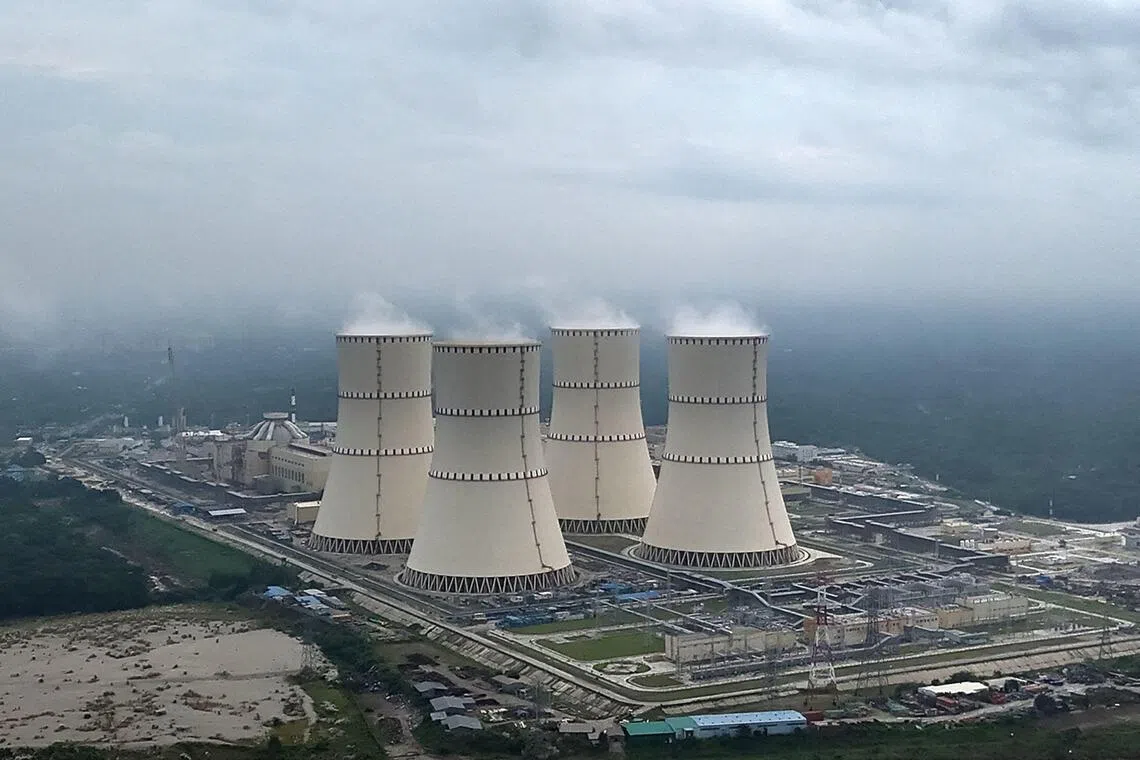
SMRs are advanced nuclear fission reactors with a smaller power capacity than a conventional nuclear plant.
Published Oct 17, 2026, 05:00 AM
Updated Oct 17, 2026, 05:00 AM
SINGAPORE - Plans to deploy small modular reactors (SMRs) are gaining momentum, as more countries look to tap nuclear energy.
The Straits Times looks at the most promising technologies, how safe they are and where they can be found.
SMRs are advanced nuclear reactors with a power capacity of up to 300MW, or 0.3 gigawatts , about one-third the capacity of a conventional nuclear plant.
SMRs generate electricity through nuclear fission, the process of splitting heavy atoms such as uranium. This releases one million times more energy per kilogram than burning carbon.
For context, Singapore had the capacity to produce about 13 gigawatts of electricity in the first half of 2025.
Smaller: SMRs hold less nuclear material than traditional reactors, which could mean a smaller amount of radioactive material being released during emergencies. This is why some argue that SMRs require smaller emergency planning zones. These zones could be so small that they extend only to the site’s boundary. This potentially allows reactors to be installed closer to industrial sites or densely populated areas.
Safer: Many SMRs feature passive safety systems that use natural phenomena, such as gravity, minimising the need for human input. One such design uses natural circulation to remove heat from the core, preventing and reducing the risk of accidents.
Water-cooled reactors
Features: Generate extreme heat by splitting uranium atoms in the reactor core. Highly pressurised water carries this heat to a heat exchanger, transferring thermal energy to another tank of water that boils into steam, driving turbines to generate electricity. This cooling system is used in the majority of conventional nuclear power plants today, making it the most mature technology.
Viability: Account for more than 40% of SMRs in the most advanced stages of development and construction. While they benefit from decades of commercial operating experience, established supply chains and familiarity among regulators, some safety systems still need to be thoroughly studied by operators, regulators and technical support organisations.
Safety: Water-cooled SMRs store relatively large volumes of water next to the reactor, which can absorb heat without the need for active cooling or operator intervention during emergencies. They also use the same type of nuclear fuel as conventional power plants, which has a long and well-understood safety record.
Example: The KLT-40S reactors power the world’s first floating nuclear power plant in Russia, which began commercial operations in the Arctic port city of Pevek in 2020.
High-temperature gas-cooled reactors
Features: Inert helium gas is passed through the reactor core, where the nuclear fission process takes place, releasing heat. The gas can extract extreme heat of up to 1,000 deg C from nuclear fuel designed to be resistant to melting. Superheated helium passes through a heat exchanger to produce steam for highly efficient electricity generation, or to supply heat to heavy industries such as steel manufacturing and clean hydrogen production. Some models can be refuelled without shutting down the reactor.
Viability: Reliance on a specialised fuel known as high-assay low-enriched uranium (HALEU) is a major hurdle. Currently, Russia and China have the infrastructure to produce HALEU at scale, while the US is working towards commercial production.
Safety: Radioactive fuel is coated in multiple stable layers to contain fission products while maintaining structural integrity even at extreme heat. The helium coolant does not corrode the structural materials or fuel coatings used in the reactor. Graphite reflectors in the core have properties that help regulate heat transfer, preventing excessively high fuel temperatures.
Example: In December 2023, the HTR-PM, built in China’s Shandong province, became the world’s first advanced SMR of its kind to enter commercial operation.
Molten salt reactors
Features: Molten salt reactors use liquid salt, instead of water, to transfer heat, allowing them to operate at high temperatures and low pressure. In one design, salt acts as a coolant that flows past solid nuclear fuel to carry heat to a heat exchanger. In a liquid-fuel design, the fuel is dissolved directly into the circulating salt. Fission occurs inside the core but stops naturally when the fluid exits, allowing the salt to safely deliver its thermal energy .
Viability: Research is ongoing into fuel management, including methods to clean the salt. The corrosive nature of liquefied salts is one of the engineering challenges facing these reactors. They could face supply chain bottlenecks due to a potential reliance on HALEU.
Safety: Operate at low or atmospheric pressures, eliminating the risk of high-pressure ruptures. As the molten salt fuel heats up, it naturally expands, reducing fuel density and slowing the reaction. This passively shuts the core down if temperatures rise beyond design limits. Typical MSR designs can also incorporate recycling and reprocessing technologies, potentially reducing the volume of long-term nuclear waste.
Example: The Hermes 2 demonstration reactor is a low-power, molten salt-cooled project being built in Oak Ridge, Tennessee.
Liquid metal-cooled fast reactors
Features: These replace water with liquid metals such as sodium or lead to carry heat away from the reactor core. These reactors are highly efficient and could potentially increase the amount of energy extracted from nuclear fuel.
Viability: While sodium-cooled designs benefit from more years of operational experience, lead-cooled reactors are still at an earlier stage of development.
Safety: Operate at low pressures, eliminating the risk of high-pressure ruptures. Like molten salt reactors, they feature safety systems that can shut down the reactor if temperatures rise beyond design limits. These reactors can also produce less waste overall and significantly reduce the volume of long-term nuclear waste.
Example: The BREST-OD-300 is a lead-cooled fast neutron reactor currently under construction in Seversk, Russia.
Sources: International Atomic Energy Agency, US Department of Energy, European Commission, World Nuclear Association, Nuclear Energy Agency, Singapore Nuclear Research and Safety Institute, World Nuclear News
小型模块化反应堆(SMR)是先进的核裂变反应堆,其发电容量小于传统核电站。
发布于2026年10月17日 上午5:00
更新于2026年10月17日凌晨5:00
新加坡——随着越来越多的国家寻求开发核能,部署小型模块化反应堆(SMR)的计划正在加速推进。
《海峡时报》关注最有前途的技术,分析它们的安全性以及应用场景。
小型模块化反应堆 (SMR) 是先进的核反应堆,功率容量高达 300 兆瓦,即 0.3 吉瓦,约为传统核电站容量的三分之一。
小型模块化反应堆(SMR)通过核裂变发电,即分裂铀等重原子的过程。与燃烧碳相比,每公斤核裂变释放的能量要高出一百万倍。
作为参考,新加坡在 2025 年上半年有能力生产约 13 吉瓦的电力。
更小:小型模块化反应堆(SMR)容纳的核材料比传统反应堆少,这意味着在紧急情况下释放的放射性物质也更少。因此,有人认为SMR所需的应急计划区域更小。这些区域甚至可以小到只延伸到厂址边界。这使得反应堆有可能建在更靠近工业区或人口稠密地区的地方。
更安全:许多小型模块化反应堆 (SMR) 都配备了被动安全系统,利用重力等自然现象,最大限度地减少人为干预。其中一种设计利用自然循环将热量从堆芯排出,从而预防和降低事故风险。
水冷反应堆
特点:通过在反应堆堆芯中裂变铀原子产生极高温度。高压水将这些热量输送到热交换器,热能再传递给另一个装有沸腾蒸汽的水箱,驱动汽轮机发电。目前大多数常规核电站都采用这种冷却系统,使其成为最成熟的技术。
可行性:小型模块化反应堆(SMR)占已进入开发和建设最后期阶段的SMR总数的40%以上。尽管它们受益于数十年的商业运营经验、成熟的供应链以及监管机构的熟悉程度,但一些安全系统仍需运营商、监管机构和技术支持机构进行深入研究。
安全性:水冷式小型模块化反应堆在反应堆旁储存着相对大量的水,这些水可以在紧急情况下吸收热量,而无需主动冷却或操作人员干预。它们还使用与传统核电站相同的核燃料,这种燃料具有悠久且安全记录良好的历史。
例如:KLT-40S 反应堆为俄罗斯世界上第一座浮动核电站提供动力,该电站于 2020 年在北极港口城市佩韦克开始商业运营。
高温气冷反应堆
特点:惰性氦气通入反应堆堆芯,核裂变过程在此发生并释放热量。氦气可以从设计成耐熔化的核燃料中提取高达1000摄氏度的极高热量。过热氦气通过热交换器产生蒸汽,用于高效发电,或为钢铁制造和清洁氢气生产等重工业提供热能。部分型号可在不关闭反应堆的情况下进行燃料补充。
可行性:依赖一种名为高丰度低浓缩铀(HALEU)的特殊燃料是一大障碍。目前,俄罗斯和中国拥有大规模生产HALEU的基础设施,而美国正在努力实现商业化生产。
安全性:放射性燃料涂覆有多层稳定涂层,以容纳裂变产物,并在极端高温下保持结构完整性。氦冷却剂不会腐蚀反应堆中使用的结构材料或燃料涂层。堆芯中的石墨反射层具有有助于调节热传递的特性,可防止燃料温度过高。
例如:2023 年 12 月,在中国山东省建造的 HTR-PM 成为世界上第一座投入商业运营的先进小型模块化反应堆。
熔盐反应堆
特点:熔盐反应堆使用液态盐而非水来传递热量,使其能够在高温低压下运行。在一种设计中,盐作为冷却剂流经固体核燃料,并将热量传递至热交换器。在液态燃料设计中,燃料直接溶解在循环的盐中。裂变发生在堆芯内,但当流体流出时,裂变会自然停止,从而使盐能够安全地传递其热能。
可行性:目前正在进行燃料管理方面的研究,包括盐的净化方法。液态盐的腐蚀性是这些反应堆面临的工程挑战之一。由于可能依赖高浓铀,它们可能会面临供应链瓶颈。
安全性:熔盐反应堆可在低压或大气压下运行,从而消除高压破裂的风险。熔盐燃料受热后会自然膨胀,降低燃料密度并减缓反应速度。如果温度超过设计限值,这种被动式关闭机制会自动关闭堆芯。典型的熔盐反应堆设计还可以集成回收和后处理技术,从而有可能减少长期核废料的产生量。
例如:赫尔墨斯 2 示范反应堆是一个低功率、熔盐冷却项目,正在田纳西州橡树岭建造。
液态金属冷却快堆
特点:这类反应堆用液态金属(例如钠或铅)代替水来带走反应堆堆芯的热量。这类反应堆效率极高,有望提高从核燃料中提取的能量。
可行性:虽然钠冷反应堆设计受益于多年的运行经验,但铅冷反应堆仍处于早期发展阶段。
安全性:低压运行,消除了高压破裂的风险。与熔盐反应堆一样,它们配备了安全系统,可在温度超过设计限值时关闭反应堆。这些反应堆还能减少总体废物产生量,并显著降低长期核废料的体积。
例如:BREST-OD-300 是一座铅冷快中子反应堆,目前正在俄罗斯谢韦尔斯克建造。
资料来源:国际原子能机构、美国能源部、欧盟委员会、世界核能协会、核能机构、新加坡核研究与安全研究所、《世界核新闻》