‘Everybody has an opinion on nuclear energy’: This scientist is determined to defuse nuclear myths“每个人都对核能有自己的看法”:这位科学家决心消除人们对核能的误解
Encountering scepticism about nuclear energy cemented Ian Ang’s decision to pursue a PhD in the field. Read more at straitstimes.com.
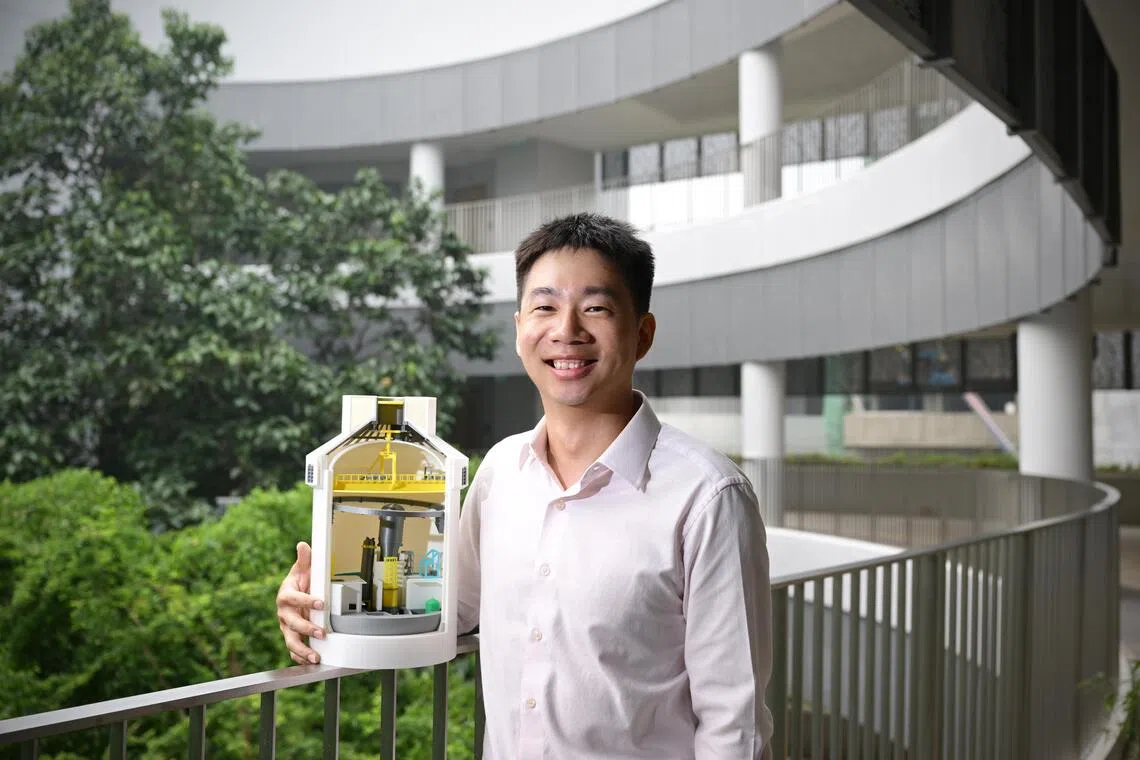
Nuclear energy scientist Ian Ang from the NUS Singapore Nuclear Research and Safety Institute.
ST PHOTO: NG SOR LUAN
Published Oct 17, 2026, 05:00 AM
Updated Oct 17, 2026, 05:00 AM
Singapore nuclear energy scientist Ian Ang is trying to correct myths about nuclear energy, a journey that began more than a decade ago at NUS.
His studies has taken him near the site of the world's worst nuclear accident at the Chernobyl plant.
Ang now studies nuclear safety and waste storage for Singapore, focusing on the potential of underground geological repositories
SINGAPORE – When Singaporean nuclear energy scientist Ian Ang recently visited his neighbourhood doctor for a check-up , he did not expect a debate over his area of research.
“Oh, I disagree with that,” the general practitioner blurted out upon learning that Ang was a researcher at the NUS Singapore Nuclear Research and Safety Institute (SNRSI).
Ang, 35, is not unfamiliar with the topic of nuclear energy triggering opposition. Instead of feeling disheartened, he saw the moment as another opportunity to debunk fears about nuclear energy. “I think it’s funny that nobody really has an opinion about a researcher, but everybody has an opinion if you are doing nuclear energy,” said the nuclear safety researcher.
Probing further, he learnt the doctor had formed his negative opinion of nuclear energy by “many people dying” due to the Chernobyl and Fukushima nuclear disasters.
In 1986, the world’s worst nuclear accident at the Soviet-built Chernobyl plant in Ukraine exposed millions to radiation and contaminated swathes of land.
Decades later, in 2011, a natural disaster triggered meltdowns at Japan’s Fukushima Daiichi Nuclear Power Plant . While m any had died from those disasters, Ang told the doctor the UN had concluded in 2020 that there were no radiation-related deaths directly attributable to the Fukushima incident.
Some 18,430 people died or went missing from the earthquake and tsunami in Fukushima, while more than 3,700 died from illness or suicide linked to the tragedy’s aftermath.
Turning to Chernobyl, Ang noted that while about 50 emergency responders died, less than 0.5% of som e 6,000 cases of thyroid cancer linked to the accident resulted in death, according to a 2008 UN report. Most thyroid cancer cases can be cured with treatment.
“To me, ( the Chernobyl accident ) was an issue caused by humans, not really the technology itself,” Ang said.
Research has shown that the explosion arose from design flaws and operator errors. The operators, for instance, were not informed that their action s could cause the reactor to enter an explosive condition.
Encountering public scepticism about nuclear energy had, in fact, cemented Ang’s decision to study the field more than a decade ago.
At the time, he was a physics student at the National University of Singapore, looking to research anything physics-related, from atomic clocks to solar energy.
In 2014, he landed on nuclear energy for his final-year project after learning that the Singapore Government had set aside $63 million for a nuclear safety research and education programme.
Convinced that nuclear energy has a strong safety record overall, produced low greenhouse gas emissions, and can help Singapore overcome its resource constraints, Ang then applied, successfully, to SNRSI for a scholarship to pursue a PhD in Physics.
As a doctoral student at the University of Bristol, a leading institution in nuclear research that sits near a nuclear facility, he helped conduct research proving that material from the Fukushima reactor core had escaped into the environment, and developed methods to quickly trace other materials from the reactors.
Yet, the most memorable moment of his studies occurred on a trip near the Chernobyl site, during a demonstration given by a child to nuclear experts.
The boy, who looked to be about six years old, showed how locals scanned carrots using a gamma detector to ensure their food was safe.
“I (realised then that) you can actually teach children nuclear science; they can apply it in real life,” said Ang.
“The main lesson I had during the trip was how badly managed the whole fallout was... So many more tragedies occurred because the (Soviet) government didn’t take proper steps to educate the public.”
Since returning to Singapore, Ang has been spending his time digging deeper into nuclear safety.
He is studying the methods and modelling needed for an underground geological repository to store nuclear waste in Singapore, which includes looking into Finland’s efforts to build the world’s first deep geological repository for spent nuclear fuel.
Underground, nuclear waste can be stored in a stable state without affecting the surface.
Addressing the misconception that Singapore lacks space for such facilities, he estimated that the world’s current volume of spent nuclear fuel since the 1950s is the equivalent of just 10 Olympic-sized swimming pools.
In contrast, Singapore’s Jurong Rock Caverns has a capacity of 600 Olympic-sized pools. “We have the common argument that Singapore has no space, but one of the advantages of nuclear technologies is actually that the waste is very manageable,” he added.
Growing the nuclear sector, he warned, cannot be treated as a “fad of the day”. He cited how, after an initial boom in talent in Western countries, new plant construction slowed or stalled around the 1980s, causing expertise to fade.
While Singapore has made no commitment to nuclear energy, Ang is determined to continue hammering out the science needed to make the sector a reality here. He said: “It’s the only energy industry that cares about its entire lifespan and beyond.”
新加坡国立大学核研究与安全研究所的核能科学家 Ian Ang。
圣徒照片:吴索銮
发布于2026年10月17日 上午5:00
更新于2026年10月17日凌晨5:00
新加坡核能科学家 Ian Ang 正在努力纠正有关核能的误解,他的核能探索之旅始于十多年前的新加坡国立大学。
他的研究让他有机会来到切尔诺贝利核电站附近,那里曾发生过世界上最严重的核事故。
Ang目前为新加坡研究核安全和核废料储存问题,重点关注地下地质处置库的潜力。
新加坡——新加坡核能科学家伊恩·昂最近去他家附近的医生那里做体检时,没想到会遇到一场关于他研究领域的辩论。
“哦,我不同意,”这位全科医生在得知Ang是新加坡国立大学核研究与安全研究所(SNRSI)的研究员后脱口而出。
35岁的昂对核能引发的反对并不陌生。他并没有因此气馁,反而将此视为又一次消除人们对核能恐惧的机会。“我觉得很奇怪,大家对研究人员没什么意见,但只要你从事核能研究,每个人都有话说,”这位核安全研究员说道。
进一步询问后,他得知这位医生对核能的负面看法是由于切尔诺贝利和福岛核灾难导致“许多人死亡”。
1986 年,苏联在乌克兰建造的切尔诺贝利核电站发生了世界上最严重的核事故,导致数百万人暴露于辐射中,并污染了大片土地。
几十年后,2011年,一场自然灾害引发了日本福岛第一核电站的堆芯熔毁事故。虽然许多人死于这些灾难,但安格告诉医生,联合国在2020年得出结论,没有与辐射相关的死亡可以直接归因于福岛事故。
福岛地震和海啸造成约 18430 人死亡或失踪,另有 3700 多人死于与这场灾难后果相关的疾病或自杀。
谈到切尔诺贝利事故,Ang指出,虽然约有50名应急救援人员丧生,但根据联合国2008年的一份报告,与该事故相关的约6000例甲状腺癌病例中,死亡病例不到0.5%。大多数甲状腺癌病例可以通过治疗治愈。
“在我看来,(切尔诺贝利事故)是人为造成的问题,而不是技术本身的问题,”Ang说道。
研究表明,爆炸是由设计缺陷和操作失误造成的。例如,操作人员并未被告知他们的操作可能导致反应堆进入爆炸状态。
事实上,十多年前,公众对核能的怀疑态度更加坚定了Ang研究该领域的决心。
当时,他是新加坡国立大学的一名物理系学生,希望研究任何与物理相关的课题,从原子钟到太阳能。
2014 年,他得知新加坡政府已拨款 6300 万美元用于核安全研究和教育计划,于是决定将核能作为他的毕业设计课题。
Ang 确信核能总体上具有良好的安全记录,温室气体排放量低,并且可以帮助新加坡克服资源限制,于是他向新加坡核科学研究院 (SNRSI) 申请并成功获得了攻读物理学博士学位的奖学金。
作为布里斯托尔大学的博士生,他所在的布里斯托尔大学是核研究领域的领先机构,毗邻核设施。他参与开展的研究证明了福岛反应堆堆芯的材料已经泄漏到环境中,并开发了快速追踪反应堆中其他材料的方法。
然而,他求学期间最难忘的时刻发生在切尔诺贝利附近的一次旅行中,当时一个孩子向核能专家进行了演示。
这个看起来大约六岁的男孩向当地人展示了如何使用伽马探测器扫描胡萝卜,以确保食物安全。
“我当时意识到,其实可以教孩子们核科学;他们可以在现实生活中应用这些知识,”Ang说道。
“这次旅行给我最大的教训是,整个事件的后续处理有多么糟糕……由于(苏联)政府没有采取适当措施教育公众,导致了更多悲剧的发生。”
回到新加坡后,Ang一直致力于深入研究核安全问题。
他正在研究在新加坡建造地下地质处置库以储存核废料所需的方法和模型,其中包括研究芬兰为建造世界上第一个用于储存乏核燃料的深地质处置库所做的努力。
核废料在地下可以稳定储存,不会对地表造成影响。
针对新加坡缺乏空间建造此类设施的误解,他估计,自 20 世纪 50 年代以来,世界目前产生的乏核燃料总量相当于 10 个奥运会标准游泳池。
相比之下,新加坡裕廊岩洞的容量相当于600个奥运会标准游泳池。“我们常说新加坡没有空间,但核技术的优势之一恰恰在于其产生的废料非常容易处理,”他补充道。
他警告说,发展核能产业不能被视为“一时风潮”。他举例说,西方国家在最初人才涌现之后,从上世纪80年代开始,新建核电站的速度放缓甚至停滞,导致专业技术流失。
尽管新加坡尚未对核能做出任何承诺,但Ang决心继续推进核能发展所需的科学研究,以使该行业在新加坡成为现实。他说:“核能是唯一一个关注自身整个生命周期乃至更长远未来的能源行业。”