Legal action by Singapore against haze-causing firms in Indonesia may come with diplomatic implications: Lawyers律师称,新加坡对印尼造成雾霾的企业采取法律行动可能产生外交影响。
Minister for Sustainability and the Environment Grace Fu said Singapore will send preventive measure notices to seven companies in Indonesia responsible for fires causing the current haze.
新闻视频
Minister for Sustainability and the Environment Grace Fu said Singapore will send preventive measure notices to seven companies in Indonesia responsible for fires causing the current haze.
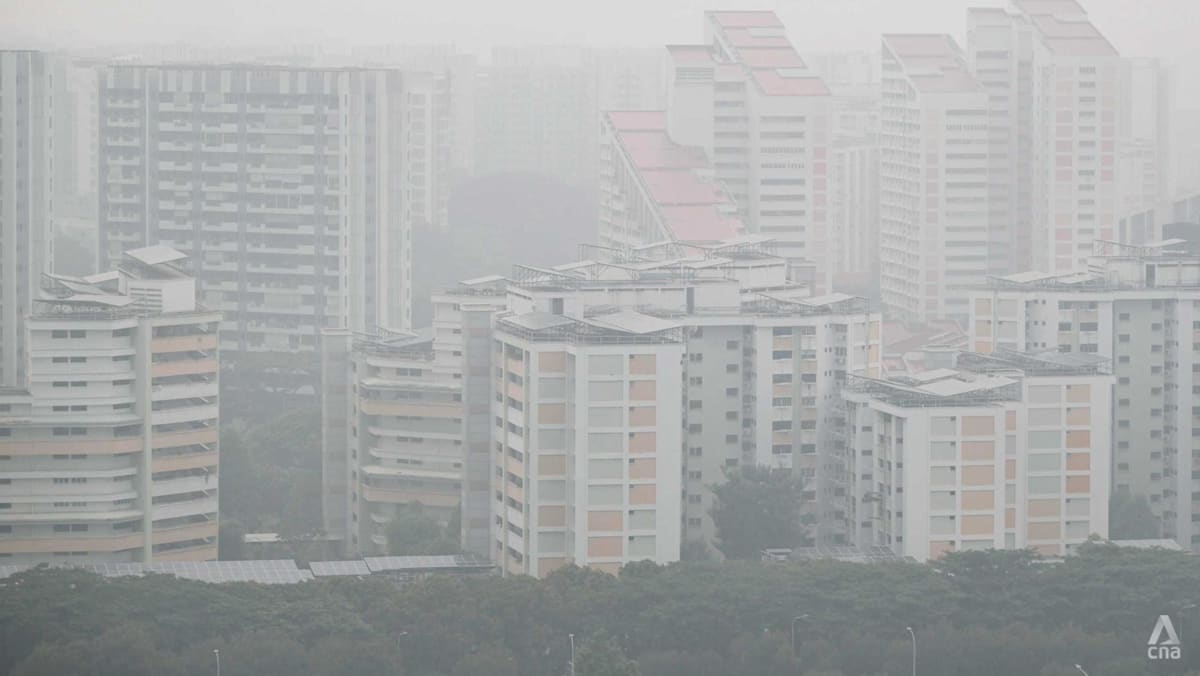
A view of HDB blocks in Potong Pasir shrouded in haze, Oct 16, 2026. (Photo: CNA/Wallace Woon)
This audio is generated by an AI tool.
SINGAPORE: Singapore can take legal action against companies responsible for the ongoing haze situation, but there could be diplomatic implications, legal experts told CNA this week.
The actions that Singapore can take are provided in the Transboundary Haze Pollution Act, said Associate Professor Jolene Lin of the National University of Singapore (NUS).
The Act came into force in 2014 and allows authorities in Singapore to hold companies responsible for causing or contributing to haze pollution in Singapore, even if the activities took place overseas.
On Friday (Oct 16), Minister for Sustainability and the Environment Grace Fu said Singapore will send preventive measure notices to seven companies in Indonesia responsible for fires causing the current haze.
The notices will require the recipient company to deploy firefighting personnel to extinguish or prevent the spread of any fire on land it owns or occupies, among other requirements.
Ms Fu also warned that the air quality in Singapore may deteriorate further and reach hazardous levels.
CNA Games Guess Word Crack the word, one row at a time Buzzword Create words using the given letters Mini Sudoku Tiny puzzle, mighty brain teaser Mini Crossword Small grid, big challenge Word Search Spot as many words as you can Show More Show Less
Taking legal action is not simply a legal decision, said Assoc Prof Lin, who is also director of the Asia-Pacific Centre for Environmental Law.
She noted that when Singapore previously tried to use the Act in 2015, there was some unhappiness in Indonesia.
"There were cries that Singapore was infringing upon Indonesia's sovereignty with this Act by trying to issue enforcement notices outside its jurisdiction," she said.
International law is "very clear" that Indonesia can do as it wishes with its natural resources as long as it does not cause harm to those outside its territory, said Assoc Prof Lin.
Being on the receiving end of harmful effects from the ongoing forest fires in Indonesia grants Singapore the right to use its own laws to tackle the issue, she said.
"The decision to do so, however, has diplomatic implications," she said.
Singapore Management University's Michelle Lim also highlighted the political sensitivities of Singapore taking legal action against companies operating in the territory of a "close and powerful neighbour".
The associate professor of law noted that Singapore does have jurisdiction – but with any moves made, how they are then perceived by Indonesia is another matter, she said.
DIFFICULTIES IN PURSUING RECOURSE
Ms Fu also said on Friday that past cases have given the government a better understanding of the practical challenges of investigating transboundary haze offences, and that it will learn from those cases as it assesses the current haze episode and the steps to take.
Investigations into four companies that began in 2015 are still ongoing, the NEA said this week, underscoring difficulty in taking action under the Act.
“It is not easy, I will be the first to admit, but we must try,” she said. “We must try in order to protect Singaporeans, try whatever that is within our control to bring the best outcome for Singapore, even if it may not be so effective.”
Assoc Prof Lim said there can be difficulty in establishing causation – or proving that conduct by a company caused the haze in Singapore.
"Due to the principle of sovereignty, Singapore's capacity to obtain this information depends on the extent to which Indonesia facilitates or even allows the fact-finding to occur," she said.
Mr Wilson Ang, partner at global law firm Norton Rose Fulbright, said the relevant data that Singapore needs would include air quality readings, satellite hotspot and smoke-plume data, as well as wind and weather data.
"Singapore may need to coordinate with other countries to obtain data to identify the parties involved and ascertain the causation links," he said.
If the companies are within the jurisdiction of Singapore, there would be a "direct nexus" that can expose them to enforcement action, added Mr Ang.
Directors and senior management of agri-plantation companies should take steps internally to investigate and obtain assurance that they are not responsible for or contributing to the haze, he said.
If they are, they should remediate the situation as best they can, he said. "Otherwise, legal liability, reputational damage and the inability to secure financing and investments may ensue," he added.
Get our pick of top stories and thought-provoking articles in your inbox
Stay updated with notifications for breaking news and our best stories
Join our channel for the top reads for the day on your preferred chat app
新加坡永续及环境部长傅海燕表示,新加坡将向印尼七家造成当前雾霾的火灾责任公司发出预防措施通知。
2026年10月16日,波东巴西的组屋笼罩在薄雾之中。(图片:CNA/Wallace Woon)
这段音频由人工智能工具生成。
新加坡:法律专家本周告诉亚洲新闻台,新加坡可以对造成持续雾霾情况的公司采取法律行动,但这可能会产生外交影响。
新加坡国立大学副教授林若琳表示,新加坡可以采取的行动在《跨境烟霾污染法》中有所规定。
该法案于 2014 年生效,允许新加坡当局追究造成或助长新加坡雾霾污染的公司的责任,即使这些活动发生在海外。
10月16日(星期五),新加坡永续发展及环境部长傅海燕表示,新加坡将向造成当前雾霾的七家印尼公司发出预防措施通知。
除其他要求外,通知将要求接收公司部署消防人员扑灭或防止其拥有或占用的土地上发生的任何火灾蔓延。
傅女士还警告说,新加坡的空气质量可能会进一步恶化,达到危险水平。
CNA游戏 猜词游戏 逐行破解单词 流行词游戏 用给定的字母组成单词 迷你数独 小小谜题,挑战你的大脑 迷你填字游戏 小方格,大挑战 单词搜索 尽可能多地找出单词 显示更多 显示更少
林副教授(同时也是亚太环境法中心主任)表示,采取法律行动不仅仅是一个法律决定。
她指出,新加坡此前在 2015 年尝试使用该法案时,印尼方面对此有些不满。
她说:“有人指责新加坡通过这项法案侵犯了印度尼西亚的主权,因为它试图在其管辖范围之外发出强制执行通知。”
林副教授表示,国际法“非常明确”地规定,只要不损害其领土以外的人民,印度尼西亚可以随心所欲地处置其自然资源。
她表示,新加坡正遭受印尼持续森林火灾的有害影响,这赋予了新加坡运用自身法律解决该问题的权利。
“然而,这样做的决定具有外交意义,”她说。
新加坡管理大学的米歇尔·林也强调了新加坡对在“近邻和强大邻国”领土内经营的公司采取法律行动的政治敏感性。
这位法学副教授指出,新加坡确实拥有管辖权——但她说,采取的任何行动,印尼方面会如何看待则是另一回事。
追索困难
傅女士周五还表示,过去的案例让政府更好地了解了调查跨境雾霾违法行为的实际挑战,政府将在评估当前雾霾事件和采取的措施时吸取这些案例的经验教训。
国家环境局本周表示,对四家公司自 2015 年开始的调查仍在进行中,这凸显了根据该法案采取行动的困难。
“我承认,这并不容易,但我们必须尝试,”她说。“为了保护新加坡人,我们必须尝试一切我们力所能及的事情,为新加坡争取最佳结果,即使这些努力可能并非总是有效。”
林副教授表示,要确定因果关系——或者证明某公司的行为导致了新加坡的雾霾——可能存在困难。
“由于主权原则,新加坡能否获得这些信息取决于印尼在多大程度上为事实调查提供便利,甚至允许进行事实调查,”她说。
全球律师事务所 Norton Rose Fulbright 的合伙人 Wilson Ang 先生表示,新加坡需要的相关数据包括空气质量读数、卫星热点和烟羽数据,以及风和天气数据。
他说:“新加坡可能需要与其他国家协调,以获取数据,从而确定涉案各方并查明因果关系。”
Ang先生补充说,如果这些公司位于新加坡的管辖范围内,就会存在“直接联系”,可能会使它们面临执法行动。
他表示,农业种植公司的董事和高级管理人员应该采取内部措施进行调查,并取得保证,确保他们不应对雾霾负责或造成雾霾。
他说,如果情况属实,他们应该尽力补救。“否则,可能会承担法律责任,损害声誉,并导致无法获得融资和投资,”他补充道。
订阅我们的邮件,即可获取精选热点新闻和引人深思的文章。
订阅通知,第一时间获取突发新闻和精彩报道。
加入我们的频道,即可在您常用的聊天应用上获取当日热门文章。