Snap Insight: Protecting Singapore’s outdoor workers from haze is easier said than done简讯:保护新加坡户外工作者免受雾霾影响说起来容易做起来难
Financial pressures make reducing haze exposure difficult for Singapore's outdoor workers, says Olivia Jensen of NUS’ Institute for the Public Understanding of Risk.
新闻视频
Financial pressures make reducing haze exposure difficult for Singapore's outdoor workers, says Olivia Jensen of NUS’ Institute for the Public Understanding of Risk.
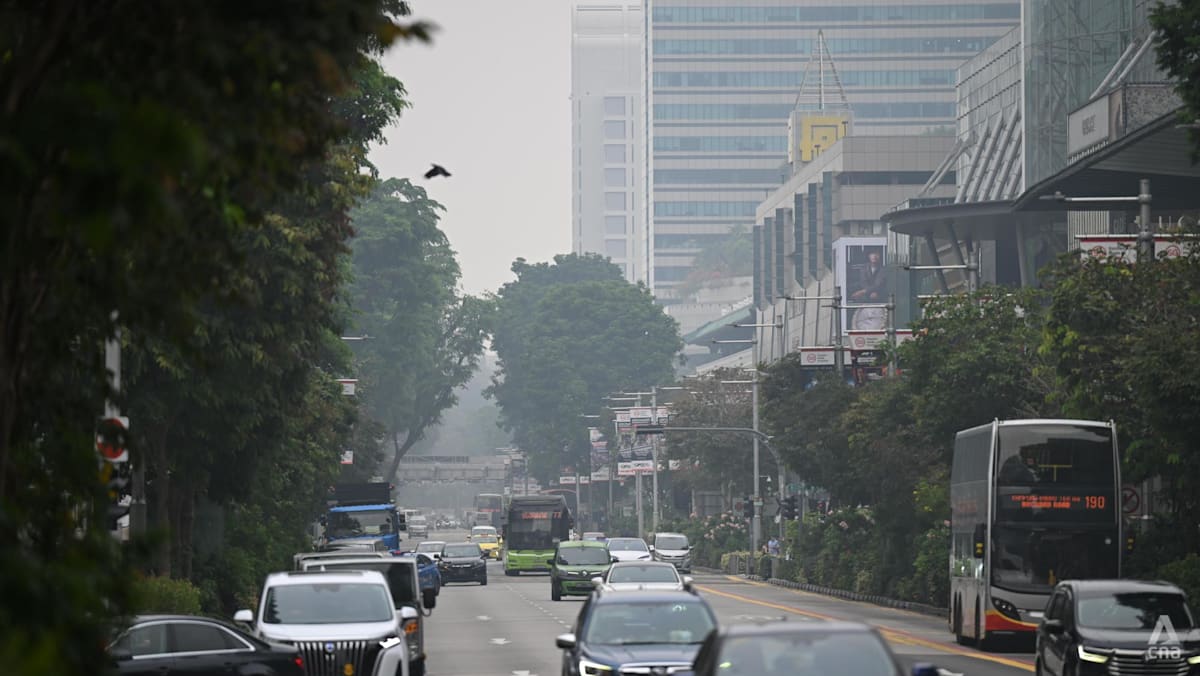
The haze seen at Orchard Road on Oct 12, 2026. (Photo: CNA/Marcus Mark Ramos)
This audio is generated by an AI tool.
SINGAPORE: With the possibility that the haze may reach hazardous levels in Singapore , the tradeoff outdoor workers face may become more acute. Should they prioritise their health or livelihoods?
Even as air quality in parts of Singapore reached the very unhealthy range, road construction sites on my commute yesterday morning were as busy as ever and food delivery riders waited in the traffic.
Singapore's outdoor workers provide essential services. Platform workers deliver the food that families order while sheltering from the haze, while construction crews, cleaners and security guards keep Singapore up and running.
Unlike those who can work from home or avoid outdoor activities, these workers may face financial pressures that make reducing their exposure difficult.
CNA Games Guess Word Crack the word, one row at a time Buzzword Create words using the given letters Mini Sudoku Tiny puzzle, mighty brain teaser Mini Crossword Small grid, big challenge Word Search Spot as many words as you can Show More Show Less Acting Minister for Manpower Jasmin Lau said on Friday (Oct 16) that protecting workers from the haze is “not optional” for employers . The Ministry of Manpower (MOM) will issue further advice on how employers can use 1-hour PM2.5 readings to take action, which may include pausing outdoor work for vulnerable workers.
Acting Minister for Manpower Jasmin Lau said on Friday (Oct 16) that protecting workers from the haze is “not optional” for employers . The Ministry of Manpower (MOM) will issue further advice on how employers can use 1-hour PM2.5 readings to take action, which may include pausing outdoor work for vulnerable workers.
PRONOUNCED RISKS FOR DELIVERY RIDERS
Delivery riders face pronounced risks. Regardless of haze conditions, many are motivated to stay on the road to bring home sufficient income.
Under the Platform Workers Act, platform operators are responsible for the health and safety of their workers and are obliged to advise them on haze protection. Some platform operators, including Grab and Foodpanda, have distributed N95 masks to workers.
However, beyond the fine particles (PM2.5) in haze, delivery riders are also exposed to chronic pollution from vehicle emissions which contain nitrogen dioxide and carbon monoxide, and generate other harmful pollutants like ozone.
This means that Singapore’s 24-hour Pollutant Standards Index (PSI) and PM2.5 readings may not give a complete picture of the air quality delivery riders are exposed to when they spend significant amounts of time in traffic. Without more localised information, it is difficult for them to get a picture of their own exposure or make informed decisions about when to take additional precautions.
In the coming weeks and in preparation for future haze episodes, it would be valuable to extend air quality monitoring to high-exposure locations, including busy intersections and delivery pick-up points. Ideally, measurements would include all the components in the PSI, not just PM2.5.
Making this information publicly accessible would help platforms and workers themselves understand their personal exposure and take appropriate protective action.
In the meantime, there are practical steps that outdoor workers and their employers can take. Properly fitted N95 masks do substantially reduce inhalation of fine particles. They may be hot and uncomfortable, but workers should use them during periods of elevated particulate pollution when outdoor work cannot be avoided.
Platform operators, construction companies and other employers can help distribute masks and encourage their use. Masks are not a substitute for reducing exposure, but they can provide an important additional layer of protection.
Olivia Jensen PhD is Deputy Director and Lead Scientist at the Institute for the Public Understanding of Risk, National University of Singapore.
Get our pick of top stories and thought-provoking articles in your inbox
Stay updated with notifications for breaking news and our best stories
Join our channel for the top reads for the day on your preferred chat app
新加坡国立大学公众风险理解研究所的奥利维亚·詹森表示,财政压力使得新加坡户外工作者难以减少雾霾暴露。
2026年10月12日,乌节路出现雾霾。(图片:CNA/Marcus Mark Ramos)
这段音频由人工智能工具生成。
新加坡:鉴于新加坡的雾霾可能达到危险级别,户外工作者面临的权衡取舍可能会更加严峻。他们应该优先考虑自身健康还是生计?
尽管新加坡部分地区的空气质量达到了非常不健康的程度,但昨天早上我通勤路上的道路施工现场仍然像往常一样繁忙,外卖骑手们也在车流中等待。
新加坡的户外工作者提供着至关重要的服务。平台工人为躲避雾霾的家庭送餐,而建筑工人、清洁工和保安人员则保障着新加坡的正常运转。
与那些可以在家工作或避免户外活动的人不同,这些工人可能面临经济压力,难以减少接触风险。
CNA游戏 猜词游戏 逐行破解单词 流行词游戏 用给定的字母组成单词 迷你数独 小谜题,脑力挑战 迷你填字游戏 小方格,大挑战 单词搜索 尽可能多地找出单词 显示更多 显示更少 人力部代理部长刘嘉敏周五(10月16日)表示,保护工人免受雾霾影响对雇主而言“并非可有可无”。人力部将就雇主如何利用1小时PM2.5读数采取行动发布进一步建议,其中可能包括暂停易感工人的户外工作。
人力部代部长刘嘉敏周五(10月16日)表示,保护工人免受雾霾危害对雇主而言“并非可有可无”。人力部将发布进一步指导,说明雇主如何利用PM2.5一小时浓度读数采取行动,其中可能包括暂停易感工人的户外工作。
外卖骑手面临的显著风险
外卖骑手面临着显著的风险。尽管雾霾天气严重,许多人仍然坚持上路,以赚取足够的收入回家。
根据《平台劳动者法》,平台运营方有责任保障其员工的健康和安全,并有义务向员工提供雾霾防护方面的建议。包括Grab和Foodpanda在内的一些平台运营方已向员工分发了N95口罩。
然而,除了雾霾中的细颗粒物(PM2.5)之外,送货员还会长期暴露于车辆排放的污染物中,这些污染物含有二氧化氮和一氧化碳,并产生臭氧等其他有害污染物。
这意味着新加坡的24小时污染物标准指数(PSI)和PM2.5读数可能无法全面反映外卖骑手在交通拥堵路段长时间工作时所处的空气质量状况。缺乏更本地化的信息,他们难以了解自身所处的空气污染环境,也难以就何时采取额外的预防措施做出明智的决定。
在接下来的几周里,为了应对未来可能发生的雾霾天气,将空气质量监测范围扩大到高暴露区域,例如繁忙的十字路口和送货取货点,将非常有价值。理想情况下,测量应包括PSI(压力-浓度指数)中的所有成分,而不仅仅是PM2.5。
公开这些信息将有助于平台和工作者了解自身面临的风险,并采取适当的防护措施。
与此同时,户外工作者及其雇主可以采取一些切实可行的措施。正确佩戴N95口罩可以显著减少细颗粒物的吸入。虽然它们可能闷热不适,但在颗粒物污染严重且无法避免户外工作时,工人应该佩戴。
平台运营商、建筑公司和其他雇主可以帮助分发口罩并鼓励佩戴。口罩不能替代减少接触,但可以提供重要的额外防护。
Olivia Jensen 博士是新加坡国立大学公众风险认知研究所的副所长兼首席科学家。
订阅我们的邮件,即可获取精选热点新闻和引人深思的文章。
订阅通知,第一时间获取突发新闻和精彩报道。
加入我们的频道,即可在您常用的聊天应用上获取当日热门文章。