Which rule made the biggest difference in managing my children’s screen time?哪条规则对控制孩子的屏幕时间影响最大?
Which screen rule works best for children? A parent shares how boundaries, delayed social media and phone-free bedrooms helped manage screen time. Read more at straitstimes.com.
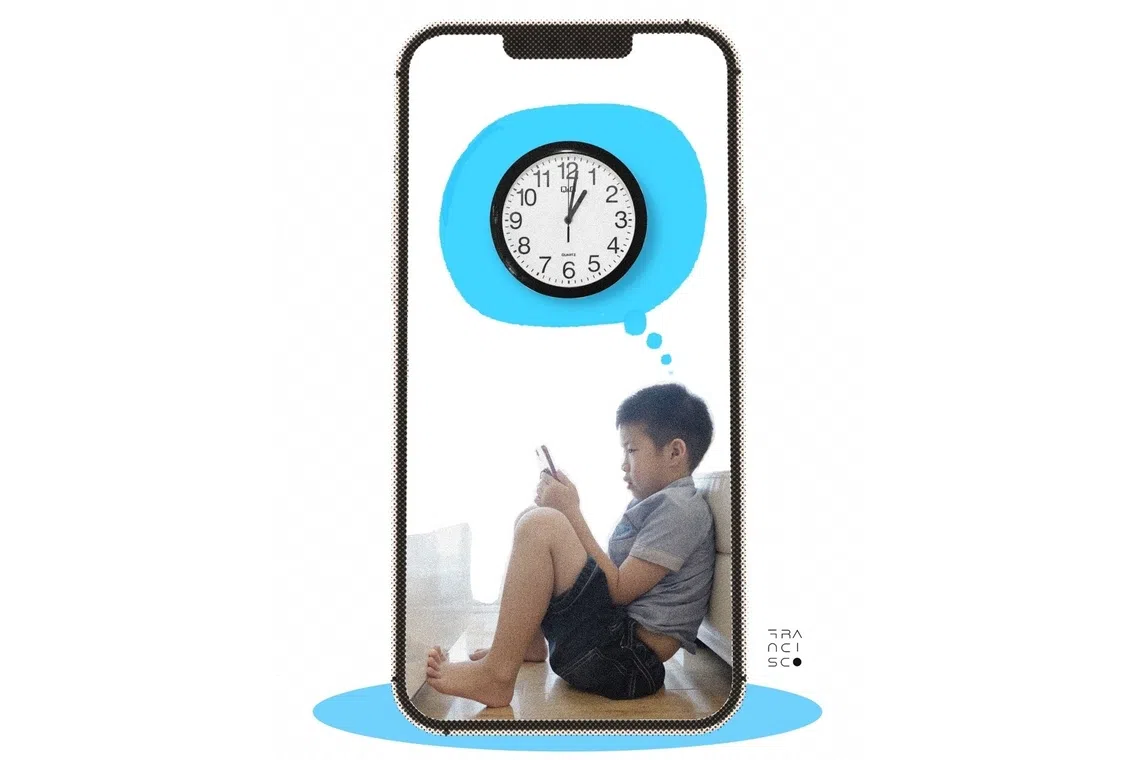
It helps to have clear boundaries when it comes to managing screen time for teenagers.
ST ILLUSTRATION: MANNY FRANCISCO
Published Oct 18, 2026, 11:15 AM
Updated Oct 18, 2026, 11:15 AM
SINGAPORE – I am generally a relaxed parent. I don’t impose a curfew on my teenagers, trusting that they will return at a reasonable hour.
When they bring home less-than-ideal test scores, I calmly ask what went wrong and offer to get them help.
But the one area I am not chill about was their screen time when they were younger.
My children are now 20, 17 and 10. As a parent concerned about the harmful effects of excessive screen time, I have tried implementing a range of rules over the years: from providing a SIM card with limited data to requiring them to leave their mobile phone in the living room at night to delaying access to social media.
I reluctantly handed my eldest child a mobile phone when he was 13. It was a hand-me-down phone paired with a SIM card that had only 500MB of data.
I figured that with a slow phone and limited data, he would not be able to spend much time on it.
I figured wrong. Where there is a will, there is a way, especially when it comes to teenagers and screens.
With Wi-Fi widely available, the lack of mobile data was hardly an obstacle.
Without family control applications and clear boundaries, I spent a lot of time arguing with him over the amount of time he was spending on the screen.
Connection before correction
With a strong-willed child like my son, rules provide structure, but gaining his buy-in is a must.
So we had many conversations, where I explained that my primary concern was excessive screen time and the risk of gaming addiction.
To bolster my argument, I shared research articles with him on how excessive screen time impacts the developing brain. I wanted him to understand the risks, even though he insisted his screen use was under control.
I explained that the rules were there to help us manage his habits – for instance, requiring his mobile phone to be left in the living room overnight.
I reminded him that he should balance screen time with other activities, and I made sure to spend time with him doing things he enjoyed.
Connecting with him and helping him realise the rules were there for his own good made him much more willing to accept the restrictions.
For my son, keeping his phone in the living room at night proved to be the most effective screen rule, preventing him from staying up late on his device during secondary school.
When it was time for my daughter to get a mobile phone three years later, I applied what I had learnt from my experience with her brother.
We still gave her an old mobile phone and she took over her brother’s 500MB SIM card.
In addition to our existing rules, I used the Family Link app to preset agreed daily screen limits, required permission before app downloads, and held off on allowing social media access.
Without the distraction of social media, she continued to nurture her love for reading, devouring e-books one after another. She also picked up hobbies like knitting, finding craft ideas from YouTube videos.
Just as I had done with her brother, I explained the rationale behind the restrictions and shared with her about the impact of social media on mental health, especially for teenage girls.
I emphasised that the idea is to delay her use of social media and not ban it indefinitely.
In 2026, at 17, she finally downloaded Instagram. She later shared that she was glad she had waited.
For my daughter, who had little interest in gaming, delaying social media made the single biggest difference.
Modelling the behaviour
The most challenging rule to abide by is to model the behaviour I hope to see in my children. But I continuously try.
When I am not working, I make it a point to put away my mobile phone when they talk to me to give them my full attention.
If I need to use my phone while with them, I explain why. For instance, letting them know I need to quickly reply to an urgent e-mail or message.
After navigating screen time with teenagers in recent years, I have learnt that engaging them even with rules in place is far more effective than relying solely on strict bans.
Simple boundaries – like requiring permission before downloading apps, putting devices away during meals and leaving phones in the living room overnight – help to protect family time.
Delaying social media also encourages habits like reading and helps to shield teens from online dangers like cyberbullying.
Yet, restrictions alone are not enough. We also do fun offline activities together, like playing card games or cycling, to remind them that enjoyable experiences happen in real life, not just online.
American social psychologist Jonathan Haidt, author of The Anxious Generation: How The Great Rewiring Of Childhood Is Causing An Epidemic Of Mental Illness (2024), says that the most important rule for managing screen use is to keep devices out of the bedroom.
“What we want to avoid is kids consuming content on their own, especially alone in their bedroom and at night,” he says, explaining that a combination of low willpower late in the day, loneliness, darkness and time stolen from sleep “have led to really bad outcomes for kids”.
Looking back, there is no single screen rule that works as a magic wand for every child.
But establishing clear boundaries, maintaining open communication and modelling good habits have made all the difference in building healthy digital routines for our family.
Jane Ng is a senior correspondent who covers parenting, education and lifestyle stories. She writes a regular column, Minor Issues, where she mulls over her parenting dilemmas.
对于青少年来说,在管理屏幕时间方面设定明确的界限很有帮助。
插图:曼尼·弗朗西斯科
发布于 2026 年 10 月 18 日上午 11:15
更新于2026年10月18日上午11:15
新加坡——我通常是一位比较放松的家长。我不会对我的青少年孩子设定宵禁时间,因为我相信他们会在合理的时间回家。
当他们带回不太理想的考试成绩时,我会冷静地询问他们哪里出了问题,并主动提出帮助他们。
但我最不能接受的是他们小时候的屏幕时间。
我的孩子现在分别是 20 岁、17 岁和 10 岁。作为一名担心过度使用电子屏幕有害影响的家长,多年来我尝试实施了一系列规则:从提供流量有限的 SIM 卡,到要求他们晚上把手机放在客厅,再到延迟访问社交媒体。
我不太情愿地在我大儿子 13 岁时给了他一部手机。那是一部别人用过的旧手机,配的 SIM 卡只有 500MB 的流量。
我估计,他的手机速度慢,流量有限,所以他不可能花太多时间在上面。
我猜错了。只要有决心,就没有做不成的事,尤其是在青少年沉迷电子屏幕这件事上。
由于 Wi-Fi 的普及,移动数据的缺乏几乎不成问题。
如果没有家庭控制应用程序和明确的界限,我花了很多时间和他争论他花在屏幕上的时间。
校正前的连接
对于像我儿子这样意志坚强的孩子来说,规则可以提供秩序,但获得他的认同是必须的。
所以我们进行了多次谈话,我解释说我最担心的是屏幕时间过长和游戏成瘾的风险。
为了佐证我的观点,我给他看了一些研究文章,讲解过度使用电子屏幕如何影响大脑发育。我希望他能明白其中的风险,尽管他坚称自己使用电子屏幕的时间控制得很好。
我解释说,这些规则是为了帮助我们管理他的习惯——例如,要求他晚上把手机留在客厅里。
我提醒他应该平衡看屏幕时间和参与其他活动的时间,并且我确保花时间陪他做他喜欢的事情。
与他建立联系,帮助他认识到规则是为了他好,这让他更愿意接受这些限制。
对我儿子来说,晚上把手机放在客厅里是最有效的屏幕使用规则,这阻止了他在中学期间熬夜玩手机。
三年后,当女儿到了该拥有手机的时候,我运用了从她哥哥身上学到的经验。
我们还是给了她一部旧手机,她也用了她哥哥的500MB SIM卡。
除了我们现有的规则之外,我还使用 Family Link 应用预设了约定的每日屏幕使用限制,要求在下载应用之前获得许可,并暂缓允许访问社交媒体。
没有了社交媒体的干扰,她继续培养着对阅读的热爱,一本接一本地阅读电子书。她还培养了一些爱好,比如编织,并从YouTube视频中寻找手工创意。
就像我之前对她哥哥做的那样,我向她解释了这些限制背后的原因,并和她分享了社交媒体对心理健康的影响,尤其是对少女的影响。
我强调,我们的想法是推迟她使用社交媒体的时间,而不是无限期地禁止她使用。
2026年,17岁的她终于下载了Instagram。后来她表示,很高兴自己等了这么久。
对于我这个对游戏没什么兴趣的女儿来说,推迟她使用社交媒体产生了最大的影响。
行为建模
最难遵守的规则就是以身作则,树立我希望孩子们拥有的行为榜样。但我一直在努力。
当我不工作的时候,我会特意把手机收起来,以便全神贯注地听他们说话。
如果我需要在和他们在一起的时候使用手机,我会解释原因。例如,告诉他们我需要尽快回复一封紧急邮件或信息。
近年来,在与青少年相处的过程中,我发现,即使制定了规则,引导他们参与屏幕时间也比仅仅依靠严格的禁令要有效得多。
简单的界限——例如下载应用程序前需要获得许可、吃饭时收起电子设备以及晚上把手机放在客厅——有助于保护家庭时间。
延迟使用社交媒体还可以培养阅读等习惯,并有助于保护青少年免受网络欺凌等网络危险的侵害。
然而,仅仅采取限制措施是不够的。我们还会一起进行一些有趣的线下活动,比如玩纸牌游戏或骑自行车,以此来提醒他们,快乐的体验不仅存在于网络世界,也存在于现实生活中。
美国社会心理学家乔纳森·海特(Jonathan Haidt)是《焦虑的一代:童年的重大重塑如何导致精神疾病的流行》(2024)一书的作者,他表示,管理屏幕使用的最重要规则是让设备远离卧室。
“我们想要避免的是孩子们独自消费内容,尤其是独自在卧室里和晚上消费,”他解释说,一天中晚些时候意志力下降、孤独、黑暗以及睡眠时间被剥夺等因素“已经对孩子们造成了非常糟糕的后果”。
回过头来看,并没有什么单一的屏幕使用规则能够像魔法棒一样对所有孩子都有效。
但是,建立清晰的界限、保持开放的沟通以及树立良好的习惯,对于为我们家建立健康的数字习惯起到了至关重要的作用。
Jane Ng是一位资深记者,主要报道育儿、教育和生活方式方面的故事。她定期撰写专栏“小问题”,在专栏中探讨她遇到的育儿难题。