SIA pilots could not avoid turbulence on 2025 flight that led to crew member fracturing ankle: Report据报道,新加坡航空2025年一架航班遭遇湍流,导致一名机组人员脚踝骨折。
SIA turbulence incident on Manila-Singapore flight left one cabin crew member with a fractured ankle, TSIB report says Read more at straitstimes.com.
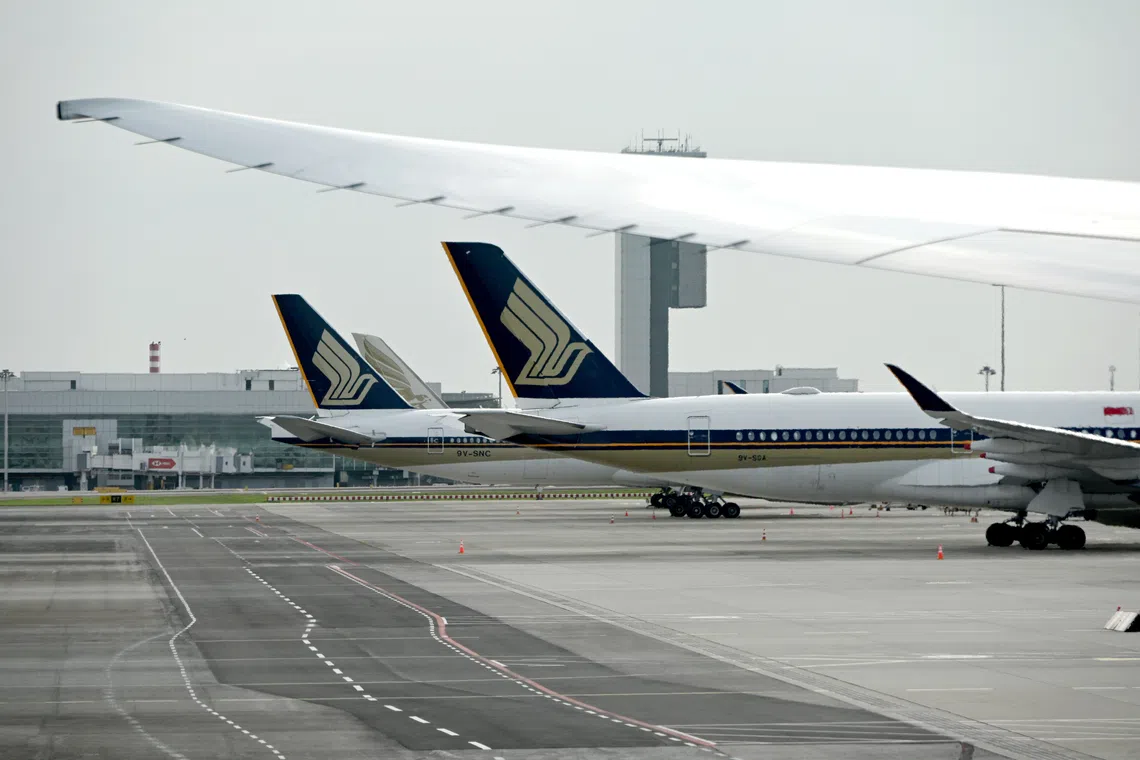
Four other cabin crew members on Flight SQ919 suffered minor injuries.
Published Oct 19, 2026, 05:00 AM
Updated Oct 19, 2026, 05:00 AM
A Singapore Airlines flight from Manila hit turbulence on 14 Nov 2025. One cabin crew member fractured an ankle, and four others had minor injuries.
TSIB said pilots saw storm clouds, kept a 5,000 ft gap, and used seatbelt signs. Turbulence still hit outside the clouds, showing the risk can spread beyond visible storms.
SIA accepted the findings and later reminded crew that significant turbulence can occur outside clouds. The injured crew member has returned to flying duties.
SINGAPORE – A Singapore Airlines (SIA) cabin crew member suffered a fracture to the right ankle after a flight heading to Singapore from the Philippine capital Manila encountered turbulent weather.
The Transport Safety Investigation Bureau (TSIB), which falls under the Transport Ministry, issued a report on Oct 5 detailing the findings of its probe into the incident.
The SIA plane, an Airbus A350-900 jet, encountered turbulence caused by convective activity, or vertical movements of moist, hot air, on Nov 14, 2025, at 7.52pm , about two hours into a flight estimated to take about two hours and 55 minutes.
At about 7.40pm, when the plane was cruising at 40,000ft, the pilots were alerted by their weather radars to storm clouds about 80 nautical miles ahead.
The pilots decided to continue with their planned route because they were flying at an altitude above the storm clouds, which were at about 30,000ft.
That means the plane was about 10,000ft above the clouds, exceeding the 5,000ft margin recommended by the plane manufacturer to avoid the “area of greatest threat”, the report said.
Even so, the pilots switched on the “fasten seat belt” signs as a precaution and advised the crew to continue cabin service cautiously.
About 11 minutes later, air traffic control instructed the pilots to descend from 40,000ft to 34,000ft.
The pilots started descending at 700ft per minute instead of the usual rate of 1,000ft per minute, to allow the aircraft to fly at an altitude of about 37,000ft – more than 5,000ft above the storm clouds.
At 7.53pm , the plane encountered turbulence while descending at about 38,450 feet.
The report said the vertical acceleration of the plane dropped from plus 1G to plus 0.7G in 1.34 seconds, before rising to plus 1.89G in 0.34 second.
It then fluctuated between plus 1.89G and plus 1.5G for the next 1¼ seconds, before reaching plus 1.66G . It then dropped to plus 0.24G in 1¼ seconds. The aircraft returned to stable flight after another two seconds.
Gravitational force, or G-force, measures acceleration or deceleration compared with the normal pull of gravity on earth. The baseline is set at plus 1G, which means that at plus 1.89G, a person would feel as if they were 1.89 times their body weight.
The pilot said the plane was not flying through storm clouds when the turbulence hit, the report added.
The plane landed in Singapore at 8.41pm .
The TSIB report said the pilots reviewed pre-flight briefing materials before the flight, including a forecast of occasional storm clouds that could reach a height of 51,000ft .
Despite the precautions the pilots took – such as switching on the seat belt signs and opting for a shallower descent – they could not avoid the turbulence, the report added.
The incident, the report said, highlighted how the effects of thunderstorms and other weather phenomena can spill beyond the top of storm clouds detected on weather radars, and how they can have a harmful effect even if planes maintain the recommended vertical distance of 5,000ft from the clouds.
In response to queries, SIA said it acknowledged the report’s findings. It added that its pilots and cabin crew receive regular training, guidance and updates on safety precautions, including measures to manage turbulence.
The airline also said the cabin crew member who suffered a fractured ankle has since returned to flying duties.
SIA has, in the past, reminded its pilots to switch on the seat belt signs to ensure that passengers and cabin crew remain seated whenever weather conditions pose a safety risk.
The carrier has also discussed case studies of turbulence-related incidents with cabin crew members.
At least 11 turbulence incidents involving Singapore-registered aircraft were recorded from 2004 to 2025, based on TSIB air safety investigation reports.
Esther Loi is a journalist at The Straits Times, where she covers transport issues.
Aviation/Aerospace sector
SQ919航班上另有四名机组人员受轻伤。
发布于 2026 年 10 月 19 日上午 5:00
更新于2026年10月19日凌晨5:00
2025年11月14日,一架从马尼拉起飞的新加坡航空公司航班遭遇气流颠簸。一名机组人员脚踝骨折,另有四人受轻伤。
TSIB表示,飞行员看到了风暴云,保持了5000英尺的安全距离,并使用了安全带指示灯。尽管如此,云层外仍然出现了湍流,这表明风险可能超出可见风暴的范围。
新加坡航空公司接受了调查结果,并随后提醒机组人员,云层外也可能出现强烈的湍流。受伤的机组人员已恢复飞行任务。
新加坡——一架从菲律宾首都马尼拉飞往新加坡的航班遭遇湍流,导致一名新加坡航空公司(SIA)的机组人员右脚踝骨折。
隶属于交通部的运输安全调查局(TSIB)于10月5日发布报告,详细介绍了其对该事件的调查结果。
2025 年 11 月 14 日晚上 7 点 52 分,新加坡航空一架空客 A350-900 型飞机遭遇了由对流活动(即潮湿热空气的垂直运动)引起的湍流。当时,该航班预计飞行时间为 2 小时 55 分钟左右,飞行时间约为 2 小时 55 分钟。
晚上 7 点 40 分左右,飞机在 40,000 英尺高空巡航时,飞行员的气象雷达发出警报,称前方约 80 海里处有风暴云。
由于飞行员当时飞行的高度高于风暴云,风暴云的高度约为 30,000 英尺,因此他们决定继续执行原定航线。
报告称,这意味着飞机当时位于云层上方约 10,000 英尺处,超过了飞机制造商建议的 5,000 英尺的裕度,以避免进入“最大威胁区域”。
即便如此,飞行员还是出于谨慎打开了“系好安全带”的指示灯,并建议机组人员谨慎地继续提供客舱服务。
大约 11 分钟后,空中交通管制指示飞行员从 40,000 英尺下降到 34,000 英尺。
飞行员开始以每分钟 700 英尺的速度下降,而不是通常的每分钟 1,000 英尺的速度,以便让飞机在大约 37,000 英尺的高度飞行——比风暴云高出 5,000 多英尺。
晚上 7 点 53 分,飞机在下降到约 38450 英尺时遭遇湍流。
报告称,飞机的垂直加速度在 1.34 秒内从 +1G 降至 +0.7G,然后在 0.34 秒内升至 +1.89G。
随后,飞机过载在接下来的1.25秒内于+1.89G和+1.5G之间波动,之后达到+1.66G。接着,过载在1.25秒内降至+0.24G。两秒后,飞机恢复稳定飞行。
重力,或称G力,衡量的是相对于地球正常重力的加速度或减速度。基准值设定为+1G,这意味着在+1.89G时,人会感觉自己承受着相当于自身体重1.89倍的重力。
报告还指出,飞行员表示,飞机遭遇湍流时并未飞越风暴云层。
飞机于晚上8点41分降落在新加坡。
TSIB 的报告称,飞行员在飞行前查看了飞行前简报材料,其中包括对偶尔可能达到 51,000 英尺高度的暴风云的预测。
报告补充说,尽管飞行员采取了预防措施——例如打开安全带指示灯和选择较浅的下降角度——但他们仍然无法避免湍流。
报告称,该事件凸显了雷暴和其他天气现象的影响范围会超出天气雷达探测到的风暴云顶部,即使飞机与云层保持建议的 5000 英尺垂直距离,也可能造成有害影响。
针对相关问询,新加坡航空公司表示已确认该报告的调查结果。该公司补充说,其飞行员和机组人员会定期接受安全预防措施方面的培训、指导和更新,包括应对湍流的措施。
该航空公司还表示,此前脚踝骨折的机组人员已经恢复飞行工作。
新加坡航空公司过去曾提醒飞行员,在天气状况构成安全风险时,务必打开安全带指示灯,以确保乘客和机组人员留在座位上。
该航空公司还与机组人员讨论了与湍流相关的事故案例研究。
根据新加坡运输安全局 (TSIB) 的航空安全调查报告,从 2004 年到 2025 年,至少记录了 11 起涉及新加坡注册飞机的湍流事件。
埃丝特·罗伊是《海峡时报》的记者,主要报道交通运输问题。
航空航天领域