Commentary: Do Botox and fillers belong in a self-care routine?评论:肉毒杆菌和填充剂应该纳入日常护理程序吗?
Aesthetic injectables are increasingly seen as expressions of self-improvement and female agency. But at what cost? Writer Annie Tan weighs in.
新闻视频
Aesthetic injectables are increasingly seen as expressions of self-improvement and female agency. But at what cost? Writer Annie Tan weighs in.
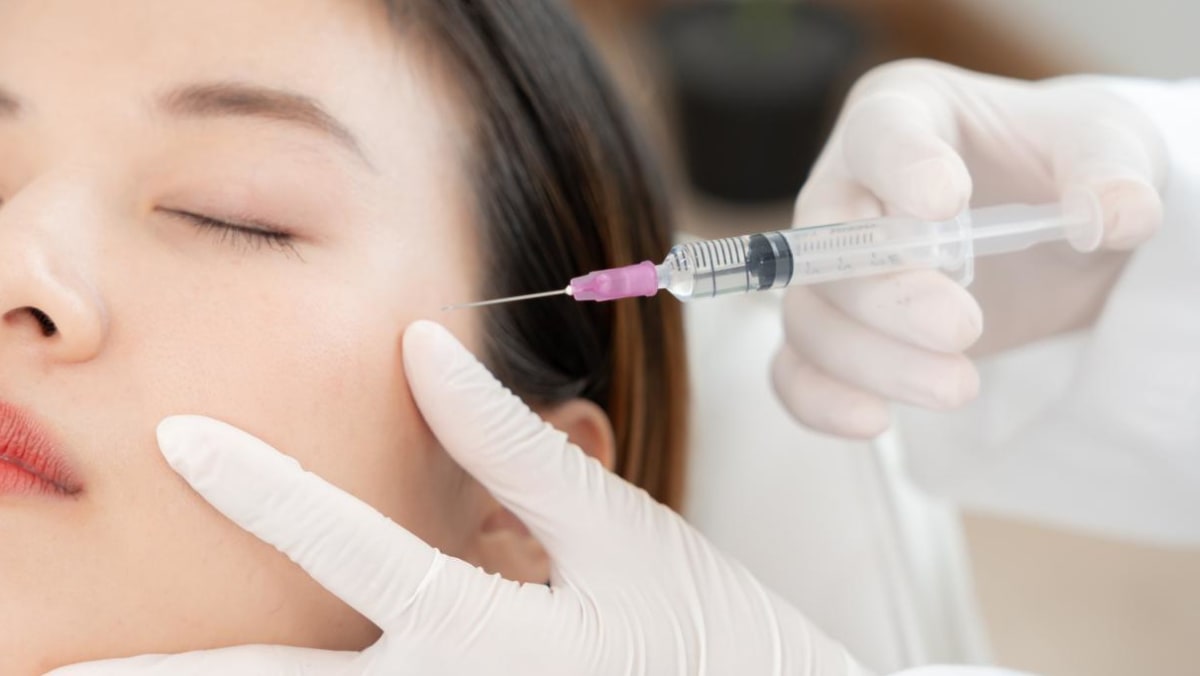
It is worth examining why we are seeking beauty in a syringe and at a younger age. (Photo: iStock/Nuttawan Jayawan)
This audio is generated by an AI tool.
SINGAPORE: This month, details emerged of a woman in Singapore who was injected with more than three times the annual limit of dermal filler in one session. She suffered prolonged facial pain, high blood pressure and weight loss. She underwent nerve surgery to manage the pain and lost her job because of the ordeal.
Fillers and Botox used to be discreet solutions for patients seeking to look younger. But this has changed in recent years.
More celebrities, influencers and consumers, particularly women, are opting for such procedures and sharing their experience. As a result, injectables are not only increasingly normalised but entwined with the language of self-care.
It may sound like female agency and empowerment, but one wonders how much autonomy there is in a marketplace that sells beauty and self-improvement by the millilitre, and what it really costs women.
CNA Games Guess Word Crack the word, one row at a time Buzzword Create words using the given letters Mini Sudoku Tiny puzzle, mighty brain teaser Mini Crossword Small grid, big challenge Word Search Spot as many words as you can Show More Show Less
ARE FILLERS THE NEW FACIALS?
The other day, a friend mentioned that she is going for some injectables in Seoul with friends. She said this as casually as someone talking about a girls’ spa-cation or facial.
That has become the language of aesthetic injectables today. Clinics call it “lunchtime fix” and “baby Botox”. Patients have likened it to a gift to themselves – the same way one picks up a new outfit for a special occasion.
Broader shifts in attitude have taken place over the years.
In 2010, Kim Kardashian sparked controversy by undergoing Botox on her reality TV show Keeping Up With The Kardashians and experiencing bruising afterwards. Some viewers questioned her decision to get cosmetic Botox at the age of 29.
Since then, growing openness around Botox and fillers has reframed these treatments as regular beauty maintenance, though they remain medical procedures.
Aesthetic injectables come with a different set of risks compared to routine products such as sunscreen, retinol and facials. Singapore’s Health Sciences Authority classifies dermal fillers as Class D medical devices – its highest risk category. Serious complications, though relatively rare, include infection, tissue death and blindness.
Botox, meanwhile, is regulated as a prescription-only medicine. Potential complications include drooping eyelids and eyebrows, an uneven smile and muscle weakness.
UNREALISTIC BEAUTY EXPECTATIONS
You might have read recent critiques of actors being unable to emote because of their uncannily smooth foreheads and eye areas. Actress and filmmaker Olivia Wilde said in June: “As a director, I now am constantly searching for actresses who can still move their faces. And it’s not easy.”
She conceded that actors face pressure to get work done, and many celebrities have spoken out about this scrutiny as well.
Not all celebrities are happy with the results of injectables. Some have done it and then quit it.
Actress Courteney Cox had her facial fillers dissolved because she felt they made her look “fake”. Fashion model Linda Evangelista said she dissolved her facial fillers but continues to use Botox.
With the shifting baseline for youth and beauty, women who avoid Botox and fillers, such as director and actress Justine Bateman, have been criticised for ageing naturally. Though Bateman considered these procedures, she ultimately decided against them, saying: “I like feeling that I am a different person now than I was when I was 20.”
Yet women are commencing aesthetic treatments at a younger age , as early as their 20s . Doctors told CNA that one factor contributing to the boom is the normalisation and proliferation of such treatments on social media.
How freely do patients make these choices when societal expectations of beauty and youth are so deeply rooted in our culture and constantly reinforced online?
WHERE DOES LOOKSMAXXING END?
“Looksmaxxing”, an internet trend centred on the idea of improving one’s appearance through beauty, fitness and cosmetic routines began in male online communities. However, one could say women have been culturally conditioned to “looksmaxx” way before this term was coined.
Botox and many fillers require repeat treatments every few months to maintain their effects. In a 2025 global survey of 1,600 cosmetic injection patients, nearly two-thirds reported receiving treatments every three to six months.
Patients are also targeting more areas. An international study of 194 Botox patients found that they typically began treating frown lines, then moved on to crow's feet and forehead lines.
When injectables are fused with the idea of self-improvement, might it become a slippery slope?
One of the great privileges of living in this day and age is that medical advancements have enabled us to feel and look younger. Women and men alike should have the freedom to choose from available options without fear of judgment.
However, if we increasingly seek beauty in a syringe and at a younger age, it is worth examining trade-offs, risks and what fuels this pursuit. Whose ideals are we pursuing, and are we moving towards an ever-shifting goalpost of youth and beauty for ourselves and others?
Annie Tan is a freelance writer based in Singapore.
Get our pick of top stories and thought-provoking articles in your inbox
Stay updated with notifications for breaking news and our best stories
Join our channel for the top reads for the day on your preferred chat app
美容注射越来越被视为自我提升和女性自主权的体现。但这背后又隐藏着怎样的代价?作家安妮·谭对此进行了探讨。
值得探讨的是,为什么我们会在更年轻的时候就追求注射美容。(图片:iStock/Nuttawan Jayawan)
这段音频是由人工智能工具生成的。
新加坡:本月,一名新加坡女子在一次注射中被注射了超过年度限量三倍的皮肤填充剂,相关细节曝光。她因此遭受了持续的面部疼痛、高血压和体重下降。为了缓解疼痛,她接受了神经手术,并因此失去了工作。
过去,填充剂和肉毒杆菌注射是让患者看起来更年轻的低调之选。但近年来,这种情况发生了变化。
越来越多的名人、网红和消费者,尤其是女性,选择接受此类美容疗程并分享她们的体验。因此,注射美容不仅日益普及,而且与自我护理的概念紧密相连。
这听起来像是女性的自主权和赋权,但人们不禁要问,在一个按毫升出售美容和自我提升产品的市场中,女性究竟有多少自主权,而这又真正让女性付出了什么代价。
CNA游戏 猜词游戏 逐行破解单词 流行词游戏 用给定的字母组成单词 迷你数独 小小谜题,挑战你的大脑 迷你填字游戏 小方格,大挑战 单词搜索 尽可能多地找出单词 显示更多 显示更少
填充剂会成为新的面部护理吗?
前几天,一个朋友提到她要和朋友们去首尔打针。她说这话的语气就像在谈论女生们的SPA之旅或面部护理一样随意。
如今,这已成为注射美容领域的惯用语。诊所称之为“午餐速效”或“迷你肉毒杆菌”。患者则将其比作送给自己的一份礼物——就像为特殊场合挑选一套新衣服一样。
这些年来,人们的态度发生了更广泛的转变。
2010年,金·卡戴珊在真人秀节目《与卡戴珊姐妹同行》中接受肉毒杆菌注射,之后出现淤青,引发争议。一些观众质疑她29岁时进行肉毒杆菌注射美容的决定。
从那时起,人们对肉毒杆菌和填充剂的态度越来越开放,这些疗法也被视为常规美容保养,尽管它们仍然是医疗程序。
与防晒霜、视黄醇和面部护理等日常用品相比,注射美容产品存在一系列不同的风险。新加坡卫生科学局将皮肤填充剂归类为D类医疗器械——风险最高类别。虽然相对罕见,但严重的并发症包括感染、组织坏死和失明。
肉毒杆菌注射则属于处方药。潜在的并发症包括眼睑和眉毛下垂、笑容不对称以及肌肉无力。
不切实际的审美期望
你可能读到过一些批评,认为有些演员因为额头和眼周肌肤过于光滑而无法表达情感。演员兼导演奥利维亚·王尔德在六月份表示:“作为一名导演,我现在一直在寻找那些面部表情丰富的演员。这并不容易。”
她承认演员面临着完成工作的压力,许多名人也曾公开谈论过这种审视。
并非所有名人都对注射美容的效果感到满意。有些人尝试过,然后就停止了。
女演员柯特妮·考克斯溶解了面部填充物,因为她觉得填充物让她看起来“很假”。时装模特琳达·伊万格丽斯塔表示,她溶解了面部填充物,但仍然继续注射肉毒杆菌。
随着人们对青春和美的标准不断变化,像导演兼演员贾斯汀·贝特曼这样不打肉毒杆菌和填充剂的女性,因为自然衰老而受到批评。尽管贝特曼考虑过这些疗程,但她最终还是放弃了,她说:“我喜欢现在的自己和20岁时截然不同的感觉。”
然而,女性开始接受美容治疗的年龄越来越小,最早的甚至在20多岁就开始了。医生告诉亚洲新闻台(CNA),促成这一现象的一个因素是社交媒体上此类治疗的正常化和普及。
当社会对美和年轻的期望深深植根于我们的文化中,并且不断在网络上得到强化时,患者究竟能在多大程度上自由地做出这些选择?
外貌提升的极限在哪里?
“外貌提升”(Looksmaxxing)是一种以美容、健身和化妆等方式改善外貌为核心的网络潮流,最初兴起于男性网络社区。然而,可以说,早在“外貌提升”这个词出现之前,女性就已经在文化熏陶下形成了这种观念。
肉毒杆菌和许多填充剂需要每隔几个月重复注射才能维持效果。在2025年一项针对1600名美容注射患者的全球调查中,近三分之二的人表示每三到六个月接受一次治疗。
患者的治疗目标也扩展到了更多部位。一项针对194名肉毒杆菌注射患者的国际研究发现,他们通常先从治疗皱眉纹开始,然后逐渐扩展到鱼尾纹和抬头纹。
当注射美容与自我提升的理念结合在一起时,会不会变成一条危险的滑坡?
生活在当今时代的一大幸事是,医学的进步使我们能够保持年轻容颜和感觉。无论男女,都应该有权自由选择各种方案,而不必担心受到评判。
然而,如果我们越来越倾向于通过注射来追求更年轻的美丽,那么就值得我们审视其中的权衡、风险以及这种追求背后的驱动力。我们究竟在追求谁的理想?我们是否正朝着一个不断变化的青春与美丽的标准迈进,而这个标准既适用于我们自己,也适用于他人?
Annie Tan是一位居住在新加坡的自由撰稿人。
订阅我们的邮件,即可获取精选热点新闻和引人深思的文章。
订阅通知,第一时间获取突发新闻和精彩报道。
加入我们的频道,即可在您常用的聊天应用上获取当日热门文章。