Singapore haze: Is your old air purifier still effective, and how much does it cost to run one?新加坡雾霾:你家的旧空气净化器还能有效净化空气吗?运行一台新的空气净化器需要多少钱?
How often should you replace the filters, and is one air purifier enough for an entire flat? Experts explain how to get the most out of the devices.
How often should you replace the filters, and is one air purifier enough for an entire flat? Experts explain how to get the most out of the devices.
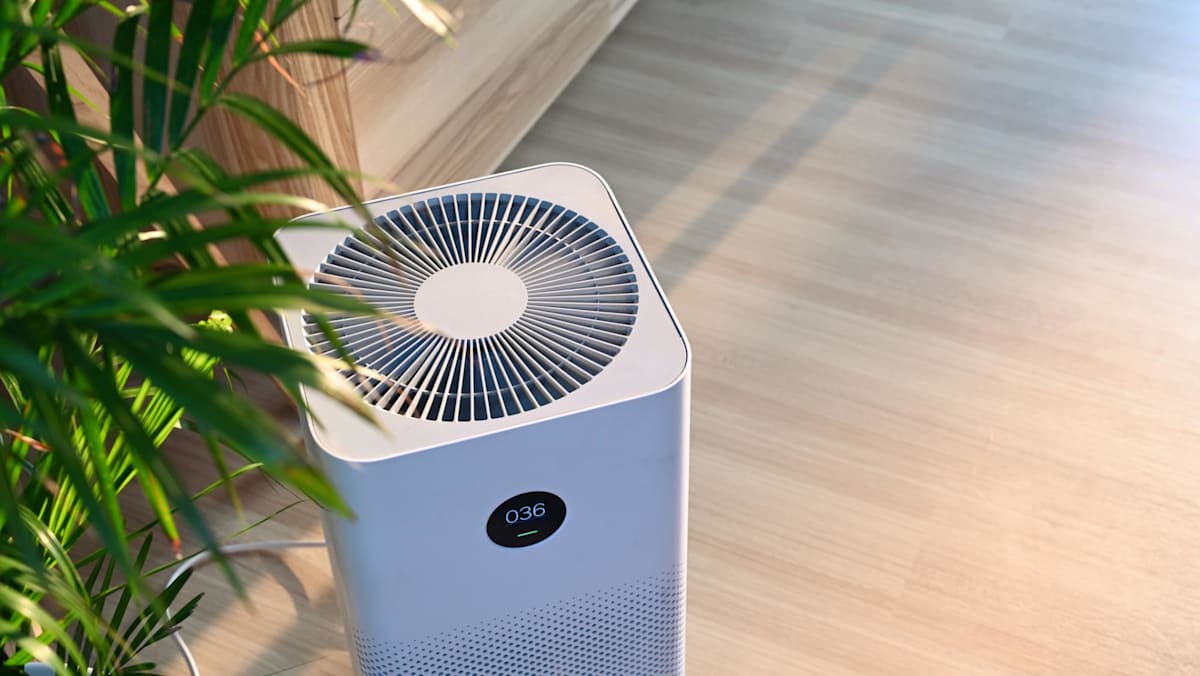
File photo of an air purifier. (File photo: iStock)
This audio is generated by an AI tool.
SINGAPORE: With haze affecting air quality in Singapore in recent weeks, households may be dusting off air purifiers bought years ago.
But can an air purifier that has been sitting unused still work effectively? How often should its filters be replaced, and how much would it cost to keep one running throughout the day?
The National Environment Agency (NEA) recommends using portable air purifiers to further reduce indoor haze particles. CNA spoke to experts and retailers about how to use air purifiers effectively and what households should know about costs and maintenance.
CAN AN OLD PURIFIER STILL WORK EFFECTIVELY?
An air purifier that has been left unused for several years should generally still work, provided it was stored in a dry, pest-free environment, said Professor Steve Yim, director of Nanyang Technological University's Centre for Climate Change and Environmental Health.
CNA Games Guess Word Crack the word, one row at a time Buzzword Create words using the given letters Mini Sudoku Tiny puzzle, mighty brain teaser Mini Crossword Small grid, big challenge Word Search Spot as many words as you can Show More Show Less Before switching it on again, households should check the power cord and test all fan speeds, he advised. As for the filters, unused high-efficiency particulate air (HEPA) filters that remain sealed in their original plastic packaging do not significantly degrade over time. However, filters that have been opened or previously used may be affected by moisture, which can encourage mould or bacterial growth, Prof Yim said. Activated carbon filters can also absorb odours and gases from the surrounding air even when the purifier is switched off. "Given the seriousness of the current haze situation, it is recommended to change (to) a new filter," he said. Professor Rajasekhar Balasubramanian, NUS Keppel Professor in Sustainability Solutions at the National University of Singapore's College of Design and Engineering, suggested that households keep spare HEPA filters on hand as a precaution. But how do you tell whether the entire purifier needs replacing? Signs to look out for include weaker airflow, unusual noises, lingering odours or a visibly clogged filter, a Dyson spokesperson said. A Philips spokesperson noted that many of these warning signs could be caused by a clogged filter rather than a faulty appliance. Consumers should therefore try replacing the filter and cleaning the unit before deciding whether to buy a new one. If problems persist, the purifier itself may be worn out and need replacing. When storing an air purifier between haze episodes, Dyson recommends switching it off, unplugging it and wiping it down. The filter should be left fitted to prevent dust from entering the internal airflow paths, while the appliance should be stored upright in a clean, dry indoor location away from direct sunlight and humidity. Before using it again, consumers should check that the airflow paths are clear and replace the filter if necessary.
Before switching it on again, households should check the power cord and test all fan speeds, he advised.
As for the filters, unused high-efficiency particulate air (HEPA) filters that remain sealed in their original plastic packaging do not significantly degrade over time.
However, filters that have been opened or previously used may be affected by moisture, which can encourage mould or bacterial growth, Prof Yim said.
Activated carbon filters can also absorb odours and gases from the surrounding air even when the purifier is switched off.
"Given the seriousness of the current haze situation, it is recommended to change (to) a new filter," he said.
Professor Rajasekhar Balasubramanian, NUS Keppel Professor in Sustainability Solutions at the National University of Singapore's College of Design and Engineering, suggested that households keep spare HEPA filters on hand as a precaution.
But how do you tell whether the entire purifier needs replacing?
Signs to look out for include weaker airflow, unusual noises, lingering odours or a visibly clogged filter, a Dyson spokesperson said.
A Philips spokesperson noted that many of these warning signs could be caused by a clogged filter rather than a faulty appliance.
Consumers should therefore try replacing the filter and cleaning the unit before deciding whether to buy a new one. If problems persist, the purifier itself may be worn out and need replacing.
When storing an air purifier between haze episodes, Dyson recommends switching it off, unplugging it and wiping it down.
The filter should be left fitted to prevent dust from entering the internal airflow paths, while the appliance should be stored upright in a clean, dry indoor location away from direct sunlight and humidity.
Before using it again, consumers should check that the airflow paths are clear and replace the filter if necessary.
Air purifiers on display at a Courts store. (File photo: Courts)
HOW OFTEN SHOULD YOU REPLACE THE FILTERS?
There is no one-size-fits-all answer, as the lifespan of an air purifier filter depends on how frequently the device is used and the conditions in which it operates.
Factors include outdoor PM2.5 concentrations, the amount of outdoor air entering the home, room size, filter quality and indoor activities such as smoking, said Prof Yim.
A Xiaomi Singapore spokesperson said filter lifespan also depends on the purifier's operating speed and filter design.
During haze episodes, households may run their purifiers for longer periods and at higher fan speeds. This increases the amount of pollutants trapped by the filters, potentially shortening their lifespan.
Consumers should therefore consider both the filter status indicated by their device and their actual usage conditions when deciding whether a replacement is needed, Xiaomi said.
Philips recommends replacing HEPA and carbon filters when the device's filter replacement alert appears, typically every six to 12 months.
Other signs that a filter needs replacing include a noticeable drop in fan motor airflow and persistent strange smells, said Blueair.
WHEN DO YOU NEED AN AIR PURIFIER?
Air purifiers become particularly useful when PM2.5 concentrations rise, although the need for one also depends on an individual's health.
Prof Yim said average PM2.5 concentrations of 55 micrograms per cubic metre (µg/m³) and below are considered within the normal range under Singapore's air quality advisory bands for the general public.
However, vulnerable groups, including infants, elderly people and those with chronic respiratory conditions, may benefit from using air purifiers at lower concentrations.
He "strongly recommended" using an air purifier when average PM2.5 concentrations exceed 55 µg/m³, entering the elevated range.
Even in an air-conditioned environment, an air purifier is still needed as the filters in air-conditioners only trap large particles and are not designed to filter fine particulate matter like PM2.5 particles, said Prof Yim.
When choosing an air purifier, consumers should look for one with an effective HEPA filter, which is designed to capture fine airborne particles.
Prof Yim cautioned against relying on marketing labels such as "HEPA-type" or "HEPA-like", which may refer to lower-grade filters. A "true HEPA" filter captures at least 99.97 per cent of airborne particles measuring 0.3 microns, he said.
IS ONE AIR PURIFIER ENOUGH FOR AN ENTIRE FLAT?
Another important consideration is the clean air delivery rate (CADR), which measures the purifier's effectiveness based on room size and the volume of clean air produced.
Prof Balasubramanian said consumers should choose a purifier with a CADR appropriate for the room they intend to use it in.
According to NEA, an air purifier should have a smoke CADR of at least three times the volume of the room, measured in cubic metres.
But can one powerful purifier clean an entire HDB flat?
Not necessarily, said Prof Yim. "Walls and doors block airflow, so one central air purifier cannot clean an entire HDB flat."
For a typical three-room HDB flat of 60 sq m to 70 sq m, it is recommended to have one high-CADR unit in the living area and one in the main bedroom, he said.
For a four-room or five-room flat measuring 90 sq m to 110 sq m, two to three units are recommended, including one in the living room or dining hall, and one in each regularly occupied bedroom, he added.
Air purifiers that allow stacking of two filters - HEPA filter and carbon filter - are also good for haze episodes, said Prof Balasubramanian.
This is because in a haze event, besides fine particles, there may also be strong odour caused by certain volatile organic compounds that are emitted by the fires. Activated carbon can capture such gases that HEPA filters would not.
He cautioned against purifiers that rely on ionisers instead of particle filters, as these may produce secondary pollutants such as ozone.
SHOULD YOU LEAVE AN AIR PURIFIER RUNNING ALL DAY?
Both Prof Balasubramanian and Prof Yim said they would consider keeping the air purifier on continuously during periods of poor air quality.
Prof Balasubramanian said he would operate his purifier throughout the day because PM2.5 concentrations can fluctuate and spike.
Prof Yim similarly recommended using a purifier for as long as PM2.5 concentrations remain at “a high level”.
Running an air purifier continuously on auto, low or sleep mode can also help ensure stable indoor air quality as indoor pollutants can build up from cooking, dust, human activity and outdoor infiltration, he added.
Households should keep windows and doors closed when using an air purifier during haze episodes to minimise the amount of polluted outdoor air entering the room, he said.
NEA similarly advises that air purifiers may be less effective when doors and windows are left open, as the devices are generally rated for rooms without a continuous influx of pollutants.
Placement matters too. Air purifiers should not be positioned where their airflow is obstructed.
HOW MUCH DOES IT COST TO RUN AN AIR PURIFIER 24/7?
Despite concerns about electricity bills, the power consumption of air purifiers is “minimal” compared to an air-conditioning system, Prof Balasubramanian told CNA.
A typical air purifier consumes about 50 to 60 watts of electricity, he said.
Based on an electricity tariff of about 31 cents per kilowatt-hour, running such a device continuously would cost roughly 40 cents a day, Prof Balasubramanian added.
That works out to about S$11 to S$13 a month, depending on the purifier's power consumption.
Actual costs will vary according to the model, fan speed and operating hours.
A Philips spokesperson said running an air purifier 24 hours a day typically consumes between 4 and 60 kilowatt-hours of electricity a month, depending on the fan speed setting.
At the same electricity tariff, that translates to approximately S$1 to S$19 a month.
Meanwhile, a Sterra spokesperson estimated that running one of its air purifier models for the whole day would cost about $7 to $10 a month, depending on the electricity tariff.
Blueair also estimated that running one of its models continuously would cost less than S$0.70 a day, based on the prevailing tariff rate.
WHAT ARE SOME COMMON MISTAKES TO AVOID?
One common mistake is choosing an inexpensive air purifier without checking its specifications, said Prof Balasubramanian.
For instance, a purifier with an insufficient CADR may struggle to clean the air effectively, particularly in a larger space.
Other mistakes include neglecting to replace its filters or attempting to wash disposable HEPA filters for reuse, he added.
Consumers should also avoid switching on the purifier only when there is an odour, as pollutants such as PM2.5 may not be detectable by human smell, said a Xiaomi Singapore spokesperson.
Get our pick of top stories and thought-provoking articles in your inbox
Stay updated with notifications for breaking news and our best stories
Join our channel for the top reads for the day on your preferred chat app
多久更换一次滤芯比较合适?一台空气净化器够整个公寓用吗?专家讲解如何最大限度地利用这些设备。
空气净化器图片(资料图)。(图片来源:iStock)
这段音频是由人工智能工具生成的。
新加坡:近几周来,雾霾影响了新加坡的空气质量,许多家庭可能正在重新启用多年前购买的空气净化器。
但是,闲置不用的空气净化器还能有效工作吗?它的滤芯应该多久更换一次?如果全天运转,成本又是多少?
国家环境局(NEA)建议使用便携式空气净化器,以进一步减少室内雾霾颗粒。亚洲新闻台(CNA)采访了专家和零售商,探讨如何有效使用空气净化器,以及家庭用户应该了解的费用和维护知识。
老旧的净水器还能有效工作吗?
南洋理工大学气候变化与环境健康中心主任史蒂夫·伊姆教授表示,即使空气净化器闲置数年,只要存放在干燥、无虫害的环境中,通常仍然可以工作。
CNA游戏 猜词游戏 逐行破解单词 流行词游戏 用给定的字母组成单词 迷你数独 小谜题,脑力挑战 迷你填字游戏 小方格,大挑战 单词搜索 尽可能多地找出单词 显示更多 显示更少 他建议,在再次开启之前,家庭用户应检查电源线并测试所有风扇速度。至于滤芯,未使用且密封在原包装中的高效空气微粒过滤器(HEPA)不会随着时间的推移而显著劣化。然而,Yim教授表示,已开封或先前使用过的滤芯可能会受潮,从而滋生霉菌或细菌。活性炭滤芯即使在净化器关闭时也能吸收周围空气中的异味和气体。“鉴于目前雾霾情况的严重性,建议更换新滤芯,”他说道。新加坡国立大学设计与工程学院可持续发展解决方案教授拉贾塞卡尔·巴拉苏布拉马尼亚 (Rajasekhar Balasubramanian) 建议家庭常备备用 HEPA 滤网以防万一。但如何判断整个净化器是否需要更换呢?戴森发言人表示,需要注意的迹象包括气流减弱、发出异常噪音、异味残留或滤网明显堵塞。飞利浦发言人指出,许多此类警告信号可能是由滤网堵塞而非设备故障引起的。因此,消费者在决定是否购买新净化器之前,应尝试更换滤网并清洁设备。如果问题仍然存在,则可能是净化器本身已老化需要更换。戴森建议,在雾霾天气间歇期存放空气净化器时,应将其关闭、拔掉电源并擦拭干净。滤网应保持安装状态,以防止灰尘进入内部气流通道,同时将净化器竖直放置在清洁干燥的室内,避免阳光直射和潮湿环境。再次使用前,消费者应检查气流通道是否畅通,必要时更换滤芯。
他建议,用户在再次开启风扇前,应检查电源线并测试所有风扇转速。
至于过滤器,未使用的、仍密封在原塑料包装中的高效空气微粒过滤器 (HEPA) 不会随着时间的推移而明显降解。
严教授表示,但是已经打开或以前使用过的过滤器可能会受到潮气的影响,从而促进霉菌或细菌的滋生。
即使净化器关闭,活性炭过滤器也能吸收周围空气中的异味和气体。
“鉴于目前雾霾情况的严重性,建议更换新的过滤器,”他说。
新加坡国立大学设计与工程学院可持续发展解决方案教授 Rajasekhar Balasubramanian 建议,家庭应备有备用的 HEPA 过滤器以防万一。
但如何判断是否需要更换整个净化器呢?
戴森发言人表示,需要注意的迹象包括气流减弱、异常噪音、挥之不去的异味或滤网明显堵塞。
飞利浦发言人指出,许多此类警告信号可能是由过滤器堵塞引起的,而不是电器故障引起的。
因此,消费者在决定是否购买新机之前,应该先尝试更换滤芯并清洁机器。如果问题仍然存在,则可能是净化器本身已经老化,需要更换。
戴森建议,在雾霾天气间歇期存放空气净化器时,应将其关闭、拔掉电源插头并擦拭干净。
应安装过滤器以防止灰尘进入内部气流通道,同时应将设备竖直存放在清洁、干燥的室内场所,避免阳光直射和潮湿。
再次使用前,消费者应检查气流通道是否畅通,必要时更换滤芯。
Courts商店内展示的空气净化器。(资料照片:Courts)
多久更换一次滤芯?
没有统一的答案,因为空气净化器滤芯的使用寿命取决于设备的使用频率和运行条件。
严教授表示,影响因素包括室外 PM2.5 浓度、进入室内的室外空气量、房间大小、过滤器质量以及吸烟等室内活动。
小米新加坡发言人表示,滤芯寿命还取决于净化器的运行速度和滤芯设计。
雾霾期间,家庭可能会延长空气净化器的运行时间,并提高风速。这会增加滤芯捕获的污染物数量,从而可能缩短滤芯的使用寿命。
小米表示,因此消费者在决定是否需要更换滤芯时,应同时考虑设备显示的滤芯状态和实际使用情况。
飞利浦建议,当设备的滤芯更换警报出现时,应更换 HEPA 滤芯和活性炭滤芯,通常每 6 至 12 个月更换一次。
Blueair公司表示,其他需要更换过滤器的迹象包括风扇电机气流明显下降和持续的异味。
什么情况下需要空气净化器?
当 PM2.5 浓度升高时,空气净化器就显得尤为有用,不过是否需要空气净化器也取决于个人的健康状况。
Yim教授表示,PM2.5平均浓度低于55微克/立方米(µg/m³)被认为是新加坡空气质量咨询等级中面向公众的正常范围。
然而,包括婴儿、老年人和患有慢性呼吸系统疾病的人在内的弱势群体,可能会受益于较低浓度的空气净化器。
他“强烈建议”当平均 PM2.5 浓度超过 55 µg/m³,进入较高范围时使用空气净化器。
Yim教授表示,即使在有空调的环境下,仍然需要空气净化器,因为空调中的过滤器只能捕获较大的颗粒物,而不能过滤PM2.5等细颗粒物。
消费者在选择空气净化器时,应该寻找带有高效HEPA过滤器的净化器,这种过滤器旨在捕捉空气中的细小颗粒。
严教授提醒大家不要轻信“HEPA型”或“类HEPA”之类的营销标签,这些标签可能指的是低等级的过滤器。他表示,“真正的HEPA”过滤器至少可以过滤掉99.97%的0.3微米大小的空气颗粒。
一台空气净化器足够整个公寓使用吗?
另一个重要的考虑因素是洁净空气输出率(CADR),它根据房间大小和产生的洁净空气量来衡量净化器的有效性。
巴拉苏布拉马尼亚教授表示,消费者应该选择 CADR 值与其打算使用的房间相匹配的净化器。
根据新加坡国家环境局 (NEA) 的说法,空气净化器的烟雾 CADR 值至少应为房间体积(以立方米为单位)的三倍。
但是一台强力净化器真的能净化整个组屋吗?
任教授表示,未必如此。“墙壁和门会阻碍空气流通,所以一台中央空气净化器无法净化整个组屋。”
他说,对于典型的60至70平方米的三房式组屋,建议在客厅安装一个高CADR值的空调单元,在主卧室安装一个高CADR值的空调单元。
他补充说,对于面积为 90 平方米至 110 平方米的四房或五房式公寓,建议安装两到三个单元,其中一个安装在客厅或餐厅,另一个安装在每个经常居住的卧室。
巴拉苏布拉马尼亚教授表示,能够叠加两个过滤器(HEPA过滤器和活性炭过滤器)的空气净化器也适用于雾霾天气。
这是因为在雾霾天气中,除了细颗粒物外,火灾产生的某些挥发性有机化合物也会产生强烈的异味。活性炭可以吸附HEPA过滤器无法吸附的这类气体。
他告诫人们不要使用依靠离子发生器而不是颗粒过滤器的净化器,因为这些净化器可能会产生臭氧等二次污染物。
空气净化器应该全天开着吗?
Balasubramanian 教授和 Yim 教授都表示,他们会考虑在空气质量差的时候持续开启空气净化器。
巴拉苏布拉马尼亚教授表示,他会全天运行净化器,因为 PM2.5 浓度会波动和飙升。
Yim教授也建议,只要PM2.5浓度保持在“较高水平”,就应该使用空气净化器。
他还补充说,让空气净化器持续以自动、低功率或睡眠模式运行,也有助于确保室内空气质量稳定,因为烹饪、灰尘、人类活动和室外空气渗透都会导致室内污染物积聚。
他表示,在雾霾天气使用空气净化器时,家庭应该关闭门窗,以尽量减少受污染的室外空气进入室内。
新加坡国家环境局也建议,如果门窗敞开,空气净化器的效果可能会降低,因为这些设备通常是为没有持续污染物流入的房间而设计的。
摆放位置也很重要。空气净化器不应放置在气流受阻的地方。
空气净化器24小时不间断运行需要多少成本?
尽管有人担心电费,但巴拉苏布拉马尼亚教授告诉亚洲新闻台,与空调系统相比,空气净化器的耗电量“微乎其微”。
他说,一台普通的空气净化器大约消耗 50 到 60 瓦的电力。
巴拉苏布拉马尼亚教授补充说,按照每千瓦时约 31 美分的电价计算,持续运行这样的设备每天大约需要花费 40 美分。
根据净化器的耗电量不同,每月大约需要花费 11 至 13 新元。
实际成本将根据型号、风扇转速和运行时间而有所不同。
飞利浦发言人表示,空气净化器每天 24 小时运转,每月通常会消耗 4 至 60 千瓦时的电量,具体取决于风扇速度设置。
按同样的电价计算,这相当于每月大约1新元至19新元。
与此同时,Sterra 的一位发言人估计,根据电价的不同,使用其空气净化器型号的空气净化器全天运行,每月大约需要花费 7 到 10 美元。
Blueair 还估计,按照现行的资费标准,其一款机型的持续运行成本每天不到 0.70 新元。
有哪些常见的错误需要避免?
巴拉苏布拉马尼亚教授说,一个常见的错误是选择价格低廉的空气净化器而不查看其规格。
例如,CADR 值不足的净化器可能难以有效净化空气,尤其是在较大的空间内。
他还补充说,其他错误包括疏忽更换过滤器或试图清洗一次性 HEPA 过滤器以重复使用。
小米新加坡发言人表示,消费者也应该避免仅在闻到异味时才打开净化器,因为像 PM2.5 这样的污染物可能无法被人类的嗅觉察到。
订阅我们的邮件,即可获取精选热点新闻和引人深思的文章。
订阅通知,第一时间获取突发新闻和精彩报道。
加入我们的频道,即可在您常用的聊天应用上获取当日热门文章。