Qatar looks to bolster its military power with new hub, partnerships卡塔尔寻求通过新的军事枢纽和合作伙伴关系来增强其军事实力
The Kingdom has spent decades cultivating its reputation as a place where enemies can sit down and talk. Apparently, even that requires an air-defense system.
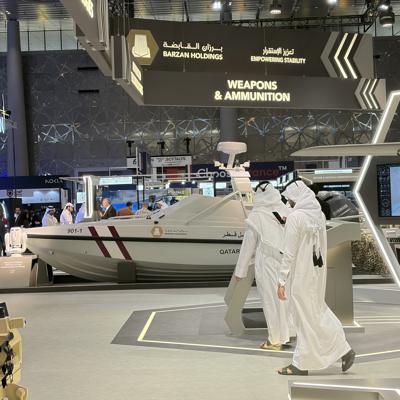
The Milipol defense conference in Doha, Qatar, Oct 21, 2026 Defense One / Patrick Tucker
The Kingdom has spent decades cultivating its reputation as a place where enemies can sit down and talk. Apparently, even that requires an air-defense system.
DOHA, Qatar– Wedged between Saudi Arabia and Iran, Qatar has long used artful diplomacy to keep regional conflicts at arm's length: it provides shelter for Hamas leaders, maintains ties with Israel, and hosts the region's largest U.S. military base. But the Israeli strike on this capital city in September 2025 and subsequent Iranian attacks have Qatari leaders racing to secure allies and boost the peninsular nation’s domestic defense industry.
"It's the first time that a mediator has been attacked. This never happened," Sheikh Saoud bin Abdulrahman Al Thani, Qatar's deputy prime minister and minister of state for defense affairs, said Monday at the Global Security Forum in Doha.
Al Thani said Qatar is exploring new defense partnerships with the United Kingdom and other Western and regional partners. The government is also looking to spin up a domestic weapons-production hub. The country's priorities include air defense, counter-drone capabilities, cybersecurity and electronic warfare, areas identified in a defense review conducted in 2025.
A visit to the Milipol Qatar security exhibition, held alongside the Global Security Forum, suggested a banking trade show as much as a military expo, a reminder that Qatar lacks the large defense-manufacturing base of some regional neighbors.
Qatari officials believe the country can participate more directly in weapons design and manufacturing, rather than simply serving as a buyer. Maj. Gen. Mohammed Abdul Latif Al Mannai, a Qatari defense official, said a proposed partnership with Britain could incorporate operational requirements, intelligence and assessments of emerging threats into weapons development. Gen. Sir Roly Walker, chief of the General Staff of the British Army, said the countries were considering a much broader partnership—not just between operators, but their acquisition corps and suppliers.
"We have high-level political ambition for a 50-year strategic partnership to gear ourselves up for the future," Walker said.
"We need to position ourselves almost as a design partner to allow the ingenious engineers and creative entrepreneurs to develop the solutions to our problems."
Qatar is also looking to increase investment in defense companies, rather than simply purchasing their products. Mohammed bin Badr Al Sada, group CEO of Barzan Holdings, said British companies were already involved in discussions about the proposed hub.
"We work very closely with UK industries," Al Sada said. "Actually some of them, they are already in town as we speak. And we hope that we can see this hub active very soon."
Qatar's growing interest in defense production also reflects concerns about the limits of American security guarantees. Iran's June 2025 missile attack on Al Udeid Air Base showed that the presence of U.S. troops on Qatari soil did not, by itself, prevent an attack. And Washington has signaled its intention to play a less interventionist role in regional security.
Tom Barrack, U.S. ambassador to Turkey and special presidential envoy for Syria and Iraq, acknowledged that shift in an onstage interview Tuesday, while emphasizing that Washington was not abandoning its regional partners.
"We're not leaving. But what everybody's doing is saying, 'Okay, I can't rely on America to solve all my problems anymore,”
Defense One is a media partner of the Global Security Forum.
NEXT STORY: Pentagon to start expanding Greenland bases next year: official
2026年10月21日,卡塔尔多哈,米利波尔防务会议(Defense One / Patrick Tucker)
沙特阿拉伯王国数十年来一直努力营造一种敌对双方都能坐下来谈判的形象。显然,即便如此,也需要一套防空系统。
卡塔尔多哈——卡塔尔地处沙特阿拉伯和伊朗之间,长期以来一直巧妙运用外交手段,力图置身于地区冲突之外:它为哈马斯领导人提供庇护,与以色列保持联系,并拥有该地区最大的美军基地。然而,2025年9月以色列对卡塔尔首都多哈的袭击以及随后伊朗的袭击,迫使卡塔尔领导人争分夺秒地寻求盟友,并大力发展该国的国防工业。
“这是调解员首次遭到袭击。这种情况以前从未发生过,”卡塔尔副首相兼国防事务国务大臣谢赫·萨乌德·本·阿卜杜勒拉赫曼·阿勒萨尼周一在多哈举行的全球安全论坛上表示。
阿勒萨尼表示,卡塔尔正在探索与英国及其他西方和地区伙伴建立新的防务伙伴关系。卡塔尔政府也计划建立一个国内武器生产中心。该国的优先事项包括防空、反无人机能力、网络安全和电子战,这些领域均在2025年进行的一项国防评估中被确定。
参观与全球安全论坛同期举办的卡塔尔国际防务展(Milipol Qatar)后,感觉它更像是一场银行业贸易展,而不是军事展览会,这提醒人们卡塔尔缺乏一些地区邻国那样庞大的国防制造基地。
卡塔尔官员认为,该国可以更直接地参与武器设计和制造,而不仅仅是作为买家。卡塔尔国防官员穆罕默德·阿卜杜勒·拉蒂夫·曼奈少将表示,拟议中的与英国的合作可以将作战需求、情报和对新兴威胁的评估纳入武器研发。英国陆军总参谋长罗利·沃克爵士表示,两国正在考虑建立更广泛的伙伴关系——不仅包括武器使用者之间的合作,还包括双方的采购部门和供应商。
沃克说:“我们怀有很高的政治抱负,希望建立为期50年的战略伙伴关系,为未来做好准备。”
“我们需要把自己定位为设计合作伙伴,让那些才华横溢的工程师和富有创造力的企业家来开发解决我们问题的方案。”
卡塔尔也希望增加对国防企业的投资,而不仅仅是购买其产品。巴尔赞控股集团首席执行官穆罕默德·本·巴德尔·萨达表示,英国公司已经参与了关于拟建国防中心的相关讨论。
“我们与英国企业有着非常密切的合作,”阿尔萨达说。“事实上,其中一些企业现在已经在城里了。我们希望这个中心很快就能投入运营。”
卡塔尔对国防生产日益增长的兴趣也反映出其对美国安全保障局限性的担忧。伊朗2025年6月对乌代德空军基地的导弹袭击表明,美军驻扎在卡塔尔领土上本身并不能阻止袭击。华盛顿也已表明其有意减少在地区安全事务中的干预。
美国驻土耳其大使兼叙利亚和伊拉克问题总统特使汤姆·巴拉克周二在一次舞台采访中承认了这一转变,同时强调华盛顿并没有抛弃其地区伙伴。
“我们不会离开。但大家现在都在说,‘好吧,我不能再指望美国解决我所有的问题了。’”
Defense One 是全球安全论坛的媒体合作伙伴。
下一篇报道:官方消息称,五角大楼将于明年开始扩建格陵兰岛军事基地。