90 Days No Help: Fortress America’s Goal To Make Bases Resilient Bastions In A Crisis90天未获援助:美国堡垒的目标——在危机中打造坚不可摧的基地
Next-generation nuclear reactors and major infrastructure modernization are seen as key to meeting ambitious aims to keep America's military running in any crisis.
新闻视频
By Joseph Trevithick
Published Oct 26, 2026 6:20 PM EDT
The Pentagon is reportedly aiming for U.S. military installations to be able to continue essential operations for at least 90 days, or roughly three months, without any external support. The installation of new small nuclear reactors and other infrastructure is key to this part of a larger plan called Fortress America. The main intent is to ensure America’s armed forces can remain functional and ready to protect the homeland in the face of any massive disruptions to power grids and other supply chains due to major conflicts or other crises. For years, TWZ has been sounding the alarm about the glaring vulnerabilities of America’s critical civilian energy infrastructure, including to drone swarms and cyberattacks , which could cripple key military capabilities right where they live.
Fox News was first to report on the 90-day base resiliency goal yesterday, citing documents it said it reviewed. This is part of the extremely wide-reaching Fortress America initiative the Pentagon announced last month , which covers everything from improved physical and cyber defenses at facilities to securing reliable access to critical defense industrial resources. The “Fortress” in Fortress America is technically an acronym that stands for Federal Operations for Resilience, Troop Resources, Energy Supply, and Survivability.
Today, at Secretary Hegseth’s direction, the Department of War is announcing FORTRESS America—a national insurance policy for the American homeland. Every major military installation in America will generate its own power. We are bringing our critical supply chains home. We… https://t.co/2kMQtw2r81 pic.twitter.com/Ptu8VQ5pv3 — Sean Parnell (@SeanParnellASW) September 30, 2026
Today, at Secretary Hegseth’s direction, the Department of War is announcing FORTRESS America—a national insurance policy for the American homeland. Every major military installation in America will generate its own power. We are bringing our critical supply chains home. We… https://t.co/2kMQtw2r81 pic.twitter.com/Ptu8VQ5pv3
“Under FORTRESS [sic], every major military installation in the continental United States would be expected to sustain essential operations independently for at least 90 days, including access to electricity, water, fuel and communications,” according to Fox .
Fox News ’ story also includes comments about Fortress America from Pentagon chief spokesperson Sean Parnell, but it is unclear if he explicitly confirmed the 90-day target. TWZ has reached out for more information.
Parnell did put particular emphasis on the importance of reducing reliance on civilian power generation as part of the larger Fortress America plan. Previous reports have said that Parnell was key to formulating this initiative. He has also been discussed as a potential frontrunner to become the next Secretary of the Army.
“Power is combat now. Without electricity, you lose communications, water, logistics, assembly lines and just basic military command structures,” Parnell told Fox . “We don’t want to rely on standard civilian municipal infrastructure to run our national defense. We just simply can’t. It’s an intolerable risk.”
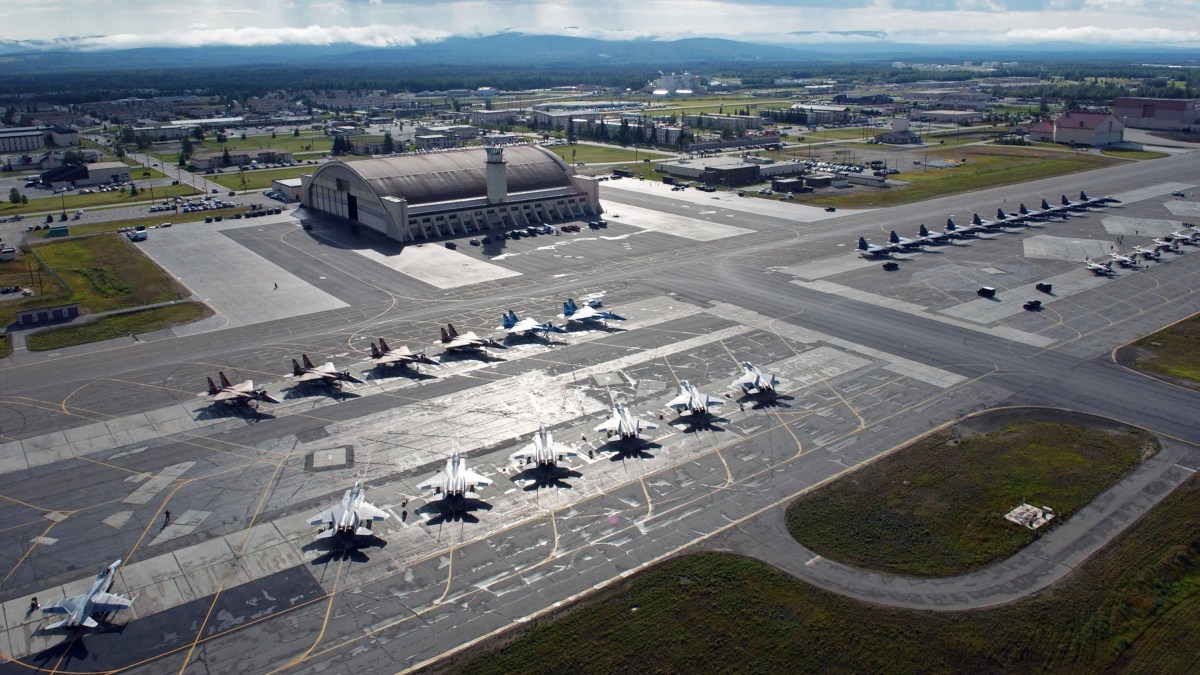
It should be pointed out here that some U.S. military bases do have their own power plants now, but this is not something that is far from universal across the board.
A train seen delivering coal to the power plant at Eielson Air Force Base in Alaska. USAF
Secretary Pete Hegseth made similar comments when he first unveiled the Fortress America initiative during a speech to service members at the U.S. Marine Corps’ base in Quantico, Virginia, in September.
“We are launching Fortress America, a national insurance policy for the American homeland,” Hegseth said at that time. “Every major military installation in America is going to generate its own power, independent of the civilian grid. If an adversary takes down the grid by cyber attack, by sabotage, or by any means, our bases stay lit, our aircraft keep flying, our command centers never go dark.”
Fox News ’ report says that “portable nuclear reactors,” as well as “large-scale battery storage and microgrids capable of disconnecting military installations from the civilian electrical grid,” are key elements of the plan to achieve this independence when it comes to generating electricity.
The U.S. military, in cooperation with the Department of Energy, has already been heavily investing in the development and installation of so-called microreactors at bases across the country. In August, the U.S. Army, in partnership with the Pentagon’s Defense Innovation Unit (DIU), notably cut new deals with five companies as part of a plan to install more than 20 microreactors at bases, starting in 2028. This effort, called the Janus program , is not limited to Army installations .
The video below offers an overview of one of several microreactor designs the U.S. military is currently pursuing.
Establishing new microgrids and other supporting energy infrastructure has also been an important focus for the U.S. military in recent years.
Details about how bases are expecting to maintain supplies of water and fuel , as well as communications connectivity, for 90 days or more are, as yet, still not entirely clear. All branches of the U.S. military have already been exploring new and novel options for ensuring the availability of water and fuel in future contingencies, though generally with more of an eye toward tactical operations. Relevant developments, including the possibility of using a process called carbon transformation to turn ambient air into fuel , could easily be applicable in a homeland defense scenario.
Fox News ’ story also makes no mention of how sufficient food for personnel at these facilities would be sustained, but that would have to be part of the equation. In his remarks in September, Secretary Hegseth also made clear that making sure supply chains delivering munitions, medicine, and even blood would be unbroken in any future crisis was part of the Fortress America vision. As already mentioned, the initiative also extends much more broadly into matters of physical force protection , cyber defense , and the resilience of America’s defense industrial base .
“For decades, we built the most powerful military in the world,” Hegseth said at Quantico. Then we “regrettably made it dependent on foreign mines for rare earths, on overseas factories for microchips, on foreign supply chains for weapons, and on a civilian power grid to keep the lights on at our bases.”
Secretary Pete Hegseth signs a missile component during a visit to a defense contractor’s facility in Febraury 2026. US Military
“We’re bringing our critical supply chains home: the rare earths, the specialty metals, the semiconductors, the propellants, mined in America, refined in America, built in America by American workers,” he added at the time. “We are building long-overdue strategic reserves, deep enough to fight through disruption.”
More specific details about how the Pentagon now intends to pursue these aims have yet to be more fully defined.
“The Under Secretary of War for Acquisition and Sustainment is directed to stand up the FORTRESS America Program Office within thirty (30) days,” according to a memo dated September 30, which was released after Hegseth’s September speech. “The Program Office shall report directly to the Under Secretary of War for Acquisition and Sustainment who will appoint a member of the Senior Executive Service to lead the day-to-day operations, assisted by a two-star Military Advisor, and shall begin as a lean core cell that scales to full operating capability within months – delivering results in weeks, not years”
There is also a question of how much of the Fortress America initiative will actually be new. As mentioned, just when it comes to increased energy resiliency, including through the installation of new microreactors, this is something that has already been top of mind for the U.S. military for years now. In 2022, the U.S. Army had a publicly stated goal for every one of its bases to have its own microgrid by 2035 as part of a larger plan to reduce dependence on fossil fuels. In 2024, the Department of the Air Force rolled out its own Installation Infrastructure Action Plan (I2AP) that included a target to have new microgrids in place at 16 bases by Fiscal Year 2030. In May, the U.S. Navy announced plans to demonstrate the ability of the supercarrier USS Gerald R. Ford to act as a floating nuclear power plant as part of broader “energy resilience and mission assurance” plans.
A stock picture of the USS Gerald R. Ford . US Navy
The U.S. military has also already been heavily engaged in efforts to secure access to critical resources, especially rare Earth elements in light of China’s continued dominance in that market globally , and otherwise expand America’s domestic defense industrial base. Physical hardening of bases, especially against emerging drone threats, has been more of a heated debate, as TWZ has been following closely for some time now . However, even before Fortress America was unveiled last month, there had been signs that institutional attitudes were shifting .
“The [Fortress America] program aligns basing and infrastructure projects to ensure they are collectively advancing toward greater independence,” the aforementioned September 30 memo itself notes.
There are additional questions to be answered as to how the U.S. military expects to fund its expansive Fortress America ambitions and the schedules for implementing them. This will all be heavily influenced by how much the initiative leverages efforts that were already ongoing. At the same time, concerns about underinvestment in infrastructure modernization, in general , across America’s armed forces, and the worrisome cascading impacts thereof, are hardly new .
There are still key elements of the Fortress America initiative that have yet to be fully proven out. This is particularly visible when it comes to microreactors, which hold the promise of being simpler and safer to build and operate compared to traditional nuclear power plants. Despite significant progress with this technology just in recent years, environmental, proliferation, and other concerns continue to be raised. You can read more about all of this can read more about here .
Today, the Department of War will execute Operation Windlord, the first C-17 airlift of a nuclear reactor, in partnership with the Department of Energy and Valar Atomics. Three C-17s Globemasters carrying the 8 modules of the Ward250 reactor will fly from March ARB to Hill AFB. pic.twitter.com/uIL7LMxACQ — Isaiah Taylor – making nuclear reactors (@isaiah_p_taylor) February 15, 2026
Today, the Department of War will execute Operation Windlord, the first C-17 airlift of a nuclear reactor, in partnership with the Department of Energy and Valar Atomics. Three C-17s Globemasters carrying the 8 modules of the Ward250 reactor will fly from March ARB to Hill AFB. pic.twitter.com/uIL7LMxACQ
On top of all this, it should be noted here that the U.S. military and the rest of the U.S. government already have mechanisms in place to ensure the key functions can continue, even in the midst of the gravest of crises, such as a limited nuclear attack. This is known as continuity of government planning , and includes a network of hardened and otherwise resilient facilities designed to support continued military operations and other activities in those ‘doomsday’ scenarios. But these facilities are few in number and are focus on strategic capabilities compared to what the Fortress America plan envisions.
At the same time, the dangers posed to civilian power grids in the United States, in particular, are only growing in scale and scope, both in the physical and cyber domains. Existing domestic U.S. energy infrastructure is aging and has been increasingly strained to meet routine day-to-day demands for decades now .
The potential for uncrewed aerial attacks on power plants and power lines has been real for years. The basic barrier to entry when it comes to weaponized drones, including converted commercial types, is also already low . Drone threats, broadly speaking, are only set to expand as swarming technology and artificial intelligence-driven capabilities continue to proliferate, as you can read more about this in this past TWZ feature . A well-informed enemy could concentrate a small number of resources on highly critical points in the grid to have vastly outsized effects, using drones or any other kinetic means.
The threat of various types of cyberattacks is also no longer limited to blockbuster movies and other popular media. This was made clear all the way back in 2021 with the ransomware attack on Colonial Pipeline , a key American oil pipeline system, and has only become more evident since then, including in the course of the war in Ukraine . U.S. authorities have run major exercises to help prepare for exactly these kinds of threats in the past. These are also capabilities where the barrier to entry has been steadily lowering over the years. Increasingly open access to powerful artificial intelligence agents with the ability to overwhelm networks and software to find critical vulnerabilities faster than humans can react is perhaps the most concerning layer of risk.
We have been reporting on this coming together for some time, it’s incredibly important. More so than a new fighter or an additional destroyer every couple years. Absolutely critical, and becoming more so with each passing day. Yes it’s scary, but it’s far scarier not doing this https://t.co/u09x0PeHZ7 — Tyler Rogoway (@Aviation_Intel) October 25, 2026
We have been reporting on this coming together for some time, it’s incredibly important. More so than a new fighter or an additional destroyer every couple years. Absolutely critical, and becoming more so with each passing day. Yes it’s scary, but it’s far scarier not doing this https://t.co/u09x0PeHZ7
If a major conflict with a global competitor like China were to break out, physical and cyberattacks on energy infrastructure would be an extremely attractive avenue to hobble U.S. military forces, including airpower, before they can even leave their bases. The capacity to threaten grids in the United States, at least to certain degrees, has become worryingly within reach of smaller nation-states, as well as non-state actors and even lone wolf attackers , too. Firmly attributing cyberattacks to a nation-state, at all, can be challenging.
There is also a secondary component to all of this for responding to major natural disasters, which are another way U.S. grids can end up being knocked out for extended periods of time . These same circumstances could easily leave military bases, as well as their surrounding communities, without access to fresh water and other supplies. The U.S. military routinely plays a key role in responding to such crises .
“This is not a wait-and-see kind of a thing. We want to move out pretty quickly to get to that energy [resilience]. Those solutions can include investments in microgrids, battery backup storage,” a senior U.S. defense official said last week at a Defense Writers Group roundtable, according to a separate report from Air & Space Forces Magazine . “First and foremost, it’s doing the assessments of the installations to make sure we understand power generation and where we’re going to go with that, and then getting those deployed.”
The Pentagon is certainly making a new push now to make sure that, as Secretary Hegseth put it last month, “America cannot be starved out, shut down, or cut off.” However, there is clearly still work to be done to meet a goal of bases being able to go three months without outside help and the many other aims of the Fortress America plan.
Contact the author: joe@twz.com
Comments couldn’t be loaded. Please refresh the page.
作者:约瑟夫·特雷维西克
发布于美国东部时间2026年10月26日下午6:20
据报道,五角大楼的目标是确保美国军事设施能够在没有任何外部支持的情况下,至少维持90天(约三个月)的基本运作。新建小型核反应堆和其他基础设施是这项名为“美国堡垒”(Fortress America)的宏大计划的关键组成部分。该计划的主要目的是确保美国武装部队能够在重大冲突或其他危机导致电网和其他供应链大规模中断的情况下,保持运转并随时准备保卫国土。多年来,TWZ一直在就美国关键民用能源基础设施的明显脆弱性发出警告,这些脆弱性包括无人机群攻击和网络攻击,这些攻击可能会在关键军事能力所在之处造成瘫痪。
福克斯新闻昨日率先报道了这项为期90天的基地韧性目标,并援引了其所审阅的文件。这是五角大楼上月宣布的“美国堡垒”(Fortress America)计划的一部分,该计划涵盖范围极其广泛,从加强设施的物理和网络防御到确保关键国防工业资源的可靠获取,无所不包。“美国堡垒”中的“堡垒”(Fortress)实际上是“联邦韧性行动”(Federal Operations for Resilience)、“部队资源”(Troop Resources)、“能源供应”(Energy Supply)和“生存能力”(Survivability)的首字母缩写。
今天,在赫格塞斯部长的指示下,战争部宣布启动“美国堡垒”(FORTRESS America)计划——一项旨在保障美国本土安全的国家保险政策。美国境内所有主要军事设施都将实现自主发电。我们将把关键的供应链迁回国内。我们…… https://t.co/2kMQtw2r81 pic.twitter.com/Ptu8VQ5pv3 — Sean Parnell (@SeanParnellASW) September 30, 2026
今天,在赫格塞斯部长的指示下,战争部宣布启动“美国堡垒”(FORTRESS America)计划——一项旨在保障美国本土安全的国家保险政策。美国境内所有主要军事设施都将实现自主发电。我们将把关键的供应链迁回国内。我们…… https://t.co/2kMQtw2r81 pic.twitter.com/Ptu8VQ5pv3
据福克斯新闻报道,“根据 FORTRESS 计划,美国本土的每个主要军事设施都应能够独立维持至少 90 天的基本运作,包括电力、水、燃料和通信的供应。”
福克斯新闻的报道还引用了五角大楼首席发言人肖恩·帕内尔关于“美国堡垒”计划的评论,但尚不清楚他是否明确证实了90天的目标期限。TWZ已联系相关方面以获取更多信息。
帕内尔特别强调了减少对民用电力依赖的重要性,这是“美国堡垒”计划的重要组成部分。此前的报道称,帕内尔是制定这项计划的关键人物。他也被认为是下一任陆军部长的热门人选。
帕内尔告诉福克斯新闻:“电力就是现在的战斗力。没有电力,通讯、供水、后勤、生产线,甚至基本的军事指挥体系都会瘫痪。我们不想依靠标准的民用市政基础设施来维持国防运转。我们根本做不到。这是无法容忍的风险。”
这里需要指出的是,一些美国军事基地现在确实有自己的发电厂,但这并不是普遍现象。
一列火车正在向阿拉斯加艾尔森空军基地的发电厂运送煤炭。美国空军
9 月,美国国防部长皮特·赫格塞斯在弗吉尼亚州匡蒂科美国海军陆战队基地向军人发表讲话,首次提出“美国堡垒”计划时,也发表了类似的评论。
“我们正在启动‘美国堡垒’计划,这是一项保护美国本土的国家保险政策,”赫格塞斯当时说道。“美国所有主要的军事设施都将独立发电,不再依赖民用电网。即使敌方通过网络攻击、破坏或其他任何手段瘫痪了电网,我们的基地依然灯火通明,我们的飞机依然可以继续飞行,我们的指挥中心也永远不会断电。”
福克斯新闻报道称,“便携式核反应堆”以及“能够将军事设施与民用电网断开的大规模电池储能和微电网”是实现电力生产独立性计划的关键要素。
美国军方与能源部合作,已在全国各地的军事基地大力投资研发和安装所谓的微型反应堆。今年8月,美国陆军与五角大楼国防创新部门(DIU)合作,与五家公司签署了新的协议,作为一项计划的一部分,该计划旨在从2028年开始在军事基地安装20多个微型反应堆。这项名为“雅努斯计划”的项目并不局限于陆军基地。
下面的视频概述了美国军方目前正在研究的几种微型反应堆设计之一。
近年来,建立新的微电网和其他配套能源基础设施也是美国军方的一项重要工作。
目前,各基地如何维持90天或更长时间的水、燃料供应以及通信连接等细节仍不完全清楚。美军各军种一直在探索确保未来突发事件中水和燃料供应的新方案,但通常更侧重于战术行动。一些相关进展,例如利用碳转化技术将空气转化为燃料,很容易应用于国土防御场景。
福克斯新闻的报道也没有提及如何保障这些设施人员的充足食物供应,但这无疑是问题的关键所在。赫格塞斯部长在9月份的讲话中也明确指出,确保在未来任何危机中,运送弹药、药品乃至血液的供应链畅通无阻,是“美国堡垒”愿景的重要组成部分。正如前文所述,该倡议还涵盖了更广泛的领域,包括实体部队防护、网络防御以及美国国防工业基础的韧性。
“几十年来,我们打造了世界上最强大的军队,”赫格塞斯在匡蒂科说道。“但令人遗憾的是,我们却让它依赖于外国的稀土矿、海外的微芯片工厂、外国的武器供应链,以及民用电网来维持我们军事基地的电力供应。”
2026年2月,国防部长皮特·赫格塞斯在访问一家国防承包商工厂期间,签署了一份导弹部件文件。美国军方
“我们正在将关键供应链迁回国内:稀土、特种金属、半导体、推进剂,这些产品都在美国开采、在美国提炼,由美国工人在美国制造,”他当时补充道。“我们正在建立期待已久的战略储备,其规模足以应对各种突发事件。”
五角大楼目前打算如何实现这些目标的具体细节还有待进一步明确。
根据一份日期为9月30日的备忘录(该备忘录在赫格塞斯9月发表讲话后发布),“负责采购和保障的陆军部副部长奉命在30天内组建‘美国堡垒’项目办公室”。“该项目办公室将直接向负责采购和保障的陆军部副部长汇报工作,副部长将任命一名高级行政人员领导日常运作,并由一名少将军事顾问协助。该项目办公室将以精简的核心小组形式启动,并在数月内扩展至全面作战能力——在数周内而非数年内交付成果。”
“美国堡垒”计划究竟有多少是真正全新的内容,也值得探讨。正如前文所述,提高能源韧性,包括安装新型微型反应堆,一直是美军多年来高度重视的问题。2022年,美国陆军公开宣布,到2035年,其所有基地都将拥有自己的微电网,这是减少对化石燃料依赖的更广泛计划的一部分。2024年,美国空军部推出了自己的“基地基础设施行动计划”(I2AP),其中包括到2030财年在16个基地建成新的微电网的目标。今年5月,美国海军宣布计划展示“杰拉尔德·R·福特”号超级航母作为浮动核电站的能力,这是其更广泛的“能源韧性和任务保障”计划的一部分。
美国海军“杰拉尔德·R·福特”号航空母舰的库存照片。
美国军方也一直在积极努力确保获得关键资源,特别是稀土元素,因为中国在全球稀土市场持续占据主导地位,同时美国也在扩大其国内国防工业基础。正如TWZ密切关注的那样,基地的物理加固,特别是针对新兴无人机威胁的加固,一直是争论的焦点。然而,早在上个月“美国堡垒”计划公布之前,就已经有迹象表明,相关机构的态度正在发生转变。
“‘美国堡垒’计划协调基地建设和基础设施项目,以确保它们共同朝着更大的独立性迈进,”上述 9 月 30 日的备忘录本身指出。
关于美国军方计划如何为其庞大的“美国堡垒”计划筹集资金以及实施时间表,还有更多问题需要解答。这一切都将很大程度上取决于该计划在多大程度上利用了已有的工作成果。与此同时,美国武装部队基础设施现代化投资不足及其令人担忧的连锁反应,早已不是什么新鲜事。
“美国堡垒”计划的关键要素仍有一些尚未得到充分验证。这一点在微型反应堆方面尤为明显,微型反应堆有望比传统核电站更简单、更安全地建造和运行。尽管近年来这项技术取得了显著进展,但环境、核扩散和其他方面的担忧依然存在。您可以在这里阅读更多相关信息。
今天,美国战争部将与能源部和瓦拉原子能公司合作,执行“风领主行动”(Operation Windlord),这是首次使用C-17运输机空运核反应堆。三架C-17“环球霸王”运输机将携带Ward250反应堆的8个模块,从马奇空军基地飞往希尔空军基地。 pic.twitter.com/uIL7LMxACQ — Isaiah Taylor – making nuclear reactors (@isaiah_p_taylor) February 15, 2026
今天,美国战争部将与能源部和瓦拉原子能公司合作,执行“风领主行动”(Operation Windlord),这是首次使用C-17运输机空运核反应堆。三架C-17“环球霸王”运输机将携带沃德250反应堆的8个模块,从马奇空军基地飞往希尔空军基地。 pic.twitter.com/uIL7LMxACQ
除此之外,还应指出,美国军方和美国政府其他部门已经建立了相应的机制,以确保即使在最严重的危机(例如有限的核攻击)中,关键职能也能继续运转。这被称为政府连续性计划,其中包括一个由加固且具有其他弹性的设施组成的网络,旨在支持在“末日”情景下继续开展军事行动和其他活动。但与“美国堡垒”计划的设想相比,这些设施数量有限,且侧重于战略能力。
与此同时,美国民用电网面临的危险,无论是在物理领域还是网络领域,都在不断扩大。现有的美国国内能源基础设施正在老化,并且几十年来一直不堪重负,难以满足日常用电需求。
多年来,无人驾驶无人机袭击发电厂和输电线路的可能性一直存在。包括改装的商用无人机在内的武装无人机的准入门槛也已经很低。总的来说,随着集群技术和人工智能驱动能力的不断普及,无人机威胁只会越来越大,您可以在之前的TWZ专题文章中了解更多相关信息。一个消息灵通的敌人可以利用无人机或其他任何动能手段,将少量资源集中在电网的关键节点上,从而造成巨大的破坏。
各种网络攻击的威胁不再局限于热门电影和其他流行媒体。早在2021年,针对美国重要输油管道系统“殖民地管道”(Colonial Pipeline)的勒索软件攻击就已凸显了这一点,此后,包括乌克兰战争在内,网络攻击的威胁变得更加明显。美国当局过去曾开展过大规模演习,以应对此类威胁。近年来,这些技术的准入门槛也在不断降低。功能强大的AI代理日益普及,能够迅速瘫痪网络和软件,以远超人类反应速度的方式发现关键漏洞,这或许是最令人担忧的风险层面。
我们已经报道这个项目筹备了一段时间,它极其重要。比每隔几年就建造一架新型战斗机或一艘驱逐舰都重要。绝对至关重要,而且随着时间的推移,它的重要性与日俱增。没错,这很可怕,但如果不做这件事,可怕得多。https://t.co/u09x0PeHZ7 — Tyler Rogoway (@Aviation_Intel) 2026年10月25日
我们已经报道这个项目筹备了一段时间,它极其重要。比每隔几年建造一架新型战斗机或一艘驱逐舰都重要。绝对至关重要,而且随着时间的推移,其重要性日益凸显。没错,这很可怕,但如果不做这件事,后果会更严重。https://t.co/u09x0PeHZ7
如果与中国这样的全球竞争对手爆发重大冲突,对能源基础设施发动物理和网络攻击将成为削弱美国军事力量(包括空军)的极具吸引力的途径,甚至在美军离开基地之前就能造成破坏。威胁美国电网的能力,至少在一定程度上,已经变得令人担忧地触手可及,这不仅包括较小的国家,还包括非国家行为体,甚至独狼式攻击者。要确切地将网络攻击归咎于某个国家,本身就极具挑战性。
此外,应对重大自然灾害也是一个重要方面,因为自然灾害是导致美国电网长时间瘫痪的另一种常见原因。同样,在自然灾害发生时,军事基地及其周边社区也可能面临淡水和其他物资短缺的困境。美军在应对此类危机中通常扮演着关键角色。
据《空军与太空部队杂志》的另一篇报道,一位美国高级国防官员上周在国防记者协会圆桌会议上表示:“这不是观望就能解决的问题。我们希望尽快采取行动,实现能源韧性。这些解决方案可能包括投资微电网和电池备用储能系统。” 他补充道:“首先,也是最重要的,是对现有设施进行评估,确保我们了解发电情况以及未来的发展方向,然后尽快部署这些设施。”
五角大楼现在无疑正在加大力度,确保正如国防部长赫格塞斯上个月所说,“美国不会陷入断粮、停摆或与外界隔绝的境地”。然而,要实现基地能够在没有外部援助的情况下维持三个月运转的目标,以及“美国堡垒”计划的其他诸多目标,显然还有很多工作要做。
联系作者:joe@twz.com
评论加载失败,请刷新页面。