Last-Ditch Meeting In Iran Seeks To Stave-Off A Restart Of All-Out Fighting In The Region在伊朗举行的最后一次会议旨在避免该地区全面冲突重启。
The meeting between Pakistan, Saudi Arabia, Turkey, and Iran took place as the U.S. and Israel are spinning-up for a new round of strikes.
Published Oct 26, 2026 7:23 PM EDT
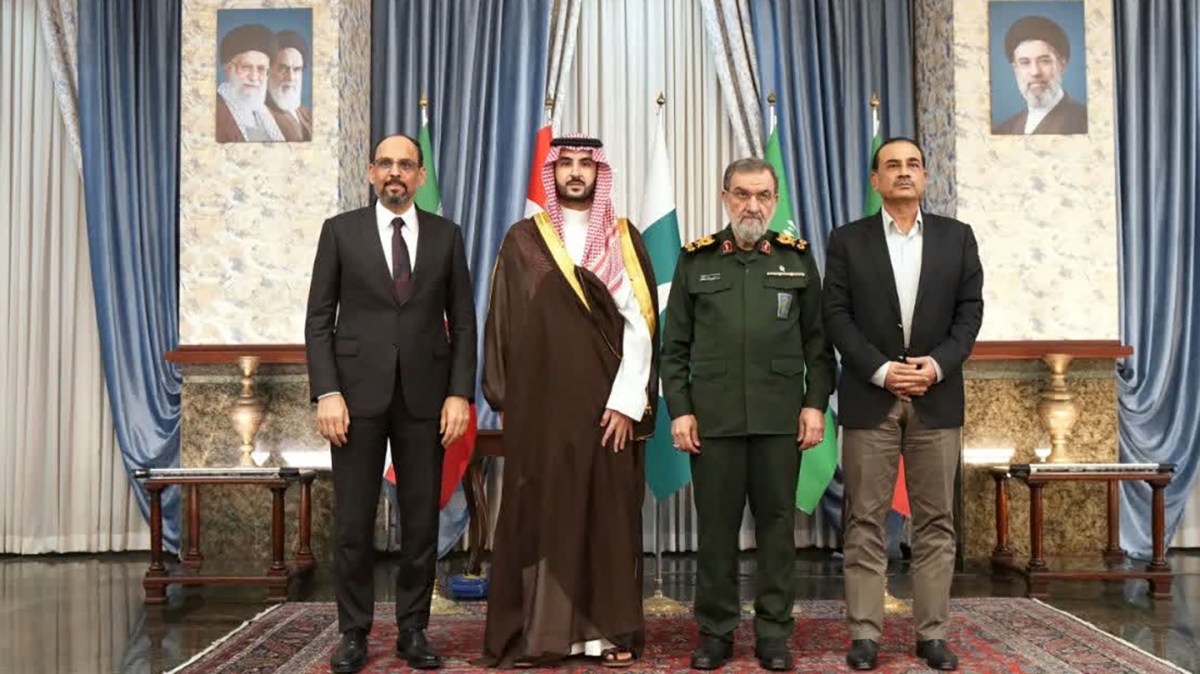
From left to right, Director of the National Intelligence Organization of Turkey Ibrahim Kalın; Saudi Arabian Defense Minister Prince Khalid bin Salman; Iran’s Supreme National Security Council Secretary Mohsen Rezaei, and Pakistani Army Chief, Field Marshal Asim Munir. (Iranian media)
As the U.S. and Israel once again mull decisions on whether to resume strikes on Iran , regional powers held an unprecedented meeting in Tehran today in an effort to find ways to stave off a further conflict. The gathering of officials from Iran, Saudi Arabia, Pakistan and Turkey reportedly also addressed the ongoing war between Riyadh and the Iranian-backed Houthi rebels of Yemen. Frequent Houthi attacks on Saudi Arabia’s oil infrastructure are adding to strain on the global economy that relies heavily on Middle Eastern energy supplies.
“The participants agreed to continue the dialogue to strengthen cooperation amongst the four regional countries, including for peace and security in the region,” the four nations said in a joint statement after the hastily called, last-ditch meeting concluded.
The meeting was the first meeting between Iran and the other three countries since they formed a new military alliance in August called the Mecca Joint Defense Agreement . The attendance of Saudi Arabia is of particular note as Iran struck Saudi Arabia repeatedly during Operation Epic Fury and Saudi Arabia hosted U.S. forces that attacked Iran. Iran’s proxies in Yemen, the Houthis, have bee pummeling the Kingdom with drones and missiles as of late, too.
Regardless, details about the conclave are sparse, with officials saying this was just the first of what is expected to be a series of such efforts.
لقطات لاجتماع حلف مكة مع الجانب الإيراني في طهران https://t.co/JutzeDbAS0 pic.twitter.com/LZVW4NYfBv — مالك الروقي (@alrougui) October 26, 2026
لقطات لاجتماع حلف مكة مع الجانب الإيراني في طهران https://t.co/JutzeDbAS0 pic.twitter.com/LZVW4NYfBv
“Very good discussions took place between us,” Mohsen Rezaei , Secretary of Iran’s Supreme National Security Council, told Iranian state television . “I feel that a new atmosphere is emerging in the region… I sensed a very positive atmosphere in the discussions among the gentlemen.”
“We have reached an understanding with Pakistan, Turkey, and Saudi Arabia that the security of the region is achieved through its countries,” Rezaei added.
#عاجل | أمين مجلس الأمن القومي الإيراني: توصلنا لتفاهم مع باكستان وتركيا والسعودية بأن أمن المنطقة يتحقق عبر دولها pic.twitter.com/ILuUTH9k2r — قناة الجزيرة (@AJArabic) October 26, 2026
#عاجل | أمين مجلس الأمن القومي الإيراني: توصلنا لتفاهم مع باكستان وتركيا والسعودية بأن أمن المنطقة يتحقق عبر دولها pic.twitter.com/ILuUTH9k2r
The Tehran visit was called “as part of the continued efforts by the Makkah Joint Defense Agreement countries for de-escalation between parties involved in the ongoing crisis, and promoting dialogue and diplomatic solutions, in support of the mediation efforts carried out by the State of Qatar and the Islamic Republic of Pakistan,” Saudi Deputy Minister for Public Diplomacy Rayed Krimly said Monday on X before the meeting began. He used an alternative English spelling of the Saudi holy city.
HRH Prince Khalid bin Salman bin Abdulaziz Al-Saud, Minister of Defense, leads the Kingdom’s delegation to the meetings that will be held today in Tehran, capital of Iran, between Makkah Joint Defense Agreement countries and officials from the Islamic Republic of Iran, with… — AMB Dr. Rayed Krimly (@Rayedkrimly) October 26, 2026
HRH Prince Khalid bin Salman bin Abdulaziz Al-Saud, Minister of Defense, leads the Kingdom’s delegation to the meetings that will be held today in Tehran, capital of Iran, between Makkah Joint Defense Agreement countries and officials from the Islamic Republic of Iran, with…
Both Qatar and Pakistan have been key to previous efforts to find a diplomatic solution to the U.S.-Iran conflict. The two countries helped broker a 14-point Memorandum of Understanding (MoU) signed on June 17. The MoU provided a 60-day extension of the ceasefire to iron out an agreement to end fighting throughout the region, including Lebanon, prevent Iran from seeking nuclear weapons, end U.S. sanctions, and resume the flow of traffic through the Strait of Hormuz among other points.
That effort soon fell apart as the U.S. and Iran resumed striking each other. It has been more than a month, however, since the two nations traded direct blows.
“The visit underscores the pivotal role of Makkah Joint Defense Agreement countries in reinforcing regional security and stability, and working with all countries in the region to achieve that goal,” Krimly added about today’s Tehran meeting.
The Mecca Joint Defense Agreement was created as a pact designed to assist the Kingdom in its fight against the Houthis . An attack on one is supposed to be considered an attack on all. However, the agreement has evolved to take on the larger issue of overall regional stability amid concerns about the individual members’ own national security interests.
The Tehran meeting was attended by high-level officials, Krimly noted. Saudi Prince Khalid bin Salman bin Abdulaziz Al-Saud, Minister of Defense, led the Kingdom’s delegation, he stated. In addition, Field Marshal Asim Munir, Pakistani Chief of Army Staff, and Ibrahim Kalin, Director of the Turkish National Intelligence all met with the President of the Islamic Republic of Iran Dr. Masoud Pezeshkian, and Rezaei.
Before the meeting, Iranian Foreign Ministry spokesperson Esmaeil Baghaei said the discussions on regional security would include “Israel’s expansionist policies, developments in the Palestinian territories and Lebanon, and the repercussions of U.S. and Israeli military action against Iran,” according to Reuters .
Baghaei said the meeting, proposed during a visit by Munir to Tehran last week , could be a first step towards establishing regional security mechanisms based on the interests of countries in the region.
Baghaei: Regional security can only be ensured through trust and cooperation among the countries of the region. pic.twitter.com/6Sxi2soMXB — Alireza Akbari (@itsalireza_akb) October 26, 2026
Baghaei: Regional security can only be ensured through trust and cooperation among the countries of the region. pic.twitter.com/6Sxi2soMXB
Iranian officials told Munir ahead of today’s meeting that there would be no talks with Washington until Tehran’s demands were met, Reuters reported, citing Iranian media.
It is unclear at this point whether any results from this round of meetings will change whatever plans U.S. President Donald Trump is drawing up for Iran. Before the meeting began, a senior U.S. official downplayed it to us when we asked about it.
“The United States is in a very strong position with control of the Strait of Hormuz and the Iranian economy collapsing,” the senior U.S. official told us in response to our question about whether the Tehran meeting will influence any decisions by Trump on his next moves toward the Islamic Republic. “Iran has been decimated, and one way or the other, the conflict in Iran will be over very soon. President Trump holds all the cards and will do whatever is best for the United States.”
The Tehran talks took place after Trump once again claimed he was at an inflection point on deciding his future approach toward Iran. On Sunday, the American leader said it’s “getting to be decision time” on whether he will make a new deal with Tehran or resume attacks as Iranian and Houthi threats against Americans in the Middle East continue to grow.
“I have a decision to make: Do I finish it off, which would be very easy to do, or do I make a deal? That’s all,” Trump said in an interview with Fox News ’ Sunday Morning Futures . “We don’t play games.”
“There won’t be a strike today,” he told reporters later Sunday as he left the White House. On Friday, U.S. Ambassador to Turkey Tom Barrack suggested the U.S. could strike Iran as early as this past weekend, but that failed to materialize.
Trump on Iran: There will be no attack today pic.twitter.com/LbOnwCW7hL — Open Source Intel (@Osint613) October 25, 2026
Trump on Iran: There will be no attack today pic.twitter.com/LbOnwCW7hL
Still, tensions in the region are increasing.
U.S. forces in the Middle East “are prepared to launch new, potentially major, military operations against Iran ‘within 96 hours of receiving’ an order from President Donald Trump,” CNN reported on Sunday , citing two U.S. officials.
“Sufficient forces are now deployed in the region to carry out the potential attacks,” the sources told the network. “The scope of new U.S. military operations would likely go beyond efforts to simply ‘mow the lawn’ or maintain the status quo by striking radars, launchers and other Iranian assets that can be quickly reconstituted — as has been the case since Trump halted full combat operations earlier this year.”
You can read more about how the U.S. is deploying additional Navy, Marine and Air Force assets to the Middle East in our report about that here .
The aircraft carrier USS Theodore Roosevelt and its carrier strike group are reportedly being deployed to the Middle East. (USN)
Adding to U.S. concerns, on Saturday, The Wall Street Journal reported that “U.S. intelligence suggests Iranian preparations to attack Americans throughout the Middle East have reached ‘advanced stages,’ prompting a sudden exodus of personnel from embassies and military bases throughout the region.”
Jay Clayton, the director of national intelligence, “summarized that finding in a brief memo Friday to Secretary of State Marco Rubio,” the newspaper added.
“Iran has substantially increased efforts to target U.S. personnel. The lethal plotting efforts by the Iranians against U.S. citizens have reached advanced stages in both the Middle East and certain other countries,” Clayton wrote.
The U.S. in recent days also “ordered the departure of diplomats and staff from the embassy in Saudi Arabia and other countries, initially citing threats from the Iran-backed Houthi militants in Yemen,” the Journal noted. “The U.S. also has evacuated personnel from military bases across the region in preparation for renewed fighting, according to U.S. officials familiar with the planning.”
Trump on Sunday told reporters that there “are two very different sets of intelligence reports on Iran. I have them both. They are very different.”
Trump on Iran: There are two very different sets of intelligence reports on Iran. I have them both. They are very different. pic.twitter.com/iV9Gui2iQM — Clash Report (@clashreport) October 25, 2026
Trump on Iran: There are two very different sets of intelligence reports on Iran. I have them both. They are very different. pic.twitter.com/iV9Gui2iQM
Israel too appears to be continuing its planning for renewed hostilities with Iran. Its previous attacks during Operation Epic Fury were carried out in close coordination with the U.S., a cooperative effort that is ongoing.
Prime Minister Benjamin Netanyahu on Sunday repeated his warning that Iran or its proxies could launch an attack before the close election to disrupt the vote, citing intelligence.
“The (military) is ready both to defend and to strike,” he said in a video statement. “You will suffer disproportionate blows far greater than you can imagine.”
⚠️ 🇮🇱 Israeli Prime Minister Benjamin Netanyahu warned Sunday that Iran and its regional allies could launch attacks intended to disrupt Israel's October 27 election, declaring that the Israeli military is prepared for both defensive and offensive operations. Speaking in front… — The Tectonic (@thetect0nic) October 25, 2026
⚠️ 🇮🇱 Israeli Prime Minister Benjamin Netanyahu warned Sunday that Iran and its regional allies could launch attacks intended to disrupt Israel's October 27 election, declaring that the Israeli military is prepared for both defensive and offensive operations. Speaking in front…
In addition, Netanyahu and Israeli Defense Forces (IDF) Chief of Staff Lt. Gen. Eyal Zamir “clashed over a military action that could renew the conflict with Iran days before Israel’s elections,” according to the Jerusalem Post .
“Recently, Zamir received a directive from the political echelon to carry out an action, which security officials told N12 would ‘trigger a rapid escalation into a confrontation with Iran,’” the newspaper added. “Due to the sensitive nature of the action, N12 reported that Zamir requested an in-depth discussion and formal authorization before moving forward with the action.”
Israeli Defense Minister Israel Katz disputed those reports.
“I state unequivocally that there was no intention on Israel’s part to initiate an attack on Iran before the elections in Israel—when we made clear that if Iran attacks Israel, we will respond with great force, and all reports on the matter are entirely false,” Katz stated on X. “The attempt by opposition figures to exploit these reports to attack the Prime Minister and me and to cast doubt on our judgment—at a time when we are prevented for understandable reasons from addressing the details of the Iranian issue—is shameful and irresponsible. We will overcome this too.”
הפרסומים על פערים בין הדרג המדיני לצה"ל בנושא איראן הם מופרכים ושקריים לחלוטין. מאז כניסתי לתפקיד שר הביטחון התיאום בין רה"מ וביני לבין צה"ל בנושא איראן הוא מלא – עם הישגים היסטוריים חסרי תקדים לטובת ביטחון מדינת ישראל. זהו השיקול היחיד – וכך יהיה גם בעתיד. אני קובע באופן חד… — ישראל כ”ץ Israel Katz (@Israel_katz) October 26, 2026
הפרסומים על פערים בין הדרג המדיני לצה"ל בנושא איראן הם מופרכים ושקריים לחלוטין. מאז כניסתי לתפקיד שר הביטחון התיאום בין רה"מ וביני לבין צה"ל בנושא איראן הוא מלא – עם הישגים היסטוריים חסרי תקדים לטובת ביטחון מדינת ישראל. זהו השיקול היחיד – וכך יהיה גם בעתיד. אני קובע באופן חד…
Last Monday, in a phone call with Trump recorded live on Monday and posted on his X account, Netanyahu suggested future operations against Iran.
“Donald, we have a job to finish [in Iran]…and we’ll finish it together,” the Israeli leader told Trump. “We’ll finish it, and no one else will do it.”
That post appears to have been since been deleted.
Actions by both Trump and Netanyahu are taking place against a backdrop of heated domestic politics in their respective countries.
With continued Republican control of Congress on the line, the Nov. 3 midterm elections are a huge factor in Trump’s plans. The president has previously said the war with Iran would end “immediately after the election” and has reportedly told aides he expects to resume strikes on the Islamic Republic after the midterms. Domestic U.S. polls show the ongoing conflict continues to be deeply unpopular with voters , who are also eager to see it concluded .
Meanwhile, Netanyahu faces a vote on his future tomorrow in a nationwide parliamentary election, and there are concerns, as we noted last Friday , that the Israeli leader could use a new conflict with Iran to bolster his hold on office. Given the fractious nature of Israeli politics, election results will not necessarily immediately determine who Israel’s next prime minister will be.
“Coalition negotiations can take weeks or even months as parties attempt to reach agreements on who will govern and under what terms,” The National noted . “Israel has a history of political deadlock. Between 2019 and 2022, the country held five elections as parties repeatedly struggled to form stable governments.”
Israel’s Prime Minister Benjamin Netanyahu speaks to his supporters during a Likud Party meet-and-greet held as part of the campaign ahead of Israel’s legislative election. (Photo by JACK GUEZ / AFP) JACK GUEZ
Iran isn’t just threatening the U.S. and Israel.
“Following the intensification of Berlin’s anti-Iranian stance, Tehran has warned of the consequences should Germany directly enter the military conflict, emphasizing that facilities and military installations associated with Germany in the region could become targets within the scope of Iran’s legitimate defense,” the semi-official Iranian Fars News Agency reported on Sunday .
BIG: Iran has warned Germany that all German military bases and facilities across the region will be considered legitimate targets if Berlin openly joins military action against Iran. Source: Iran’s Fars, citing information obtained by its security and defense correspondent — Clash Report (@clashreport) October 25, 2026
BIG: Iran has warned Germany that all German military bases and facilities across the region will be considered legitimate targets if Berlin openly joins military action against Iran. Source: Iran’s Fars, citing information obtained by its security and defense correspondent
As mentioned earlier in this story, officials meeting in Tehran also addressed the ongoing fighting between the Houthis and Saudi Arabia and its proxies in Yemen.
“The urgency of the initiative was underscored by fresh explosions in Riyadh overnight and warnings of a hostile aerial threat, as the Houthis claimed another attack on the Saudi capital’s international airport,” Gulf News reported . In addition, the Houthis are expanding their attacks on oil infrastructure in Saudi Arabia, including a recent strike near the Shaybah oilfield . Combined with a spike in Iranian attacks on shipping in the Strait of Hormuz, the Houthi strikes on Saudi oil interests have sent the price of Brent crude rising. However, the Tehran talks may be tempering things. According to OilPrice.com , the per-barrel price of Brent crude was over $115 as of Monday evening, a slight drop from Friday, when it was more than $117.
With the issue of oil flow in mind, Adm. Brad Cooper, the commander of U.S. Central Command (CENTCOM), visited the Strait of Hormuz on Oct. 25 as U.S. forces reached “the milestone of assisting Gulf partners in exporting more than 1.5 billion barrels of crude oil since summer,” Cooper said.
Cooper “observed the current operational environment while flying in a U.S. Army CH-47 Chinook over the international waterway,” according to a CENTCOM post on X . “More than 3,000 commercial vessels have successfully transited the Strait of Hormuz with support from CENTCOM forces over the last six months.”
U.S. Navy Adm. Brad Cooper, commander of U.S. Central Command, observes a commercial vessel transiting the Strait of Hormuz while flying in a U.S. Army CH-47 Chinook over the international waterway, Oct. 25, 2026. (U.S. Central Command photo) Senior Chief Petty Officer Amanda Dunford
“We continue to stand shoulder to shoulder with our Gulf partners and the shipping industry,” said Cooper. “This visit underscores our strong commitment to continued freedom of navigation through the Strait of Hormuz.”
CENTCOM added that “American forces successfully cleared the strait’s international shipping lanes of sea mines laid by Iran’s Islamic Revolutionary Guard Corps (IRGC).”
“Today, primary transit routes in the Strait of Hormuz remain free and clear of Iranian sea mines thanks to incredible efforts by our people,” said Cooper. “We remain intensely focused on keeping commercial traffic flowing as we work with our teammates in the U.S. interagency, Gulf Cooperation Council, and shipping industry.”
In recent months, “over 95% of ships navigating the Strait of Hormuz have sailed through safely despite the IRGC’s unwarranted aggression, clearly demonstrating that the United States and regional partners control the international waterway,” CENTCOM claimed. TWZ cannot independently verify this .
That the four-way meetings between Iran, Saudi Arabia, Pakistan and Turkey will continue to seek a peaceful way forward is a positive sign. Still, how much, if at all, this effort changes the threat picture are open questions and the answers will be provided by Washington, Jerusalem and Tehran in the coming days and weeks.
Contact the author: howard@twz.com
Comments couldn’t be loaded. Please refresh the page.
发布于美国东部时间2026年10月26日晚上7:23
从左至右依次为:土耳其国家情报组织主任易卜拉欣·卡林;沙特阿拉伯国防大臣哈立德·本·萨勒曼亲王;伊朗最高国家安全委员会秘书穆赫辛·雷扎伊;以及巴基斯坦陆军参谋长阿西姆·穆尼尔元帅。(伊朗媒体)
在美国和以色列再次权衡是否恢复对伊朗的空袭之际,地区大国今天在德黑兰举行了一次前所未有的会议,试图寻求避免进一步冲突的途径。据报道,伊朗、沙特阿拉伯、巴基斯坦和土耳其的官员在会上还讨论了利雅得与伊朗支持的也门胡塞武装之间的持续战争。胡塞武装频繁袭击沙特阿拉伯的石油基础设施,加剧了严重依赖中东能源供应的全球经济的压力。
“与会者同意继续对话,以加强四个地区国家之间的合作,包括为该地区的和平与安全而合作,”这四个国家在仓促召开的最后一次会议结束后发表的联合声明中表示。
这是伊朗与另外三个国家自8月签署名为《麦加联合防御协议》的新军事联盟以来的首次会晤。沙特阿拉伯的出席尤为引人注目,因为在“史诗狂怒行动”期间,伊朗曾多次袭击沙特阿拉伯,而沙特阿拉伯也曾庇护过对伊朗发动攻击的美军。此外,伊朗在也门的代理人胡塞武装近期也一直在用无人机和导弹猛烈攻击沙特阿拉伯。
尽管如此,有关此次会议的细节仍然很少,官员们表示这只是预计将举行的一系列此类活动的开端。
??????????????????????????????????????????????????????????????????????????????????????????????????????????????????????????????????????????????????????????????????????????????????????????????????????????????????????????????????????????????????????????????????????????????????????????????????????????????????????????????????????????????????????????????????????????????????????????????????????????????????????????????????????????????????????????????????????????????????????????????????????????????????????????????????????????????????????????????????????????????????????????????????????????????????????????????????????????????????????????????????????????????????????????????????????????????????????????????????????????????????????????????????????????????????????????????????????????????????????????????????????????????????????????????????????????????????????????????????????????????????????????? 2026年
?????????????????????????????????????????????????????????????????????????????????????????????????????????????????????????????????????????????????????????????????????????????????
伊朗最高国家安全委员会秘书穆赫辛·雷扎伊在接受伊朗国家电视台采访时表示:“我们之间进行了非常好的讨论。我感到该地区正在形成一种新的氛围……我从各位先生的讨论中感受到了一种非常积极的氛围。”
雷扎伊补充说:“我们已经与巴基斯坦、土耳其和沙特阿拉伯达成共识,该地区的安全是通过这些国家来实现的。”
#关注 | Уимин масин языки и и и и и и и и и и и и и и и и и и и и и и и и и и и и и и и и и и и и и и и и и и и и и и и и и и и и и и и и в из видео ( ) : 和你的朋友一起玩参见 pic.twitter.com/ILuUTH9k2r — قרײьé (@AJArabic) 2026 年 10 月 26 日
#关注 | Уимин масин языки и и и и и и и и и и и и и и и и и и и и и и и и и и и и и и и и и и и и и и и и и и и и и и и и и и и и и и и и в из видео ( ) : 和你的朋友一起玩请参阅 pic.twitter.com/ILuUTH9k2r
沙特阿拉伯公共外交部副部长雷耶德·克里姆利周一在会晤开始前通过X网站表示,此次德黑兰之行是“麦加联合防御协议缔约国为缓和当前危机各方局势、促进对话和外交解决而持续努力的一部分,旨在支持卡塔尔国和巴基斯坦伊斯兰共和国开展的调解工作”。他使用了沙特阿拉伯圣城麦加的另一种英文拼写方式。
沙特王国国防大臣哈立德·本·萨勒曼·本·阿卜杜勒阿齐兹·阿勒沙特亲王殿下率领沙特代表团出席今日在伊朗首都德黑兰举行的麦加联合防御协议缔约国与伊朗伊斯兰共和国官员之间的会晤……——拉耶德·克里姆利大使(@Rayedkrimly)2026年10月26日
沙特王国国防大臣哈立德·本·萨勒曼·本·阿卜杜勒阿齐兹·阿勒沙特亲王殿下率领沙特代表团出席今日在伊朗首都德黑兰举行的麦加联合防御协议缔约国与伊朗伊斯兰共和国官员之间的会晤……
卡塔尔和巴基斯坦在此前寻求以外交途径解决美伊冲突的努力中发挥了关键作用。两国促成了6月17日签署的14点谅解备忘录。该备忘录将停火期限延长60天,旨在达成一项协议,以结束包括黎巴嫩在内的整个地区的战斗,阻止伊朗寻求核武器,解除美国制裁,并恢复霍尔木兹海峡的交通,以及其他一些事项。
随着美伊两国恢复交火,这一努力很快宣告失败。不过,两国已经一个多月没有发生直接冲突了。
克里姆利在谈到今天在德黑兰举行的会议时补充说:“此次访问凸显了《麦加联合防御协议》国家在加强地区安全与稳定方面发挥的关键作用,以及与该地区所有国家合作实现这一目标的决心。”
《麦加联合防御协议》最初旨在协助沙特阿拉伯王国打击胡塞武装。根据协议,对其中一方的攻击应被视为对所有一方的攻击。然而,鉴于各成员国对自身国家安全利益的考量,该协议的适用范围已扩展至更广泛的区域稳定问题。
克里姆利指出,德黑兰会晤有多位高级官员出席。他表示,沙特国防大臣哈立德·本·萨勒曼·本·阿卜杜勒-阿齐兹·阿勒沙特王子率领沙特代表团。此外,巴基斯坦陆军参谋长阿西姆·穆尼尔元帅和土耳其国家情报局局长易卜拉欣·卡林也分别会见了伊朗伊斯兰共和国总统马苏德·佩泽什基安和雷扎伊。
据路透社报道,伊朗外交部发言人伊斯梅尔·巴盖伊在会晤前表示,关于地区安全的讨论将包括“以色列的扩张主义政策、巴勒斯坦领土和黎巴嫩的事态发展,以及美国和以色列对伊朗采取军事行动的后果”。
巴盖伊表示,此次会议是穆尼尔上周访问德黑兰期间提出的,可能是建立基于该地区各国利益的区域安全机制的第一步。
巴盖伊:只有通过区域各国之间的信任与合作,才能确保区域安全。 pic.twitter.com/6Sxi2soMXB — Alireza Akbari (@itsalireza_akb) 2026年10月26日
巴盖伊:只有通过区域各国之间的信任与合作,才能确保区域安全。 pic.twitter.com/6Sxi2soMXB
路透社援引伊朗媒体报道称,伊朗官员在今天的会晤前告诉穆尼尔,在德黑兰的要求得到满足之前,不会与华盛顿进行任何谈判。
目前尚不清楚此轮会谈的任何成果是否会改变美国总统特朗普正在制定的伊朗政策。会谈开始前,当我们询问一位美国高级官员时,他淡化了此事的影响。
一位美国高级官员在回答我们关于德黑兰会晤是否会影响特朗普下一步对伊朗的决策时表示:“美国控制着霍尔木兹海峡,伊朗经济正在崩溃,美国因此处于非常有利的地位。伊朗已经遭受重创,无论如何,伊朗冲突很快就会结束。特朗普总统掌握着所有筹码,他会采取一切对美国最有利的行动。”
在特朗普再次声称他对伊朗的未来政策正处于关键转折点之后,德黑兰举行了会谈。周日,这位美国领导人表示,现在“到了做出决定的时候”,他需要决定是与德黑兰达成新的协议,还是恢复对伊朗的袭击,因为伊朗和胡塞武装对中东地区美国人的威胁持续增长。
“我必须做出决定:是完成这件事,这很容易做到;还是达成协议?就这么简单。”特朗普在接受福克斯新闻“周日早间期货”节目采访时说,“我们不玩弄手段。”
“今天不会有袭击,”他在周日晚些时候离开白宫时告诉记者。上周五,美国驻土耳其大使汤姆·巴拉克曾暗示美国最早可能在本周末对伊朗发动袭击,但这一说法最终并未成为现实。
特朗普谈伊朗:今天不会发动袭击 pic.twitter.com/LbOnwCW7hL — Open Source Intel (@Osint613) 2026年10月25日
特朗普谈伊朗:今天不会发动袭击 pic.twitter.com/LbOnwCW7hL
然而,该地区的紧张局势正在加剧。
据美国有线电视新闻网(CNN)周日报道,两名美国官员表示,驻中东美军“已做好准备,在收到唐纳德·特朗普总统的命令后96小时内,对伊朗发动新的、可能规模巨大的军事行动”。
消息人士告诉该媒体:“目前该地区已部署了足够的兵力来实施潜在的袭击。美国新的军事行动范围可能不再局限于‘清理草坪’或通过打击雷达、发射器和其他可以迅速重建的伊朗资产来维持现状——自特朗普今年早些时候停止全面作战行动以来,伊朗一直都是这样做的。”
您可以点击此处阅读我们的相关报道,了解更多关于美国如何向中东部署更多海军、海军陆战队和空军资源的信息。
据报道,美国海军“西奥多·罗斯福”号航空母舰及其航母打击群正在部署到中东地区。(美国海军)
雪上加霜的是,《华尔街日报》周六报道称,“美国情报显示,伊朗袭击中东各地美国人的准备工作已进入‘高级阶段’,这促使该地区各地大使馆和军事基地的人员突然撤离。”
该报还补充说,国家情报总监杰伊·克莱顿“在周五向国务卿马可·卢比奥提交的一份简短备忘录中总结了这一调查结果”。
克莱顿写道:“伊朗大幅加大了针对美国人员的袭击力度。伊朗针对美国公民的致命阴谋在中东和其他一些国家都已进入后期阶段。”
《华尔街日报》指出,近日美国还“下令撤离驻沙特阿拉伯和其他国家的使馆外交官和工作人员,最初的理由是也门胡塞武装(伊朗支持)的威胁”。“据熟悉相关计划的美国官员透露,美国还从该地区各地的军事基地撤离人员,以应对可能再次爆发的战斗。”
特朗普周日告诉记者,“关于伊朗,有两套截然不同的情报报告。两套报告我都有。它们大相径庭。”
特朗普谈伊朗:关于伊朗,有两份截然不同的情报报告。两份报告我都有。它们大相径庭。 pic.twitter.com/iV9Gui2iQM — Clash Report (@clashreport) October 25, 2026
特朗普谈伊朗:关于伊朗,有两份截然不同的情报报告。两份报告我都有。它们大相径庭。 pic.twitter.com/iV9Gui2iQM
以色列似乎也在继续策划与伊朗再次发生冲突。此前在“史诗狂怒行动”中,以色列的袭击都是与美国密切协调进行的,这种合作仍在继续。
以色列总理本雅明·内塔尼亚胡周日再次发出警告,称伊朗或其代理人可能在选情胶着的选举前发动袭击,以扰乱投票,他援引了情报。
他在一段视频声明中说:“(军方)已做好防御和反击的准备。你们将遭受远超你们想象的沉重打击。”
⚠️🇮🇱 以色列总理内塔尼亚胡周日警告称,伊朗及其地区盟友可能发动袭击,旨在干扰以色列10月27日的选举。他同时宣布,以色列军方已做好防御和进攻的准备。他在……发表讲话。——The Tectonic (@thetect0nic) 2026年10月25日
⚠️ 🇮🇱 以色列总理内塔尼亚胡周日警告称,伊朗及其地区盟友可能发动袭击,旨在干扰以色列10月27日的选举。他同时宣布,以色列军方已做好防御和进攻的准备。他在……发表讲话
此外,据《耶路撒冷邮报》报道,内塔尼亚胡和以色列国防军总参谋长埃亚尔·扎米尔中将“在以色列大选前几天,就可能重新引发与伊朗冲突的军事行动发生了冲突”。
该报补充道:“近日,扎米尔接到政治高层指示,要采取一项行动。安全官员告诉N12新闻社,这项行动将‘迅速升级为与伊朗的对抗’。鉴于该行动的敏感性,N12报道称,扎米尔要求在采取行动前进行深入讨论并获得正式授权。”
以色列国防部长以色列·卡茨否认了这些报道。
卡茨在X网站上发表声明:“我在此明确声明,以色列在以色列大选前绝无意图对伊朗发动攻击——我们当时已明确表示,如果伊朗攻击以色列,我们将予以强力回击,所有相关报道均属虚假。”他补充道:“反对派人士企图利用这些报道攻击总理和我,并质疑我们的判断力——尤其是在我们因种种原因无法详细讨论伊朗问题之际——这种做法既可耻又不负责任。我们终将克服这一难关。”
禁止吸烟 禁止吸烟 禁止吸烟 禁止吸烟 禁止吸烟 禁止吸烟一切都已结束。 ” ” ” ” ” ” ” ” ” ” מלא – עם הישגים היסטוריים חסרי תקדים לטובת ביטחון מדינת ישראל.一切都已结束。以色列·卡茨 (@Israel_katz) 2026 年 10 月 26 日
禁止吸烟 禁止吸烟 禁止吸烟 禁止吸烟 禁止吸烟 禁止吸烟一切都已结束。 ” ” ” ” ” ” ” ” ” ” מלא – עם הישגים היסטוריים חסרי תקדים לטובת ביטחון מדינת ישראל.一切都已结束。 ……
上周一,内塔尼亚胡在与特朗普的通话中提出了未来针对伊朗的行动建议。这段通话的录音于周一现场录制,并发布在他的 X 账户上。
“唐纳德,我们在伊朗还有一项任务要完成……我们会一起完成,”以色列领导人对特朗普说。“我们会完成它,其他人不会去做。”
那篇帖子似乎已被删除。
特朗普和内塔尼亚胡的行动都是在各自国家激烈的国内政治背景下进行的。
由于共和党能否继续掌控国会仍是未知数,11月3日的中期选举对特朗普的计划至关重要。总统此前曾表示,与伊朗的战争将在“选举结束后立即结束”,据报道,他还告诉助手,他预计在中期选举后恢复对伊朗的空袭。美国国内民调显示,这场持续不断的冲突仍然极不受选民欢迎,选民们也渴望看到冲突结束。
与此同时,内塔尼亚胡将于明日面临全国议会选举,他的未来将取决于此。正如我们上周五指出的,人们担心这位以色列领导人可能会利用与伊朗的新冲突来巩固其权力。鉴于以色列政坛的纷争,选举结果未必会立即决定谁将成为以色列的下一任总理。
《国家报》指出:“由于各党派需要就谁来执政以及执政条件达成一致,组建联合政府的谈判可能需要数周甚至数月时间。以色列历来存在政治僵局。2019年至2022年间,该国举行了五次选举,各党派屡次难以组建稳定的政府。”
以色列总理本雅明·内塔尼亚胡在利库德集团举办的竞选活动中向支持者发表讲话,此次活动是以色列立法选举竞选活动的一部分。(图片来源:杰克·格兹/法新社)杰克·格兹
伊朗威胁的不仅仅是美国和以色列。
据伊朗半官方的法尔斯通讯社周日报道,“随着柏林反伊朗立场的加强,德黑兰警告称,如果德国直接卷入军事冲突,将会面临严重后果。伊朗强调,该地区与德国有关的设施和军事设施可能成为伊朗合法防御范围内的目标。”
重磅消息:伊朗警告德国,如果柏林公开加入针对伊朗的军事行动,该地区所有德国军事基地和设施都将成为合法打击目标。消息来源:伊朗法尔斯通讯社,援引其安全与国防记者获得的信息——冲突报道(@clashreport)2026年10月25日
重磅消息:伊朗警告德国,如果柏林公开加入针对伊朗的军事行动,该地区所有德国军事基地和设施都将成为合法打击目标。消息来源:伊朗法尔斯通讯社,援引其安全与国防记者获得的信息。
正如本文前面提到的,在德黑兰举行的官员会议还讨论了胡塞武装与沙特阿拉伯及其代理人在也门持续不断的战斗。
据《海湾新闻》报道,“利雅得昨夜再次发生爆炸,并发出敌对空中威胁警告,胡塞武装声称对沙特首都利雅得国际机场发动了又一次袭击,这凸显了该倡议的紧迫性。”此外,胡塞武装正在扩大对沙特阿拉伯石油基础设施的袭击,包括最近在谢巴油田附近发动的袭击。加之伊朗在霍尔木兹海峡对船只的袭击激增,胡塞武装对沙特石油利益的袭击推高了布伦特原油价格。然而,德黑兰方面的谈判可能正在缓和局势。据OilPrice.com网站数据显示,截至周一晚间,布伦特原油价格超过每桶115美元,较上周五的117美元略有下降。
考虑到石油运输问题,美国中央司令部司令布拉德·库珀海军上将于10月25日访问了霍尔木兹海峡。库珀表示,自夏季以来,美军已协助海湾伙伴出口超过15亿桶原油,达到了“一个里程碑”。
据美国中央司令部在X网站上发布的消息,库珀“乘坐美国陆军CH-47“支奴干”直升机飞越国际水道时,观察了当前的作战环境”。“在过去六个月里,在中央司令部部队的支持下,已有超过3000艘商船成功通过霍尔木兹海峡。”
2026年10月25日,美国中央司令部司令、海军上将布拉德·库珀乘坐美国陆军CH-47“支奴干”直升机飞越霍尔木兹海峡,观察一艘商船通过该海峡。(美国中央司令部照片)高级士官长阿曼达·邓福德
库珀表示:“我们将继续与海湾伙伴和航运业并肩作战。此次访问凸显了我们对维护霍尔木兹海峡航行自由的坚定承诺。”
美国中央司令部补充说,“美军成功清除了伊朗伊斯兰革命卫队(IRGC)布设在海峡国际航道上的水雷。”
库珀说:“如今,得益于我们人民的不懈努力,霍尔木兹海峡的主要航道仍然畅通无阻,没有伊朗水雷的威胁。我们将继续与美国各部门、海湾合作委员会以及航运业的伙伴们紧密合作,全力保障商业航运的畅通。”
美国中央司令部声称,近几个月来,“尽管伊朗伊斯兰革命卫队进行了毫无根据的侵略,但超过95%的航行船只安全通过了霍尔木兹海峡,这清楚地表明美国及其地区伙伴控制着这条国际水道。” TWZ无法独立核实这一说法。
伊朗、沙特阿拉伯、巴基斯坦和土耳其四方会谈将继续寻求和平解决之道,这是一个积极的信号。然而,这一努力究竟能在多大程度上改变当前的威胁形势,目前仍是未知数,华盛顿、耶路撒冷和德黑兰将在未来几天和几周内给出答案。
联系作者:howard@twz.com
评论加载失败,请刷新页面。