Top NATO commanders standing by for policy guidance on Arctic mission北约高级指挥官随时待命,就北极任务寻求政策指导。
Grynkewich said NATO’s military headquarters has “a ton of expertise” that could be used to organize an Arctic mission.
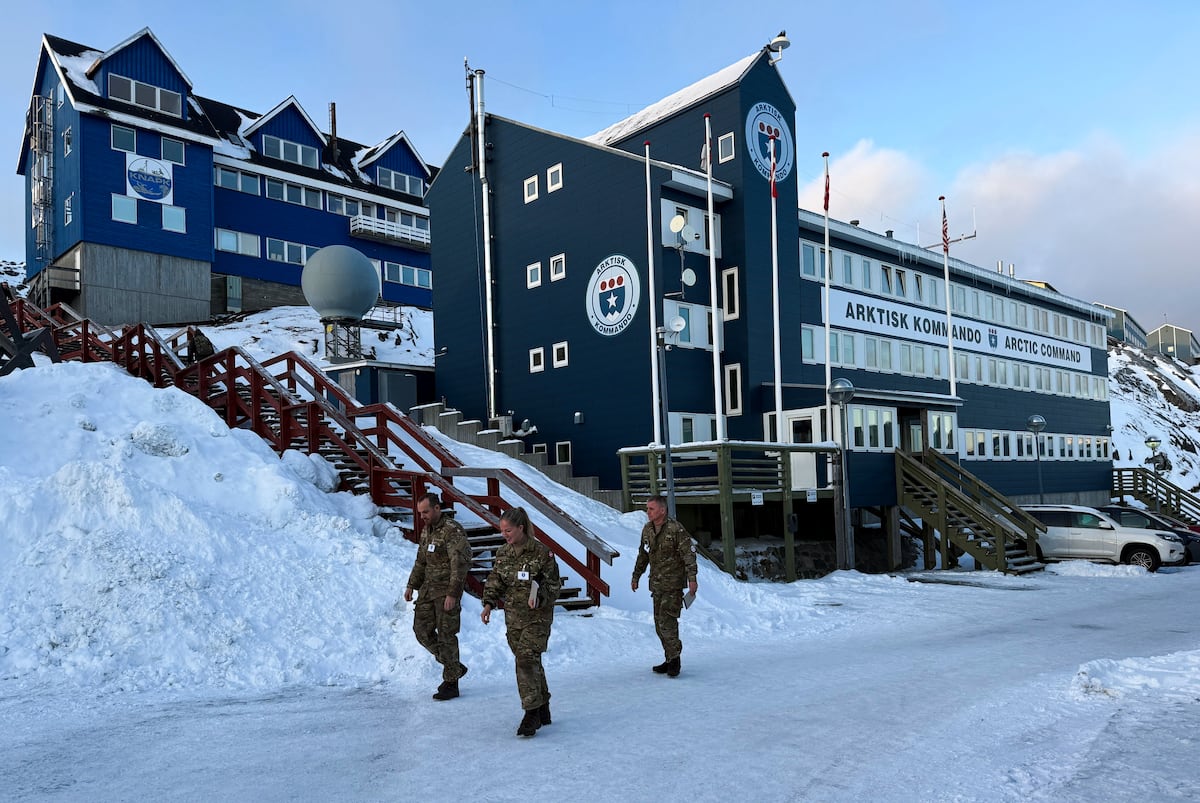
PARIS — NATO is ready to engage in a potential Arctic mission, but hasn’t started planning one as there has been no political guidance to do so, said Gen. Alexus Grynkewich, the Supreme Allied Commander Europe, after a meeting of the organization’s top military leaders on Thursday.
“We’re aware of discussions about this, of course, and therefore we’re doing some thinking about how we would organize for it, but no planning has started yet,” said Grynkewich, a United States Air Force general, at a press briefing in Brussels.
Grynkewich said NATO’s military headquarters has “a ton of expertise” that could be used to organize an Arctic mission, “whether we call it Arctic Sentry or something else.” European NATO members including the Nordic countries, the Netherlands, France and the United Kingdom have proposed a greater Arctic presence to boost security against potential Russian or Chinese threats.
The meeting of NATO chiefs of defense followed a tense week in trans-Atlantic politics, during which Denmark took steps to reinforce its military presence on Greenland after repeated demands by U.S. President Donald Trump to control the island. Trump shocked European policy makers by threatening tariffs on allies supporting the Danish stance, before dropping the threats on Wednesday, citing the “framework of a future deal.”
Thursday’s meeting was “entirely focused on what military leaders are supposed to be focused on, which is ensuring the defense and deterrence of the Euro-Atlantic area,” Grynkewich said. “We, of course, are aware of the political discussions that are going on, but there was never a military dimension to those discussions that made its way down to us.”
The meeting of NATO’s top military leaders was “totally uneventful from this point of view, and totally swift,” said Adm. Giuseppe Cavo Dragone, the chair of the NATO Military Committee.
While NATO command is aware of a framework between Greenland, Denmark and the U.S., “we are still waiting for direction,” Cavo Dragone said. Once there is, “we will start doing our business, which is the military planning and whatever it is necessary to fulfill and to honor the guidance we still have to receive,” he said.
Climate change is transforming access to the Arctic, and the opening of maritime routes makes control of the area “very important” for NATO and countries with a continuous at-sea deterrence, said Adm. Pierre Vandier, Supreme Allied Commander Transformation. He also cited the need to consider “space and ballistic issues,” where global threats NATO faces require looking ahead.
Greenland hosts Pituffik Space Base, where the U.S. operates radars as part of a missile early-warning system. When considering ballistic trajectories, the shortest route between Russian missile launch sites and North America is via the Arctic, including over Greenland.
One of the “most concerning changes in the security situation” is Russia and China increasingly working together in the Arctic in recent years, both in the maritime domain with more joint patrols as well as in the air domain with joint long-range bomber patrols, Grynkewich said, echoing remarks he made earlier this month in Sweden.
NATO is focused on the Arctic, is getting more capability to work and operate in the “challenging” climate there, and will do more in the region, according to Cavo Dragone.
“Some of the things that we need to do in the Arctic to enhance our security are long lead items, including installation of new sensors and detection capabilities,” Grynkewich said. “All of those things are constantly in our cross-check and we’re constantly trying to enhance our posture and think of ways that nations can enhance our posture in the Arctic.”
NATO has several exercises planned in the Arctic in coming months, though none in Greenland itself, the alliance commander said. If NATO is tasked with other vigilance activity, the alliance has “plenty of capacity here,” especially in the maritime and air domain, Grynkewich said.
Grynkewich cited visits to Finland and Sweden earlier this month, saying their militaries “are uniquely positioned to strengthen NATO’s northern flank and Arctic security.”
He said both countries, as well as Norway and Denmark, have “tremendous capabilities that they bring to bear every single day up there,” while other near-Arctic nations also have the ability to operate in the area. “I’m confident that if we’re tasked to do any specific mission or just to continue our general approach to the Arctic, we’re well postured.”
Rudy Ruitenberg is a Europe correspondent for Defense News. He started his career at Bloomberg News and has experience reporting on technology, commodity markets and politics.
巴黎——北约欧洲盟军最高司令阿莱克西斯·格林克维奇将军在周四北约最高军事领导人会议后表示,北约已准备好参与潜在的北极任务,但由于缺乏政治指导,尚未开始制定计划。
“我们当然知道有关于此事的讨论,因此我们正在考虑如何组织此事,但目前还没有开始任何计划,”美国空军将军格林克维奇在布鲁塞尔举行的新闻发布会上说。
格林克维奇表示,北约军事总部拥有“大量专业知识”,可以用来组织一项北极任务,“无论我们称之为‘北极哨兵’还是其他名称”。包括北欧国家、荷兰、法国和英国在内的欧洲北约成员国已提议加强在北极的军事存在,以应对潜在的俄罗斯或中国威胁。
北约国防部长会议召开之际,跨大西洋政治局势正经历一段紧张的一周。此前,美国总统特朗普多次要求丹麦控制格陵兰岛,丹麦随即采取措施加强在该岛的军事存在。特朗普威胁要对支持丹麦立场的盟友加征关税,此举震惊了欧洲决策者。周三,特朗普以“未来协议框架”为由,撤回了这一威胁。
格林克维奇表示,周四的会议“完全聚焦于军事领导人应该关注的重点,即确保欧洲-大西洋地区的防御和威慑。我们当然了解正在进行的政治讨论,但这些讨论中从未涉及军事层面,也从未波及到我们。”
北约军事委员会主席朱塞佩·卡沃·德拉戈内海军上将表示,北约最高军事领导人会议“从这个角度来看完全没有波澜,而且非常迅速”。
北约指挥部虽然了解格陵兰、丹麦和美国之间的合作框架,但卡沃·德拉戈内表示,“我们仍在等待指示”。他说道,一旦收到指示,“我们将立即着手开展工作,包括军事计划制定以及为履行和遵守我们尚未收到的指示而采取的一切必要措施”。
气候变化正在改变进入北极的途径,海上航线的开辟使得对北约和拥有持续海上威慑能力的国家而言,控制该地区“至关重要”,北约转型盟军最高司令皮埃尔·范迪耶海军上将表示。他还指出,需要考虑“太空和弹道问题”,北约面临的全球威胁需要着眼未来。
格陵兰岛拥有皮图菲克航天基地,美国在那里运行着导弹预警系统的一部分雷达。从弹道轨迹来看,俄罗斯导弹发射场与北美之间的最短路径是途经北极,包括飞越格陵兰岛。
格林克维奇表示,“安全形势中最令人担忧的变化之一”是,近年来俄罗斯和中国在北极地区的合作日益密切,不仅在海上领域开展了更多联合巡逻,还在空中领域开展了联合远程轰炸机巡逻。这与他本月早些时候在瑞典发表的言论相呼应。
卡沃·德拉戈内表示,北约正将重点放在北极,正在增强在北极“充满挑战”的气候条件下开展工作和行动的能力,并将在该地区开展更多行动。
格林克维奇说:“我们在北极地区需要加强安全的一些工作是需要较长准备时间的,包括安装新的传感器和探测设备。所有这些工作都在我们持续的交叉检查范围内,我们也在不断努力提升自身态势,并思考各国如何才能更好地加强我们在北极地区的态势。”
北约司令表示,北约计划在未来几个月于北极地区举行多项演习,但不会前往格陵兰岛。格林克维奇还表示,如果北约被赋予其他警戒任务,该联盟“拥有充足的能力”,尤其是在海上和空中领域。
格林克维奇提到本月初对芬兰和瑞典的访问,称两国军队“在加强北约北部侧翼和北极安全方面具有独特的优势”。
他表示,两国以及挪威和丹麦都拥有“强大的能力,并且每天都在北极地区发挥作用”,其他北极附近国家也具备在该地区开展行动的能力。“我相信,无论我们被委派执行任何特定任务,还是继续推进我们在北极地区的总体行动,我们都已做好充分准备。”
鲁迪·鲁伊滕贝格是《防务新闻》的欧洲记者。他的职业生涯始于彭博新闻社,拥有报道科技、大宗商品市场和政治方面的经验。