More greenery retained in Maju Forest, Gillman Barracks under revised plans根据修订后的计划,马朱森林和吉尔曼军营将保留更多绿地。
About 4,000 flats are planned in Maju, while Gillman Barracks will yield about 7,000 homes. Read more at straitstimes.com.
新闻视频
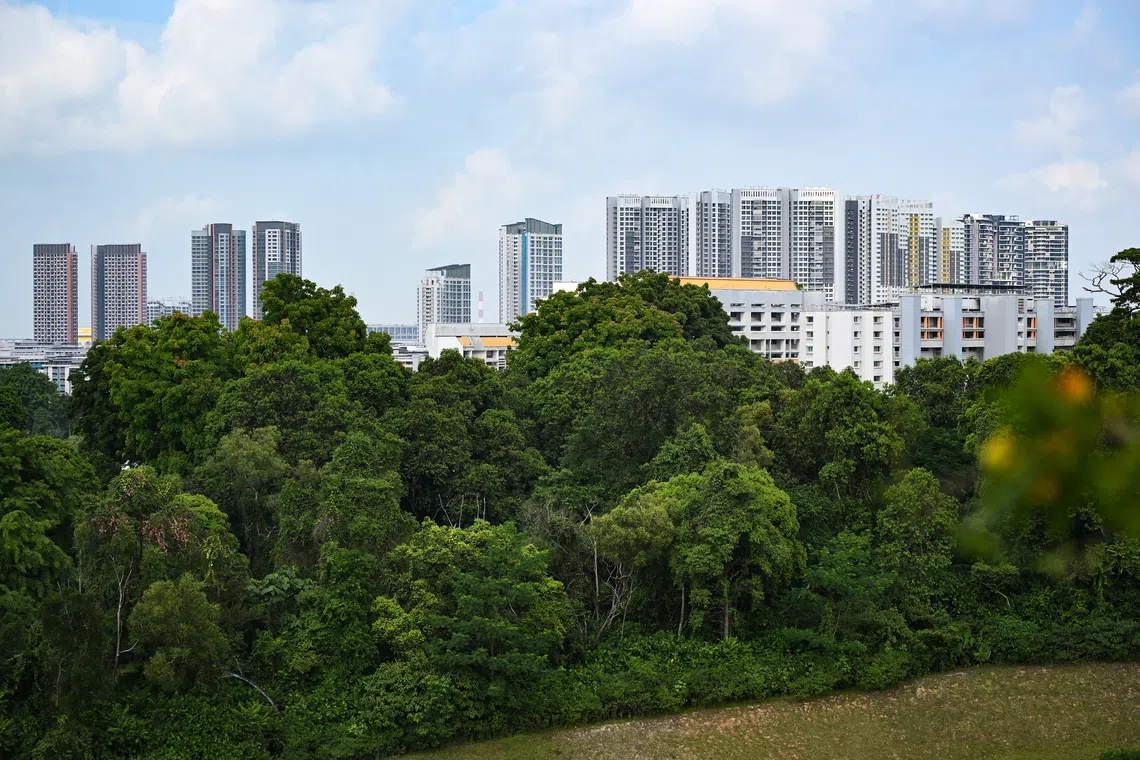
For the 23ha Maju Forest, about 10ha of greenery will be retained, up from 8ha under plans unveiled by the HDB in July.
Published Oct 28, 2026, 06:30 PM
Updated Oct 28, 2026, 06:30 PM
SINGAPORE – More greenery will be retained in Maju Forest and Gillman Barracks under revised development plans that involve building a combined 11,000 homes at the two sites over the next decade.
Announcing the revised plans on Oct 28, the Housing Board said it took into account earlier studies for both sites, public feedback and broader planning considerations such as housing needs and the availability of alternative sites.
The area, which is currently largely forested, is expected to yield 4,000 flats. Land preparation works are slated to begin from the first half of 2028, and public access to the site to be restricted from then.
At Gillman Barracks, about 12ha of the 40ha estate will be set aside for greenery, up from 8ha that was originally planned.
The former British military camp will be redeveloped for about 7,000 homes, of which about 5,500 will be flats and the remainder will be private housing.
Site works are expected to begin with the demolition of buildings from the second half of 2027, and land preparation works will start in 2029.
Speaking to the media on Oct 28, Minister of State for National Development Alvin Tan said the revised plans mean about 400 fewer homes will be built in Maju Forest, and 800 fewer in Gillman Barracks.
He said HDB will build taller blocks where possible to intensify use of the remaining development area.
Minister of State for National Development Alvin Tan ST PHOTO: HESTER TAN
Minister of State for National Development Alvin Tan
ST PHOTO: HESTER TAN
HDB’s revised plans follow several months of public debate over the plans for both sides, with some of the areas’ residents and nature advocates upset over plans to redevelop the green sites, and keen to have more say on the sites’ future use.
From July 10 – when plans for the two sites were first announced – to Aug 6, the board received about 7,200 feedback submissions for Maju Forest and 2,300 for Gillman Barracks.
HDB said about 1,000 people were also engaged “to better understand the concerns raised and hear from different segments of the community”.
The Ministry of National Development and public agencies held engagement sessions with nature groups, youth, academics, planning and built environment professionals and members of the public. MPs also organised sessions for residents living near the two areas.
Tan said many residents requested to retain more greenery where possible, during door-to-door engagements and closed-door sessions.
“Many have also told us that they understood the need for more housing and also shared with us constructive feedback and suggestions on what they would like to see in the future estates,” he said.
HDB said there were also questions on whether more housing was required at the two sites, and suggestions to explore other brownfield sites, intensify existing developed areas, or reduce the proposed development footprints.
“There were also those who recognised the need for more homes in both areas so families can live closer to one another for mutual care and support,” it added.
The board said planning for national needs – such as housing, nature and heritage – requires “difficult but necessary trade-offs”.
It added that alternative brownfield sites were considered for development, including locations suggested by members of the public and residents.
Some of these sites are already planned for housing and will contribute to future supply – such as the Protective Security Command in Ulu Pandan Road, HDB said.
Other sites that had been looked at, including Maju Camp and the former Central Manpower Base in Depot Road, are required for existing uses, and cannot be freed up within the timeframe in which new homes are needed.
“Taking into account all of the considerations, we have found – as best as we can – a landing spot and also a right balance,” said Tan.
“These engagements also allow us to also explain our planning considerations as we need to juggle between retaining greenery, preserving heritage, and also meeting the housing aspirations of Singaporeans.”
HDB said housing demand in recent years has been strong, with larger cohorts of Singaporeans, who were both in the 1980s and 1990s, now looking to buy their own flats.
The board added that demand is also driven by decreasing household sizes, as more couples, singles and seniors choose to live on their own instead of with their extended families.
It noted that recent Build-To-Order projects in Clementi and Bukit Merah – where Maju Forest and Gillman Barracks are located – drew “significant interest”, with about 2,000 applications received for Clementi Emerald’s 420 four-room flats, and 5,300 applications for Berlayar Rise’s 988 four-room flats.
HDB said agencies “sought to strike the balance between developing the sites as sensitively as possible, while meeting the housing needs of Singaporeans” as they reviewed plans for the two sites.
Asked if the development plans shared on Oct 28 are final, Tan cited the cumulative 9,500 feedback submissions received, as well as the engagements with more than 1,000 persons – some of whom were engaged multiple times.
He said the Government has looked into many of the suggestions, and made its decision after “wide and deep consultations”. “We will have to proceed with the development as I mentioned, and I thank all of the stakeholders for giving us their views.”
HDB said the revised conceptual plans for the sites will form the basis for the detailed planning and design of the sites, with development to take place over several years.
Before development works in vegetated areas at both sites commence, an Environmental Management and Monitoring Plan will be put in place, it said.
This sets out measures to minimise the environmental impact of works, and protect greenery and other ecological features earmarked for retention.
Ng Keng Gene is a correspondent at The Straits Times, reporting on issues relating to land use, urban planning and heritage.
Isabelle Liew is a journalist at The Straits Times. She covers housing issues in Singapore, with a focus on public housing.
Conservation/Preservation
对于占地 23 公顷的马朱森林,将保留约 10 公顷的绿地,高于建屋发展局 (HDB) 7 月份公布的计划中的 8 公顷。
发布于2026年10月28日下午6:30
更新于2026年10月28日下午6:30
新加坡——根据修订后的发展计划,未来十年将在马朱森林和吉尔曼军营两地建造共计 11,000 套住宅,同时保留更多绿地。
建屋发展局于 10 月 28 日公布了修订后的计划,并表示已考虑了此前对两个地点的研究、公众反馈以及更广泛的规划考虑因素,例如住房需求和替代地点的可用性。
该区域目前大部分为森林,预计将建造4000套公寓。土地平整工作计划于2028年上半年开始,届时将限制公众进入该地块。
在吉尔曼军营,40公顷的土地中将有约12公顷被划为绿地,比最初计划的8公顷有所增加。
这处前英国军事营地将被改建为约7000套住宅,其中约5500套为公寓,其余为私人住宅。
预计场地工程将于 2027 年下半年开始拆除建筑物,土地准备工作将于 2029 年开始。
10月28日,国家发展部政务部长陈庆炎在接受媒体采访时表示,修订后的计划意味着马朱森林将减少约400套房屋的建设,吉尔曼军营将减少约800套房屋的建设。
他表示,建屋发展局将在条件允许的情况下建造更高的楼房,以加强对剩余开发区域的利用。
国家发展部政务部长陈志远(照片:陈慧珊)
国家发展部政务部长陈志远
圣路易斯邮报照片:海丝特·谭
经过数月的公开辩论,建屋发展局 (HDB) 修改了计划。一些地区的居民和自然保护主义者对重新开发绿地的计划感到不满,并渴望对这些地点的未来用途有更多发言权。
从 7 月 10 日(这两个地点的计划首次公布之时)到 8 月 6 日,委员会收到了约 7200 份关于马朱森林的反馈意见和 2300 份关于吉尔曼兵营的反馈意见。
建屋发展局表示,他们还与约 1000 人进行了沟通,“以便更好地了解提出的问题,并听取社区不同群体的意见”。
国家发展部和公共机构与自然保护组织、青年团体、学者、规划和建筑环境专业人士以及公众举行了交流会。议员们也为居住在这两个区域附近的居民组织了交流会。
谭先生表示,在挨家挨户的走访和闭门会议中,许多居民要求尽可能保留更多绿化。
“许多人也告诉我们,他们理解需要更多的住房,并向我们提出了建设性的反馈和建议,希望在未来的住宅区看到什么,”他说。
建屋发展局表示,也有人质疑这两个地块是否需要更多住房,并建议探索其他棕地、加强现有已开发区域的建设,或减少拟建项目的占地面积。
声明还补充道:“也有人认识到这两个地区都需要更多的住房,以便家庭成员可以住得更近,互相照顾和支持。”
委员会表示,规划国家需求(例如住房、自然和遗产)需要“艰难但必要的权衡”。
报告还补充说,他们考虑了其他棕地开发用地,包括公众和居民建议的地点。
建屋发展局表示,其中一些地块已经规划用于住房建设,并将有助于未来的住房供应,例如乌鲁班丹路的保安指挥部。
之前考察过的其他地点,包括马朱营地和仓库路的前中央人力基地,都需要用于现有用途,无法在需要新建住房的时间范围内腾出空间。
“综合考虑所有因素,我们已经尽力找到了一个落脚点,也找到了一个合适的平衡点,”谭说道。
“这些交流也让我们有机会解释我们的规划考量,因为我们需要在保留绿地、保护历史遗迹和满足新加坡人的住房愿望之间取得平衡。”
建屋发展局表示,近年来住房需求强劲,更多出生于上世纪八九十年代的新加坡人现在希望购买自己的组屋。
该委员会补充说,需求也受到家庭规模缩小的推动,因为越来越多的夫妇、单身人士和老年人选择独自生活,而不是与大家庭成员一起生活。
报告指出,最近在金文泰和红山(Maju Forest 和 Gillman Barracks 所在地)的预购组屋项目引起了“极大的兴趣”,其中金文泰翡翠的 420 套四房式组屋收到了约 2000 份申请,而 Berlayar Rise 的 988 套四房式组屋收到了 5300 份申请。
建屋发展局表示,各机构在审查这两个地块的开发计划时,“力求在尽可能谨慎地开发这些地块的同时,满足新加坡人的住房需求”。
当被问及 10 月 28 日公布的发展计划是否已最终确定时,谭先生提到已收到累计 9500 份反馈意见,并与 1000 多人进行了沟通——其中一些人还多次参与了沟通。
他表示,政府已认真研究了许多建议,并在经过“广泛而深入的磋商”后做出了决定。“正如我之前提到的,我们必须继续推进开发工作,我感谢所有利益相关方提出的宝贵意见。”
建屋发展局表示,这些地块的修订概念规划将成为地块详细规划和设计的基础,开发工作将持续数年。
声明称,在两个地点的植被区域开始开发工作之前,将制定环境管理和监测计划。
这规定了尽量减少工程对环境影响的措施,并保护指定保留的绿地和其他生态特征。
吴庆根是《海峡时报》的记者,报道与土地利用、城市规划和遗产相关的问题。
Isabelle Liew是《海峡时报》的记者,主要报道新加坡的住房问题,尤其关注公共住房。
保护/保存