Is the Finnish-Norwegian call with Putin a crack in Nordic resolve, or the start of a new path?芬兰和挪威与普京的通话是北欧决心的裂痕,还是新道路的开始?
Western European leaders have largely avoided speaking with Putin since Russia’s full-scale invasion of Ukraine in February 2022.
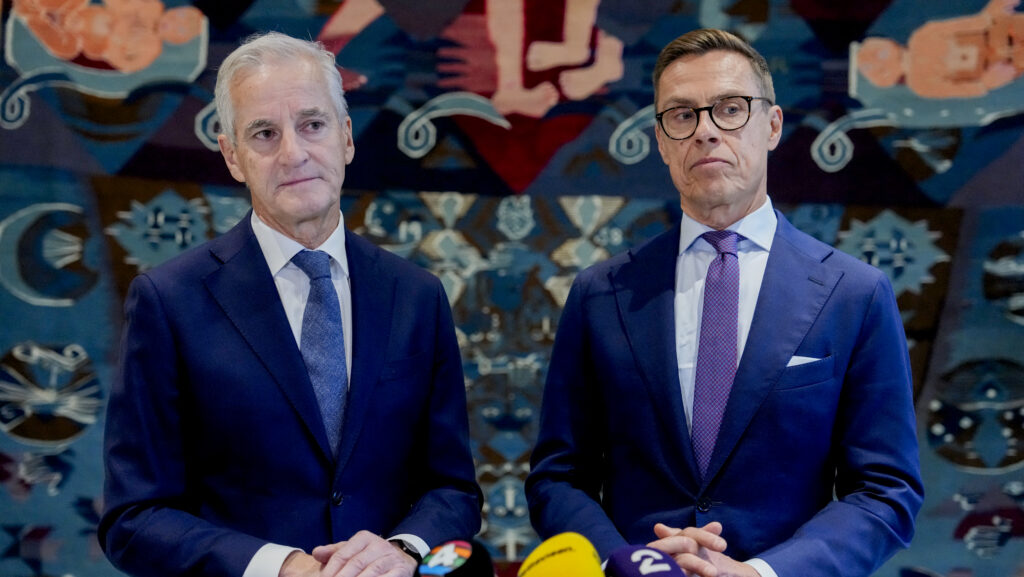
Norway's Prime Minister Jonas Gahr Støre (L) and Finnish President Alexander Stubb address a press conference during a meeting at the Norwegian Prime Minister's Office in Oslo on October 8, 2026. (Ole Berg-Rusten / NTB / AFP via Getty Images)
STOCKHOLM and MILAN – A small fissure appears to have opened in the Nordic nations’ stance towards Russia, as the leaders of Norway and Finland held a rare call Tuesday with Russian president Vladimir Putin to discuss Ukraine.
While Finnish President Alexander Stubb and Norwegian Prime Minister Jonas Gahr Støre said the call was done with the blessing of Ukraine, it led to quick pushback from Denmark and caution from Sweden, underlining a key issue as Europe is in its fifth year of the Ukraine conflict — keeping nations aligned on how to handle Moscow.
“It was a 90-minute call. It was substantial and went into the issues. It was professional. There are large gaps in positions,” Norway’s Prime Minister Støre told the public broadcaster NRK after the conversation with Putin, adding that the call had been planned to be only 20 minutes in length.
“We stand by Ukraine and defend Ukraine’s right to defend itself. And we emphasize that there must be a diplomatic path to end this war in a lasting and just manner,” Støre said.
The joint phone call to Moscow was a follow-up to a meeting in Oslo one week earlier, where Stubb and Støre hosted Ukrainian President Volodymyr Zelenskyy and US special envoy Steve Witkoff. Representatives from several other countries, including Germany and Poland, were present at that meeting.
Western European leaders have largely avoided speaking with Putin since Russia’s full-scale invasion of Ukraine in February 2022. The last notable contact by a European leader was French President Emmanuel Macron in July 2025, according to the BBC.
In a coordinated statement, Stubb said “The discussion was frank and substantive. We are neighbouring countries to Russia. The outcome of this war will have a direct impact on our and the broader European security. Ending the war requires direct discussions.”
MQ-9B and Gambit Series: Advancing European Defense Capabilities
GA-ASI will build Gambit aircraft in Europe, partnered with European-based companies, with airframes available for international procurement starting in 2027.
In a statement on X , Russia’s Ministry of Foreign Affairs said that Putin “stressed that a just and lasting peace can only be achieved if the Russian Federation’s legitimate interests are fully and unconditionally taken into account.” (The Financial Times reported that Putin spent most of the call complaining about Slavic history.)
Stubb and Støre stated that they took the call “as leaders of their respective countries and did not speak on behalf of Europe as a whole” — a point underlined by the response to the call from other parts of Europe.
Just after the communiqué was released by the president’s office in Helsinki, Copenhagen heavily criticised the initiative by its Nordic allies.“I am very sceptical about this Norwegian and Finnish solo initiative. It has not been coordinated with the rest of us,” Danish Prime Minister Mette Frederiksen told Danish TV 2.
“I believe we should keep Europe united instead of going it alone,” Frederiksen stressed.
Sweden’s Prime Minister Ulf Kristersson, who was in Helsinki for the Nordic Council’s annual session, said “My view is that everyone wants peace except Putin. I have rather low expectations for this kind of talks,” Kristersson said, according to the Swedish Daily DN , adding that he had not been briefed immediately on the outcome of discussions between Stubb, Støre and Putin.
Asked whether he considers it wise to hold talks with the Russian leader, Kristersson replied that it entirely depends on the outcome.
The Baltic leaders have so far been cautious in their comments. Estonia’s Minister of Foreign Affairs Margus Tsahkna said that he had been briefed about the phone call to Moscow, according to the country’s public broadcaster ERR.
However, he stressed in a post on X that “Only increased pressure on Russia will make it take peace negotiations seriously” and that “Every contact with Russia must convey Europe’s unity and determination to support Ukraine and maintain pressure on Russia, while making clear that Europe will not negotiate away the fundamental principles underpinning its security.”
Coordination Or Individual Priorities?
The fact that it was Finland and Norway who made these calls should not be a major surprise, said Henri Vanhanen, a Finnish foreign-policy analyst, who emphasized in a post on X that the two share land borders with Russia.
Finland brings “long experience dealing with Russia, while Norway brings decades of expertise in security dialogue on the northern regions.” Stubb also has a “direct communication line” to Trump and both leaders have close ties with Zelenskyy.
“Norway is not part of the EU, but Finland is,” Vanhanen added. This duo can approach the issue as European NATO allies without having to decide on behalf of the entire EU who should represent Europe in the negotiations.”
Jim Townsend, a European expert with the Center for a New American Security, views the call as a first step in what could be a great role for Europe in negotiating a ceasefire in Ukraine.
Stubb, Townsend told Breaking Defense, is viewed as a pragmatic leader in Europe, who has good relations across the continent as well as in Washington. So it makes sense he would be taking the lead on these discussions, while Støre is viewed as largely in alignment with his Finnish counterpart.
As to the idea that this shows a crack in Europe’s alignment on Ukraine, Townsend pointed to the riots in France, the rise of the far-right in Germany and ongoing economic challenges across the continent as a sign that “there are cracks already” forming.
“Europe is hardly a unified monolith. I don’t read this so much as Europe cracking,” he noted. He added that, “some in Europe are trying to find a way out and beginning to say things publicly that they may have been only willing to say behind closed doors” about the need to find a way out of the Ukraine situation.
The Nordic countries are among some of the NATO nations most directly exposed to the Russian threat: Finland shares a 1,340-kilometer (832.6-mile) land border with Russia; Norway borders it in the High North, near the important Kola Peninsula, that hosts Russian nuclear capabilities; and Sweden’s position in the Baltic Sea region makes it strategically important for the alliance’s northern flank.
According to Townsend, who formerly covered Europe as a Pentagon official, “It’s really the northern Europeans who have been the propellant for Ukraine,” and they have largely kept their alignment together to this point.
But that doesn’t mean everything is done the same, according to Maj. Gen. Johan Pekkari, the Swedish army chief, who talked to Breaking Defense at the AUSA conference in Washington earlier this month.
“Our dimensional threat will continue to be Russia,” Pekkari said. “I am sure we have the same view among the Nordic community, what may be a little different is how we pronounce it.”
His job is to “prepare for the worst case,” he said, which entails anticipating what such a scenario could look like.
Pekkari said that this kind of cooperation happens at all levels on a daily basis in Sweden and that sabotage is “part of what we anticipate in case of escalation,” noting that the country has prepared itself for by relying on “different tools.”
Tuija Karanko, the secretary general of the Finnish Defense and Aerospace Industries, which represents over 300 defense and dual-use technology companies, noted that when it comes to national security, the Finns sometimes go about it a different way.
“We definitely know what is going on and I would claim that we know it better than anybody else — the Finnish way is not to be very vocal about this, there is no need to go around and say what we think might happen,” Karanko told Breaking Defense at AUSA. “We know, are prepared and that is our mentality: Carry on and do your business.”
The acting chief of the Norwegian Army, Trond Nilsen, agreed with the points made by his counterparts about the common alignment that exists among the Nordic countries on the matter.
“We share the same borders, the same concerns, it is quite easy to speak to the Finns and Swedes because we are talking about the exact same thing. … The most important part for us is that the Norwegian Army is prepared for an invasion [if that took place],” he said at AUSA.
“The villain to fight is in Moscow. For a Norwegian, if you lost one or two battles you would withdraw and ask are we doing the right thing. … The Russians will not, they will just send more people,” he said.
He added that this is a scenario the country’s army needs to examine deeper.
“If you are sending a lot of [weapons with] warheads to the border, and attacking, we might stop the first wave but what about the second or third one? We are looking into this,” Nilsen said.
Aaron Mehta in Washington contributed to this report.
Breaking Defense Video
A more flexible way to defend maneuver forces from drones that doesn’t tie them down [Sponsored]
What’s haunting the Pentagon this Halloween?
The new must-have capabilities for drones [Sponsored]
Army’s tech chief talks autonomy, acquisition and the future of drones
Drones take over AUSA, plus the Army’s plan to bring in new vendors
Hegseth talks autonomy at AUSA, a key show focus
Army doubles down on autonomy, stakes out Indo-Pacific role: AUSA Day 2
Telle talks ‘manufacturing rodeo,’ supply chain ‘weak links’: AUSA Day 1
New leaders, new drone command: What we expect from AUSA 2026
Unpacking Boeing’s F/A-XX win, plus a report from wartime Ukraine
2026年10月8日,挪威首相约纳斯·加尔·施特勒(左)和芬兰总统亚历山大·斯图布在奥斯陆挪威首相府举行会晤期间召开新闻发布会。(Ole Berg-Rusten / NTB / AFP via Getty Images)
斯德哥尔摩和米兰——北欧国家对俄罗斯的立场似乎出现了一丝裂痕,挪威和芬兰领导人周二与俄罗斯总统弗拉基米尔·普京进行了一次罕见的通话,讨论乌克兰问题。
尽管芬兰总统亚历山大·斯图布和挪威首相乔纳斯·加尔·施特勒表示,此次通话得到了乌克兰的祝福,但丹麦迅速予以反对,瑞典也表示谨慎,这凸显了欧洲在乌克兰冲突的第五年里面临的一个关键问题——如何让各国在如何应对莫斯科的问题上保持一致。
“通话持续了90分钟,内容充实,深入探讨了相关问题,而且非常专业。双方立场存在很大分歧。”挪威首相斯托雷在与普京通话后告诉挪威公共广播公司NRK,并补充说,通话原计划只有20分钟。
“我们与乌克兰站在一起,捍卫乌克兰的自卫权。我们强调,必须通过外交途径,以持久公正的方式结束这场战争,”斯托雷说。
此次与莫斯科的联合通话是对一周前在奥斯陆会晤的后续行动。在奥斯陆会晤中,斯图布和斯托尔接待了乌克兰总统泽连斯基和美国特使史蒂夫·维特科夫。包括德国和波兰在内的其他几个国家的代表也出席了那次会晤。
自2022年2月俄罗斯全面入侵乌克兰以来,西欧领导人基本上避免与普京对话。据英国广播公司报道,欧洲领导人上一次与普京进行重要接触是2025年7月法国总统埃马纽埃尔·马克龙与普京的会面。
斯塔布在一份协调一致的声明中表示:“讨论坦诚而实质性。我们是俄罗斯的邻国。这场战争的结果将直接影响我们以及更广泛的欧洲安全。结束战争需要直接对话。”
MQ-9B 和 Gambit 系列:提升欧洲国防能力
通用航空飞机公司(GA-ASI)将与欧洲公司合作,在欧洲建造 Gambit 飞机,从 2027 年开始,飞机机身将可供国际采购。
俄罗斯外交部在一份声明中表示,普京“强调,只有充分、无条件地考虑俄罗斯联邦的合法利益,才能实现公正持久的和平。”(《金融时报》报道称,普京在通话的大部分时间里都在抱怨斯拉夫历史。)
斯图布和斯托尔表示,他们“以各自国家领导人的身份”接受了这一呼吁,“并不代表整个欧洲发言”——欧洲其他地区对这一呼吁的回应也强调了这一点。
赫尔辛基总统府发布公报后不久,哥本哈根就对其北欧盟友的这项倡议提出了强烈批评。“我对挪威和芬兰的这项单独倡议非常怀疑。它没有与我们其他国家协调,”丹麦首相梅特·弗雷德里克森在接受丹麦第二电视台采访时表示。
弗雷德里克森强调:“我认为我们应该保持欧洲团结,而不是各自为战。”
瑞典首相乌尔夫·克里斯特松当时正在赫尔辛基参加北欧理事会年会。据瑞典《每日新闻报》报道,克里斯特松表示:“我认为除了普京之外,所有人都希望和平。我对这类会谈的期望值相当低。”他还补充说,他尚未立即获悉斯图布、斯特勒和普京之间会谈的结果。
当被问及是否认为与俄罗斯领导人举行会谈是明智之举时,克里斯特松回答说,这完全取决于会谈的结果。
波罗的海三国领导人迄今为止对此事的评论都较为谨慎。据爱沙尼亚公共广播公司ERR报道,爱沙尼亚外交部长马尔古斯·察赫克纳表示,他已听取了有关与莫斯科通话的简报。
然而,他在 X 上的一篇文章中强调,“只有加大对俄罗斯的压力,才能使其认真对待和平谈判”,并且“与俄罗斯的每一次接触都必须传达欧洲团结一致、支持乌克兰并继续对俄罗斯施压的决心,同时明确表示欧洲不会在维护自身安全的基本原则上进行谈判”。
协调还是个人优先事项?
芬兰外交政策分析师亨利·范哈宁表示,芬兰和挪威发出这些呼吁并不令人意外。他在 X 网站上发表的一篇文章中强调,芬兰和挪威与俄罗斯接壤。
芬兰在与俄罗斯打交道方面拥有“丰富的经验”,而挪威则在北方地区的安全对话方面拥有数十年的专业经验。斯塔布还与特朗普保持着“直接沟通渠道”,而且两位领导人都与泽连斯基关系密切。
“挪威不是欧盟成员国,但芬兰是,”范哈宁补充道。“这两个国家可以作为欧洲北约盟国来处理这个问题,而无需代表整个欧盟决定谁应该代表欧洲参加谈判。”
美国新安全中心的欧洲问题专家吉姆·汤森德认为,这次通话是欧洲在乌克兰停火谈判中发挥重要作用的第一步。
汤森德告诉《防务新闻》,斯塔布在欧洲被视为一位务实的领导人,他与欧洲大陆以及华盛顿都保持着良好的关系。因此,由他主导这些讨论合情合理,而斯托尔则被认为与他的芬兰同行立场基本一致。
至于这是否表明欧洲在乌克兰问题上的立场出现了裂痕,汤森德指出,法国的骚乱、德国极右势力的崛起以及整个欧洲大陆持续面临的经济挑战,都表明“裂痕”正在形成。
“欧洲绝非铁板一块。我并不认为这是欧洲正在分裂,”他指出。他还补充说,“欧洲一些人正试图寻找出路,并开始公开谈论一些他们原本可能只愿意私下说的话”,这些话是关于如何摆脱乌克兰困境的。
北欧国家是北约成员国中受俄罗斯威胁最直接影响的国家之一:芬兰与俄罗斯共享 1340 公里(832.6 英里)的陆地边界;挪威在北部与俄罗斯接壤,靠近重要的科拉半岛,该半岛拥有俄罗斯的核能力;瑞典位于波罗的海地区,其地理位置对北约的北部翼具有重要的战略意义。
曾任五角大楼官员、负责欧洲事务的汤森德表示,“真正推动乌克兰局势的是北欧国家”,而且到目前为止,他们基本上保持了团结一致。
但瑞典陆军总司令约翰·佩卡里少将表示,这并不意味着所有事情都以同样的方式进行。他本月早些时候在华盛顿举行的美国陆军协会会议上接受了《防务新闻》的采访。
佩卡里说:“我们面临的主要威胁仍然是俄罗斯。我相信北欧国家也持相同观点,可能只是表述方式略有不同。”
他说,他的工作是“为最坏的情况做好准备”,这意味着要预测这种情况可能会是什么样子。
佩卡里表示,这种合作在瑞典每天都在各个层面进行,破坏活动是“我们预料到局势升级时会发生的事情的一部分”,并指出瑞典已经依靠“不同的工具”为此做好了准备。
代表 300 多家国防和军民两用技术公司的芬兰国防和航空航天工业协会秘书长图伊娅·卡兰科指出,在国家安全问题上,芬兰人有时会采取不同的方式。
“我们当然知道发生了什么,而且我认为我们比任何人都更清楚——芬兰人的行事方式是对此保持低调,没必要到处宣扬我们认为可能发生的事情,”卡兰科在AUSA的Breaking Defense会议上说道。“我们知道,也做好了准备,这就是我们的心态:继续前进,做好自己的事。”
挪威陆军代理总司令特隆德·尼尔森同意其他同行的观点,即北欧国家在这一问题上存在共同立场。
“我们拥有相同的边界,相同的关切,与芬兰人和瑞典人交谈非常容易,因为我们谈论的是同一件事。……对我们来说,最重要的是挪威军队已经做好了应对入侵的准备(如果入侵真的发生的话)。”他在AUSA会议上说道。
“我们要对抗的敌人在莫斯科。对挪威人来说,如果输掉一两场战役,他们会撤退并反思我们这样做是否正确……但俄国人不会,他们只会增派兵力,”他说。
他还补充说,这是该国军队需要深入研究的情况。
尼尔森说:“如果你向边境运送大量(带有)弹头的武器并发动攻击,我们或许可以阻止第一波攻击,但第二波或第三波呢?我们正在研究这个问题。”
华盛顿的亚伦·梅塔对本报道亦有贡献。
突破性防御视频
一种更灵活的防御机动部队免受无人机攻击的方式,不会限制其行动[赞助]
今年万圣节,五角大楼究竟闹鬼?
无人机必备的新功能 [赞助内容]
陆军技术主管谈无人机的自主性、采购和未来
无人机主导了美国陆军协会(AUSA)的会议,此外,陆军还计划引入新的供应商。
Hegseth 在 AUSA 大会上谈到了自主性,这是本次大会的一个重点议题。
陆军加倍强调自主性,明确印太地区角色:AUSA第二天
特勒谈“制造业乱象”、供应链“薄弱环节”:AUSA 第一天
新领导人,新无人机指挥部:我们对 AUSA 2026 的期待
深入剖析波音F/A-XX的中标,以及来自战时乌克兰的报道