Navy faces ‘years-long’ maintenance crunch amid record-breaking, extended deployments由于部署次数创历史新高且持续时间延长,海军面临“长达数年”的维护难题。
Extended deployments in the Middle East could compound existing maintenance delays, with Navy leaders warning that returning ships will strain shipyard capacity and force trade-offs between repairs and modernization.
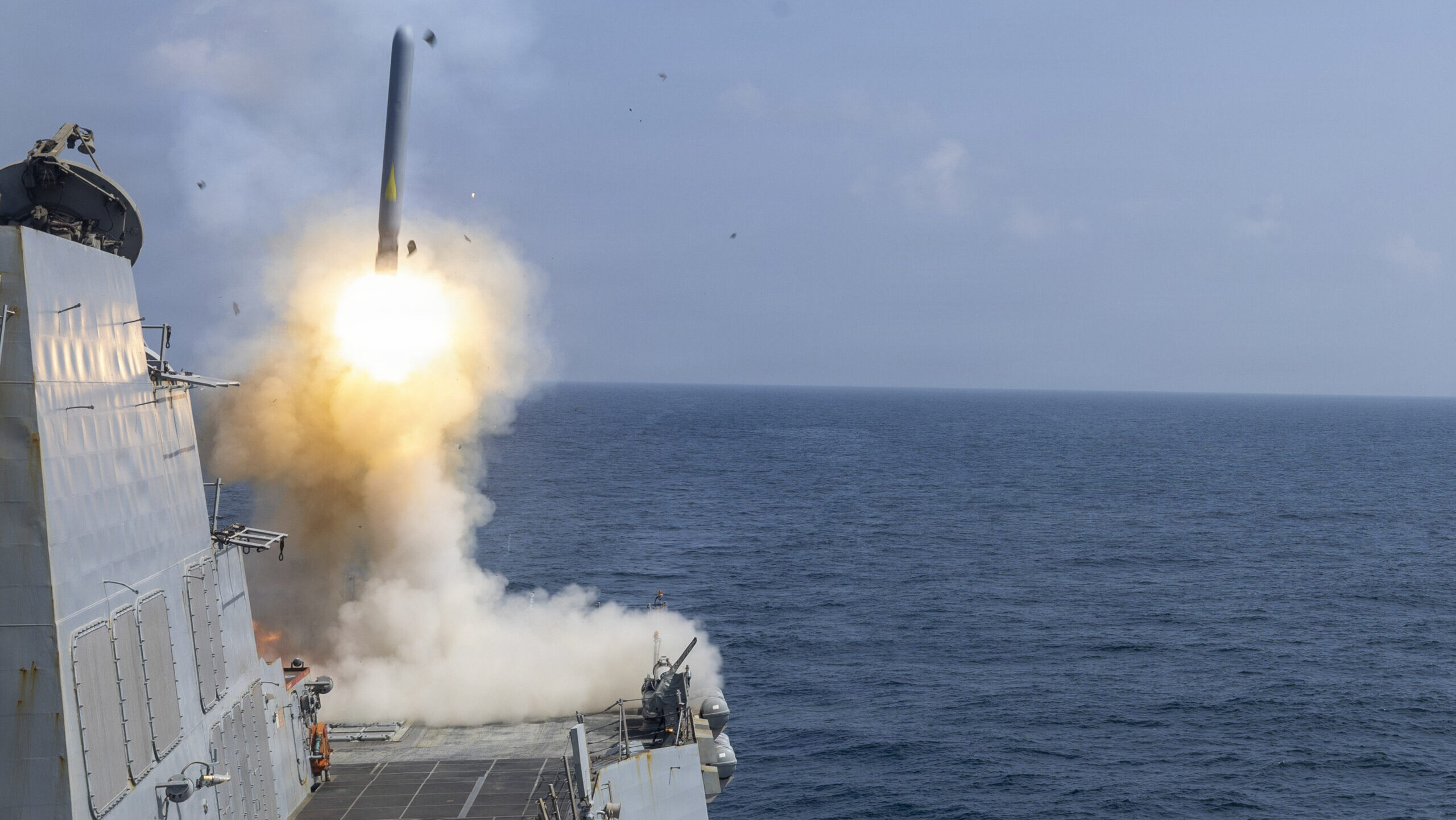
Arleigh Burke-class guided-missile destroyer USS Delbert D. Black (DDG 119) fires a Tomahawk Land Attack Missile (TLAM) in support of Operation Epic Fury, Feb. 28, 2026. (U.S. Navy photo)
WASHINGTON — The US Navy expects it will take years for its fleet to recover from recent drawn out deployments, with leaders bracing for a surge in maintenance work that could strain shipyard capacity and force trade-offs between repairs and modernization.
Chief of Naval Operations Adm. Daryl Caudle said Monday that the service is bracing for maintenance availabilities — particularly impacting the destroyer fleet — to snowball as some of its aircraft carriers and surface vessels return from more than 300-day long periods at sea. As a result, the Navy is weighing how to prioritize repairs, shorten some timelines and defer larger projects without pushing the service’s schedule further behind.
“You’re talking hundreds of availabilities and millions of dollars. Hundreds of millions of dollars have to be applied to that problem as we start retrograding these destroyers back into their maintenance period,” Caudle said at the United States Navy Memorial. “But this is a years-long recovery. There is no workaround on that.”
Speaking earlier this month, Vice Chief of Naval Operations Adm. James Kilby voiced similar concerns, noting that efforts in the Middle East like Operation Epic Fury have contributed to “artificially high combat surge ready rates” because ships remain at sea on extended deployments and have yet to return from the region. However, he warned that “the problem will come when they eventually do come home,” signaling that an influx of ships entering maintenance could postpone modernization efforts.
“The industrial base will not be able to swallow that pill, and so we’ll have to sequence that,” Kilby said during an Oct. 8 National Commission on the Future of the Navy hearing. “There’s a couple things that can happen there. I’ll defer maintenance. I’ll either squish the package into the bare minimum and not do modernization things I need to do. So that’s the bill that’s being paid there.”
This year , extended deployments have pushed the Navy’s ships well beyond their typical seven-month period at sea. For example, the aircraft carrier Gerald R. Ford completed a 326-day deployment in May — shattering the aircraft carrier Abraham Lincoln’s previous record of 294 days at sea in 2019 and 2020.
Destroyers have also logged exceptionally long deployments this year. The McFaul returned to Naval Station Norfolk on Oct. 23 after an 11-month deployment totaling 332 days at sea. While underway, the ship integrated with the Abraham Lincoln, George H.W. Bush and the George Washington carrier strike groups to provide anti-air warfare and surface fire support amid combat operations, the Navy said in a news release.
Bombardier Defense, your trusted, mission-focused partner
A commitment to long-term operational value.
The destroyer Spruance has been at sea even longer. The San Diego Union-Tribune reported that the destroyer surpassed the record for longest destroyer deployment after the ship hit 339 days underway on Sunday, a milestone previously held by a destroyer in World War II.
A Navy spokesperson told Breaking Defense in July that the service has 75 destroyers in its fleet. More than a dozen destroyers are actively deployed in the Red Sea and Arabian Sea as of Monday, according to the USNI News fleet tracker .
While the public shipyards typically conduct maintenance for nuclear-powered submarines and aircraft carriers, private yards usually oversee repairs for the Navy’s surface fleet, including destroyers and cruisers.
A Backlog Of Challenges
Maintenance issues have consistently plagued the Navy. In August, the Government Accountability Office issued a report that found public shipyards only completed 11 percent of submarine maintenance periods on schedule.
Likewise, the Congressional Budget Office found in December 2025 that maintenance for the destroyer and amphibious fleets takes 20-100 percent longer than the Navy accounts for . The agency also estimated that destroyers will spend roughly nine years — or roughly a quarter of their planned service life — in maintenance.
When asked about maintenance delays resulting from lengthy deployments, Norfolk Naval Shipyard Commander Rear Adm. Kavon Hakimzadeh said during a September Center for Maritime Strategy roundtable that the situation is “ going to be a pig through the snake kind of scenario.”
Hakimzadeh said there’s currently a “nice sequence” for aircraft carrier maintenance and that the service is targeting a six-month period for the Ford. He acknowledged that submarine maintenance is “a little bit of a different story,” and predicted destroyers would face the brunt of maintenance challenges upon returning from the Middle East.
“There’s some choke points just based on capacity out there for all the destroyers that are going to be coming back,” Hakimzadeh said. “We’re running the destroyers really hard out there, and I suspect they’re all going to need to go into the same dry dock, and we’re going to have to sequence them in.”
Eric Labs, a senior analyst for naval forces and weapons at the Congressional Budget Office, said the full impact of ongoing military operations on the fleet is difficult to predict because it’s unclear how long they will continue. However, he said the Navy has historically take n “at least several years” to catch up on maintenance after previous military operations that required a surge in naval capacity.
“At a general level, ships that are missing their maintenance availabilities now because of ongoing operations would have that maintenance manifest itself over the next several years,” Labs told Breaking Defense.
He noted that destroyers and aircraft carriers are most likely to be affected by deferred maintenance — destroyers due to their “high utilization,” and aircraft carriers because there are less than a dozen in the entire fleet and they are the Navy’s largest vessels.
While Labs said that some private maintenance shipyards that work on the Navy’s surface fleet have voiced concerns about a lack of work at present, he said they would face a hefty workload once destroyers return that would create planning and workforce challenges for both industry and the service .
“The private maintenance yards in the US are undergoing a famine and then, later, will experience a feast cycle,” Labs said. “The consequence of that will depend on unique ship circumstances. It could mean some ships will need to return to sea before getting all the maintenance they need, which could just exacerbate problems in the future. Or it could mean some ships will sit idle until the maintenance can be done.”
Even so, Labs said the impact would vary by ship — depending on its age, the length of its deployment, the timing of its last maintenance period and other factors.
Bradley Martin, a retired Navy captain who is now a senior policy researcher at RAND, also predicted it would take years for the fleet to recover from maintenance backlogs stemming from current operations in the Middle East. He said nearly every ship class would likely be affected, although the most acute maintenance issues could hit the destroyer fleet, given its heavy operational use in the Middle East.
“I think we’ll start seeing mounting cost as the Iran conflict winds down and might not see the full impact for at least two years,” Martin told Breaking Defense. “And it will be years past that before the force fully recovers.”
Breaking Defense Video
A more flexible way to defend maneuver forces from drones that doesn’t tie them down [Sponsored]
What’s haunting the Pentagon this Halloween?
The new must-have capabilities for drones [Sponsored]
Army’s tech chief talks autonomy, acquisition and the future of drones
Drones take over AUSA, plus the Army’s plan to bring in new vendors
Hegseth talks autonomy at AUSA, a key show focus
Army doubles down on autonomy, stakes out Indo-Pacific role: AUSA Day 2
Telle talks ‘manufacturing rodeo,’ supply chain ‘weak links’: AUSA Day 1
New leaders, new drone command: What we expect from AUSA 2026
Unpacking Boeing’s F/A-XX win, plus a report from wartime Ukraine
2026年2月28日,阿利·伯克级导弹驱逐舰“德尔伯特·D·布莱克”号(DDG 119)发射一枚战斧陆攻导弹(TLAM),支援“史诗狂怒行动”。(美国海军照片)
华盛顿——美国海军预计,其舰队需要数年时间才能从最近漫长的部署中恢复过来,领导层正在为维护工作的激增做好准备,这可能会使造船厂的产能紧张,并迫使在维修和现代化之间做出权衡。
海军作战部长达里尔·考德尔海军上将周一表示,随着部分航母和水面舰艇结束超过300天的海上航行返回,海军正严阵以待,准备应对维护保养工作量激增的情况,尤其会影响驱逐舰舰队。因此,海军正在权衡如何优先安排维修工作,缩短部分工期,并推迟一些大型项目,同时避免进一步延误海军的整体计划。
“这涉及到数百艘舰艇的可用性和数百万美元的投入。随着我们开始将这些驱逐舰重新纳入维护周期,数亿美元必须投入到这个问题中,”考德尔在美国海军纪念馆说道。“但这需要数年时间才能完成。没有捷径可走。”
本月初,海军作战副部长詹姆斯·基尔比海军上将也表达了类似的担忧。他指出,诸如“史诗狂怒行动”之类的中东行动,由于舰艇长期部署在海上,尚未返回,导致“战备率被人为抬高”。然而,他警告说,“问题在于这些舰艇最终返回家园之时”,这意味着大量舰艇进入维护保养阶段可能会延缓现代化改造进程。
“工业基础无法承受这样的代价,所以我们必须分阶段进行,”基尔比在10月8日举行的海军未来国家委员会听证会上说。“有两种可能。我会推迟维护工作。我会把项目压缩到最低限度,放弃一些必要的现代化改造。这就是最终要付出的代价。”
今年,由于部署时间延长,海军舰艇的海上部署时间远远超过了通常的七个月。例如,杰拉尔德·R·福特号航空母舰在五月份完成了为期326天的部署,打破了亚伯拉罕·林肯号航空母舰在2019年和2020年创下的294天的海上部署纪录。
今年驱逐舰的部署时间也异常长。“麦克福尔”号驱逐舰在结束了为期11个月、累计海上航行332天的部署后,于10月23日返回诺福克海军基地。海军在一份新闻稿中表示,在航行期间,该舰与“亚伯拉罕·林肯”号、“乔治·H·W·布什”号和“乔治·华盛顿”号航母打击群协同作战,在战斗行动中提供防空和水面火力支援。
庞巴迪防务,您值得信赖、以任务为导向的合作伙伴
致力于创造长期运营价值。
“斯普鲁恩斯”号驱逐舰的出海时间更长。《圣地亚哥联合论坛报》报道称,该舰周日出海时间达到339天,打破了驱逐舰最长出海时间的纪录,此前的纪录保持者是一艘二战时期的驱逐舰。
海军发言人7月份告诉《防务新闻》,海军舰队拥有75艘驱逐舰。据美国海军学会新闻(USNI News)的舰队追踪数据显示,截至周一,有十几艘驱逐舰正在红海和阿拉伯海积极部署。
公共造船厂通常负责核动力潜艇和航空母舰的维护,而私人造船厂通常负责海军水面舰队(包括驱逐舰和巡洋舰)的维修。
一系列挑战
海军一直饱受维护问题困扰。今年8月,美国政府问责局发布的一份报告显示,公立造船厂仅有11%的潜艇维护工作按计划完成。
同样,国会预算办公室在2025年12月发现,驱逐舰和两栖舰队的维护时间比海军预估的时间长20%至100%。该机构还估计,驱逐舰大约需要九年时间——约占其计划服役寿命的四分之一——用于维护。
当被问及因长期部署而导致的维护延误时,诺福克海军造船厂司令卡冯·哈基姆扎德海军少将在 9 月份的海事战略中心圆桌会议上表示,这种情况“就像猪穿过蛇一样”。
哈基姆扎德表示,目前航母的维护保养有一个“合理的顺序”,海军计划将“福特”号的维护保养周期控制在六个月。他承认潜艇的维护保养“情况略有不同”,并预测驱逐舰从中东返回后将面临最严峻的维护挑战。
哈基姆扎德说:“由于所有即将返回的驱逐舰的进出能力有限,目前存在一些瓶颈。我们正在全力运转这些驱逐舰,我估计它们都需要进入同一个干船坞,我们需要安排它们的进出顺序。”
国会预算办公室海军力量和武器高级分析师埃里克·拉布斯表示,由于目前尚不清楚军事行动会持续多久,因此很难预测其对舰队的全面影响。但他指出,以往军事行动需要海军力量大幅提升,而海军历来需要“至少数年”时间才能完成维护工作。
“总体而言,由于正在进行的作战行动而错过维护保养的舰船,其维护保养问题将在未来几年内显现出来,”拉布斯告诉《防务新闻》。
他指出,驱逐舰和航空母舰最有可能受到延期维护的影响——驱逐舰是因为其“利用率高”,而航空母舰是因为整个舰队中只有不到十二艘,而且它们是海军最大的舰艇。
拉布斯表示,虽然一些为海军水面舰艇提供维修服务的私人船厂对目前缺乏工作表示担忧,但他表示,一旦驱逐舰回归,他们将面临繁重的工作量,这将给行业和海军带来规划和劳动力方面的挑战。
“美国的私营维修厂目前正经历着一段低迷期,之后将会迎来一段繁荣期,”拉布斯说。“其后果将取决于每艘船的具体情况。这可能意味着一些船舶需要在完成所有必要的维修之前就返回海上,这可能会加剧未来的问题。或者也可能意味着一些船舶将闲置一段时间,直到完成维修。”
即便如此,实验室表示,影响程度会因舰船而异——取决于舰船的船龄、部署时间、上次维护时间以及其他因素。
布拉德利·马丁是一位退役海军上校,现任兰德公司高级政策研究员。他也预测,舰队需要数年时间才能从目前在中东的行动中造成的维护积压问题中恢复过来。他表示,几乎所有舰艇类型都可能受到影响,但鉴于驱逐舰在中东的频繁作战,其维护问题可能最为严重。
马丁告诉《防务新闻》:“我认为随着伊朗冲突逐渐平息,我们将开始看到成本不断攀升,而且至少两年内可能看不到全部影响。而要让军队完全恢复,则需要更长时间。”
突破性防御视频
一种更灵活的防御机动部队免受无人机攻击的方式,不会限制其行动[赞助]
今年万圣节,五角大楼究竟闹鬼?
无人机必备的新功能 [赞助内容]
陆军技术主管谈无人机的自主性、采购和未来
无人机主导了美国陆军协会(AUSA)的会议,此外,陆军还计划引入新的供应商。
Hegseth 在 AUSA 大会上谈到了自主性,这是本次大会的一个重点议题。
陆军加倍强调自主性,明确印太地区角色:AUSA第二天
特勒谈“制造业乱象”、供应链“薄弱环节”:AUSA 第一天
新领导人,新无人机指挥部:我们对 AUSA 2026 的期待
深入剖析波音F/A-XX的中标,以及来自战时乌克兰的报道