UK commits to 3 percent GDP on defense by 2030, new investment partnerships with industry英国承诺到2030年将国防开支提高到GDP的3%,并与业界建立新的投资伙伴关系。
Chancellor John Healey said that the UK’s recent Defence Investment Plan would be “fully” funded, indicating the money for defense would come from cuts to other priorities.
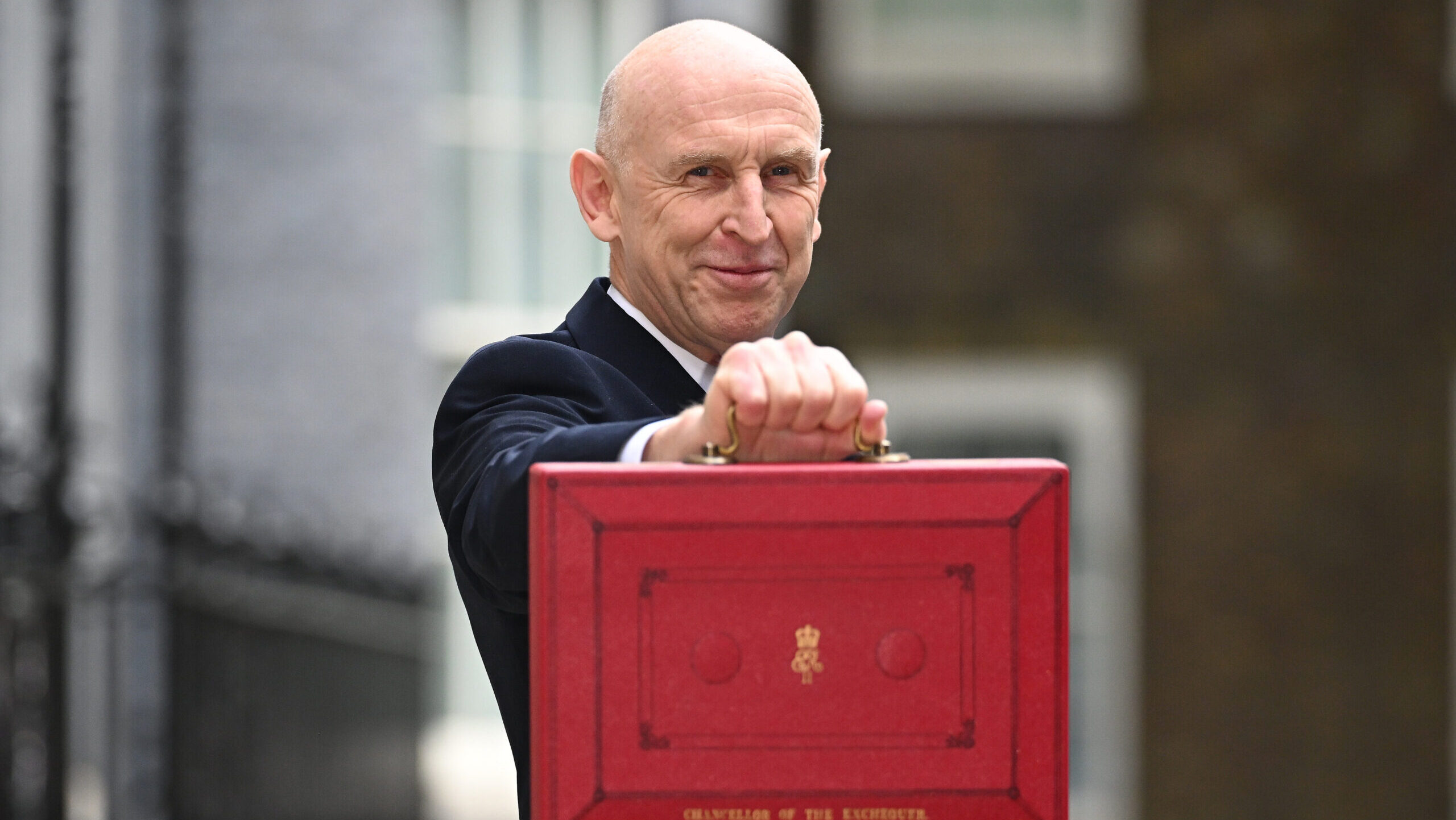
Chancellor John Healey leaves 11 Downing Street to present the Autumn Budget to Parliament on October 28, 2026 in London, England. (Photo by Leon Neal/Getty Images)
WASHINGTON — The United Kingdom plans to reach 3 percent GDP spending on defense by 2030, Chancellor John Healey announced today as part of a broader budget announcement that also indicated a greater partnership with the defense industry to come.
In a speech today , Healey said that the UK’s recent Defence Investment Plan would be “fully” funded, indicating the money for defense would come from cuts to other priorities.
In addition, he said that next year’s spending review would spell out exactly how the UK plans to hit the NATO commitment of spending 3.5 percent GDP on defense by 2035, and how the UK will be at 3 percent by 2030.
That the news came from Healey added extra oomph for defense watchers.
Healey was defense secretary under previous Prime Minister Keir Starmer before publicly resigning over what Healey described as underfunding the military. That resignation triggered several others, which ultimately pushed Starmer to resign and be replaced by Burnham — who then brought Healey back as his main financial officer.
Other defense-related announcements in budget documents released with Healey’s speech today include:
The standup of a new Innovative Defence Financing Taskforce to “maximise the contribution of private and international finance to UK defence;”
The opening of discussions with Finland, Poland and the Netherlands to pool funding for “defence investment and joint procurement across NATO allies”;
A plan for the “National Wealth Fund and British Business Bank to deploy up to £5 billion over the next four years into defence, dual-use and other sectors that support our national security, sovereign capability and resilience;”
The creation of a Ministry of Defence-led “drone regulation unit” which will work across different agencies to cut” red tape and create clearer routes for testing uncrewed and autonomous systems,” which would seem to mirror some of the concerns about regulation authorities over UAVs in the United States.
£10 billion ($13.3 billion) in additional funds for Ukraine.
The government has a currently-unfunded plan for a 10-year, £2.5 billion program with Rolls-Royce to develop a next-gen gas turbine engine that would be dual-use. “This has not been contracted and funding is subject to award, negotiations and relevant legal processes,” per the documents.
Europe’s military advantage depends on sovereign command of the ground truth
As NATO and European governments accelerate investment in space-based intelligence, decision advantage will depend on how quickly sovereign and commercial capabilities can be fused into a trusted operational picture.
Breaking Defense Video
How General Atomics views Europe’s unmanned future
A more flexible way to defend maneuver forces from drones that doesn’t tie them down [Sponsored]
What’s haunting the Pentagon this Halloween?
The new must-have capabilities for drones [Sponsored]
Army’s tech chief talks autonomy, acquisition and the future of drones
Drones take over AUSA, plus the Army’s plan to bring in new vendors
Hegseth talks autonomy at AUSA, a key show focus
Army doubles down on autonomy, stakes out Indo-Pacific role: AUSA Day 2
Telle talks ‘manufacturing rodeo,’ supply chain ‘weak links’: AUSA Day 1
New leaders, new drone command: What we expect from AUSA 2026
2026年10月28日,英国财政大臣约翰·希利离开唐宁街11号,前往伦敦议会提交秋季预算案。(图片来源:Leon Neal/Getty Images)
华盛顿——英国财政大臣约翰·希利今天宣布,英国计划到 2030 年将国防开支提高到国内生产总值的 3%。这是更广泛的预算声明的一部分,该声明还表明未来将与国防工业建立更紧密的伙伴关系。
希利在今天的演讲中表示,英国最近的国防投资计划将得到“充分”资助,这表明国防资金将来自削减其他优先事项的开支。
此外,他还表示,明年的支出审查将详细说明英国计划如何实现北约到 2035 年将国防开支占 GDP 3.5% 的承诺,以及英国将如何到 2030 年达到 3% 的目标。
消息来自希利,这无疑给国防观察人士增添了额外的关注度。
希利曾在前首相基尔·斯塔默手下担任国防大臣,后因公开指责军费开支不足而辞职。他的辞职引发了一系列连锁反应,最终导致斯塔默辞职,由伯纳姆接任——伯纳姆随后又将希利召回担任首席财务官。
在希利今天发表讲话的同时公布的预算文件中,其他与国防相关的公告包括:
成立一个新的创新国防融资工作组,以“最大限度地发挥私人和国际金融对英国国防的贡献”;
与芬兰、波兰和荷兰展开讨论,以汇集资金用于“北约盟国之间的国防投资和联合采购”;
“国家财富基金和英国商业银行计划在未来四年内向国防、军民两用及其他支持国家安全、主权能力和韧性的领域投入高达 50 亿英镑;”
国防部牵头成立“无人机监管部门”,该部门将与不同机构合作,以减少繁文缛节,并为测试无人和自主系统创造更清晰的途径。这似乎反映了美国对无人机监管机构的一些担忧。
向乌克兰追加100亿英镑(133亿美元)资金。
英国政府目前有一项与劳斯莱斯公司合作的十年期、耗资25亿英镑的计划,旨在开发一种可军民两用的新一代燃气涡轮发动机,但该计划尚未获得资金支持。文件显示,“该计划尚未签订合同,资金到位取决于项目授予、谈判以及相关法律程序。”
欧洲的军事优势取决于其对实际情况的主权掌控。
随着北约和欧洲各国政府加快对天基情报的投资,决策优势将取决于主权能力和商业能力能够多快地融合到一个可信的作战图景中。
突破性防御视频
通用原子公司如何看待欧洲的无人化未来
一种更灵活的防御机动部队免受无人机攻击的方式,不会限制其行动[赞助]
今年万圣节,五角大楼究竟闹鬼?
无人机必备的新功能 [赞助内容]
陆军技术主管谈无人机的自主性、采购和未来
无人机主导了美国陆军协会(AUSA)的会议,此外,陆军还计划引入新的供应商。
Hegseth 在 AUSA 大会上谈到了自主性,这是本次大会的一个重点议题。
陆军加倍强调自主性,明确印太地区角色:AUSA第二天
特勒谈“制造业乱象”、供应链“薄弱环节”:AUSA 第一天
新领导人,新无人机指挥部:我们对 AUSA 2026 的期待