askST: Should I install solar panels at home? How much can I save on electricity?askST:我应该在家安装太阳能电池板吗?我能节省多少电费?
Experts explain costs, savings and payback for installing solar panels at landed homes in Singapore. Read more at straitstimes.com.
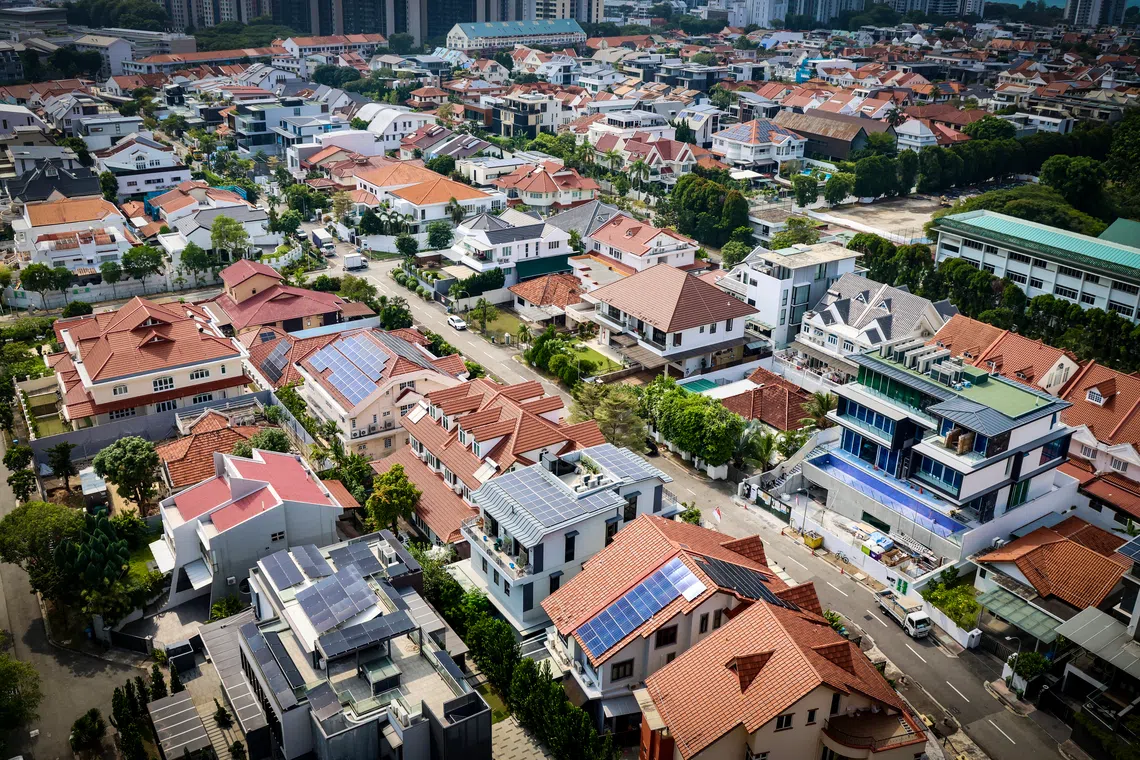
Experts say switching to solar power makes financial sense for landed homeowners in Singapore, though savings and costs vary
There were around 8,086 private homes in Singapore, including condominiums and landed properties, with solar panels in the first half of 2026, according to data from the Energy Market Authority.
Jan Lee, Brand Newsroom
Published Oct 31, 2026, 04:00 AM
Energy prices in Singapore have been fluctuating amid ongoing conflict in the Middle East.
Singapore produces 95 per cent of its electricity from imported natural gas, leaving it exposed to changes in global fuel prices.
Households in Singapore saw a 17 per cent quarter-on-quarter increase in the electricity tariff to 31.91 cents per kilowatt hour (kWh) from July to September. It fell to 28.59 cents per kWh for the period of October to December. The rates do not include goods and services tax (GST).
More homeowners in Singapore have turned to solar power over the past year. There were around 8,086 private homes, including condominiums and landed properties, with solar panels in the first half of 2026. This is up from 5,817 such homes at the end of June 2025, according to data from the Energy Market Authority (EMA).
Can switching to solar power help landed homeowners guard against price volatility? Here’s what you should know.
Q: Is installing solar panels actually worth it? How much money can I save every month?
It makes financial sense for landed property owners to install solar panels at home, says Thomas Reindl, deputy chief executive officer of the Solar Energy Research Institute of Singapore (SERIS) at the National University of Singapore.
“If one invests in a solar (PV) system, the self-generated electricity costs around 15-cents per kWh over the lifetime of the solar system, which is 20 years or more,” he explains.
Solar panels comprise photovoltaic (PV) cells, which are made of semiconductor materials that can convert sunlight into electricity.
EMA estimates that investment in solar panels can usually pay off for landed homeowners in five years, or shorter if they have larger electricity consumption.
How does having solar affect my electricity bill?
With the declining cost of solar panels, rooftop solar has become increasingly cost-competitive with electricity purchased from the grid, says EMA.
Installing solar panels allows households to reduce their electricity bills by using the electricity they generate and receiving payments for excess electricity exported to the grid.
Actual savings and payback periods depend on factors such as installation costs, household electricity consumption and solar generation, EMA adds.
Retiree Andrew, 77, who asked to be known by his first name only, spent over $40,000 installing solar panels on the roof of his landed property in Katong in August.
He used to pay around $900 a month for electricity for his five-person household – partly due to high electricity consumption, which includes charging an electric vehicle.
His solar PV system with 94 panels has an installed capacity of over 60 kilowatt peak – the unit used to measure the maximum power output of solar panels under ideal conditions, depending on size and complexity. Installation of the panels took around four days. He estimates his payback period to be around three years.
He has also installed a bi-directional meter, which measures how much electricity he exports back to the grid. With it, Andrew can sell his excess solar-generated power to national grid operator SP Group to offset his bills. The PV system helps him hedge against fluctuations in electricity prices, he says.
Solar panels can help households reduce their electricity bill by generating their own electricity and selling any excess energy back to the grid. PHOTO: ST FILE
Solar panels can help households reduce their electricity bill by generating their own electricity and selling any excess energy back to the grid.
What happens to solar electricity I generate but do not use?
Homeowners can use solar power for all activities requiring electricity during the day but will still need to draw power from the grid after sundown.
Excess electricity generated in the daytime that is unconsumed can be sold back to the grid, says EMA.
Homeowners buying electricity from SP Group may do so under the Simplified Credit Treatment Scheme (SCT), and those buying from other retailers under the Enhanced Central Intermediary Scheme (ECIS).
Under the SCT, homeowners will be paid based on the prevailing electricity regulated tariff minus grid charges. Under the ECIS, homeowners will be paid based on the prevailing half-hourly wholesale electricity prices.
Selling excess solar-generated electricity can help to offset nighttime electricity costs. Andrew sells his excess electricity to SP Group under the ECIS.
In September, his system generated over 6,700 kWh of electricity. He uses around 2,200 kWh of electricity a month, of which around 900 kWh is used in the daytime – which can be directly drawn from the system.
This means that he can sell 5,800 kWh of electricity back to the grid in a month, which will earn him over $800 even after accounting for his 1,300 kWh of nighttime electricity use.
According to EMA data, landed homes in Singapore use an average of 1,175 kWh of electricity per month.
What are the upfront costs involved? Are there any other longer-term costs I should be aware of?
The exact cost of installation depends on the size of the solar PV system and how it is deployed, such as on the roof or integrated into the building facade, says EMA.
Upfront costs typically take up around two-thirds of the cost of a solar PV system, says Reindl. He adds that installation will set owners back around $1,000 to $1,600 per kilowatt peak.
“For a solar PV system, there is no fuel cost as the sun energy is free,” he adds.
Those concerned about high upfront costs can also consider the rent-to-own option, says Reindl. This allows homeowners to pay a monthly fee to rent and maintain their solar PV system. At the end of the rental term – usually around five to ten years – the ownership of the system will then be transferred to the customer.
Reindl says solar PV systems should be maintained every six to 12 months. Maintenance costs are usually around 1 to 2 per cent of the initial installation costs, he adds.
How do I know if my roof is suitable for solar panels, and what the right system size is?
Most rooftops of landed residential properties in Singapore can accommodate solar panels, according to EMA, though steep slopes, complex structures or separate roof sections may limit usable space.
There are also rare instances, Reindl adds, when installation may not be advisable. For example, when a neighbouring house is much taller, shading and limiting the amount of sunlight the roof gets.
Most residential landed properties in Singapore have roofs that can accommodate the installation of solar panels, says the Energy Market Authority. PHOTO: ST FILE
Most residential landed properties in Singapore have roofs that can accommodate the installation of solar panels, says the Energy Market Authority.
Reindl advises interested homeowners to visit the National Solar Repository website , which shows how installations on landed properties are typically deployed.
The NSR site also has resources to help consumers contact installers and compare the cost of generating electricity through solar with the prevailing regulated tariffs.
Will solar panels damage my roof? What maintenance is needed?
Andrew says the solar panels also double as a protective layer for his roof. “The roof doesn’t get direct sun exposure now, so wear and tear will not be that (severe), and any water will drop onto the solar panels rather than directly onto the roof before going into the drain,” he says.
His installer estimates yearly maintenance of the PV system to be around $1,000.
Aside from cleaning, maintenance should include checking cables and connections, and possible obstruction from nearby trees, says Reindl.
More important, he adds, are regular checks of the system’s performance data to assess if there are any issues with the solar PV system and whether it is under-performing.
What should I look out for when choosing an installer?
EMA advises homeowners to compare quotations from different solar vendors and check that only qualified professionals will be engaged to support the proper installation and connection of the solar PV system. Homeowners can find more information on the EMA website .
In Andrew’s case, he reached out to two installers, including one that had left a leaflet advertising its services in his mailbox. He compared the two and went with one that was more experienced, and were also roof specialists. The company also installed solar PV systems for three of his neighbours.
Reindl says checking an installer’s track record is important. “Don’t be shy to give previous clients of the company you intend to work with a call,” he says.
“This is a major decision that will last with the house for over 20 years.”
In partnership with the Energy Market Authority
专家表示,对于新加坡的独立式住宅业主来说,改用太阳能发电在经济上是划算的,尽管节省的费用和成本因情况而异。
根据能源市场管理局的数据,到 2026 年上半年,新加坡约有 8086 户私人住宅(包括公寓和有地住宅)安装了太阳能电池板。
Jan Lee,品牌新闻编辑室
发布于 2026 年 10 月 31 日 上午 4:00
受中东持续冲突的影响,新加坡的能源价格一直波动不定。
新加坡95%的电力来自进口天然气,因此极易受到全球燃料价格波动的影响。
新加坡家庭用电价格在7月至9月期间环比上涨17%,达到每千瓦时31.91分。10月至12月期间,电价回落至每千瓦时28.59分。以上价格均不包含消费税(GST)。
过去一年,新加坡越来越多的房主开始使用太阳能。根据能源市场管理局(EMA)的数据,截至2026年上半年,约有8086户私人住宅(包括公寓和独立式住宅)安装了太阳能电池板。而截至2025年6月底,这一数字为5817户。
改用太阳能发电能否帮助拥有房产的业主抵御价格波动?以下是您应该了解的内容。
问:安装太阳能电池板真的划算吗?我每个月能省多少钱?
新加坡国立大学新加坡太阳能研究所 (SERIS) 副首席执行官 Thomas Reindl 表示,对于拥有独立土地的业主来说,在家中安装太阳能电池板在经济上是有意义的。
他解释说:“如果投资一套太阳能(光伏)系统,那么在太阳能系统的使用寿命内(20 年或更久),自发电的成本约为每千瓦时 15 美分。”
太阳能电池板由光伏(PV)电池组成,光伏电池由半导体材料制成,可以将太阳光转化为电能。
EMA 估计,对于拥有土地的房主来说,投资太阳能电池板通常可以在五年内收回成本,如果他们的用电量较大,则成本可能会更低。
安装太阳能系统会如何影响我的电费?
EMA表示,随着太阳能电池板成本的下降,屋顶太阳能发电的成本竞争力越来越强,与从电网购买的电力相比更具优势。
安装太阳能电池板可以让家庭通过使用自己产生的电力来降低电费,并将多余的电力输送到电网获得报酬。
EMA补充说,实际节省的费用和投资回收期取决于安装成本、家庭用电量和太阳能发电量等因素。
77岁的退休人士安德鲁(Andrew,要求只透露其名字)于8月份花费超过40000美元在其位于加东的独立式住宅屋顶上安装了太阳能电池板。
他过去每月要为他五口之家支付大约 900 美元的电费——部分原因是用电量高,其中包括给电动汽车充电。
他的太阳能光伏系统由94块太阳能电池板组成,装机容量超过60千瓦峰值功率——峰值功率是衡量太阳能电池板在理想条件下最大功率输出的单位,具体数值取决于电池板的尺寸和复杂程度。电池板的安装大约耗时四天。他估计投资回收期约为三年。
他还安装了一个双向电表,用来计量他向电网输送的电量。有了它,安德鲁可以将多余的太阳能发电出售给国家电网运营商SP集团,以抵消部分电费。他说,光伏系统有助于他对冲电价波动带来的风险。
太阳能电池板可以帮助家庭降低电费,因为它们可以自行发电,并将多余的电力卖回电网。图片:ST FILE
太阳能电池板可以帮助家庭降低电费,因为它们可以自己发电,并将多余的电力卖回电网。
我产生的太阳能电力如果不用,会怎么样?
房主白天可以使用太阳能满足所有用电活动,但日落后仍然需要从电网获取电力。
EMA表示,白天产生的未消耗的多余电力可以卖回电网。
从新加坡电力集团 (SP Group) 购买电力的业主可以按照简化信用处理计划 (SCT) 进行交易,而从其他零售商处购买电力的业主则可以按照加强中央中介计划 (ECIS) 进行交易。
根据SCT方案,业主将根据现行电力管制价格减去电网费用获得报酬。根据ECIS方案,业主将根据现行半小时批发电力价格获得报酬。
出售多余的太阳能发电可以帮助抵消夜间用电成本。安德鲁根据能源成本信息共享计划(ECIS)将多余的电力出售给了SP集团。
9月份,他的系统发电量超过6700千瓦时。他每月用电量约为2200千瓦时,其中约900千瓦时在白天使用——这些电量可以直接从系统中获取。
这意味着他一个月可以向电网出售 5800 千瓦时的电力,即使考虑到他夜间 1300 千瓦时的用电量,也能赚到 800 多美元。
根据 EMA 的数据,新加坡的独立式住宅每月平均用电量为 1,175 千瓦时。
前期需要支付哪些费用?还有其他需要注意的长期费用吗?
EMA表示,具体的安装成本取决于太阳能光伏系统的大小及其部署方式,例如安装在屋顶上或集成到建筑物立面中。
雷恩德尔表示,前期成本通常占太阳能光伏系统总成本的三分之二左右。他还补充说,安装费用约为每千瓦峰值功率1000至1600美元。
“对于太阳能光伏发电系统来说,没有燃料成本,因为太阳能是免费的,”他补充道。
雷恩德尔表示,担心前期投入过高的用户也可以考虑租赁购买方案。这种方案允许房主按月支付租金来租赁和维护太阳能光伏系统。租赁期满后(通常为五到十年),系统的所有权将转移给客户。
雷恩德尔表示,太阳能光伏系统应每6至12个月进行一次维护。他还补充说,维护成本通常约为初始安装成本的1%至2%。
我如何知道我的屋顶是否适合安装太阳能电池板,以及合适的系统容量是多少?
据 EMA 称,新加坡大多数有地住宅的屋顶都可以安装太阳能电池板,但陡峭的坡度、复杂的结构或独立的屋顶部分可能会限制可用空间。
雷恩德尔补充说,也有少数情况下不宜安装这种装置。例如,当邻近房屋很高时,遮挡阳光会限制屋顶接收的日照量。
新加坡能源市场管理局表示,新加坡大多数住宅的屋顶都适合安装太阳能电池板。(图片:海峡时报档案)
新加坡能源市场管理局表示,新加坡大多数住宅用地房屋的屋顶都适合安装太阳能电池板。
Reindl 建议有兴趣的房主访问国家太阳能存储库网站,该网站展示了在有地房产上安装太阳能装置的典型方式。
NSR 网站还提供资源,帮助消费者联系安装商,并将太阳能发电成本与现行管制电价进行比较。
太阳能电池板会损坏我的屋顶吗?需要哪些维护?
安德鲁说,太阳能电池板还能起到保护屋顶的作用。“现在屋顶不会受到阳光直射,所以磨损不会太严重,而且雨水会先滴到太阳能电池板上,而不是直接流到屋顶上,然后再流入排水沟。”他说道。
他的安装人员估计,光伏系统的年度维护费用约为 1000 美元。
Reindl 表示,除了清洁之外,维护还应包括检查电缆和连接,以及附近树木可能造成的阻碍。
他补充说,更重要的是定期检查系统的性能数据,以评估太阳能光伏系统是否存在任何问题以及其性能是否低于预期。
选择安装人员时应该注意什么?
EMA建议业主比较不同太阳能供应商的报价,并确保只有合格的专业人员才会负责太阳能光伏系统的正确安装和连接。业主可在EMA网站上找到更多信息。
安德鲁联系了两家安装公司,其中一家还在他的邮箱里留下了宣传单。他比较了这两家公司,最终选择了一家经验更丰富、而且专精屋顶安装的公司。这家公司还为他的三位邻居安装了太阳能光伏系统。
雷恩德尔表示,查看安装商的过往业绩非常重要。“不要犹豫,给你打算合作的公司之前的客户打个电话,”他说。
“这是一项重大决定,将对这栋房子产生20多年的影响。”
与能源市场管理局合作