‘I treat every senior as I would a member of my own family’: A home care nurse on finding his calling“我对待每一位老人都像对待自己的家人一样”:一位家庭护理护士谈找到自己的使命
Caring for his late father showed community care professional R Subramaniam what families go through. Read more at straitstimes.com.
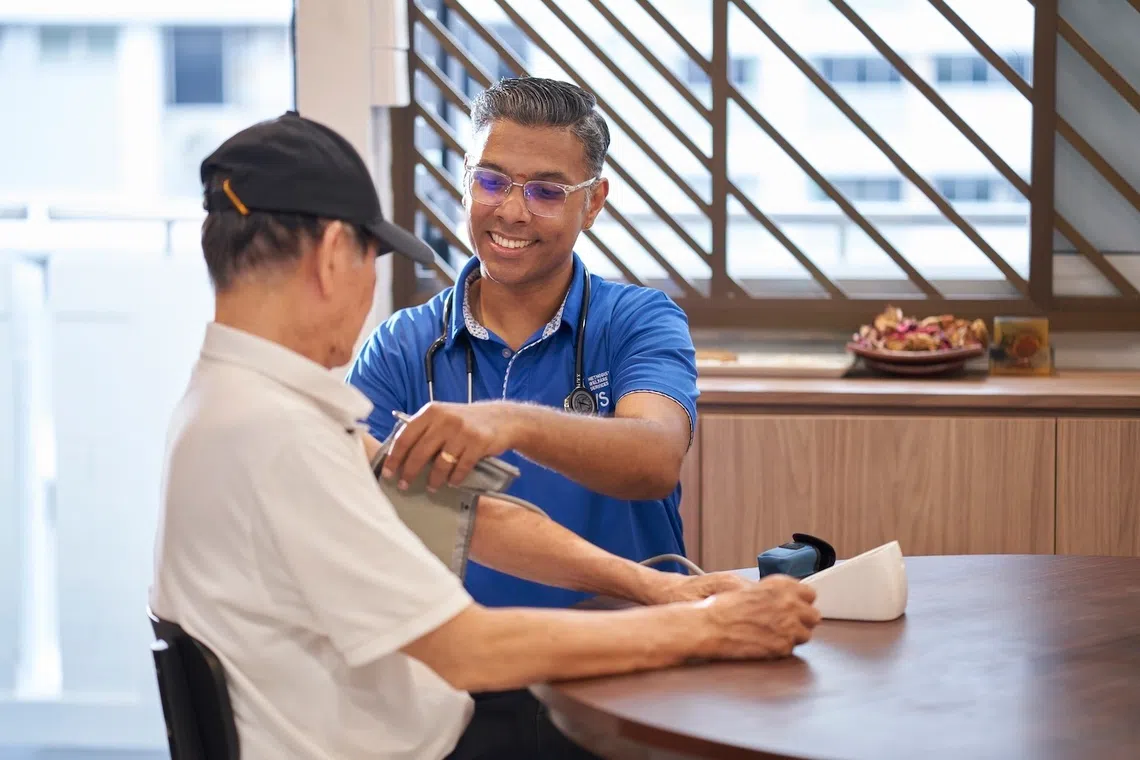
Caring for his late father showed R. Subramaniam what families go through. Now the senior staff nurse helps them manage illness at home, after starting out as a healthcare assistant
Senior staff nurse R. Subramaniam from Methodist Welfare Services helps seniors manage chronic conditions at home and coach family members on how to care for them.
Published Nov 02, 2026, 04:00 AM
When R. Subramaniam’s father was diagnosed with lung cancer seven years ago, doctors estimated he had six months to live.
He decided against chemotherapy and radiotherapy, choosing instead to receive care at home. During the four months before he passed away, he was able to continue with his daily routines, feeding himself, taking walks and even drafting his will.
In his father’s final days, Subramaniam, 45, took leave from work to care for him, helping fulfill the older man’s wish to die peacefully in familiar surroundings.
Subramaniam (right) looked after his late father at home, which taught him what it means to care for loved ones during their final days. PHOTO: COURTESY OF R. SUBRAMANIAM
Subramaniam (right) looked after his late father at home, which taught him what it means to care for loved ones during their final days.
PHOTO: COURTESY OF R. SUBRAMANIAM
That experience gave Subramaniam a personal understanding of what it means to care for a loved one at home – something he now helps other families do as a senior staff nurse with Methodist Welfare Services (MWS).
The social service agency provides home care and home hospice services, and runs nursing homes. His work includes helping patients manage chronic conditions at home, and guiding families and domestic helpers in recognising symptoms and providing end-of-life care.
He says: “Our job gives us the privilege of encouraging family members to take care of the patient at home.”
His work is among the contributions recognised on Community Care Day , observed on Nov 1 to honour those working in the sector.
Here, he shares his path into community nursing, the bonds he builds with patients and their families and the fulfilment he finds in caring for others, just as he did for his father.
Q: What made you take up community nursing as a career?
When I was young, I had a cousin who was a nurse. She would tell me many inspiring stories about her job. I was also touched when I saw how my mum took care of my late grandparents. Another big inspiration comes from my wife and sister-in-law, who are nurses too. I felt that nursing could be my calling. I didn’t complete my GCE O levels so I started as a healthcare assistant at the Institute of Mental Health (IMH). I later asked for a transfer to the National University Health System where I worked for 14 years and became a staff nurse. I may have climbed up the ladder in a longer, different way, but I reached my goal.
Subramaniam visits patients' homes, where he helps them with tasks such as packing their medicines, and teaches caregivers how to dress wounds or administer injections. PHOTO: SPH MEDIA
Subramaniam visits patients' homes, where he helps them with tasks such as packing their medicines, and teaches caregivers how to dress wounds or administer injections.
Q: What does your role as a senior staff nurse at MWS entail?
In a day, I may make visits to patients’ homes for 45 minutes to two hours. I help pack their medicines as some patients need to take more than 10 medications every day and their newly hired helpers may not know how to do so. I will also teach family members and helpers to do tasks like dressing wounds or administering injections.
Our home care patients are long-term patients who may have medications prescribed by their doctors, like antibiotics, on standby. Home hospice care patients will have injections to manage pain or shortness of breath.
We work office hours but take turns to be on call for after-office home visits when needed.
Some families still keep in touch with me even years after a home hospice patient’s death and some attend our memorial events to express their gratitude.
Subramaniam (second row, second from left) with his colleagues from MWS PHOTO: COURTESY OF R. SUBRAMANIAM
Subramaniam (second row, second from left) with his colleagues from MWS
Q: What are some misconceptions about your work?
People think we are private nurses because we do home visits. While home hospice patients may have less than a year to live, some remain well enough to go about their daily lives and are not necessarily in their final days.
My job is to help their family and helpers identify symptoms and know when to call us for advice.
Q: What were some memorable cases that you have come across?
Some patients may not want our services. One man in his 70s with end-stage kidney failure had decided against further dialysis after being told he had three to six months to live.
When we called to introduce our services, he got angry and shouted that he was going to die anyway. He lived alone without a helper and was wheelchair-bound. This made it hard for him to clean up his five-room HDB flat or go out to buy meals.
One month later, we tried contacting him again, and this time, he was less resistant. Nowadays, when I visit his home to check on his vital signs and pack his medicines, he enjoys chatting with me. I think it makes him feel better. We also managed to get an appointment for him to go for cataract surgery so now, he can watch TikTok videos and order food on his phone!
Some families may also have issues and can’t agree on whether to keep the patient at home or admit the patient into hospital. We referred one family to our medical social workers and when the patient passed away, her daughter sent us a simple thank-you message. We knew that we had made a difference for them.
Q: What makes your work meaningful?
Community care is becoming increasingly important because we have many elderly people in Singapore.
An 80-year-old patient may have children in their 50s who are managing chronic conditions themselves, while the grandchildren may have young families of their own. Our support as community care professionals can help ease the strain on the whole family.
Whenever my daughter asks me why I have to go to work, I tell her I am going to give “Grandpa” and “Grandma” their medicine. I treat every senior as I would a member of my own family. Caring for them brings me the same sense of fulfilment I felt when looking after my father in his final days.
Community care professionals like Subramaniam bring skilled nursing care, compassion and reassurance to seniors, helping them receive the care they need in the comfort of their homes. This Community Care Day, show your appreciation for them by personalising a “Thank You” card here.
AIC/Agency for Integrated Care
照顾已故父亲的经历让R. Subramaniam体会到了家庭的艰辛。如今,这位资深护士从一名医疗助理做起,帮助这些家庭应对疾病。
来自卫理公会福利服务的资深护士 R. Subramaniam 帮助老年人在家管理慢性疾病,并指导家庭成员如何照顾他们。
发布于 2026 年 11 月 2 日 上午 4:00
七年前,R·苏布拉马尼亚姆的父亲被诊断出患有肺癌,医生估计他只有六个月的寿命。
他拒绝了化疗和放疗,选择在家接受治疗。在他去世前的四个月里,他仍然能够维持日常作息,自己吃饭、散步,甚至还立下了遗嘱。
在父亲生命的最后日子里,45岁的苏布拉马尼亚姆请假照顾他,帮助这位老人实现了在熟悉的环境中安详离世的愿望。
苏布拉马尼亚姆(右)在家照顾已故的父亲,这让他懂得了在亲人生命的最后阶段如何关爱他们。照片:由R·苏布拉马尼亚姆提供
苏布拉马尼亚姆(右)在家照顾他已故的父亲,这让他明白了在亲人生命的最后阶段照顾他们意味着什么。
照片:由 R. Subramaniam 提供
那段经历让苏布拉马尼亚姆对在家照顾亲人有了切身体会——现在,作为卫理公会福利服务 (MWS) 的高级护士,他正在帮助其他家庭做到这一点。
这家社会服务机构提供居家护理和临终关怀服务,并运营养老院。他的工作包括帮助患者在家管理慢性疾病,指导家属和家政人员识别症状并提供临终关怀。
他说:“我们的工作让我们有幸鼓励家属在家照顾病人。”
他的工作是社区关怀日(11月1日)表彰的贡献之一,该节日旨在向社区关怀领域的工作人员致敬。
在这里,他分享了他进入社区护理领域的历程,他与患者及其家人建立的联系,以及他在照顾他人时获得的满足感,就像他照顾父亲一样。
问:是什么促使你选择社区护理作为职业?
我小时候有个表姐是护士,她经常给我讲她工作中许多鼓舞人心的故事。我也很感动于妈妈照顾已故祖父母的方式。我的妻子和嫂子也是护士,她们给了我很大的启发。我感觉护理可能是我的使命。我没有完成普通中等教育证书(GCE O Level)考试,所以先在心理卫生学院(IMH)做医疗助理。后来我申请调到新加坡国立大学医疗系统,在那里工作了14年,最终成为一名正式护士。我的职业道路或许比别人更漫长、更曲折,但我最终还是实现了我的目标。
苏布拉马尼亚姆会到病人家中进行家访,帮助他们完成诸如打包药品等任务,并指导护理人员如何包扎伤口或注射药物。图片:新加坡报业控股
苏布拉马尼亚姆会到病人家中探访,帮助他们完成诸如打包药品之类的任务,并教护理人员如何包扎伤口或注射药物。
问:您在MWS担任高级护士的职责是什么?
我每天可能会去病人家里探访45分钟到2个小时。我会帮他们打包药品,因为有些病人每天需要服用10多种药物,而他们新雇的帮手可能不知道该怎么做。我还会教病人家属和帮手一些简单的护理方法,比如包扎伤口或注射药物。
我们的居家护理患者均为长期患者,他们可能备有医生开具的常用药物,例如抗生素。居家临终关怀患者则会接受注射治疗,以缓解疼痛或呼吸困难。
我们按正常办公时间上班,但会轮流值班,在需要时提供下班后的家访服务。
即使在家庭临终关怀患者去世多年后,有些家庭仍然与我保持联系,有些家庭还会参加我们的纪念活动以表达他们的感激之情。
苏布拉马尼亚姆(第二排,左二)与他的MWS同事合影。照片由R·苏布拉马尼亚姆提供。
Subramaniam(第二排,左二)与他的 MWS 同事们合影
问:人们对你的工作有哪些误解?
人们误以为我们是私人护士,因为我们提供上门服务。虽然居家临终关怀的病人可能只剩下不到一年的寿命,但有些病人身体状况仍然良好,能够正常生活,并不一定处于生命的最后阶段。
我的工作是帮助他们的家人和照顾者识别症状,并知道何时应该联系我们寻求建议。
问:您遇到过哪些令人印象深刻的案例?
有些病人可能不想要我们的服务。一位70多岁、患有终末期肾衰竭的男子在被告知只有三到六个月的生命后,决定不再接受透析治疗。
当我们打电话介绍我们的服务时,他勃然大怒,大喊自己反正都要死了。他独自居住,没有帮手,而且只能依靠轮椅行动。这使得他很难打扫自己的五房式组屋,也很难出门吃饭。
一个月后,我们再次尝试联系他,这次他没那么抗拒了。现在,我去他家检查生命体征、帮他取药时,他很喜欢和我聊天。我觉得这让他感觉好多了。我们还帮他预约了白内障手术,现在他可以用手机看TikTok视频、点外卖了!
有些家庭可能也会遇到问题,无法就病人是居家治疗还是住院治疗达成一致。我们曾将一个家庭转介给我们的医务社工,病人去世后,她的女儿给我们发来了一条简单的感谢信息。我们知道,我们为他们带来了改变。
问:是什么让你的工作有意义?
社区护理变得越来越重要,因为新加坡有很多老年人。
一位80岁的老人可能有50多岁的子女,他们自己也在应对慢性疾病,而他们的孙辈可能也已经组建了自己的家庭。作为社区护理专业人员,我们的支持可以帮助减轻整个家庭的负担。
每当女儿问我为什么非去上班,我都会告诉她,我要去给“爷爷”和“奶奶”送药。我对待每一位老人都像对待自己的家人一样。照顾他们带给我的满足感,和当年照顾我父亲走完人生最后一段路时的感觉如出一辙。
像苏布拉马尼亚姆这样的社区护理专业人员为老年人提供专业的护理服务、关怀和安心,帮助他们在舒适的家中获得所需的照护。值此社区护理日之际,请在此处定制一张“感谢卡”,表达您对他们的感激之情。
AIC/综合护理机构