The Pentagon’s IT agency wants to bridge network gaps in the Pacific五角大楼的信息技术机构希望弥合太平洋地区的网络差距。
“The old ways of connecting with partners are simply no longer sufficient,” says INDOPACOM deputy commander.
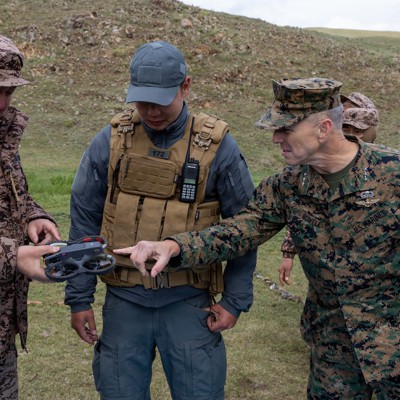
Lt. Gen. George Rowell, deputy commander of U.S. Pacific Command, center-left, met with the leadership of Mongolia’s Special Forces Training Command at the Mongolian Special Operations Training Center, Mongolia, June 19, 2026. U.S. Army / Sgt. Austin Riel
“The old ways of connecting with partners are simply no longer sufficient,” says INDOPACOM deputy commander.
HONOLULU— Lags in communication could undermine even the most advanced technology available, the deputy chief of Indo-Pacific Command warned Thursday.
“If we field cutting-edge compute and advanced software applications, but retain rigid, multi-layered bureaucracies requiring hours to authorize time-sensitive engagements, then we've negated our technological overmatch,” Lt. Gen. George Rowell, deputy commander of INDOPACOM, told attendees at TechNet Indo-Pacific. “No competitor on Earth can match America's network of capable allies and partners. That network is our greatest advantage. It is our strategic center of gravity. But the old ways of connecting with partners are simply no longer sufficient.”
Upgrading military networks in the Pacific so the U.S. can quickly share battle details with allies has been a key priority in recent years. The command recently deployed the Pacific mission partner network, a unified version of a series of bespoke networks for individual allied or partner nations in the region. Throughout the year, the command has tested the network in military exercises, where it has shown progress and allowed better coordination, with fewer devices to toggle between.
Still, there are still gaps that need to be addressed to improve communications with allies and partners.
“We're in the middle of a transition right now,” said Col. Michael Hlad, who leads the Defense Information Systems Agency’s regional field command in the Pacific. “We are migrating to a data-centric environment, helping our partners understand what does it mean to be zero trust? What are the key items that we need to agree on, let's say, from an identity standpoint, a data standardization standpoint?”
While some nations are more technologically aligned, such as the Five Eye partners, the plan is to build a data-sharing environment malleable enough to bring in other nations as well.
“I don't know what the coalition of the future necessarily looks like,” Hlad said. “So how are we, DISA, building a coalition environment that is agile and common enough that we can bring in those partners instead of making it brittle…where it's just bilateral or just multilateral? We've got to bring that agility to [Indo-Pacific Command] as well as our partners, so they're able to integrate for an [humanitarian assistance and disaster relief] scenario as well as a high-conflict scenario of the future.”
Getting to that common digital ground means agreeing on what tools and methods to use.
There must be “clear standardization of what that common architecture looks like,” Hlad said. “This only works if we get the data right. And we are still siloed.”
In addition to improving communication with allies and partners, one of DISA Pacific's top priorities is to improve data transfer, speed, and security in the region.
“How do we have better transport resiliency in the Pacific so that we can make sure that the critical feeds and data are where we need them?…How do we deliver those for the warfighters in the Pacific so the data is closer to the operational need?” Hlad said.
The field command recently unveiled the Regional Network Operations Security Center Pacific—which aims to increase network support for INDOPACOM’s headquarters.
“That's an enhanced [network operations center]. That's an enhanced [security operations center]. That's a regional service support desk, and that's some data fusion capabilities that were not resident in this theater to synchronize,” Hlad said.
The idea is for the center to respond to connectivity challenges, including when undersea cables cut out and during electromagnetic spectrum or application disruptions.
The center has yielded a 20 percent personnel increase to assist in solving those connectivity problems, Hlad said.
NEXT STORY: Army pilots are trying virtual reality to stay more alert in flight
2026年6月19日,美国太平洋司令部副司令乔治·罗威尔中将(左二)在蒙古特种作战训练中心会见了蒙古特种部队训练司令部领导。(美国陆军/奥斯汀·里尔中士摄)
“与合作伙伴沟通的旧方式已经远远不够了,”印太司令部副司令表示。
檀香山——印太司令部副司令周四警告说,通信滞后甚至会破坏最先进的技术。
“如果我们拥有尖端的计算技术和先进的软件应用,却仍然保留僵化、层级繁多的官僚机构,需要花费数小时才能批准一些有时效性的合作项目,那么我们就白白浪费了我们的技术优势,”印太司令部副司令乔治·罗威尔中将在印太技术交流会上对与会者说道。“世界上没有任何竞争对手能够匹敌美国强大的盟友和伙伴网络。这个网络是我们最大的优势,也是我们的战略重心。但是,过去那种与伙伴沟通的方式已经远远不够用了。”
近年来,升级太平洋地区的军事网络,以便美国能够快速与盟友共享作战信息,一直是美国的一项重要优先事项。该司令部近期部署了太平洋任务伙伴网络,这是此前为该地区各个盟国或伙伴国分别定制的一系列网络的统一版本。今年以来,该司令部已在军事演习中对该网络进行了测试,结果表明其运行良好,能够实现更高效的协调,并减少需要切换的设备数量。
尽管如此,仍存在一些差距需要解决,以改善与盟友和伙伴的沟通。
“我们目前正处于转型期,”负责美国国防信息系统局太平洋地区现场指挥部的迈克尔·赫拉德上校说。“我们正在向以数据为中心的环境迁移,帮助我们的合作伙伴理解零信任的含义。我们需要就哪些关键事项达成一致,例如从身份认证和数据标准化的角度来看?”
虽然有些国家在技术上更加契合,例如五眼联盟成员国,但该计划旨在建立一个足够灵活的数据共享环境,以便其他国家也能参与其中。
“我不知道未来的联盟究竟会是什么样子,”赫拉德说。“所以,我们国防信息系统局(DISA)该如何构建一个足够灵活和通用的联盟环境,以便我们能够吸纳更多合作伙伴,而不是让它变得脆弱不堪……仅仅局限于双边或多边合作?我们必须将这种灵活性带给印太司令部以及我们的合作伙伴,使他们能够在未来应对人道主义援助和灾害救援以及高冲突等各种情况。”
要达成共同的数字化基础,就意味着要就使用哪些工具和方法达成一致。
赫拉德说:“必须对通用架构进行明确的标准化。这只有在我们获取正确数据的情况下才能奏效。而我们现在仍然各自为政。”
除了改善与盟友和伙伴的沟通外,DISA Pacific 的首要任务之一是提高该地区的数据传输速度和安全性。
“我们如何才能提高太平洋地区的运输韧性,确保关键信息和数据能够及时送达所需之处?……我们如何才能将这些信息和数据提供给太平洋地区的作战人员,使数据更贴近作战需求?”赫拉德说道。
战地指挥部最近推出了太平洋地区网络作战安全中心,旨在加强对印太司令部总部的网络支持。
“那是一个增强型网络运营中心,一个增强型安全运营中心,一个区域服务支持台,还有一些之前该区域不具备的数据融合能力,用于同步这些能力,”赫拉德说道。
该中心的目的是应对连接性挑战,包括海底电缆断裂以及电磁频谱或应用中断等情况。
赫拉德表示,该中心已增加 20% 的人员,以协助解决这些连接问题。
下一篇报道:陆军飞行员正在尝试利用虚拟现实技术来保持飞行中的警觉性