New X-Plane To Be Announced At Max Power Airshow: NASA Administrator Isaacman美国宇航局局长艾萨克曼表示,新型X飞机将在Max Power航展上发布。
NASA's boss insists it is "not the one you're thinking about" and has deflected a new question about a 'missing' SR-71.
新闻视频
By Joseph Trevithick
Published Nov 2, 2026 1:15 PM EST
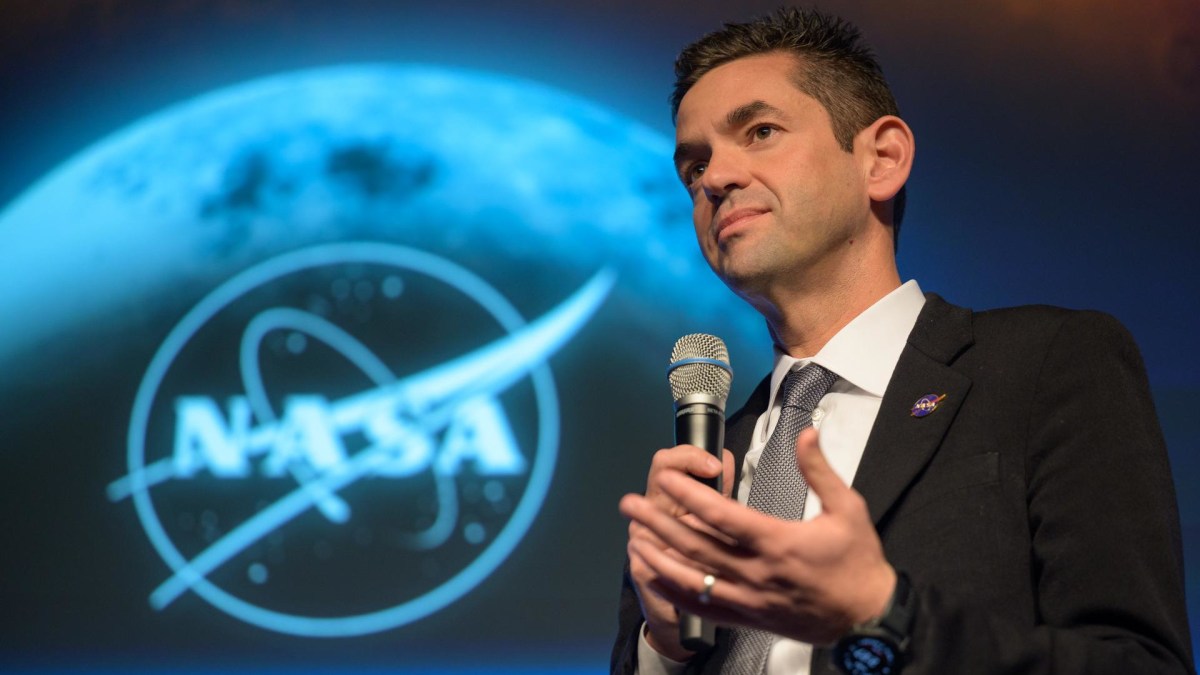
NASA Administrator Jared Isaacman says a new X-plane will be announced at the Max Power exhibition at the Kennedy Space Center in Florida this coming weekend. He insisted, however, that this is unrelated to an SR-71 Blackbird that mysteriously disappeared from public display earlier this year. Isaacman also deflected a direct question about that SR-71 and the possibility that it could fly again , quipping that “we’re just cleaning it, man.”
Isaacman made his new remarks about the SR-71 that had been on display, commonly referred to by the tail number 844, and NASA’s broader X-plane plans on a new edition of NASASpaceflight ’s The Flame Trench podcast, which was posted online last Friday . 844 had been on display at NASA’s Armstrong Flight Research Center, which is co-located at Edwards Air Force Base in California, following its retirement in 1999. This particular SR-71 had been the last flying Blackbird.
SR-71 tail number 844 seen in NASA service in the 1990s. NASA
“I gotta ask, has 844 been powered on yet?” Eric Johnson, a science, technology, engineering, and mathematics educator and streamer, who was also on the podcast, asked Isaacman.
“So, we’re just cleaning it, man,” Isaacman said in response, with a smile and a small laugh. “It was so dusty out there in the desert, and it just felt like it needed a cleaning.”
"We're just cleaning it man" Amid speculation that it could be returning to flight, NASA Administrator Jared Isaacman teases to NSF that NASA is "just cleaning" their SR-71 Blackbird… pic.twitter.com/t8uBwaK4s1 — NSF – NASASpaceflight.com (@NASASpaceflight) November 1, 2026
"We're just cleaning it man" Amid speculation that it could be returning to flight, NASA Administrator Jared Isaacman teases to NSF that NASA is "just cleaning" their SR-71 Blackbird… pic.twitter.com/t8uBwaK4s1
The possibility that NASA has at least been exploring returning an SR-71 to flight in some configuration has been a hot topic of discussion since September. At a conference that month, Isaacman appeared to tease that possibility, or that his agency was eyeing a follow-on of some kind, with cryptic remarks and an image of a distinctly Blackbird-like silhouette . The matter of the ‘missing’ SR-71, as well as reports that NASA has been courting former SR-71 program members for a return-to-flight effort, subsequently emerged.
NASA Administrator Jared Isaacman showed this image during a presentation last week while talking about plans for new X-planes. NASA
“Since I didn’t answer your question that you asked before, I will give you some insight that we will announce a new X-plane at it [Max Power], and it is not the one you’re thinking about,” the NASA director said in an ensuing discussion on the podcast about that event, which is set to kick off on Saturday. “I am gonna deliver on the promise there will be more X-planes.”
Isaacman has openly pledged to revitalize NASA’s X-plane portfolio on several occasions, including during a town hall with NASA staff on just his second day on the job in December 2025.
While on The Flame Trench podcast, Isaacman also noted that he had just been out to Armonstrong recently, primarily to mark the naming of Troy Asher as the facility’s new director.
“They know to speed up when we go past the outdoor museum. They definitely don’t want me out –” the head of NASA said of that recent trip, before Johnson interjected with a tongue-in-cheek remark that they didn’t want him “cleaning more planes, right?”
“I was like, is there anything else?” Isaacman added immediately afterward. “You know the F-16 VISTA, pretty cool plane. Got some cool jets.”
The “F-16 VISTA” mentioned here is the Variable Stability In-flight Simulator Test Aircraft, a heavily modified two-seat F-16D Viper fighter that is now designated as an X-plane, the X-62A . The X-62A is in active U.S. Air Force service as a testbed based at Edwards. NASA’s museum at Armstrong does have several other retired jet-powered X-planes on display, including a delta-winged F-16XL and an X-29 with its distinctive reverse-swept wings.
The X-62A VISTA test jet. USAF A stock picture of the X-62A VISTA test jet. USAF
A satellite image taken in 2018 showing SR-71, tail number 844, as well as other retired X-planes, on display outside of the Armstrong Flight Research Center in California. Google Earth
As noted, Isaacman is an outspoken advocate for new X-planes, including types that could be capable of supersonic or even hypersonic flight. This has been reflected in NASA budget proposals and the prior announcement of a new Aeronautics Flight Accelerator (AFA) initiative.
At the aforementioned conference in September, Isaacman had also pushed back on the idea that the silhouette he had shown in his presentation was of an SR-71, despite it having a host of features in line with the Blackbird’s iconic shape. He declined to elaborate further at that time, but did say that “NASA is getting back in the business of flying high and fast again.”
“NASA has a long history of building and flying experimental aircraft that push the boundaries of what is possible,” NASA told TWZ at that time when asked for more information. “As Administrator Isaacman has said, we want to see more X-planes flying in the years ahead, developing the technologies that will allow us to fly higher, farther, and faster than we have in decades. We look forward to sharing more as those efforts progress.”
“NASA has a long history of pushing the boundaries of experimental aviation, and we continue to explore opportunities to build on that legacy,” the agency told us again following the initial story on the disappearance of 844 from Aviation Week . “As Administrator Isaacman has said, we want to see NASA flying higher, farther, and faster than we have in decades. We recognize the interest in the SR-71 and its remarkable history at NASA but have no additional information to share regarding the aircraft at this time.”
TWZ has reached back out to NASA today in light of Isaacman’s latest comments.
SR-71 tail number 844 during its service with NASA. This picture was taken on October 31, 1997, during a flight in support of the NASA/Rocketdyne/Lockheed Martin Linear Aerospike SR-71 Experiment (LASRE). NASA
There do continue to be significant questions about the viability and practicality of returning even one SR-71 to flight, as we have detailed in our previous reporting . At the same time, getting a Blackbird flying again could be seen as being worth the cost and complexity given the unique high-flying, high-speed testbed the aircraft would offer. This entire discussion comes at a time when very high-speed flight is back in vogue , particularly within the U.S. military , but also in America’s commercial aviation sector .
“One of the reasons why there’s interest in this speed regime, it was neglected for a number of years. The focus was on hypersonics. If you proposed anything going back, say, 15 years in the Mach 3.5 speed regime, it was ignored,” Tim Conners, an engineer who worked on the SR-71 program at NASA, told us in an exclusive interview published earlier this month . “The glitz and glamor was on hypersonics. Hypersonics is great tactically for certain scenarios, but the weaknesses of hypersonics are now becoming apparent.”
“And as far as countermeasures, hypersonics still has a place. Don’t get me wrong, but every system cannot be hypersonic from an affordability standpoint. So, now you’ve seen it over the last, say, five years. A lot of systems are coming back on the scene that operate in the Mach 2 to Mach 4 regime, and there’s a reason they’re all fitting in there, right?” Conners, who is now technical director for advanced weapons systems at Tiberius Aerospace, continued. “You stay below the speed limit that requires more exotic metallics. You stay in the titanium regime. You can fly, of course, up to [Mach] 3.5 with brief excursions up to about [Mach] 4, so that is tactically relevant against a lot of military targets and defensive systems. So here it is. You know we now have a potential flying test bed that can carry engines in the J58 size class.”
“They probably are not going to do this for — or trying to do this — for aerodynamic reasons. You can do CFD [ computational fluid dynamics ]-based modeling in this speed regime all day long and very accurately in this day and age. It does not take a lot of time or money to do that,” he also added. “What you cannot do is an accurate representation of a new type of engine integrated into a high-speed airframe. You can do the conceptual modeling of it. Of course, it’s difficult to get the final installed answer, especially if it involves an engine that operates at long duration. That is where I think they’re going with this. I believe that they’re developing basically a high-speed engine test bed. That would make the most sense to me.”
TWZ has also laid out in detail how the process itself of making an SR-71 flyable could be immensely valuable, including for informing follow-on developments. As we have noted in the past, it is possible that what NASA is doing with 844 now could be intended as a stepping stone to a new X-plane. There is also a potential for the aircraft to re-emerge in a substantially reworked form, potentially configured for pilot-optional or even completely uncrewed operation. However, any such conversion effort would be a different kind of major undertaking.
An SR-71 undergoing maintenance. NASA
How any of this may or may not relate to the plans for the new X-plane that Isaacman mentioned remains to be seen. Even within the context of high-speed flight, NASA is publicly pursuing advanced technology developments in various different directions.
The main face of the agency’s X-plane work currently is the X-59 Quiet SuperSonic Technology (QueSST) jet, which has now flown 41 test flights since taking to the skies for the first time in October 2025 . The X-59, which will also be present at Max Power, has been able to reach a top speed of Mach 1.53 and get up to an altitude of 56,000 feet in the course of that testing. The central goal of the QueSST program is to prove out technologies that could eventually enable commercial supersonic flight over land with a substantially reduced sonic boom. With this in mind, the X-59 has been in no way designed for the kind of extreme speeds the SR-71 is capable of reaching.
One year. New heights. Faster speeds. ✈️ Since its first flight on Oct. 28, 2025, NASA's X-59 has continued pushing the boundaries of aviation. See how far we've come in just one year! https://t.co/N7ew2vnCtI #NASAaero #Quesst pic.twitter.com/FApl6F9gnY — NASA Aeronautics (@NASAaero) October 28, 2026
One year. New heights. Faster speeds. ✈️ Since its first flight on Oct. 28, 2025, NASA's X-59 has continued pushing the boundaries of aviation. See how far we've come in just one year! https://t.co/N7ew2vnCtI #NASAaero #Quesst pic.twitter.com/FApl6F9gnY
Max Power is “turning into a big exposition. I think you’re going to have a lot of stuff on display there, from space to VTOLs [vertical takeoff and landing designs], [and] drones. And for sure an air show will be a component to it,” NASA’s Isaacman said on The Flame Trench podcast. “From here forward, we might be trying to make a run at putting some real infrastructure on that next to that runway [at t the Kennedy Space Center], and trying to create our own kind of Paris/Farnborough type, Dubai type, event here.”
Isaacman was referring here to the Paris Air Show , Farnborough International Air Show , and Dubai Airshow , all of which are major biennial events that aerospace firms globally routinely use as showcases for new developments .
In the meantime, what we do know now for sure is that we are set to get details about at least one new NASA X-plane this coming weekend at Max Power. There may also be new hints about what the future holds for SR-71 tail number 844.
Contact the author: joe@twz.com
Comments couldn’t be loaded. Please refresh the page.
作者:约瑟夫·特雷维西克
发布于美国东部时间2026年11月2日下午1:15
美国宇航局局长贾里德·艾萨克曼表示,一架新型X飞机将于本周末在佛罗里达州肯尼迪航天中心举行的“最大功率”展览上发布。但他坚称,这与今年早些时候神秘消失的SR-71“黑鸟”侦察机无关。当被问及SR-71是否有可能再次飞行时,艾萨克曼也巧妙地回避了这个问题,只是打趣道:“我们只是在清理它而已,伙计。”
艾萨克曼在NASASpaceflight的播客节目“火焰沟壑”(The Flame Trench)的最新一期中,就展出的SR-71侦察机(通常被称为尾号844)以及NASA更广泛的X系列飞机计划发表了新的评论。该播客节目已于上周五上线。844号SR-71于1999年退役后,一直在位于加利福尼亚州爱德华兹空军基地的NASA阿姆斯特朗飞行研究中心展出。这架SR-71是最后一架仍在飞行的“黑鸟”侦察机。
20世纪90年代在NASA服役的SR-71,尾号844。
“我得问问,844 号服务器通电了吗?” 埃里克·约翰逊(Eric Johnson)是一位科学、技术、工程和数学教育家兼主播,他也参与了该播客节目,他问艾萨克曼(Isaacman)。
“所以,我们正在清理它,伙计,”艾萨克曼笑着回答,还轻声笑了笑。“沙漠里尘土飞扬,感觉它需要清理一下。”
“我们只是在清理它而已。” 在外界猜测SR-71“黑鸟”侦察机可能重返蓝天之际,NASA局长贾里德·艾萨克曼向美国国家科学基金会透露,NASA“只是在清理”他们的SR-71“黑鸟”…… pic.twitter.com/t8uBwaK4s1 — NSF – NASASpaceflight.com (@NASASpaceflight) November 1, 2026
“我们只是在清理它而已。”在外界猜测SR-71“黑鸟”侦察机可能重返蓝天之际,NASA局长贾里德·艾萨克曼向美国国家科学基金会透露,NASA“只是在清理”他们的SR-71“黑鸟”侦察机…… pic.twitter.com/t8uBwaK4s1
自去年九月以来,NASA是否至少在探索以某种配置让SR-71重返蓝天一直是热门话题。当月的一次会议上,艾萨克曼似乎暗示了这种可能性,或者说他的机构正在考虑某种后续行动,他发表了一些意味深长的言论,并展示了一张酷似黑鸟侦察机的轮廓图。随后,关于“失踪”的SR-71以及NASA一直在争取SR-71项目前成员参与重返蓝天计划的报道相继浮出水面。
美国国家航空航天局局长贾里德·艾萨克曼上周在一次演讲中展示了这张图片,当时他正在谈论新型X系列飞机的计划。
“既然我之前没有回答你提出的问题,那我就透露一点:我们将在‘最大功率’(Max Power)大会上发布一款新的X系列飞机,但它并非你所想的那款,”美国宇航局局长在随后关于该活动的播客讨论中说道。该活动将于周六拉开帷幕。“我将兑现承诺,未来会有更多X系列飞机问世。”
艾萨克曼曾多次公开承诺重振 NASA 的 X 型飞机项目,包括在 2025 年 12 月上任第二天与 NASA 员工举行的市政厅会议上。
在 The Flame Trench 播客节目中,艾萨克曼还提到,他最近去了一趟阿蒙斯特朗,主要是为了庆祝特洛伊·阿舍尔被任命为该机构的新主任。
“他们知道经过露天博物馆时要加速。他们肯定不想让我出去——”美国宇航局局长在谈到最近的那次旅行时说道,随后约翰逊插话,半开玩笑地说,他们不想让他“再去清洗飞机,对吧?”
“我就想,还有别的吗?”艾萨克曼紧接着补充道,“你知道F-16 VISTA,很酷的飞机。还有一些很棒的喷气式飞机。”
这里提到的“F-16 VISTA”指的是可变稳定性飞行模拟器测试飞机,它是一架经过大幅改装的双座F-16D“蝰蛇”战斗机,现在被命名为X系列飞机X-62A。X-62A目前在美国空军服役,作为测试平台驻扎在爱德华兹空军基地。位于阿姆斯特朗空军基地的NASA博物馆还展出了其他几架退役的喷气式X系列飞机,包括一架三角翼的F-16XL和一架拥有独特反后掠翼的X-29。
X-62A VISTA 测试喷气式飞机。美国空军。一张 X-62A VISTA 测试喷气式飞机的库存照片。美国空军
这张摄于2018年的卫星图像显示了SR-71侦察机(尾号844)以及其他退役的X系列飞机,它们当时正在加利福尼亚州阿姆斯特朗飞行研究中心外展出。(谷歌地球)
如前所述,艾萨克曼是新型X系列飞机的积极倡导者,其中包括能够进行超音速甚至高超音速飞行的机型。这一点已体现在NASA的预算提案以及此前宣布的航空飞行加速器(AFA)计划中。
在9月份举行的那次会议上,尽管艾萨克曼在演讲中展示的轮廓图与SR-71黑鸟的标志性外形有很多相似之处,但他仍然否认那是SR-71。当时他拒绝进一步解释,只是表示“NASA正在重返高空高速飞行领域”。
“NASA在建造和试飞不断突破极限的实验飞机方面有着悠久的历史,”NASA当时在被问及更多信息时告诉TWZ。“正如局长艾萨克曼所说,我们希望在未来几年看到更多X系列飞机飞行,开发出能够让我们飞得更高、更远、更快的技术。随着这些工作的进展,我们期待与大家分享更多信息。”
在《航空周刊》首次报道了844号SR-71失踪事件后,美国国家航空航天局(NASA)再次向我们表示:“NASA在拓展实验航空的边界方面有着悠久的历史,我们将继续探索各种机会,以延续这一传统。正如局长艾萨克曼所说,我们希望看到NASA的飞机飞得更高、更远、更快,超越过去几十年。我们理解大家对SR-71及其在NASA的卓越历史的关注,但目前我们没有关于该飞机的更多信息可以分享。”
鉴于艾萨克曼的最新言论,TWZ今天再次联系了NASA。
这张照片拍摄于1997年10月31日,当时SR-71的尾号为844,正处于NASA服役期间,该机正在执行NASA/Rocketdyne/Lockheed Martin线性气动尖锥SR-71实验(LASRE)的支持飞行任务中。
正如我们之前的报道所述,关于让哪怕一架SR-71重返蓝天的可行性和实用性,仍然存在诸多疑问。与此同时,考虑到SR-71能够提供的独特高空高速试验平台,让“黑鸟”重返蓝天或许值得付出相应的成本和复杂程度。而这一切讨论正值高速飞行再次成为热门话题之际,尤其是在美国军方以及美国商业航空领域。
“人们对这个速度区间感兴趣的原因之一是,它曾被忽视多年。当时的关注点都在高超音速飞行器上。如果你在15年前提出任何3.5马赫的速度方案,都会被置之不理,”曾在NASA参与SR-71项目的工程师蒂姆·康纳斯在本月初发表的独家采访中告诉我们。“当时人们都把目光投向了高超音速飞行器。高超音速飞行器在某些战术场景下确实非常强大,但它的弱点现在也逐渐显现出来。”
“至于反制措施,高超音速武器仍然有用武之地。别误会我的意思,但从成本角度来看,并非所有系统都能做到高超音速。所以,在过去的五年里,你们也看到了,许多在2马赫到4马赫范围内运行的系统重新出现,它们之所以都符合这个速度范围,是有原因的,对吧?”现任泰比留斯航空航天公司先进武器系统技术总监的康纳斯继续说道,“这样可以控制在需要更特殊金属材料的速度范围内,也就是钛合金的适用范围。当然,飞行速度最高可达3.5马赫,短时间内也能达到4马赫左右,这对于打击许多军事目标和防御系统来说都具有战术意义。所以,现在我们拥有了一个潜在的飞行试验平台,可以搭载J58级别的发动机。”
“他们可能并非出于空气动力学的原因——或者说并非试图出于空气动力学的原因——来做这件事。如今,在这个速度范围内,你可以随时进行基于计算流体动力学(CFD)的建模,而且精度很高。这并不需要花费太多时间和金钱,”他还补充道。“但你无法精确地模拟一种新型发动机集成到高速机身中的情况。你可以进行概念建模。当然,要得到最终的安装结果非常困难,尤其是在发动机需要长时间运行的情况下。我认为他们正在朝着这个方向努力。我相信他们基本上是在开发一个高速发动机试验平台。这对我来说是最合理的解释。”
TWZ还详细阐述了使SR-71具备飞行能力的过程本身具有巨大的价值,包括为后续研发提供参考。正如我们之前指出的,NASA目前对844号SR-71的改造很可能是为了研发新型X系列飞机。此外,该飞机还有可能以大幅改进的形式重新出现,或许可以配置为可选飞行员或完全无人驾驶。然而,任何此类改装都将是一项截然不同的重大工程。
一架正在进行维护的SR-71侦察机。美国国家航空航天局
这一切与艾萨克曼提到的新型X飞机计划究竟有何关联,目前尚不得而知。即使在高速飞行领域,NASA也在公开推进各个不同方向的先进技术研发。
目前,该机构X系列飞机项目的主要成果是X-59静音超音速技术(QueSST)喷气式飞机。自2025年10月首飞以来,该机已完成41次试飞。X-59也将亮相Max Power展会,在测试过程中,其最高速度达到1.53马赫,飞行高度达到56,000英尺。QueSST项目的核心目标是验证相关技术,最终实现陆地商业超音速飞行,并大幅降低音爆。因此,X-59的设计目标并非像SR-71那样追求极致速度。
一年,更高峰,更快速度。✈️ 自2025年10月28日首飞以来,NASA的X-59不断突破航空领域的极限。看看我们一年来取得了多大的进步!https://t.co/N7ew2vnCtI #NASAaero #Quesst pic.twitter.com/FApl6F9gnY — NASA Aeronautics (@NASAaero) October 28, 2026
一年,更高峰,更快速度!✈️ 自2025年10月28日首飞以来,NASA的X-59不断突破航空领域的极限。看看我们一年来取得了多大的进步!https://t.co/N7ew2vnCtI #NASAaero #Quesst pic.twitter.com/FApl6F9gnY
“Max Power 正在变成一场大型展览。我认为那里会展出很多东西,从太空到垂直起降飞行器(VTOL)和无人机。当然,飞行表演也会是其中的一部分,”美国宇航局的艾萨克曼在“火焰沟壑”(The Flame Trench)播客节目中说道。“接下来,我们可能会尝试在肯尼迪航天中心跑道旁边建设一些真正的基础设施,并努力在这里打造我们自己的类似巴黎/范堡罗航展或迪拜航展那样的盛会。”
艾萨克曼在这里指的是巴黎航展、范堡罗国际航展和迪拜航展,这些都是每两年举办一次的大型活动,全球航空航天公司经常利用这些活动来展示新的发展成果。
与此同时,我们现在可以确定的是,本周末在Max Power展会上,我们将获得至少一架NASA新型X飞机的详细信息。此外,SR-71 844号机的未来发展方向也可能会有新的线索。
联系作者:joe@twz.com
评论加载失败,请刷新页面。