Air Force divests its few A-29s, explores ‘future options’空军出售其少量A-29战机,探索“未来选择”
A set of three A-29 Super Tucanos are destined for storage after officials at the Air Force Test Pilot School opted against using the turboprops, a spokesperson for Edwards Air Force Base told Breaking Defense.
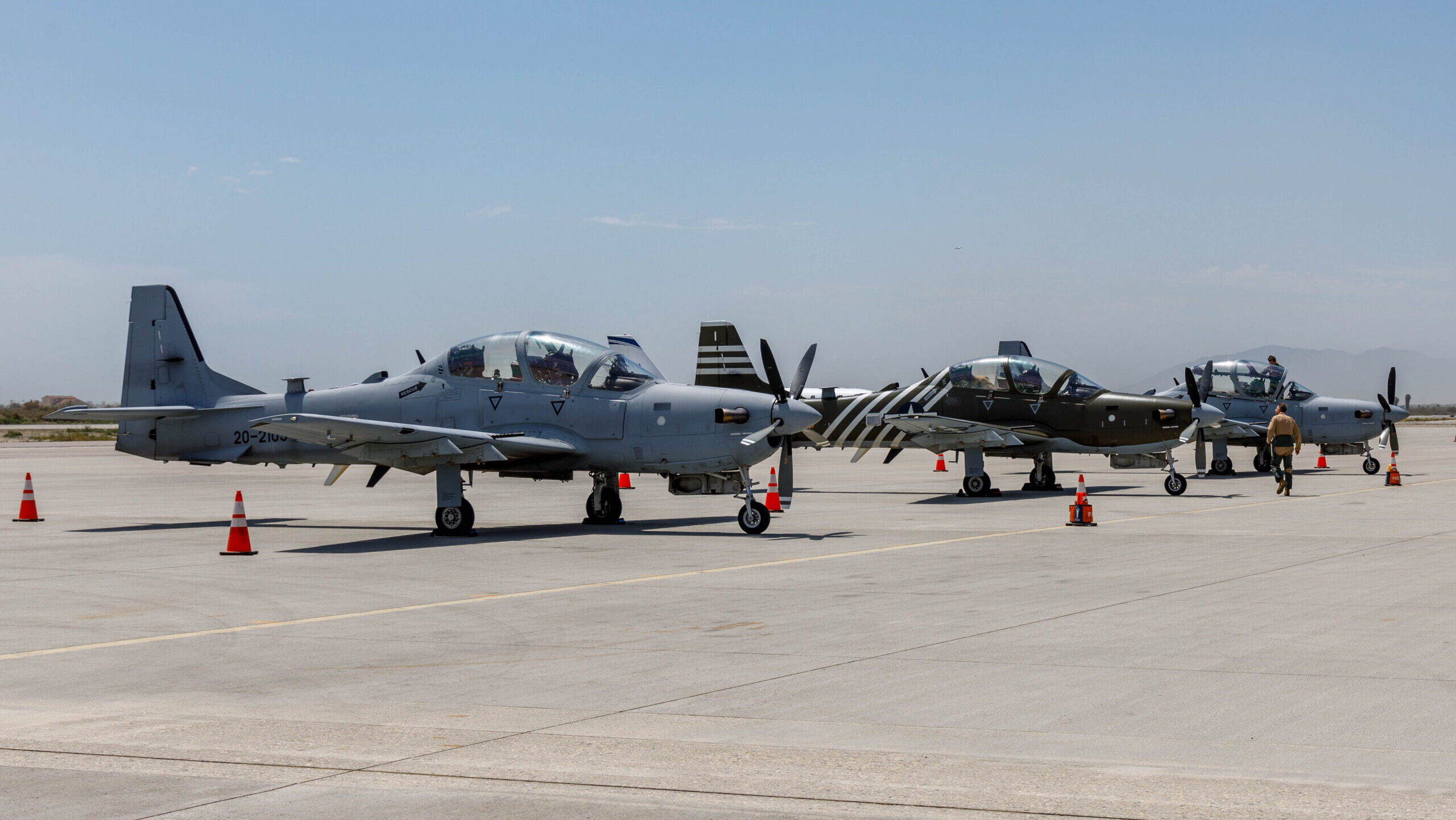
Three A-29 Super Tucanos prepare for a ferry flight to Edwards Air Force Base, California, July 18, 2024. (Air Force photo by Richard Gonzales)
PARIS — The US Air Force is no longer planning to use three A-29 Super Tucanos for flight testing, opting instead to divest the service’s only examples of the Embraer-made turboprops.
“The A-29 Super Tucano was thoroughly evaluated but did not meet the intended use for Air Force Test Pilot School,” a spokesperson for Edwards Air Force Base said in a statement to Breaking Defense.
Those aircraft have now been “divested,” the spokesperson said, adding that officials “are exploring future options for a sustainable spin and mission systems aircraft” for the test pilot school. Aviation Week previously reported the Air Force’s decision to retire the aircraft.
The three A-29s were originally bought by Air Force Special Operations Command, but the command off-loaded the aircraft “after mission requirements changed,” the Air Force said in a 2024 release. The test pilot school at Edwards then picked up the turboprop trio to see if it could fill various test school needs.
Brazilian aerospace company Embraer manufactures the A-29 and assembles the aircraft at an assembly line in Jacksonville, Fla., where US firm SNC subsequently installs mission equipment for the US and specific foreign military sales customers. Embraer officials have said the Jacksonville line could be at risk if sufficient demand does not materialize, though the company also runs a separate Super Tucano production facility in Brazil.
The fate of Edwards’ A-29 fleet was previously revealed in a notice posted by the Air Force Oct. 29, which said the service plans to sole-source a contract with SNC to safely store the aircraft.
“These aircraft are not expected to return to flight for use by the Air Force,” the notice says. The contract to store them would come with a single base year and options for an additional two years of work.
Winning the information war is as much about ideas and perception as it is about data
"Being able to tell the commander you don't need to do something is actually a pretty powerful message, as well."
SNC and Embraer did not respond to a request for comment by press time.
The US Air Force itself never bought the A-29 in significant numbers, but the service did acquire the aircraft for allies like the Afghan armed forces prior to the Taliban takeover. In recent years, the growing threat of unmanned systems has prompted Embraer and SNC to pitch the Super Tucano as a more affordable drone killer.
Breaking Defense Video
Qatar’s domestic weapons, Turkey’s drone arsenal and the Mecca pact’s next test
3 congressional races that matter for defense
How General Atomics views Europe’s unmanned future
A more flexible way to defend maneuver forces from drones that doesn’t tie them down [Sponsored]
What’s haunting the Pentagon this Halloween?
The new must-have capabilities for drones [Sponsored]
Army’s tech chief talks autonomy, acquisition and the future of drones
Drones take over AUSA, plus the Army’s plan to bring in new vendors
Hegseth talks autonomy at AUSA, a key show focus
Army doubles down on autonomy, stakes out Indo-Pacific role: AUSA Day 2
2024年7月18日,三架A-29超级巨嘴鸟攻击机准备飞往加利福尼亚州爱德华兹空军基地。(美国空军照片,摄影:理查德·冈萨雷斯)
巴黎——美国空军不再计划使用三架 A-29 超级巨嘴鸟进行飞行测试,而是选择出售该军种仅有的三架巴西航空工业公司制造的涡轮螺旋桨飞机。
“A-29 超级巨嘴鸟攻击机经过了彻底评估,但并不符合空军试飞员学校的预期用途,”爱德华兹空军基地的一位发言人在给《防务新闻》的一份声明中表示。
发言人表示,这些飞机现已“退役”,并补充说,官员们“正在探索未来为试飞员学校寻找可持续的螺旋桨和任务系统飞机的方案”。《航空周刊》此前曾报道过空军决定退役这些飞机的消息。
这三架A-29飞机最初由空军特种作战司令部采购,但该司令部在2024年发布的一份声明中表示,由于“任务需求发生变化”,他们将这些飞机转让给了特种作战司令部。随后,位于爱德华兹空军基地的试飞员学校接收了这三架涡轮螺旋桨飞机,以测试它们是否能够满足该校的各种试飞需求。
巴西航空工业公司(Embraer)生产A-29攻击机,并在佛罗里达州杰克逊维尔的装配线上进行组装。随后,美国SNC公司为美国及特定外国军售客户安装任务设备。巴西航空工业公司官员表示,如果市场需求不足,杰克逊维尔的生产线可能会面临风险。不过,该公司在巴西还运营着一家独立的超级巨嘴鸟(Super Tucano)生产工厂。
爱德华兹空军基地的 A-29 机队的命运此前已在空军 10 月 29 日发布的一份通知中披露,该通知称,空军计划与 SNC 公司签订独家合同,以安全存放这些飞机。
通知称,“这些飞机预计不会再恢复飞行供空军使用。” 存放这些飞机的合同包含一年的基本期限,并可选择续签两年。
赢得信息战,关键不仅在于数据,更在于理念和认知。
“能够告诉指挥官你不需要做某件事,实际上也是一个非常有力的信息。”
截至发稿时,SNC和巴西航空工业公司均未回复置评请求。
美国空军自身从未大量采购A-29,但在塔利班掌权前,曾为阿富汗武装部队等盟友采购过该型飞机。近年来,无人机系统日益增长的威胁促使巴西航空工业公司(Embraer)和SNC公司推出超级巨嘴鸟(Super Tucano),将其定位为更经济实惠的无人机杀手。
突破性防御视频
卡塔尔的国产武器、土耳其的无人机武库以及麦加条约的下一次测试
3场对国防至关重要的国会选举
通用原子公司如何看待欧洲的无人化未来
一种更灵活的防御机动部队免受无人机攻击的方式,不会限制其行动[赞助]
今年万圣节,五角大楼究竟闹鬼?
无人机必备的新功能 [赞助内容]
陆军技术主管谈无人机的自主性、采购和未来
无人机主导了美国陆军协会(AUSA)的会议,此外,陆军还计划引入新的供应商。
Hegseth 在 AUSA 大会上谈到了自主性,这是本次大会的一个重点议题。
陆军加倍强调自主性,明确印太地区角色:AUSA第二天