New committee to strengthen safeguards in Islamic religious institutions after child sexual abuse case in mosque清真寺发生儿童性侵案后,新成立的委员会将加强伊斯兰宗教机构的安全保障措施
The government is also considering widening criminal screening to more roles involving contact with children, and voluntary background checks for unregulated sectors.
The government is also considering widening criminal screening to more roles involving contact with children, and voluntary background checks for unregulated sectors.
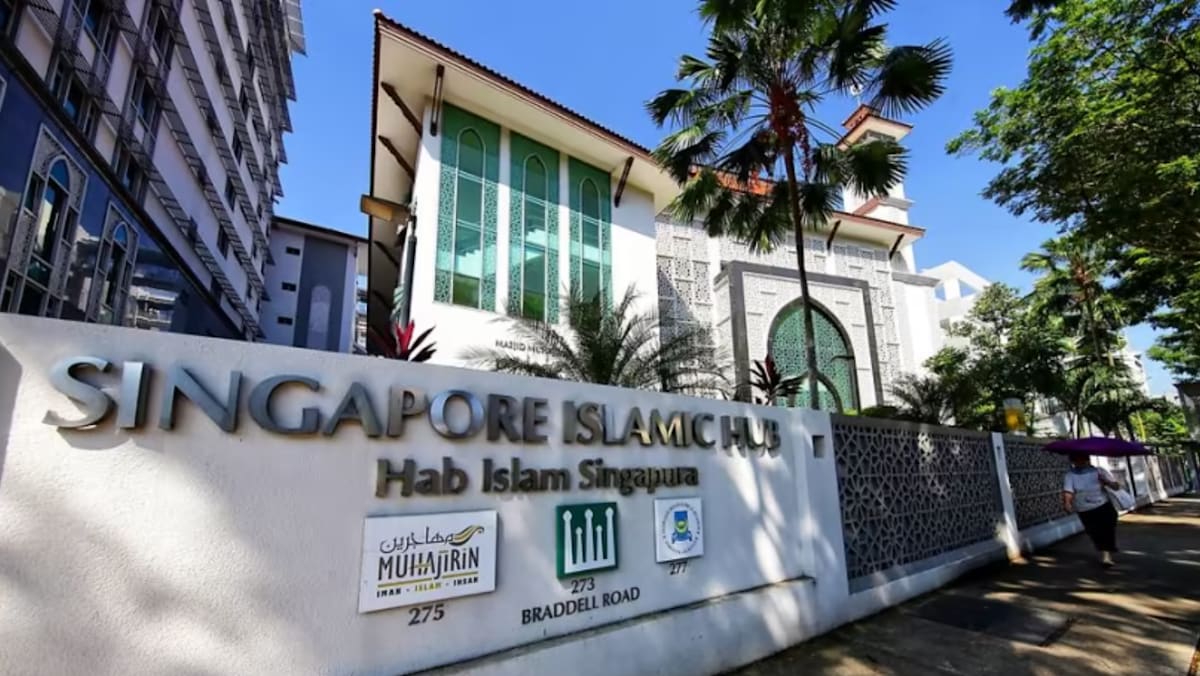
Exterior of the Islamic Religious Council of Singapore (MUIS) building.
This audio is generated by an AI tool.
SINGAPORE: A committee will be formed to examine safeguards across Islamic religious institutions and propose ways to strengthen them, Acting Minister-in-charge of Muslim Affairs Zaqy Mohamad said in parliament on Tuesday (Sep 8).
This follows the case of a self-styled religious mentor who sexually abused two young brothers , with some offences taking place in a mosque, while he was on bail. He was convicted and sentenced in August.
The offender was not an accredited religious teacher. Mr Zaqy described him as a regular congregant at the mosque.
"He gathered informally with small groups of youths in the main prayer hall. These were not religious classes that were approved or sanctioned by the mosque," said Mr Zaqy, adding that this is a common practice.
The man cannot be named due to gag orders protecting the victims' identities.
Mr Zaqy said the new committee will be led by two chairpersons who are respected members of the community: Associate Professor Razwana Begum and Ustaz Fathurrahman Dawoed.
The committee's composition and terms of reference will be announced later. It will report directly to Mr Zaqy and its findings will be shared with the community.
Members of parliament (MPs) filed parliamentary questions related to the case after it was reported in the media.
The government is also considering expanding the scope of criminal background checks for those who work with children to cover more types of roles, said Senior Minister of State for Home Affairs and Social and Family Development Goh Pei Ming.
He added that this may include voluntary screening for those working in unregulated sectors. "This could take the form of a certificate-based system, which several members have proposed," said Mr Goh.
Considerations include the practicability of screening requirements for employers, especially small- and medium-sized enterprises.
"However, when it comes to such things, the safety of our children will have to take priority," he said, adding that more details will be shared when ready.
Currently, people applying for roles involving sustained contact with children and young persons are screened for past offences, including sexual offences, if these roles are regulated by public agencies.
This includes those applying to be full-time mosque staff, recognised asatizah or religious teachers, employees in Ministry of Education schools and Early Childhood Development Agency-licensed preschools, as well as members of SportSG's National Registry of Coaches.
Employers in unregulated sectors are not required to verify employees' criminal records. They may ask prospective employees to declare any past offences and consider this in their hiring decisions.
KEEPING RELIGIOUS INSTITUTIONS SAFE
Mr Zaqy noted that the offender in the sexual abuse case posted religious content on social media.
"Through that online presence, and his interactions with the victims at the mosque, they came to see him as someone they could trust for religious guidance.
"What were, in fact, informal unsanctioned interactions felt like religious classes to the victims. This was not a failing on their part. He cultivated that impression deliberately," Mr Zaqy said.
"This case exposes a troubling matter. Someone with no formal authority can still build a following online, and position himself as a trusted guide to young people seeking religious knowledge. That trust was then used against them to inflict harm on them.
"We cannot be complacent about this. In fact, we owe it to the victims and their families to learn from this incident and do something about it."
Mr Zaqy said that existing screening measures at mosques include pre-employment staff screening and approval requirements for external religious classes. Recognised asatizah are also subject to a code of ethics and accreditation renewal every three years.
He said that he has asked the Islamic Religious Council of Singapore (MUIS) to work with mosques, parents and the community to strengthen safeguards.
"Our mosques must remain open and welcoming, while ensuring that every child, every parent, every congregant can worship and learn safely with confidence. This means establishing a common safeguarding approach across all our mosques," he said.
Mr Zaqy said this involves clearer reporting and escalation protocols, closer monitoring of informal gatherings involving minors, safeguarding awareness training for staff and volunteers, and periodic safeguarding checks.
"It also means partnering with parents, children and youths closely to equip our children to recognise inappropriate behaviour, understand personal boundaries, and more importantly, know who to turn to when something does not feel right."
WHY OFFENDER WAS GRANTED BAIL
The offender was arrested for the first time in December 2021 after a teenage boy reported him to the police for molestation. He was released on bail.
He then sexually abused the two brothers between 2022 and 2024. He was arrested in April 2024 and placed in remand after that.
MUIS was informed in July 2025 of the sexual abuse allegations against the man.
Mr Goh responded to MPs' questions on considerations for granting bail, as the offender was out on bail when he sexually abused the two brothers.
A person who has been arrested must be released on bail by the police, unless he or she is charged in court and the court exercises the power to order otherwise, said Mr Goh.
"In this case, further investigations were necessary to decide whether the person could be charged. The allegation against the individual was being denied and he had no prior record of similar offences."
The man was therefore released on bail with the usual conditions. After this, he continued to report to the police regularly as required.
"A fundamental principle of our criminal justice system is that an individual is presumed innocent until proven guilty in a court of law. The Constitution provides that no person shall be deprived of his life or personal liberty save in accordance with law," said Mr Goh.
He pointed out that in most cases, an offender who has been charged in court must be offered bail unless the offence is non-bailable.
"The court will consider whether there is clear public interest to deny bail, such as where the offender has committed a serious offence that indicates he is a danger to the public, has shown a risk of reoffending while on bail, or may obstruct justice by absconding or tampering with witnesses."
These factors were not present in December 2021 when the man was first arrested, he said.
Subsequently, a police report was made in 2024 alleging that the man had committed rape while on bail. This was a serious allegation with substantive evidence supporting it, said Mr Goh.
"This fundamentally changed the assessment. The police then moved swiftly to arrest and charge him in court. The police objected to bail on public safety grounds, and he was remanded until he was convicted and sentenced."
WHY WAS MUIS TOLD A YEAR LATER?
Mr Goh added that the police generally do not disclose the names of people who are being investigated, including to other government agencies.
The man in this case was not a registered asatizah, and there was no evidence that he held any formal appointment, role or affiliation with the mosque.
"He was an individual who engaged in informal religious sharing in his private capacity. On this basis, MUIS was not informed in 2021," said Mr Goh.
Mr Zaqy said that MUIS was informed by the police in July 2025 that the man would be charged for sexual abuse of children, including offences in the mosque.
"He had already been in remand since April 2024 and posed no further threat to the public," said Mr Zaqy.
MUIS acted by issuing an advisory in August 2025 to all mosques to strengthen safeguards for minors by ensuring adequate security camera coverage and training staff to identify suspicious behaviour.
Get our pick of top stories and thought-provoking articles in your inbox
Stay updated with notifications for breaking news and our best stories
Join our channel for the top reads for the day on your preferred chat app
政府还在考虑将犯罪背景审查范围扩大到更多与儿童接触的岗位,并对非监管行业实行自愿背景调查。
新加坡伊斯兰宗教理事会(MUIS)大楼外观。
这段音频由人工智能工具生成。
新加坡:负责穆斯林事务的代理部长扎基·穆罕默德周二(9月8日)在国会表示,将成立一个委员会,审查伊斯兰宗教机构的保障措施,并提出加强这些措施的方法。
此前,一名自称宗教导师的男子在保释期间性侵了两名幼兄弟,其中一些罪行发生在清真寺内。他于8月被定罪并判刑。
肇事者并非注册宗教教师。扎基先生称他是清真寺的常客。
扎基先生说:“他经常在主祈祷厅与一小群年轻人非正式地聚会。这些并非清真寺批准或认可的宗教课程。”他还补充说,这是一种常见的做法。
由于保护受害者身份的禁言令,该男子的姓名不能公开。
扎基先生表示,新委员会将由两位受人尊敬的社区成员担任主席:拉兹瓦娜·贝古姆副教授和法图拉赫曼·达沃德老师。
委员会的组成和职权范围将稍后公布。委员会将直接向扎基先生汇报工作,调查结果也将与社区分享。
媒体报道此案后,国会议员们就此案提出了议会质询。
内政部兼社会及家庭发展部高级政务部长吴佩铭表示,政府也在考虑扩大与儿童接触人员的犯罪背景调查范围,以涵盖更多类型的职位。
他补充说,这可能包括对在非监管行业工作的人员进行自愿筛查。“这可以采取证书制度的形式,一些成员已经提出了这种方案,”吴先生说。
需要考虑的因素包括对雇主(尤其是中小企业)进行筛选要求的可行性。
“但是,在处理这类事情时,我们孩子的安全必须放在首位,”他说道,并补充说,更多细节将在准备就绪后公布。
目前,如果某些职位受公共机构监管,申请与儿童和青少年持续接触的职位的人员将接受犯罪记录审查,包括性犯罪记录。
这包括申请成为全职清真寺工作人员、获得认可的宗教教师或宗教老师、教育部学校和幼儿发展局许可的幼儿园的员工,以及新加坡体育理事会国家教练注册处的成员。
非监管行业的雇主无需核实员工的犯罪记录。他们可以要求求职者申报过往犯罪记录,并在招聘决定中予以考虑。
保障宗教机构安全
扎基先生指出,性侵案中的罪犯曾在社交媒体上发布宗教内容。
“通过他在网络上的活跃表现,以及他与清真寺受害者的互动,他们开始把他视为可以信赖的宗教指导者。
“事实上,这些非正式的、未经许可的互动,在受害者看来却像是宗教课程。这并非他们的错。他是故意营造这种印象的,”扎基先生说。
“这个案例揭露了一个令人不安的问题。即使没有正式的权威,一个人仍然可以在网上建立起追随者群体,并将自己塑造成寻求宗教知识的年轻人的可信赖的导师。然后,这种信任被用来伤害他们。”
“我们不能对此掉以轻心。事实上,我们有责任从这次事件中吸取教训,并采取行动,以告慰受害者及其家属。”
扎基先生表示,清真寺现有的审查措施包括员工入职前审查和外部宗教课程的审批要求。获得认可的宗教领袖(asatizah)还需遵守道德准则,并每三年更新一次认证。
他说,他已要求新加坡伊斯兰宗教理事会(MUIS)与清真寺、家长和社区合作,加强保障措施。
他说:“我们的清真寺必须保持开放和热情,同时确保每个孩子、每个家长、每个信众都能安全、放心地进行礼拜和学习。这意味着我们需要在所有清真寺建立统一的安全保障措施。”
扎基先生表示,这包括更清晰的报告和升级协议、更密切地监控涉及未成年人的非正式聚会、对工作人员和志愿者进行保护意识培训以及定期进行保护检查。
“这也意味着要与家长、儿童和青少年紧密合作,使我们的孩子能够识别不恰当的行为,理解个人界限,更重要的是,知道当感觉不对劲时该向谁求助。”
罪犯为何获准保释
该罪犯于2021年12月首次被捕,此前一名十几岁的男孩向警方报案称其性骚扰。他随后获得保释。
随后,他在 2022 年至 2024 年间对两兄弟进行了性虐待。他于 2024 年 4 月被捕,之后被羁押候审。
MUIS于2025年7月获悉了针对该男子的性虐待指控。
吴先生回应了议员们关于保释考虑因素的问题,因为罪犯在性侵两兄弟时正处于保释状态。
吴先生说,除非被法院起诉且法院行使权力另行命令,否则被捕者必须由警方保释。
“在这种情况下,需要进行进一步调查以决定是否可以对该人提出指控。该人否认了对她的指控,而且她此前没有类似犯罪记录。”
因此,该男子获准保释,但需遵守通常的保释条件。此后,他继续按要求定期向警方报到。
“我国刑事司法制度的一项基本原则是,在法庭证明有罪之前,任何人都应被推定为无罪。宪法规定,除依法外,任何人不得被剥夺生命或人身自由,”吴先生说。
他指出,在大多数情况下,除非罪行不可保释,否则被法院起诉的罪犯必须获得保释。
“法院将考虑是否存在明显的公共利益需要拒绝保释,例如,罪犯犯下了严重罪行,表明他对公众构成危险;罪犯表现出在保释期间再次犯罪的风险;或者罪犯可能通过潜逃或干扰证人来妨碍司法公正。”
他说,这些因素在 2021 年 12 月该男子首次被捕时并不存在。
随后,2024年有人向警方报案,指控该男子在保释期间犯下强奸罪。吴先生表示,这是一项严重的指控,并且有实质性证据支持。
“这从根本上改变了评估结果。警方随后迅速逮捕了他,并将其告上法庭。警方以公共安全为由反对保释,他被还押候审,直至定罪判刑。”
为什么一年后才告知MUIS?
吴先生补充说,警方通常不会透露被调查人员的姓名,包括对其他政府机构而言。
本案中的男子并非注册的阿萨提扎,也没有证据表明他与清真寺有任何正式的任命、职务或隶属关系。
“他只是以个人身份参与非正式的宗教活动。因此,新加坡伊斯兰宗教理事会(MUIS)在2021年并未收到相关通知,”吴先生说。
扎基先生表示,伊斯兰宗教理事会 (MUIS) 于 2025 年 7 月接到警方通知,该男子将被指控性侵儿童,包括在清真寺内犯下的罪行。
扎基先生说:“他自 2024 年 4 月以来一直被羁押,对公众不再构成威胁。”
2025 年 8 月,伊斯兰宗教理事会 (MUIS) 向所有清真寺发出通知,要求加强对未成年人的保护,确保安装足够的监控摄像头,并培训工作人员识别可疑行为。
订阅我们的邮件,即可获取精选热门新闻和引人深思的文章。
订阅通知,第一时间获取突发新闻和精彩报道。
加入我们的频道,即可在您常用的聊天应用上获取当日热门文章。