Dem lawmakers vow inquest into CISA cuts, intel policy民主党议员誓言要对CISA预算削减和情报政策展开调查。
House Democrats will investigate the administration's cyberdefense cuts, while Senate Dems will control confirmation hearings for the officials who lead the nation’s security agencies.
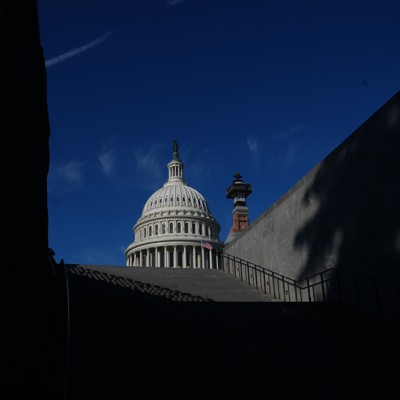
Mehmet Eser/Anadolu via Getty Images
House Democrats will investigate the administration's cyberdefense cuts, while Senate Dems will control confirmation hearings for the officials who lead the nation’s security agencies.
House Democrats plan to investigate how the Trump administration’s cuts to the nation’s cyberdefense agency affected its ability to protect federal networks and help states secure elections, while their Senate counterparts vow to scrutinize whether intelligence agencies can deliver findings that contradict the president without putting analysts’ jobs at risk.
Rep. Bennie Thompson, D-Miss., who is in line to chair the House Homeland Security Committee when Democrats take both houses of Congress in January, said he and his colleagues would examine the department’s use of its powers against Americans, its immigration enforcement practices, and its dealings with contractors.
The party’s wins in both chambers mean Democrats will decide which officials to call before Congress and what records to seek, under subpoena authorities given to whichever party has the majority in a given chamber.
If a permanent director for the Cybersecurity and Infrastructure Security Agency is nominated again, Senate Democrats will also have a say in who leads the agency. The same can be said for a nominee to lead the National Counterterrorism Center, whose previous leader resigned earlier this year.
“We will investigate the administration weaponizing DHS against Americans, its out of control immigration policies, and its blatantly corrupt self-dealing,” Thompson told Nextgov/FCW . “The American people expect nothing less, and we will deliver.”
The panel also plans to examine the department’s surveillance of Americans engaged in protected speech, its handling of whistleblowers and whether federal officials steered contracts to political allies. On cybersecurity, they want to know how DHS is preparing for attacks aided by artificial intelligence and what became of services the department scaled back.
What CISA lost in the cuts
Thompson and Rep. Delia Ramirez, D-Ill., who is positioned to chair the Homeland Security cyber subcommittee, have already asked Congress’ watchdog to assess the impact of staffing cuts at CISA, which helps defend civilian federal networks and other frequent hacker targets like water systems and telecom networks.
CISA lost roughly a third of its workforce after Trump retook office, though the agency has made efforts to refill its roster. By September, about 250 prospective hires had tentative offers and were waiting for clearances, acting Director Nick Andersen said, as part of an effort under DHS Secretary Markwayne Mullin to recant some of the cuts made to the cyberdefense agency over the last two years.
Ramirez, in a June interview with Nextgov/FCW , said she was planning a significant DHS overhaul bill for next year. She also gave positive feedback on CISA’s rehiring plans, though she added it may not be enough.
In a post on X after the election , she had a message for Homeland Security Secretary Markwayne Mullin, White House aide Stephen Miller and others involved in immigration enforcement: “Clear your schedule.”
In the Senate, the retirement of Michigan Democrat Gary Peters puts Sen. Maggie Hassan, D-N.H., next in seniority among Democrats on the Homeland Security and Governmental Affairs Committee. Hassan and Peters have already asked DHS to preserve records belonging to former Secretary Kristi Noem and her adviser Corey Lewandowski.
Hassan has also pressed CISA on its own security practices after reports that a contractor left agency account information and passwords in a public database.
One issue facing both homeland security panels could come due before Democrats take over. A law protecting companies from lawsuits when they share information about cyber threats is operating under a temporary extension through Dec. 11 . Without a longer renewal planted this year, the incoming chairs could inherit a fight over the legal protections companies rely on when communicating with the government about cyberattacks.
When intelligence findings conflict with the White House
Rep. Jim Himes, D-Conn., and Sen. Mark Warner, D-Va., are in line to chair the intelligence committees in their respective chambers after two years of disputes over whether spy agencies can deliver findings that contradict the president without putting analysts’ jobs at risk.
One major dispute centered on Tren de Aragua, the Venezuelan gang Trump said was carrying out an invasion at the direction of Nicolás Maduro’s government.
Most U.S. intelligence agencies assessed that Maduro was not directing the gang’s operations in the United States. Then-Director of National Intelligence Tulsi Gabbard subsequently fired the two leaders of the National Intelligence Council , which produced the assessment.
Warner also challenged Gabbard directly over Iran. At a Senate hearing in March, weeks after the U.S. and Israel went to war, he pressed her on a passage in her written testimony that she skipped in her opening remarks. It said Iran had made no effort to rebuild its uranium enrichment capability after U.S. strikes the previous June, a finding that bore on President Donald Trump’s claim that Iran posed an imminent threat.
A day earlier, Joe Kent, Trump’s director of the National Counterterrorism Center, had resigned over the war , saying he did not believe Iran posed such a threat.
Last June, after Trump said U.S. strikes had “obliterated” three Iranian nuclear sites, a preliminary Defense Intelligence Agency assessment suggested the attacks could have set the program back only a few months.
When Defense Secretary Pete Hegseth fired DIA Director Lt. Gen. Jeffrey Kruse that August without explanation, Warner pointed to the dispute in accusing the administration of “treating intelligence as a loyalty test.”
Himes has already signaled one investigation he wants to pursue. In September, he alerted an association representing intelligence contractors that lawmakers could seek records and testimony about donations to Trump’s White House ballroom. He wants to know who solicited the contributions and whether companies believed giving money would help them secure government work or access to senior officials.
At least a third of the Republicans on the House intelligence panel won’t return to Congress in January. Missouri Rep. Ann Wagner and Pennsylvania Reps. Brian Fitzpatrick and Scott Perry lost reelection Tuesday. New York Rep. Elise Stefanik didn’t seek another term, and Texas Rep. Dan Crenshaw lost his primary.
Himes and Warner also face a decision about the government’s own surveillance powers should lawmakers leave it unresolved this year, namely Section 702 authorities under the Foreign Intelligence Surveillance Act.
Those authorities let spy agencies compel internet and telecom providers for contents of phone calls, emails and text messages of foreigners located abroad without a warrant, but, in doing so, agencies can also collect Americans’ data if they are communicating with a foreign target. The controversial program expired in June, though certain collection procedures can continue through this spring under court approvals issued in March .
Who oversees military cyber operations
Rep. Adam Smith, D-Wash., and Sen. Jack Reed, D-R.I., are positioned to lead the Armed Services committees, which help write the annual defense policy bill.
Smith told The Washington Post he wants to investigate military operations, politicization of the armed forces and possible corruption in defense contracting. Both lawmakers challenged the administration over the firing of Gen. Timothy Haugh , who led the National Security Agency and U.S. Cyber Command.
Much of the detailed oversight of military hacking and network defense would fall to Rep. Ro Khanna, D-Calif., and Sen. Jacky Rosen, D-Nev., if they move up from their current posts as ranking members. Khanna is the top Democrat on the House Armed Services cyber subcommittee, which also oversees Pentagon software purchases and AI programs.
Rosen is his counterpart on the Senate Armed Services cybersecurity subcommittee, where lawmakers have examined how the military recruits and trains its cyber forces. A major Defense Department Cyber Strategy was planned for release in September but has been sitting in limbo for sometime.
Khanna could also lead the House select committee on competition with China. That role would give him another avenue to scrutinize AI security. In October, he asked leading U.S. developers what they knew about Chinese efforts to obtain their code or use their models’ answers to train competing systems. He has also called for the U.S. and China to agree on when to shut down AI systems judged too dangerous to operate.
Morgan Adamski, a former executive director of U.S. Cyber Command and now PwC’s Cyber, Data & Tech Risk Platform Leader, said she will be watching how lawmakers approach CISA’s readiness and what federal agencies ask companies to report when they are hacked.
Hearings could give stakeholders a clearer picture of where federal defenses have fallen short, even if the rules they operate under stay the same.
“But greater oversight doesn't necessarily mean immediate legislative or regulatory change,” Adamski added. “The administration will continue to play a significant role in shaping federal priorities, so businesses should be prepared for continued policy uncertainty.”
NEXT STORY: Cancellations, investigations, and even impeachment could be ahead under Democratic Congress
穆罕默德·埃瑟 (Mehmet Eser)/阿纳多卢 (Anadolu),盖蒂图片社
众议院民主党人将调查政府削减网络防御预算的举措,而参议院民主党人将掌控领导国家安全机构官员的确认听证会。
众议院民主党人计划调查特朗普政府削减国家网络防御机构预算如何影响其保护联邦网络和帮助各州保障选举安全的能力,而参议院民主党人则誓言要审查情报机构能否在不危及分析师工作的情况下,提供与总统相悖的调查结果。
密西西比州民主党众议员本尼·汤普森(Bennie Thompson)表示,他和他的同事将审查国土安全部对美国公民使用权力、移民执法做法以及与承包商的交易。汤普森预计将在1月份民主党控制国会两院后担任众议院国土安全委员会主席。
该党在参众两院的胜利意味着,民主党将根据在特定议院中拥有多数席位的政党所获得的传唤权,决定传唤哪些官员到国会作证以及要索取哪些记录。
如果网络安全和基础设施安全局的常任局长再次获得提名,参议院民主党人也将对该机构的领导人选拥有发言权。国家反恐中心的领导人提名人选也同样如此,该中心的前任领导人已于今年早些时候辞职。
汤普森告诉Nextgov/FCW:“我们将调查政府利用国土安全部对付美国公民的行为、其失控的移民政策以及其公然的腐败自肥行为。美国人民对此期望不亚于此,我们必将不负众望。”
该小组还计划审查国土安全部对参与受保护言论的美国公民的监控、其对举报人的处理方式,以及联邦官员是否将合同授予政治盟友。在网络安全方面,他们想了解国土安全部如何应对人工智能辅助的攻击,以及该部门缩减的服务最终去了哪里。
CISA在削减预算中失去了什么?
汤普森和即将担任国土安全网络小组委员会主席的伊利诺伊州民主党众议员德莉亚·拉米雷斯已经要求国会监督机构评估CISA人员削减的影响,CISA负责保护民用联邦网络和其他经常成为黑客攻击目标的机构,如供水系统和电信网络。
特朗普连任后,美国网络安全和基础设施安全局(CISA)约有三分之一的员工流失,不过该机构已努力补充人员。代理局长尼克·安德森表示,截至9月份,约有250名潜在员工已收到初步录用通知,正在等待安全审查。这是国土安全部部长马克韦恩·穆林领导下,为弥补过去两年对该网络防御机构的部分裁员而采取的措施之一。
拉米雷斯在6月接受Nextgov/FCW采访时表示,她计划明年推出一项意义重大的国土安全部改革法案。她还对网络安全和基础设施安全局(CISA)的重新招聘计划给予了积极评价,但也补充说这可能还不够。
选举结束后,她在 X 上发帖,向国土安全部长马克韦恩·穆林、白宫助理斯蒂芬·米勒以及其他参与移民执法的人员传达信息:“清空你们的日程安排。”
在参议院,密歇根州民主党参议员加里·彼得斯的退休使得新罕布什尔州参议员玛吉·哈桑在国土安全与政府事务委员会的民主党成员中资历仅次于彼得斯。哈桑和彼得斯此前已要求国土安全部保存前部长克里斯蒂·诺姆及其顾问科里·莱万多夫斯基的相关记录。
此前有报道称,一名承包商将机构帐户信息和密码遗留在公共数据库中,哈桑也因此向美国网络安全和基础设施安全局 (CISA) 施压,要求其改进自身的安全措施。
国土安全委员会面临的一个问题可能会在民主党接任主席之前爆发。一项保护企业在分享网络威胁信息时免于诉讼的法律目前处于临时延期状态,有效期至12月11日。如果今年未能通过更长期的延期,新任主席们可能会接手一场关于企业在与政府沟通网络攻击时所依赖的法律保护的争论。
当情报结果与白宫相冲突时
经过两年的争论,康涅狄格州民主党众议员吉姆·海姆斯和弗吉尼亚州民主党参议员马克·沃纳有望分别担任各自议院的情报委员会主席。争论的焦点在于,情报机构能否在不危及分析人员工作的情况下,提供与总统相悖的调查结果。
其中一场主要争端集中在“阿拉瓜列车”上,特朗普称这个委内瑞拉团伙是在尼古拉斯·马杜罗政府的指示下进行入侵的。
大多数美国情报机构评估认为,马杜罗并未指挥该团伙在美国的活动。时任国家情报总监图尔西·加巴德随后解雇了做出该评估的国家情报委员会的两名领导人。
沃纳还就伊朗问题直接质问加巴德。在3月份的一次参议院听证会上,也就是美以开战几周后,他追问加巴德书面证词中一段她在开场白中略过的段落。这段文字指出,伊朗在去年6月美国发动空袭后,并未采取任何措施重建其铀浓缩能力。这一结论与特朗普总统关于伊朗构成迫在眉睫的威胁的说法密切相关。
前一天,特朗普的国家反恐中心主任乔·肯特因这场战争而辞职,称他不认为伊朗构成这样的威胁。
去年六月,在特朗普称美国空袭“摧毁”了伊朗三个核设施后,国防情报局的初步评估表明,这些袭击可能只会使伊朗的核计划倒退几个月。
同年 8 月,国防部长皮特·赫格塞斯 (Pete Hegseth) 解雇了国防情报局局长杰弗里·克鲁斯 (Jeffrey Kruse) 中将,但并未给出任何解释。沃纳 (Warner) 指出这一争议,指责政府“将情报视为忠诚度测试”。
海姆斯已经暗示他想展开一项调查。9月,他通知一个代表情报承包商的协会,议员们可能会要求查阅有关特朗普白宫宴会厅捐款的记录和证词。他想知道是谁募集了这些捐款,以及这些公司是否认为捐款能帮助他们获得政府项目或接触高级官员的机会。
众议院情报委员会至少三分之一的共和党议员将不会在明年一月重返国会。密苏里州众议员安·瓦格纳和宾夕法尼亚州众议员布莱恩·菲茨帕特里克、斯科特·佩里周二竞选连任失败。纽约州众议员伊莉丝·斯特凡尼克没有寻求连任,而德克萨斯州众议员丹·克伦肖则在党内初选中落败。
如果立法者今年未能解决政府自身的监视权力问题,海姆斯和华纳还面临着一个决定,即《外国情报监视法》第 702 条赋予的权力。
这些授权允许情报机构在没有搜查令的情况下,强制互联网和电信运营商提供身处国外的外国人的电话、电子邮件和短信内容。但与此同时,如果美国公民与外国目标进行通信,情报机构也可以收集他们的个人数据。这项备受争议的计划已于6月到期,但根据3月份法院的批准,某些数据收集程序可以继续进行到今年春季。
谁负责监督军事网络行动
华盛顿州民主党众议员亚当·史密斯和爱荷华州参议员杰克·里德有望领导武装部队委员会,该委员会负责起草年度国防政策法案。
史密斯告诉《华盛顿邮报》,他希望调查军事行动、军队政治化以及国防合同中可能存在的腐败问题。两位议员都就解雇蒂莫西·豪将军一事向政府提出质疑,豪将军曾任国家安全局和美国网络司令部司令。
如果加州民主党众议员罗·卡纳和内华达州民主党参议员杰基·罗森从目前的资深成员职位晋升,那么对军事黑客攻击和网络防御的大部分详细监督工作将落在他们身上。卡纳是众议院军事委员会网络小组委员会的首席民主党成员,该小组委员会还负责监督五角大楼的软件采购和人工智能项目。
罗森是参议院军事委员会网络安全小组委员会的对口官员,该小组委员会负责审查军方如何招募和训练网络部队。国防部一项重要的网络战略原计划于9月发布,但至今仍未公布。
卡纳还可以领导众议院负责对华竞争问题的特别委员会。这一职务将使他能够从另一个角度审视人工智能安全问题。去年10月,他询问美国顶尖的人工智能开发者,他们对中国试图获取其代码或利用其模型答案训练竞争对手系统的举措了解多少。他还呼吁美中两国就何时关闭那些被认为过于危险而无法运行的人工智能系统达成一致意见。
美国网络司令部前执行主任、现任普华永道网络、数据和技术风险平台负责人摩根·亚当斯基表示,她将关注立法者如何看待网络安全和基础设施安全局 (CISA) 的准备情况,以及联邦机构要求公司在遭受黑客攻击时报告哪些信息。
即使规则保持不变,听证会也能让利益相关者更清楚地了解联邦辩护在哪些方面存在不足。
“但加强监管并不一定意味着立即进行立法或监管改革,”亚当斯基补充道。“政府将继续在制定联邦优先事项方面发挥重要作用,因此企业应该做好应对政策持续不确定性的准备。”
下一篇报道:民主党掌控国会,可能会出现取消选举、调查甚至弹劾等情况。