MPs raise concerns over shorter timeline for signature collection as law passed to lower en bloc thresholds议员们对缩短签名收集时间表示担忧,因为一项旨在降低集体签名门槛的法律已经获得通过。
Replacement costs and support for elderly residents were also mentioned by MPs during the debate.
Replacement costs and support for elderly residents were also mentioned by MPs during the debate.
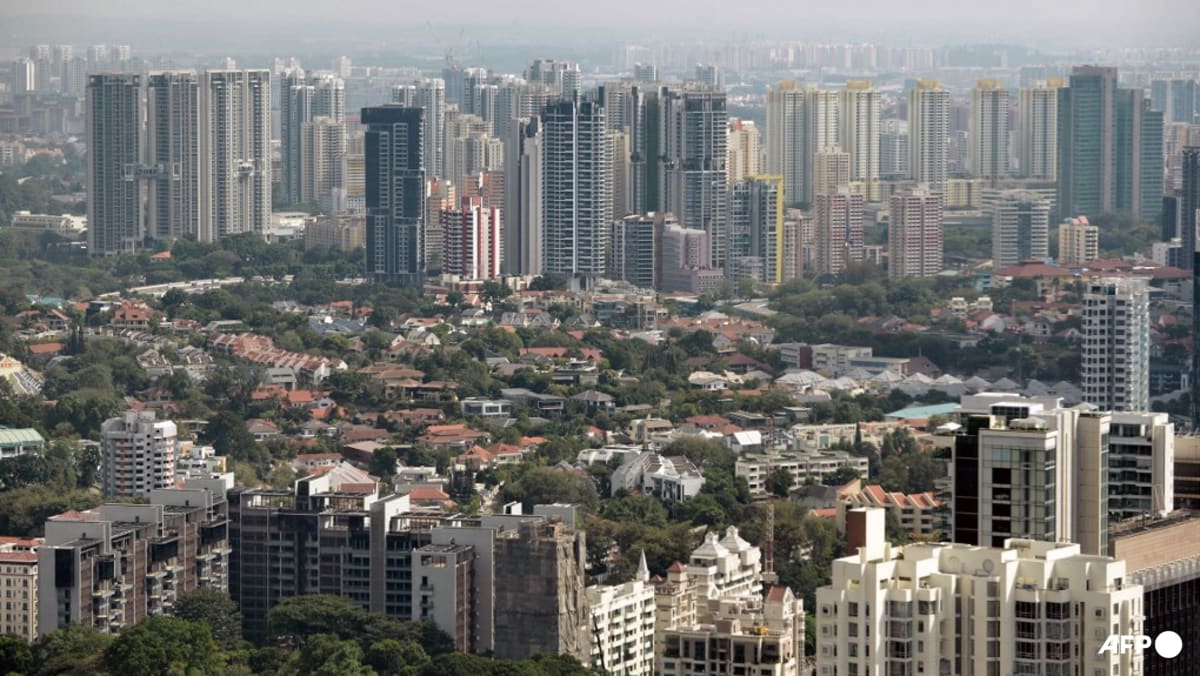
Residential housing in Singapore. (File photo: AFP/Roslan Rahman)
This audio is generated by an AI tool.
SINGAPORE: Members of Parliament (MPs) raised concerns about a shorter timeline to get signatures for a collective sale agreement and the cost of replacement homes as parliament passed a law on Tuesday (Sep 8) to lower en bloc consent thresholds for older developments.
Under the new law, the consent threshold for developments aged 40 to 59 years would be lowered from 80 per cent to 70 per cent, and from 80 per cent to 65 per cent for those aged 60 years and above.
At the same time, the legislation would tighten rules governing en bloc attempts .
The threshold to convene a general meeting to form a collective sale committee would be raised to 35 per cent of owners, measured either by share value or the number of units.
CNA Games Guess Word Crack the word, one row at a time Buzzword Create words using the given letters Mini Sudoku Tiny puzzle, mighty brain teaser Mini Crossword Small grid, big challenge Word Search Spot as many words as you can Show More Show Less That is up from the current requirement of 20 per cent of owners by share value or 25 per cent of the number of units in the development. The timeline to obtain signatures for a collective sale agreement will be halved from 12 months to six months. After a failed collective sale attempt, the restriction period will be extended from two years to three years. During that period, any fresh attempt to form a collective sale committee would be subject to the higher requisition threshold.
That is up from the current requirement of 20 per cent of owners by share value or 25 per cent of the number of units in the development.
The timeline to obtain signatures for a collective sale agreement will be halved from 12 months to six months.
After a failed collective sale attempt, the restriction period will be extended from two years to three years. During that period, any fresh attempt to form a collective sale committee would be subject to the higher requisition threshold.
The Land Titles (Strata) (Amendment) Bill builds upon previous efforts to ensure that Singapore’s framework for urban renewal remains fit for purpose - to cater for ageing developments where there is support amongst the owners for redevelopment and allow for Singapore's urban landscape to continue to renew in an orderly and sustainable way. Law Minister Edwin Tong said this in parliament on Tuesday (Sep 8), as he outlined the key features of the Bill. He pointed out that more owners will have to deal with the question of whether it is feasible or sustainable to invest in the maintenance and upkeep of their property. To support renewal, the Bill will recalibrate the consent thresholds for collective sales in older developments with two new tiers. For developments aged 40 to 59 years - a new threshold of 70 per cent, and for those aged 60 years and older - a new threshold of 65 per cent. The second set of amendments will strengthen the safeguards for non-consenting owners in three ways - raise the threshold to initiate a collective sale attempt, reduce the time period that Collective Sale Committees have to obtain signatures to the Collective Sale Agreement from 12 months to six months and extend the restriction period after a failed collective sale attempt from two years to three years. Mr Tong said the two sets of amendments form an integrated package and are meant to be taken together as a whole for balance.
In his opening speech, Minister for Law Edwin Tong said the amendments form an “integrated package” that facilitates the renewal of older developments, while providing greater certainty and also stronger protections for non-consenting owners.
“The lower consent thresholds make board-based renewal more accessible for genuinely ageing developments where there is support amongst the owners.
“At the same time, the higher initiation threshold, shorter signature window, and extended restriction period ensure that the framework cannot be used to mount repeated disruptive attempts in developments for which there is really insufficient majority support,” he said.
As buildings age, the cost of upkeep rises significantly, he added.
The estimated cost of modernising a single lift starts from S$120,000 (US$95,000), and full replacement costs between S$200,000 and S$300,000 per lift. Repainting works can cost several million in larger developments, and the cost of mandatory façade inspections, spalling concrete repairs, waterproofing and structural inspections needs to be factored in as well, he said.
“For the owners, this represents a real and growing burden. At some stage, continued investment in upkeep yields diminishing returns, and owners who wish to pursue renewal may nonetheless find themselves unable to do so under the existing framework,” he said.
Mr Tong added that the law builds on previous efforts to ensure that Singapore’s framework for urban renewal remains “fit for purpose”, and allows for Singapore's urban landscape to continue to renew itself in an “orderly and sustainable fashion”.
According to official government records, more than 360,000 private non-landed residential units are currently below 40 years, while 20,000 private non-landed residential units are above 40 years.
Urban renewal is a continuous journey, and redevelopment is a crucial pathway in ensuring that Singapore’s housing stock remains safe, modern and sustainably built, said MP Fadli Fawzi. The Land Titles (Strata) (Amendment) Bill strikes a crucial balance - giving older developments a viable mechanism to redevelopment and relieving asset-rich but cash-poor owners from crushing maintenance costs while protecting homeowners from unrelenting pressure. Speaking in parliament on Tuesday (Sep 8), he suggested ways to enhance the effectiveness of the Bill. It should be coupled with active upzoning to create additional incentives for homeowners and property developers to redevelop ageing developments and increase the availability of housing in mature estates, he said.
Several MPs raised concerns about the shortened timeline to collect signatures for a collective sale.
MP Fadli Fawzi (WP-Aljunied) said that the administrative burden on a volunteer collective sale committee is “immense”, especially in larger condominiums.
Gathering signatures involves door-to-door verification, coordinating with overseas owners, navigating complex probate matters for deceased owners and holding multiple town hall discussions to address individual anxieties, he said.
“A rigid six-month window may inevitably penalise large estates where a vast majority of owners may actually favour a sale, but where the sheer logistics may prevent the committee from reaching the final finish line in time.”
He suggested having tiered timelines based on the size of the estate, or introducing an automatic grace period extension to the signature collection period.
MP Wan Rizal (PAP-Jalan Besar) said a shorter period to collect signatures can reduce uncertainty and prolonged campaigning. But if the timeline is “too tight”, owners may feel rushed and tensions between neighbours may rise, he said.
Similarly, MP Ang Wei Neng (PAP-West Coast-Jurong West) suggested a mechanism allowing larger developments to apply for an extension where there are “genuine practical difficulties”.
“This would strike a reasonable balance: protecting non-consenting owners from unnecessary prolonged pressure, while recognising that large developments should not necessarily be treated in exactly the same way as the small ones,” he said.
In response, Mr Tong noted that the period of signature collection is usually the “most difficult” and “most polarising” phase of a collective sale exercise for all owners,
“There will be sustained uncertainty and pressure in some cases, persistent lobbying. In one example, we received feedback that information on units that had not or refused to sign the CSA (collective sale agreement) were then named on social media, on WhatsApp, chat groups, other communication groups, to try and pressure these owners into agreeing to the sale,” he said.
While this does not happen across developments, such practices tend to happen in longer signature collection periods, he said.
He added that while they had considered the merits of a differentiated signature collection period, they decided against it as size is “not necessarily the only indicator of complexity” in the context of an en bloc sale.
Mr Tong added that a significant majority of signatures are typically gathered within the first four months, or within a concentrated window of one to two months. Several large developments were also able to reach the 70 per cent threshold within six months.
This data informed how they approached the revisions, he said.
SUPPORT FOR HOMEOWNERS
Another concern raised was the cost of finding a replacement home, should a collective sale succeed.
Non-Constituency MP Andre Low (WP) said a successful collective sale could leave a household struggling to afford a move.
“For an older owner, making up the shortfall could mean drawing further on retirement savings, and a younger family with limited savings may need substantial new borrowing if it can obtain a loan at all,” he said.
He asked the government to consider requiring a standardised disclosure of the likely financial and rehousing consequences before owners sign the collective sale agreement.
Owners should be able to see indicative net proceeds based on the reserve price and apportionment method, with sale costs and relevant mortgage and CPF implications clearly explained, he said.
If parliament lowers the threshold for renewal, it must raise the standard of fairness, said MP Yip Hon Weng. He told the House on Tuesday (Sep 8) that his support for renewal rests on this central conviction. Three principles should therefore guide this framework, he said. Renewal must rest on durable consent, compensation must preserve real choices and speed must not outrun fairness, he added. This means making room for tomorrow without being careless with yesterday, renewing buildings without uprooting belonging and renewing the city without diminishing the dignity of those who make way, he added.
MP Yip Hon Weng (PAP-Yio Chu Kang) suggested that owners’ information packages should include indicative prices for comparable nearby homes, major relocation costs and the expected timetable.
While this would not guarantee replacement, it would reveal the “real cost” of starting again, he said.
MPs pointed out that elderly and vulnerable households, in particular, might require more assistance in the collective sale process.
In the face of maintenance cost pressures and a lower consent threshold for a collective sale, MP Alex Yeo (PAP-Potong Pasir) asked whether some homeowners would be left with no other choice but to accept a lower and less competitive collective sale.
He asked whether the government would consider setting up a support mechanism, particularly for senior homeowners who may require advice on their rights and relocation prospects in the collective sale process.
MP He Ting Ru (WP-Sengkang) said there may be homeowners who feel they have no housing alternatives. They may be elderly, in poor health, or vulnerable in other ways, she said.
She asked the government to clarify what specific bridging support or relocation assistance could be extended to elderly or vulnerable minority owners who did not consent to the sale, but are compelled to give up their primary home under these lower thresholds.
In parliament on Tuesday (Sep 8), Law Minister Edwin Tong responded to clarifications sought by Members on the Land Titles (Strata) (Amendment) Bill. The Bill was then passed in the House.
In response, Mr Tong said it would be useful to have a lawyer introduced into the process, as included in the 2007 amendment, to offer owners an opportunity to ask questions about legal terms, liabilities, what is outstanding on the mortgage, what they might have to incur by way of cost, and address any doubts that they might have.
If needed or necessary, the collective sale committee can already work with the appointed lawyers to make special arrangements to accommodate signing by individuals who may face mobility issues or require additional assistance.
The requirement of a physical presence of a lawyer only applies when the collective sale agreement is signed in Singapore, not when it is signed overseas, he added.
Mr Tong added that information on the collective sale process is available on the Strata Titles Board (STB) website.
Owners can also tap into legal support resources available to members of the public, including from Pro Bono SG's community legal clinics.
“We will work with STB to enhance the relevant information after these amendments are introduced, as well as the guides that are available on the collective sale process, so that … those who are affected by the collective sales will be better informed,” he said.
Collective sale committees must also provide a preface to the collective sale agreement, which states the clause numbers and page numbers where key information can be found, including the apportionment method for the proceeds of sale.
That perhaps is the most important information for a seller, as well as the fees payable to parties involved in handling the collective sales, such as lawyers, professional agents, and others, said Mr Tong.
Under the new law, the limit on court-ordered increases to the sale proceeds paid to objectors will be raised from 0.25 per cent to 0.5 per cent of the sale proceeds for each lot or flat, or S$2,000 for each lot or flat, whichever is higher.
This increases the pool of proceeds available to be awarded to non-consenting owners.
The amendments would also extend the collective sale regime to non-strata-titled private residential developments where flat owners hold long leases over their units but do not own the underlying land.
Such developments require unanimous agreement between flat owners and landowners before they can be sold. Under the new framework, they could instead proceed with a majority-consent sale, with safeguards to protect landowners' interests.
Currently, they can only undergo collective sale by majority consent if the flat owners own flat leases of at least 850 years.
Most of the amendments would apply to ongoing en bloc exercises where the first signature to the collective sale agreement has not been obtained before the law comes into force.
In estates where the first signature has already been obtained, the ministry said the rules will continue to apply.
However, committees that are still collecting signatures will be allowed to convene general meetings to decide whether to terminate the agreement, and if so, to approve terms for a new agreement that will be subject to the new rules.
Such collective sale committees will be given seven months from the start date to meet the required consent threshold for the new agreement.
Get our pick of top stories and thought-provoking articles in your inbox
Stay updated with notifications for breaking news and our best stories
Join our channel for the top reads for the day on your preferred chat app
议员们在辩论中还提到了更换成本和对老年居民的支持。
新加坡的住宅。 (资料图:法新社/罗斯兰·拉赫曼)
这段音频由人工智能工具生成。
新加坡:周二(9月8日),国会通过一项法律,降低老旧住宅整体出售的同意门槛。国会议员们对此表示担忧,认为集体出售协议的签署时间缩短,以及重建房屋的成本问题。
根据新法律,40 至 59 年房龄的开发项目的同意门槛将从 80% 降至 70%,60 岁及以上房龄的开发项目的同意门槛将从 80% 降至 65%。
与此同时,该立法将收紧对整体收购尝试的监管规则。
召开股东大会成立集体出售委员会的门槛将提高到股东总数的 35%,股东总数可以按股份价值或单位数量计算。
CNA游戏 猜词游戏 逐行破解单词 流行词游戏 用给定的字母组成单词 迷你数独 小谜题,脑力挑战 迷你填字游戏 小方格,大挑战 单词搜索 尽可能多地找出单词 显示更多 显示更少 这比目前要求的20%(按股份价值计算)或25%(开发项目中的单元数量)的要求有所提高。集体出售协议的签署时间将从12个月缩短至6个月。集体出售尝试失败后,限制期将从两年延长至三年。在此期间,任何组建集体出售委员会的新尝试都将受到更高要求的约束。
这比目前要求的持股比例(按股份价值计算)为 20%,或开发项目中单元总数的 25% 有所提高。
集体出售协议的签署期限将从 12 个月缩短至 6 个月。
集体出售尝试失败后,限制期将从两年延长至三年。在此期间,任何再次尝试组建集体出售委员会的请求都将受到更高门槛的限制。
《土地所有权(分层地契)(修正)法案》旨在巩固新加坡的城市更新框架,使其继续有效运作,以满足老旧物业业主对重建的支持,并使新加坡的城市景观能够以有序且可持续的方式持续更新。律政部长唐振辉周二(9月8日)在国会概述该法案的主要内容时表示,更多业主将不得不考虑投资维护和保养其物业是否可行或可持续。为支持更新,该法案将重新调整老旧物业集体出售的同意门槛,设立两个新的等级。对于房龄在40至59年之间的物业,新的门槛为70%;对于房龄在60年及以上的物业,新的门槛为65%。第二套修正案将从三个方面加强对非同意业主的保障:提高启动集体出售的门槛;将集体出售委员会获得集体出售协议签署的期限从12个月缩短至6个月;以及将集体出售失败后的限制期从两年延长至三年。唐先生表示,这两套修正案构成一个整体,应统筹考虑以求平衡。
律政部长唐振辉在开幕致辞中表示,这些修正案构成了一个“综合方案”,既有利于旧楼盘的翻新,又能为不同意的业主提供更大的确定性和更强的保护。
“较低的同意门槛使得基于董事会的更新更容易被真正老化的开发项目所接受,前提是业主们对此表示支持。
“与此同时,更高的发起门槛、更短的签名窗口和更长的限制期确保了该框架不能被用来在缺乏足够多数支持的发展项目中发起反复的破坏性尝试,”他说。
他还补充说,随着建筑物老化,维护成本会大幅上升。
现代化改造一台电梯的预估成本起价为12万新元(约合9.5万美元),而彻底更换一台电梯的成本则在20万至30万新元之间。他表示,在大型开发项目中,重新粉刷的费用可能高达数百万新元,此外,还需将强制性外墙检查、混凝土剥落修复、防水和结构检查的成本考虑在内。
“对业主而言,这确实是一个日益沉重的负担。在某个阶段,持续的维护投入带来的回报会递减,而那些希望进行翻新的业主可能会发现,在现有的框架下,他们根本无法做到这一点,”他说道。
唐先生补充说,该法律建立在以往的努力之上,以确保新加坡的城市更新框架保持“符合目的”,并允许新加坡的城市景观以“有序和可持续的方式”继续自我更新。
根据官方政府记录,目前有超过 36 万套私人非有地住宅的房龄低于 40 年,而有 2 万套私人非有地住宅的房龄高于 40 年。
新加坡国会议员法德利·法兹表示,城市更新是一个持续的过程,而重建是确保新加坡住房安全、现代化和可持续建设的关键途径。《土地所有权(分层地契)(修正)法案》在各方面取得了重要的平衡——既为老旧楼盘的重建提供了可行的机制,又减轻了资产雄厚但现金短缺的业主的巨额维护成本,同时保护了业主免受持续不断的压力。周二(9月8日),他在国会发言时提出了增强该法案效力的建议。他表示,该法案应与积极的土地用途变更政策相结合,从而为业主和房地产开发商重建老旧楼盘创造更多激励,并增加成熟社区的住房供应。
多位议员对集体出售签名征集时间过短表示担忧。
国会议员法德利·法兹(工人党-阿裕尼)表示,志愿者集体出售委员会的行政负担“非常沉重”,尤其是在大型公寓中。
他说,收集签名需要挨家挨户核实,与海外业主协调,处理已故业主复杂的遗嘱认证事宜,并举行多次市政厅会议以解决个人的担忧。
“严格的六个月期限可能会对大型庄园造成不利影响,因为绝大多数业主可能实际上都赞成出售,但繁琐的后勤工作可能会使委员会无法及时完成最终的出售程序。”
他建议根据遗产规模制定分级时间表,或者引入自动宽限期,延长签名收集期限。
国会议员旺·里扎尔(人民行动党-惹兰勿刹选区)表示,缩短签名征集时间可以减少不确定性,避免旷日持久的宣传活动。但他同时指出,如果时间“过于紧迫”,业主可能会感到仓促,邻里关系也可能因此紧张。
同样,国会议员洪伟能(人民行动党西海岸-裕廊西选区)建议建立一种机制,允许规模较大的开发项目在遇到“真正的实际困难”时申请延期。
他说:“这将取得合理的平衡:既保护不同意的业主免受不必要的长期压力,又承认大型开发项目不一定应该与小型开发项目采取完全相同的方式对待。”
对此,唐先生指出,对于所有业主而言,签名收集阶段通常是集体出售过程中“最困难”和“最具争议性”的阶段。
他说:“在某些情况下,将持续存在不确定性和压力,还会有持续不断的游说活动。例如,我们收到反馈,一些未签署或拒绝签署集体出售协议(CSA)的单元房信息随后被发布到社交媒体、WhatsApp、聊天群组和其他通讯群组中,试图以此向这些业主施压,迫使他们同意出售。”
他说,虽然这种情况并非在所有开发项目中都会发生,但这种做法往往会在较长的签名收集期内出现。
他还补充说,虽然他们考虑过分批收集签名的利弊,但他们最终决定不这样做,因为在整体出售的情况下,规模“不一定是复杂性的唯一指标”。
唐先生补充说,绝大多数签名通常在最初四个月内收集完毕,或者集中在一到两个月内完成。一些大型开发项目甚至在六个月内就达到了70%的签名门槛。
他说,这些数据为他们如何进行修订提供了依据。
对房主的支持
另一个令人担忧的问题是,如果集体出售成功,寻找替代住房的成本是多少。
非选区议员安德烈·罗(工人党)表示,成功的集体出售可能会让一些家庭难以负担搬家费用。
他说:“对于年纪较大的业主来说,弥补资金缺口可能意味着要进一步动用退休储蓄;而对于储蓄有限的年轻家庭来说,如果能够获得贷款,则可能需要大量新的借款。”
他要求政府考虑要求业主在签署集体出售协议之前,对可能产生的财务和重新安置后果进行标准化披露。
他表示,业主应该能够根据底价和分配方法看到指示性的净收益,并且销售成本以及相关的抵押贷款和公积金影响也应该得到清楚地解释。
议员叶汉荣表示,如果议会降低更新门槛,就必须提高公平标准。他周二(9月8日)在议会表示,他支持更新正是基于这一核心信念。他指出,因此,这一框架应遵循三项原则:更新必须建立在持久共识之上;补偿必须保障真正的选择权;速度不能凌驾于公平之上。他补充说,这意味着既要为未来腾出空间,又不能忽视过去;既要更新建筑,又不能剥夺居民的归属感;既要更新城市,又不能损害那些让路者的尊严。
议员叶汉荣(人民行动党-义顺)建议,业主资料包应包括附近类似房屋的参考价格、主要搬迁费用和预计时间表。
他表示,虽然这并不能保证一定能得到补偿,但会揭示重新开始的“真正成本”。
议员们指出,老年人和弱势家庭尤其需要在集体出售过程中获得更多帮助。
面对维护成本压力和集体出售同意门槛降低的问题,国会议员杨耀祥(人民行动党-波东巴西)质疑,一些业主是否别无选择,只能接受价格更低、竞争力更弱的集体出售。
他询问政府是否会考虑设立支持机制,特别是针对可能需要在集体出售过程中获得有关自身权利和搬迁前景建议的老年业主。
国会议员何婷茹(工人党-盛港)表示,可能有些业主感到自己别无选择。她说,他们可能是年老体弱者,或在其他方面较为弱势。
她要求政府澄清,对于不同意出售房产但又被迫根据这些较低的门槛放弃主要住所的老年人或弱势少数族裔业主,可以向他们提供哪些具体的过渡性支持或搬迁援助。
周二(9月8日),律政部长唐振辉在国会回应了议员们就《土地所有权(分层地契)(修正)法案》提出的澄清要求。该法案随后在国会获得通过。
对此,Tong 先生表示,根据 2007 年的修正案,引入律师参与这一过程将很有帮助,以便让业主有机会询问有关法律条款、责任、抵押贷款未偿还金额、他们可能需要承担的费用等问题,并解答他们可能存在的任何疑问。
如有需要,集体出售委员会可以与指定的律师合作,做出特殊安排,以便行动不便或需要额外帮助的个人能够顺利签署文件。
他补充说,只有在新加坡签署集体出售协议时才要求律师必须亲自到场,在海外签署时则不需要。
唐先生补充说,有关集体出售流程的信息可在分层地契委员会(STB)网站上查阅。
业主还可以利用面向公众的法律支持资源,包括来自 Pro Bono SG 的社区法律诊所。
他说:“我们将与新加坡旅游局合作,在这些修正案出台后,加强相关信息以及集体出售流程指南,以便……受集体出售影响的人们能够更好地了解情况。”
集体出售委员会还必须提供集体出售协议的前言,其中列明关键信息的条款编号和页码,包括出售所得款项的分配方法。
童先生表示,这或许是卖家最重要的信息,以及支付给参与集体出售的各方(如律师、专业代理人等)的费用。
根据新法律,法院命令增加支付给反对者的销售收益的上限将从每套公寓或单位销售收益的 0.25% 提高到 0.5%,或每套公寓或单位 2,000 新元,以较高者为准。
这样就增加了可用于奖励不同意出售房产的所有者的收益池。
这些修正案还将把集体出售制度扩展到非分层产权的私人住宅开发项目,在这些项目中,公寓业主拥有其单元的长期租赁权,但不拥有底层土地的所有权。
此类开发项目在出售前需要公寓业主和土地所有者一致同意。在新框架下,他们可以改为以多数同意的方式出售,并采取保障措施保护土地所有者的利益。
目前,只有当公寓业主拥有至少 850 年的公寓租赁权时,才能通过多数业主同意进行集体出售。
大多数修正案将适用于正在进行的集体出售行动,即在法律生效之前尚未获得集体出售协议的第一份签字。
该部表示,对于已经获得第一笔签字的房产,相关规定将继续适用。
然而,仍在收集签名的委员会将被允许召开全体会议,以决定是否终止该协议,如果终止,则批准一项受新规则约束的新协议的条款。
此类集体出售委员会将从生效日期起有七个月的时间来达到新协议所需的同意门槛。
订阅我们的邮件,即可获取精选热门新闻和引人深思的文章。
订阅通知,第一时间获取突发新闻和精彩报道。
加入我们的频道,即可在您常用的聊天应用上获取当日热门文章。