Naval Group charges rival ThyssenKrupp with selling out submarine tech法国海军集团指责竞争对手蒂森克虏伯出卖潜艇技术
TKMS denied careless sharing of submarine technology with would-be competitors, as European shipbuilders scramble for contracts worldwide.
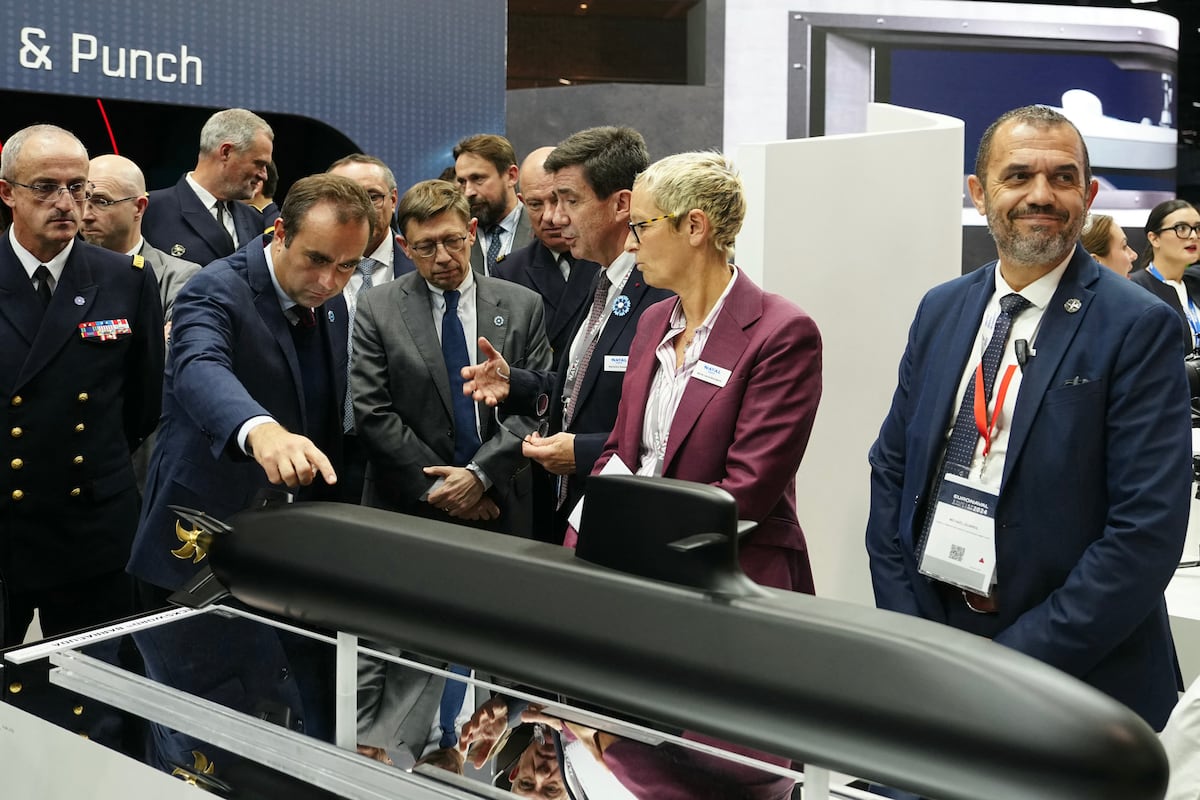
PARIS — France’s Naval Group has criticized Germany’s ThyssenKrupp Marine Systems for hurting European submarine vendors by transferring technology to countries that later managed to build their own boats for export.
TKMS “are champions at creating new competitors,” Guillaume Rochard, Naval Group’s head of strategy, partnerships and mergers, said at a round table in Paris to discuss France’s defense-industrial base earlier this month. “They’ve made extremely significant technology transfers to Turkey and Korea, two nations that are now in the submarine export market.”
Naval Group and TKMS regularly face off on submarine contracts, and Rochard described the German firm as his company’s main competitor in conventional submarines. The executive said Naval Group is “very careful” regarding transfer of technology in order to not create or intensify competition, an approach he contrasted with that of TKMS.
TKMS denied careless sharing of submarine tech, in an emailed response to Defense News, saying the company “sets the benchmark for responsible technology transfer” in the naval industry.
The Germany company said in addition to securing its intellectual property, all sales are set up for customers to “commission and operate our products for any naval mission they need to perform and execute to defend their country.”
The company said it couldn’t comment on specific projects due to their classified nature.
The company’s naval industry mission “is well defined in the respective export control regulation on which each and every form of technology transfer is based upon,” the company said. “We at thyssenKrupp Marine Systems are always acting in full compliance with that.”
ThyssenKrupp won an order from Turkey in 2009 for six submarines with an air-independent propulsion system based on the company’s HDW fuel cell technology, to be built by Gölçük Naval Shipyards near Izmit. The first boat in the resulting Reis-class submarines entered service in August 2024. Turkey last month announced the start of construction of its first locally developed submarine, putting the country on track to become self-sufficient in the technology .
France’s armaments directorate DGA will intervene on export deals to keep critical skills in the country, said Alexandre Lahousse, head of the defense industry directorate within DGA, during the round table talk in Paris. The official said export clients are demanding increasingly large offsets and greater degrees of program sharing in exchange for contracts.
“How do we ensure that what was a few percent before and now becomes large chunks, does not go against our defense industrial policy?” Lahousse said. “That’s a matter of dialogue with industry, but we also have flexible and lively discussions with international directorate colleagues to find a balance, which is that all critical skills, we will try to keep, those will be more like red lines.”
Lahousse added: “So we are going to restrict your freedoms a little more in this area, but it’s for a good cause, it’s so that we can maintain our strategic autonomy.”
ThyssenKrupp provided the design and major components for the Class 214 submarines for South Korea, built by Hyundai Heavy Industries and Hanwha Ocean, with the first two boats commissioned in 2008.
Rudy Ruitenberg is a Europe correspondent for Defense News. He started his career at Bloomberg News and has experience reporting on technology, commodity markets and politics.
巴黎——法国海军集团批评德国蒂森克虏伯海洋系统公司向欧洲潜艇供应商转让技术,导致一些国家后来能够建造自己的潜艇进行出口,从而损害了欧洲潜艇供应商的利益。
海军集团战略、合作与并购负责人纪尧姆·罗查尔本月初在巴黎举行的一次讨论法国国防工业基础的圆桌会议上表示,TKMS“是打造新竞争对手的佼佼者”。“他们已向土耳其和韩国进行了极其重要的技术转让,这两个国家现在都已进入潜艇出口市场。”
法国海军集团和TKMS公司经常在潜艇合同上展开竞争,罗查德称这家德国公司是其公司在常规潜艇领域的主要竞争对手。这位高管表示,法国海军集团在技术转让方面“非常谨慎”,以避免引发或加剧竞争,他将这种做法与TKMS的做法进行了对比。
TKMS 在回复《防务新闻》的电子邮件中否认了不负责任地分享潜艇技术的说法,称该公司“为海军工业的负责任技术转让树立了标杆”。
这家德国公司表示,除了确保其知识产权外,所有销售都旨在让客户“委托和操作我们的产品,以执行和完成他们为保卫国家而需要的任何海军任务”。
该公司表示,由于项目涉及机密信息,因此无法对具体项目发表评论。
该公司表示,其在海军工业领域的使命“在相关的出口管制法规中已有明确规定,每一种技术转让形式都以此为基础”。“蒂森克虏伯海事系统始终完全遵守这些法规。”
蒂森克虏伯公司于2009年赢得土耳其订单,将为土耳其建造六艘采用基于该公司HDW燃料电池技术的不依赖空气推进系统的潜艇,这些潜艇将由位于伊兹密特附近的格尔丘克海军造船厂建造。首艘“赖斯”级潜艇于2024年8月服役。土耳其上个月宣布启动其首艘自主研发潜艇的建造,这将使土耳其走上实现该技术自主化的道路。
法国国防装备总局(DGA)国防工业局局长亚历山大·拉乌斯在巴黎举行的圆桌会议上表示,DGA将介入出口交易,以确保关键技术人才留在法国。这位官员指出,出口客户要求以越来越大的补偿措施和更高程度的项目共享作为合同交换条件。
拉胡斯说:“我们如何确保以前只占几个百分点、现在却占很大比例的产业不会违背我们的国防工业政策?这需要与业界对话,但我们也与国际事务部门的同事进行灵活而积极的讨论,以寻求平衡,那就是所有关键技能,我们将努力保留,这些技能将更像是我们的底线。”
拉胡斯补充道:“因此,我们将在这一领域进一步限制你们的自由,但这是为了一个好的理由,是为了维护我们的战略自主权。”
蒂森克虏伯为韩国的 214 型潜艇提供了设计和主要部件,这些潜艇由现代重工和韩华海洋建造,前两艘潜艇于 2008 年服役。
鲁迪·鲁伊滕贝格是《防务新闻》的欧洲记者。他的职业生涯始于彭博新闻社,拥有报道科技、大宗商品市场和政治方面的经验。