EU leaders green-light massive European rearmament Plan欧盟领导人批准大规模欧洲重新武装计划
The spending plan is explicitly designed to decouple from a reliance on America for weapons and security over time.
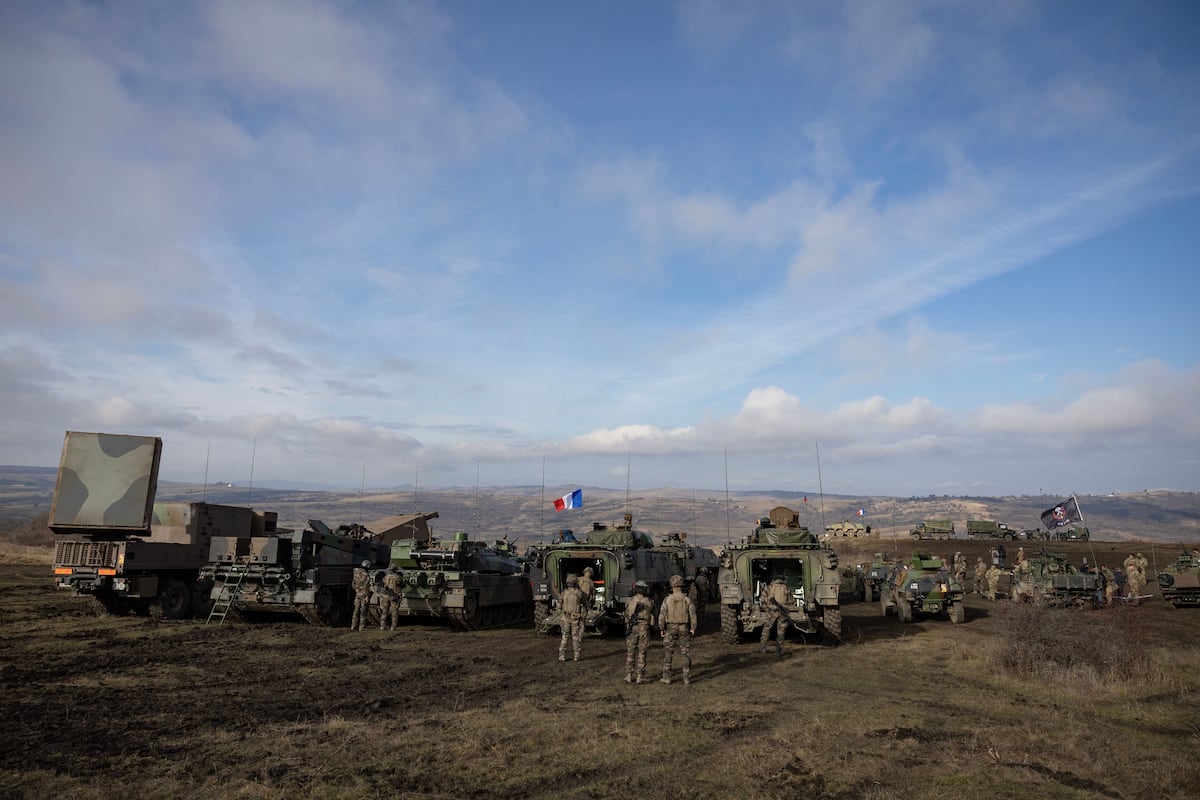
THE HAGUE, Netherlands — European Union leaders have wrapped up a busy week for defense, endorsing a landmark plan Thursday to unlock a combined €800 billion ($866 billion) in European military spending, though some political fissures became visible.
The bloc hopes to mark a watershed moment in the continent’s history in the face of Russia’s war against Ukraine, seen by many here as an opening move to grander territorial aspirations, and a feared abandonment by the United States under President Trump.
The spending plan is explicitly designed to decouple from a reliance on America for weapons and security, with Commission President Ursula von der Leyen saying that Europe “must buy more European” and strengthen the European defense technological and industrial base. It also focuses on joint procurement, a growing trend throughout the continent that promises to bind the countries together even tighter. Under the plan, joint procurement will also be open to Ukraine and other countries in the EU’s sphere of influence.
There remained some haggling around specifics.
Spain would like to include cybersecurity and climate change mitigation in the definition of “defense,” for instance, which top EU officials have rejected as “defense-washing.”
And Italy, long a proponent of common loans and buying European, suddenly flip-flopped on those positions, now calling into question the EU plans, seemingly with a worry for giving the EU more power that had previously been reserved for national governments.
Hungary, meanwhile, stuck to its stated position of “weapons for Europe yes, weapons for other countries no” – a reflection of Budapest’s distaste for Ukraine military aid.
While the mood of a newfound sense of self-assuredness remained, progress particularly on support for Ukraine somewhat faltered as old divisions within the bloc reared their heads.
Front and center of those hitting the brakes were the usual suspects of Hungary and Slovakia, whose Russia-friendly governments have often threatened to block European support for Ukraine or new sanctions against Moscow. As had already been the case at an emergency summit earlier this month, precipitated by the disastrous White House meeting between Ukrainian president Zelensky and U.S. president Trump, the EU fell just short of consensus on underscoring its continued support for Ukraine.
Only Hungary refused to sign onto the joint declaration promising Europe’s continued commitment to providing military and financial aid to Ukraine.
An EU plan to mobilize €40 billion in additional support for Ukraine appeared unworkable, and even a downsized €5 billion version focusing exclusively on artillery shells seemed on life support going into Friday. European diplomats lamented that the initiative had been botched by not consulting with the relevant stakeholders early on, with France – the union’s preeminent military power – hesitant to support the initiative.
To date, the EU has provided €139.2 billion to Ukraine, including €49.3 billion in military support.
Despite the stumbling stones, the EU has been moving at lightning speed – at least by Brussels standards – to fill the power vacuum left by a United States in retreat and has shown remarkable unity in doing so.
“What has changed … is the new sense of urgency. Because something fundamental has shifted,” Commission President Ursula von der Leyen told reporters in Brussels earlier this month. “Our European values – democracy, freedom, and the rule of law – are under threat.”
Linus Höller is Defense News' Europe correspondent and OSINT investigator. He reports on the arms deals, sanctions, and geopolitics shaping Europe and the world. He holds master’s degrees in WMD nonproliferation, terrorism studies, and international relations, and works in four languages: English, German, Russian, and Spanish.
荷兰海牙——欧盟领导人结束了忙碌的一周国防事务,周四批准了一项具有里程碑意义的计划,该计划将释放总计 8000 亿欧元(8660 亿美元)的欧洲军事开支,尽管一些政治裂痕也显现出来。
面对俄罗斯对乌克兰的战争,该集团希望在非洲大陆历史上留下一个分水岭时刻。许多人认为,这场战争是俄罗斯迈向更大领土野心的开端,也是特朗普总统领导下的美国令人担忧的抛弃。
该支出计划明确旨在摆脱对美国在武器和安全方面的依赖。欧盟委员会主席乌尔苏拉·冯德莱恩表示,欧洲“必须购买更多欧洲产品”,并加强欧洲国防技术和工业基础。该计划还着重强调联合采购,这在欧洲大陆正日益成为一种趋势,有望进一步加强各国之间的联系。根据该计划,乌克兰和欧盟势力范围内的其他国家也将参与联合采购。
双方在一些具体细节上仍存在一些讨价还价。
例如,西班牙希望将网络安全和气候变化减缓纳入“国防”的定义,但欧盟高级官员拒绝了这一提议,称其为“国防洗白”。
意大利长期以来一直支持共同贷款和购买欧洲产品,但现在却突然改变了立场,开始质疑欧盟的计划,似乎担心赋予欧盟更多以前只属于各国政府的权力。
与此同时,匈牙利坚持其“向欧洲提供武器,向其他国家提供武器,不提供”的既定立场——这反映了布达佩斯对乌克兰军事援助的反感。
尽管一种新获得的自信情绪依然存在,但随着集团内部旧有的分歧再次浮现,尤其是在支持乌克兰方面,进展有所停滞。
率先踩下刹车的,正是匈牙利和斯洛伐克这两个老生常谈的“嫌疑国”。这两个亲俄政府曾多次威胁要阻止欧洲对乌克兰的支持,或阻止对莫斯科实施新的制裁。正如本月初因乌克兰总统泽连斯基与美国总统特朗普在白宫会晤失败而引发的紧急峰会上的情况一样,欧盟在强调其对乌克兰的持续支持方面,未能达成共识。
只有匈牙利拒绝签署这份联合声明,该声明承诺欧洲将继续向乌克兰提供军事和财政援助。
欧盟一项旨在为乌克兰额外提供400亿欧元援助的计划似乎行不通,即使是规模缩减至50亿欧元、专门用于提供炮弹的方案,截至周五也岌岌可危。欧洲外交官们感叹,这项倡议由于未能及早与相关利益攸关方进行磋商而失败,而作为欧盟头号军事强国的法国也对支持该倡议犹豫不决。
迄今为止,欧盟已向乌克兰提供了 1392 亿欧元,其中包括 493 亿欧元的军事援助。
尽管困难重重,欧盟仍在以闪电般的速度——至少以布鲁塞尔的标准来看——填补美国撤退后留下的权力真空,并在这一过程中展现出非凡的团结。
“改变的是……一种新的紧迫感。因为一些根本性的事情已经发生了转变,”欧盟委员会主席乌尔苏拉·冯德莱恩本月初在布鲁塞尔对记者说。“我们的欧洲价值观——民主、自由和法治——正受到威胁。”
林努斯·霍勒是《防务新闻》的欧洲记者和开源情报调查员。他报道影响欧洲乃至全球的军火交易、制裁和地缘政治。他拥有大规模杀伤性武器不扩散、恐怖主义研究和国际关系三个硕士学位,并精通英语、德语、俄语和西班牙语四种语言。