USAF Commander Who Fired First Female Demo Team Leader Talks Mistakes, Redemption, And Leadership解雇首位女性爆破队队长的美国空军指挥官谈错误、救赎和领导力
Long before removing F-16 pilot Zoe Kotnik from her post, Colonel O'Malley faced his own controversy and he's finally ready to talk about it publicly.
新闻视频
Updated Dec 1, 2019 6:35 AM EST
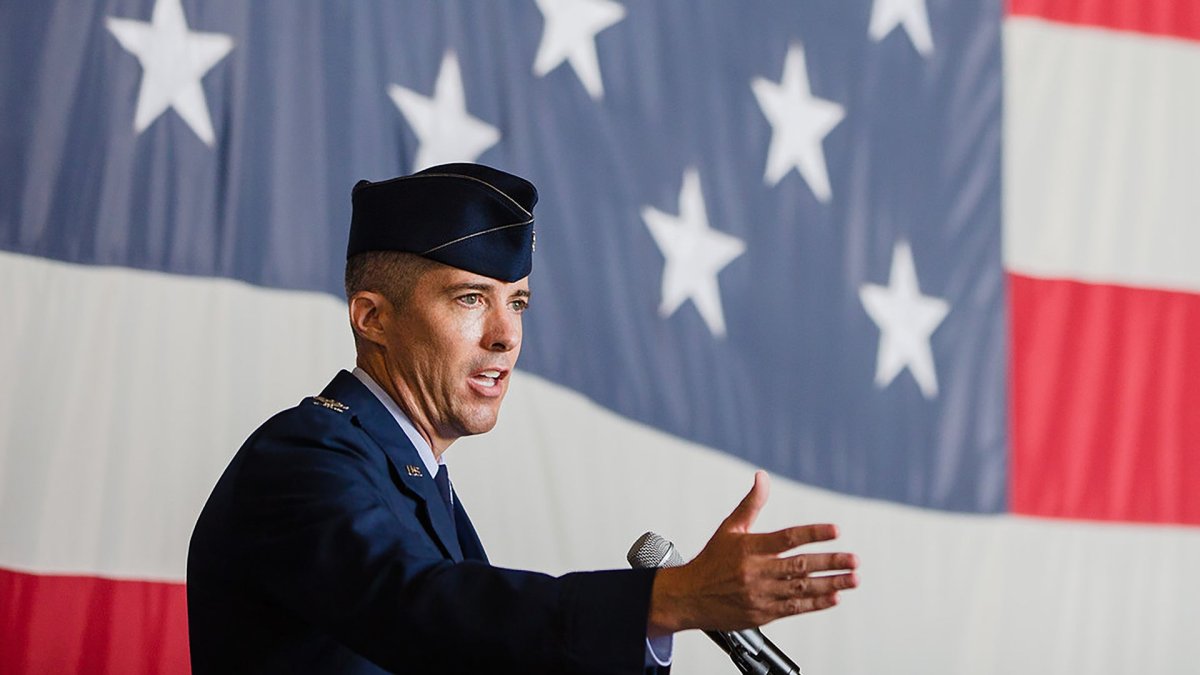
Derek “Maestro” O’Malley was a young fighter pilot rising quickly in the ranks when he decided to make a particularly crass gag video. What came next was nothing he ever imagined. All that he had worked for was suddenly at stake. But the Air Force gave him another chance, one that he ran with and has since achieved incredible heights of success, becoming the wing commander of the prestigious 20th Fighter Wing based at Shaw Air Force Base. Then, just days ago, it was his turn to make a disciplinary decision just like his superiors had in regards to his mistake a decade and a half ago. This one would be far more publicized. Now Colonel O’Malley relieved the first female demonstration team leader the Air Force ever had, Captain Zoe Kotnik , after just two weeks on duty. His decision made international headlines and the details surrounding it are still shrouded in secrecy.
After the video he created years ago, which is infamous in the fighter pilot community, was published on this site in relation to the ongoing story about the dismissal of Zoe Kotnik, O’Malley made the decision to reach out to us to share his story publically for the first time. And an amazing and intimate one it is. It speaks to the failings in all of us and how it’s not necessarily how you fail, but how you redeem yourself and use your experiences, no matter how unpleasant, to become a better person and a more thoughtful leader.
Judging by his responses alone, we need more people like O’Malley in the top echelons of the USAF’s leadership, ones who have learned to see the potential in people even when it is highly inconvenient to do so. For a force that is struggling to retain personnel, including pilots and maintainers —those who are absolutely critical to its core mission—giving people a second shot when it is possible to do so is really a necessity not a luxury.
So, without further ado, here is my remarkable interview with the colorful commander of the 20th Fighter Wing:
Can you tell us the entire story of how this video came about?
I’ll start early just to give you context. I have an identical twin brother. His name is Colin O’Malley and he and I are very right-brained, creative people, we’ve got a very active sense of humor. In high school, I was the student body president, he was the vice president and we had our own “Colin and Derek O’Show” and we would do funny videos, so comedic videos and having a sense of humor, is something that’s been a big part of our lives. My brother is a professional composer and musician, he’s actually an orchestrator, Yanni’s primary orchestrator… He does a lot of work for Disney and television, so he’s very successful. He writes a lot of jingles as well
The O’Malley brothers, identical twins! One a composer and orchestrator, the other one of the USAF’s top fighter pilots. Colonel O’Malley describes his close relationship with his brother and how they share in each other’s professional lives in creative ways: “Colin is three minutes older than I am. He was just here last week for our 20th Fighter Wing annual awards party. I put him in a flight suit and we did the “transported man” illusion in front of the entire Wing. I walked out a door on one side of the hanger and he walked in from another cross the hangar—creating the illusion that I transported. We blew people’s minds.”, Image Courtesy of Derek O’Malley
With that background, I am now many years later, a young fighter pilot, a young captain in Kunsan Air Base, Korea. That’s a one-year remote assignment, so you’re there without your family in a very remote location. It’s a lot of fun, but it’s a very different environment.
In Korea, of course, it’s very humid and it’s a very high operations tempo, so we’re flying a lot . There’s a lot of big exercises as you’re practicing being in a high state of readiness in case something happens in Korea, and as we fly out over the Yellow Sea, we have to wear anti-exposure suits. And these are, you know, effectively dry suits. And they’re very hot.
When you’re flying you’re okay, but you can imagine wearing these in the hot summer in Korea? So, Gold Bond powder is a primary product.
One day I’m talking to some of my fellow fighter pilots and we’re joking about Gold Bond, I just started talking to them—”Hey we should do a little commercial.” As the Chief of Weapons and Tactics—I was the chief instructor in the squadron—I’m in charge of all the upgrades and making sure everybody is the best they can be, I’ve been through our equivalent of Topgun to the Air Force, the U.S. Air Force Weapons School. So, I’m in a very prominent role there in the squadron to lead these fighter pilots.
When your weapons officer says “Hey let’s make a commercial” everybody jumps says “Yeah that sounds like a great idea.” So, I told my brother about Gold Bond, and he came up with the jingle that you hear in the video, which is very catchy. And that’s him singing on there, so he composes that and sends it to me there in Korea, and I play it for everybody and it’s a big hit.
That morning, Saturday morning, I get everybody up and we’re there in our dorms, and we filmed the little commercial that you saw. In every fighter squadron on Fridays, you usually get together and you’ll tell stories about flying from the week. Mistakes people made, funny stories, those kinds of things, and then we’d show funny things like the Gold Bond video. I showed the video, it was a big hit, everybody laughed, and then that’s the end of it, it was not ever intended to go anywhere else of course.
This is pretty much pre-YouTube at that time right?
It is. I think YouTube was just emerging, but certainly, the notion of a viral video is not a term that any of us had heard yet. This is late 2004 timeframe. Eventually, this video gets in the hand of our rival squadron and they start sending it to each other. And then it gets emailed all across the base and then very quickly gets emailed all across the Air Force, and quickly spreads. You know, it becomes truly a viral video.
I was actually traveling home, it was around December time frame, going home for Christmas. You get a mid-tour when you’re there in Korea to go home, and as I’m walking through the airport somewhere in the United States, I see on somebody’s laptop the video playing .
And I remember looking at the guy I was traveling with saying “Uh-oh, I think I might be in trouble.” Because we just had no idea that the video would go outside the squadron. And now here I am, across the world, and it’s on somebody’s laptop! So, at that point, I got the sense of how big of an issue this was.
Of course, you’ve seen it, it doesn’t represent the Air Force the way I want to represent the Air Force, it doesn’t represent me the way I want to represent myself. As they should have, the Air Force looked into it, they weren’t happy with the video, and I definitely got in some trouble. I won’t go specifically into the punishment that I received, but I definitely got in trouble, to the point where I had to work hard to recover.
I remember when I was called into the Wing Commander’s office, there to receive my punishment. I looked at him said “Sir I’m so sorry, this is totally my fault. Please don’t punish all the other guys that were in this. They followed their Weapons Officer into this, so please just let me take the brunt of it.” And for the most part, that’s what happened. I was grateful that they let me own that.
A picture from Maestro’s earlier days of flying F-16s., Colin O’Malley
After my one-year assignment in Korea I’d been invited to go teach at our Weapons School, which is very prestigious—our F-16 Weapons School. Weapons School is the Air Force’s version of Topgun where you graduate you get the trophy and you get invited back as an instructor. That is what I had been given the opportunity to do. Once this video broke, the Air Force was considering changing my assignment and was really looking hard at what they were going to do with me. Fortunately, they ended up letting me go to Nellis, to the Weapons School to be an instructor.
When I got to Nellis, my Wing Commander pulled me aside and said “You know Maestro, if you work hard, you’re going to be able to redeem yourself from this. So, just put your nose to the ground and get to work and be the best instructor officer you can be, and we’re going to put all this behind you.” And I really appreciated that, and I took him at his word, and I worked really hard at the Weapons School, won many awards there as a top instructor, used a lot of my video skills for the forces of good—I did a lot of videos for the Air Force and for the Weapons School that to this day are still used there.
I just tried to really prove to the Air Force that this was not who I was and that I was willing to do what I had to do to make things right.
I remember during all this, I would get a lot of emails from people that were angry about the video and I didn’t blame them. I remember one, in particular, was from a commandant of cadets at an ROTC detachment at a college and he wrote me on my government email and said “If this is the Derek O’Malley that did this video, you just took us back 30 years. Please keep this junk off the internet, you’re really shaming the Air Force, shame on you.” That was an eye-opening email to me, so I wrote him back and I still have the email to this day. It’s something I read, and I remember when I shared this with my squadron at a commander’s call I read the letter to them. Not only what he had said, but my response to him.
I explained “I lead men and women in combat, I’m a Weapons Officer, I have a Distinguished Flying Cross, I’ve done all these things, and I should’ve known better. Maybe it is easier to dismiss me as an officership failure. And I don’t blame you if you do. Fortunately, the men and women I’ve led into combat, and now lead recognize that good people, even great people, make mistakes. Maybe that’s the best lesson for your cadets. Regardless of our intentions with this video, I take full responsibility.”
He wrote me back and thanked me and shared the message with his cadets. It’s been a memorable lesson for me. It’s shaped the way I handle command, and the way I handle Airmen that make mistakes under my command.
Next, I was selected to the F-35 initial cadre. At this point, I definitely was in a position where from an Air Force perspective I was on the road to full recovery and I had the opportunity to do wonderful things. I was flying the F-35 at Nellis and I was commanding an operational test squadron that was testing the F-35 along with other aircraft, and this was around the time when General Welsh [Air Force Chief Of Staff at the time] implemented what I’ll call a cultural revolution across the Air Force, but particularly in fighter pilot circles.
He pulled all the wing commanders together and said “It’s time to clean up the crudeness and some of the things that have been propagating across our culture. This isn’t the environment that we want.” He knew it wasn’t how we wanted to represent ourselves as the Air Force and he took the initiative to correct it.
Maestro in the F-35A., Image Courtesy of Derek O’Malley
I remember my Wing Commander talking to all the squadron commanders explaining “Hey, we need to straighten up, clean this stuff up in your squadrons, and get back to the professional environment that we need. Doesn’t mean we can’t have fun, but there are some lines that we just shouldn’t be crossing.”
I remember standing up in front of my squadron and telling them the changes that were happening, the things that we weren’t going to do anymore, and that we never should have been doing. And I shared with them this entire experience as I’m sharing it with you, because I wanted them to hear it from me, and then to know that these changes that General Welsh was rolling out, that I believed in them. That I knew that they were important and that I wasn’t just spouting the party line and then saying “Oh, wink wink, I’m the Gold Bond guy, we’re going to keep doing things the way we always did it on the side here.” I’ve done that same thing at every level of command and shared the same experience.
We all do things that are stupid sometimes, but in the business that we do here in the Air Force, we’ve got to have an environment where everybody feels safe. And I feel like anything that I did in the past, or that we all did without even realizing it, that made this environment feel unsafe, or a place where people didn’t want to work, was wrong. We’ve got to get away from that.
I’m grateful for the changes that I’ve seen across the Air Force in that respect.
When you talk to younger pilots under your command about your experience, you have a bunch of them there at Shaw AFB, what’s their reaction?
Just recently when I first took command, I sat down and did an all call with the pilots and officers and shared this story. This video, at least in the fighter pilot world, while I’m not happy about it, is well-known. There’s probably not an F-16 pilot in the Air Force that doesn’t know of that video and that I did it. So, when I became the Wing Commander, I thought it was important to discuss it with the pilots.
I shared it with them and it was a good opportunity to be real, to show them that I still have a sense of humor and that we can have fun and joke around and be human. But at the same time, we’ve got to remember that we should hold ourselves to a higher standard. I felt like that resonated. I’m not telling them to change who they are, I just want them to recognize that who we were before isn’t who we want to be anymore, we’re better than that now.
“Here’s a shot of me executing a fake sneeze when someone was trying to take my official photo. Humor has always been one of my primary leadership weapons.” , Image Courtesy of Derek O’Malley
Are airmen being systematically trained to realize the pitfalls of this type of thing? Is there just a training video they see or are they actually hearing about stories like yours in context to the current environment that’s out there right now, especially in regards to social media?
The Air Force core values and the way we train people to conduct themselves would lead you towards “Hey let’s not post ridiculous stuff about ourselves on the internet.” And I think there are enough examples out there like mine that people know “I probably shouldn’t do that.” I also think our young officers are way smarter on social media than any of us are.
Hearing it from people that are just repeating a message is one thing, hearing it from someone like you has an entirely different impact. If I was a young airman, I’d listen to this and say “Hey this is where I want to be in ten years, and after hearing this, yeah I wouldn’t pick up the camera and do that.” Maybe there’s a greater opportunity here?
I agree, and when I share this story, it isn’t just about social media and how you communicate on those platforms. For me, it’s broader. It’s about recognizing that every one of us has done something we regret. And you can learn from it, you can move on. Don’t forget that you’re not defined by the mistakes you make unless you choose to let them define you.”
Image Courtesy of Derek O’Malley
So, on second chances. This is your story and obviously there’s an issue that’s ongoing. In your letter that you published [about removing Zoe Kotnik from her command] I believe you said that you hope that the individual takes the best advantage of a second chance or something along those lines. Is that something that is your position or do you see that more of as an Air Force position?
I wrote every word of that, that was not a prepared statement that anybody gave me, it is absolutely how I feel and embodies the way I lead. That was right from the heart.
What goes into making a disciplinary decision? How does the process work?
For most issues on Shaw Air Force Base—the 20th Fighter Wing—I am what we call the ‘convening authority.’ So, I have jurisdiction on what happens. But the Air Force widely tries to push autonomy and decisions down to the lowest level possible.
For example, I have 18 squadrons in my wing and those squadron commanders handle their own disciplinary actions within the squadron. They don’t funnel that all to me. It’s only when we’re talking about more significant offenses, where maybe somebody might get discharged, those kinds of things, that it starts to come up to a higher level.
You have this experience in your past, yet look how far you’ve come. I’ve read your resume, it is filled with some of the most incredible flying positions the Air Force has to offer. Today you command thousands of people on one of the service’s most important bases. What advice can you give those that find themselves in a ‘Gold Bond’ like predicament now? Not just in regards to not doing something stupid, but after the fact, once a bad decision has already been made? What can they do to make the best out of a bad situation?
That’s a great question. I’ll just talk broadly instead of talking about specific situations, but I can think of several cases here since I’ve been a wing commander where I’ve had someone in my office because something didn’t go well for them. And of course, when you’re coming to the wing commander’s office and you’ve done something wrong, you’re fearful. They are worried about what’s going to happen.
One of my favorite memories here in the wing was a time where a young man came into my office who made some significant mistakes, and I suspect he thought that his career was over. I sat there and talked to him, I was very stern and I think he thought “Okay here we go.”
I paused for a second and I held up what was potentially a discharge letter, and I tore it up right in front of him and I said “You know what? I believe in you, and my Command Chief believes in you, and your Squadron Commander believes in you. I want you to go back down to your squadron, I want you to learn from this, I want you to put it behind you, and I want you to move on and be the best Airman that I’ve ever seen in this wing. Prove to us that we made the right decision.”
That’s the message, right? I think it’s so important to have a commander, and I hope my commanders embody this, it can’t just be me, where we see the best in people. So, even when people do things that are just bad sometimes, we look at them and we see through that and we see past it and we recognize that there is so much potential here that we need to harness. That is how I approach it.
From the Airmen’s point of view, as I interact with them, it’s important that they can see themselves in me. If I’m always perfectly articulate and don’t show any vulnerability, I think it makes me seem unreachable. Nobody can relate to that. I want them to see that we’re very much the same and that there is no reason they can’t be a wing commander or whatever else they want to become. So, I start there. I sit down with them. I call them by their first name. I ask them about their family, their interests, their goals.
Now getting directly to your question, I tell them I know what it feels like to think that you’ve disappointed everyone that believes in you and that you’ve destroyed your career. And the easiest thing to do right now is to give up. But we need leaders in our Air Force that know what it’s like to be in their shoes. We need leaders that can look beyond a mistake or a momentary lapse in judgment and see the hidden potential in our Airmen. That’s the kind of leader I want them to become, so I ask them if they’ll take the steps necessary to put their mistakes behind them and join me in the revolution. Some say this is a one mistake Air Force. Not on our watch!
“Here are a couple photos of me and my Dad. The black and white photo is him when he was stationed at Shaw as an aircraft maintenance officer. He’s the reason I became a fighter pilot, and we were very close. He died just a few weeks ago. It is very special for me to command the base where my Dad was once stationed. Our last time together (other than in the hospital), was when he was here to watch me take command this past summer.” , Image Courtesy of Derek O’Malley
Obviously, it’s not easy in the internet age where social media can keep circulating something that you find personally and professionally unpleasant. But you combated this for years, didn’t you?
I thought to myself “Once something is on the internet it never goes away.” People always say that and I thought “Is that really true?” I mean of course an EMP, that could wipe it out, but that’s not an option! So, I did some research on copyright and realized that I had grounds to have it copyrighted. In fact, even by making the video I already had the copyright of it. But just to make it official I filed a copyright, I have the certificate to this day, and for the past fourteen years, every month, maybe twice a month, I go through the internet and I do ‘Gold Bond cleanings.’ I find the video and I reach out with the DMCA notices and I have it taken down. This thing pops up probably every month, I’ll see at least one, and I just snipe it. I’ve spent hundreds of hours over the past 14 years suppressing this video!
And it’s funny because you’ll see commentary on the internet, maybe you did as you researched this story. People think the government is doing this and the Air Force is somehow involved in this big conspiracy to keep ‘Gold Bond’ off the internet. Little do they know it’s just little old me. I don’t do this because of my Air Force career, I received my punishment and I had the opportunity to recover. It’s never been about preserving my career, and I always knew eventually it could come out as it did this week, but I had a young son at the time, he’s 18 now, and I challenged myself thinking “I don’t want him to come across this.”
And I did, I kept it away from him, he didn’t see it until he turned 18 and I finally showed it to him. He actually didn’t think it was that funny. He was disappointed after all those years. I guess I overhyped it.
There is another video of me on the internet that ties to my twin brother. As you may know in the fighter pilot world we have callsigns, you get a nickname and it’s kind of who you are. My call sign is ‘Maestro.’ And that’s based on my twin brother being a Maestro… And that’s just another one that’s out there. I haven’t tried to suppress that one.
At this point, why even chase it anymore? Why not let people learn from it? You’re a man of very high stature, you’ve done amazing things in your life and are clearly a huge asset to the USAF. What’s there to hide from? It’s an inspiration to people who do make a mistake and look to come back from it to go on to incredible success.
Yeah, it does change things now. This is very different, this is the first time someone has publicly told the whole story. While I’m not proud of the video, I wouldn’t trade the lessons I learned from those experiences. I wouldn’t be the father, friend, Airman or leader I am today without them.
As I look at the video now, I am grateful that’s not who we are as an Air Force anymore. Still, young Captain O’Malley should have known better. I’m grateful that my leaders saw something in me that was worth saving and gave me a chance to reach my full potential. That’s exactly what I will do every single day I have the privilege of leading Airmen.
But you’re right this does change things. This may finally free me from my penance of monthly ‘Gold Bond cleanings.’
Contact the author: Tyler@thedrive.com
Comments couldn’t be loaded. Please refresh the page.
更新于美国东部时间2019年12月1日上午6:35
德里克·“大师”·奥马利曾是一名年轻的战斗机飞行员,军衔迅速晋升。然而,他却一时兴起制作了一段极其低俗的恶搞视频。接下来发生的一切,完全出乎他的意料。他毕生努力的成果瞬间岌岌可危。但空军给了他第二次机会,他牢牢把握住了这次机会,并取得了令人瞩目的成就,最终成为驻扎在肖空军基地的著名第20战斗机联队的联队长。就在几天前,轮到他做出纪律处分决定了,就像他的上级在15年前对他犯错时所做的那样。但这一次,舆论的关注度要高得多。奥马利上校解除了空军历史上首位女性表演队队长佐伊·科特尼克上尉的职务,而科特尼克上尉上任仅仅两周。他的决定登上了国际新闻头条,而相关的细节至今仍笼罩在神秘之中。
几年前,奥马利制作了一段在战斗机飞行员圈子里臭名昭著的视频。这段视频后来被发布在本网站上,与佐伊·科特尼克被解雇的事件有关。之后,奥马利决定联系我们,首次公开讲述他的故事。这是一个令人动容且感人至深的故事。它触及了我们每个人身上都存在的不足,以及重要的并非你如何失败,而是你如何救赎自己,如何利用你的经历——无论多么不愉快——来成为一个更好的人,一个更有思想的领导者。
仅从他的回应来看,我们需要更多像奥马利这样的人进入美国空军的高层领导,他们懂得在极其不便的情况下,依然能够发现他人的潜力。对于一支正努力留住人员(包括飞行员和维护人员——这些人对空军的核心任务至关重要)的部队来说,在条件允许的情况下给予人们第二次机会,这的确是必需品,而非奢侈品。
那么,事不宜迟,以下是我对这位第20战斗机联队传奇指挥官的精彩采访:
你能跟我们讲讲这个视频的整个制作过程吗?
我先从头说起,给你们交代一下背景。我有个双胞胎兄弟,名叫科林·奥马利。我们俩都是右脑型、很有创造力的人,而且都很有幽默感。高中时,我是学生会主席,他是副主席,我们俩还一起做了个“科林和德里克·奥秀”,拍了很多搞笑视频。所以,喜剧视频和幽默感一直是我们生活中非常重要的一部分。我兄弟是一位专业的作曲家和音乐家,他其实是一位编曲家,是雅尼的主要编曲家……他为迪士尼和电视台做了很多工作,所以他非常成功。他还创作了很多广告歌曲。
奥马利兄弟,一对同卵双胞胎!一个是作曲家兼编曲家,另一个是美国空军顶尖的战斗机飞行员。奥马利上校描述了他与兄弟的亲密关系,以及他们如何以富有创意的方式在彼此的职业生涯中相互影响:“科林比我大三分钟。他上周刚来参加我们第20战斗机联队的年度颁奖晚会。我让他穿上飞行服,我们当着整个联队的面表演了‘瞬间移动’的魔术。我从机库一侧的门走出去,他从机库另一侧的门走进来——这样就营造出了我瞬间移动的错觉。我们把大家都惊呆了。” 图片由德里克·奥马利提供
有了那样的背景,多年后的今天,我成为了一名年轻的战斗机飞行员,一名驻扎在韩国群山空军基地的年轻上尉。这是一项为期一年的远程任务,所以你要独自一人待在非常偏远的地方,远离家人。这很有趣,但环境却截然不同。
当然,在韩国,气候非常潮湿,作战节奏也很快,所以我们经常要飞行。为了保持高度戒备状态,以应对在韩国可能发生的任何情况,我们进行了很多大型演习。当我们飞越黄海时,必须穿上防寒服。这些防寒服实际上就是干式潜水服,非常闷热。
坐飞机的时候没问题,但你能想象在韩国炎热的夏天穿着这些衣服是什么感觉吗?所以,金邦爽身粉是他们的主要产品。
有一天,我和几个战友——战斗机飞行员——聊天,我们聊到金邦牌香烟,我就突然跟他们说:“嘿,我们应该拍个广告。” 作为武器战术主管——也就是中队的总教官——我负责所有的升级改造,确保每个人都发挥出最佳水平。我参加过空军的“壮志凌云”——美国空军武器学校的培训。所以,我在中队里扮演着非常重要的角色,领导着这些战斗机飞行员。
当你的武器官说“嘿,咱们拍个广告吧”,所有人都会立刻跳起来说“好啊,听起来是个好主意”。于是,我把金邦德的故事告诉了我哥哥,他创作了你在视频里听到的那首广告歌,非常朗朗上口。视频里唱歌的就是他,他作曲后发给我,当时我在韩国,我放给所有人听,结果大受欢迎。
那天早上,星期六早上,我把大家都叫醒,然后我们回到宿舍,拍了你们看到的那个小广告。每个战斗机中队周五通常都会聚在一起,讲讲这周的飞行故事。比如大家犯的错,一些趣事等等,然后我们会放一些搞笑的东西,像金邦德的广告视频。我放了那个视频,反响很好,大家都笑了,然后就结束了,当然,它本来也没打算放到其他地方。
这基本上是YouTube出现之前的时代吧?
没错。我想当时YouTube才刚刚兴起,但“病毒式传播视频”这个词我们肯定都没听说过。那是2004年末的时候。后来,这段视频落到了我们敌对中队的手里,他们开始互相转发。然后,视频通过邮件传遍了整个基地,很快又传遍了整个空军,迅速传播开来。你知道,它真的成了一个病毒式传播的视频。
我当时其实正在回家的路上,大概是十二月左右,回家过圣诞节。在韩国巡演期间会有一次回家的机会,当时我正在美国某个机场里走着,看到有人用笔记本电脑播放着那个视频。
我记得当时看着同行的伙伴说:“糟了,我可能要倒霉了。”因为我们根本没想到这段视频会传到中队以外的地方。现在我远在地球的另一端,它竟然出现在某个人的笔记本电脑里!那一刻,我才意识到事情的严重性。
当然,你们都看到了,那段视频并不能代表我希望代表的空军形象,也不能代表我希望代表的我自己形象。空军也理所当然地调查了此事,他们对视频很不满意,而我也确实因此受到了一些惩罚。我不会具体透露我受到的处罚,但我确实受到了惩罚,以至于我不得不努力恢复形象。
我记得当时我被叫到联队长办公室接受惩罚。我看着他说:“长官,我非常抱歉,这完全是我的错。请不要惩罚其他参与此事的人。他们是听从武器官的指示才这么做的,所以请让我承担大部分责任吧。” 大部分情况下,事情就是这样。我很感激他们让我承担了责任。
这是科林·奥马利拍摄的,来自大师早年驾驶F-16战斗机时的照片。
在韩国为期一年的任务结束后,我受邀前往我们非常负盛名的武器学校——F-16武器学校——任教。武器学校就像空军版的“壮志凌云”,毕业后不仅能获得奖杯,还能被邀请回来担任教官。这就是我当时所获得的机会。这段视频曝光后,空军开始考虑调整我的任务,并认真考虑如何处置我。幸运的是,最终他们还是让我去了内利斯空军基地,继续在武器学校担任教官。
我到内利斯空军基地后,我的联队长把我叫到一边说:“大师,你知道吗,只要你努力,就能弥补这次的过错。所以,埋头苦干,努力成为你所能成为的最优秀的教官,我们会把这一切都抛在脑后。” 我非常感激他的话,也把他的话当成了真理。我在武器学校刻苦训练,作为一名顶尖教官赢得了许多奖项,并将我的视频技能运用到公益事业中——我为空军和武器学校制作了很多视频,至今仍在使用。
我只是想向空军证明,我不是那样的人,我愿意做任何我必须做的事情来纠正错误。
我记得在那段时间里,我收到了很多邮件,都是人们对那段视频感到愤怒的,我并不责怪他们。我尤其记得其中一封,是一位大学后备军官训练队(ROTC)学员指挥官发来的,他用我的政府邮箱给我写信说:“如果视频里的德里克·奥马利真是那个人,你简直把我们带回了30年前。请把这种垃圾视频从网上撤下来,你真的在给空军丢脸,你真丢人。” 这封邮件让我大开眼界,所以我给他回了信,直到今天我还保留着这封邮件。我读过这封信,记得在一次指挥官会议上,我把这封信读给了我的中队官兵听。我不仅读了他写的内容,还读了我的回复。
我解释说:“我曾带领男女官兵作战,我是一名武器官,我曾荣获杰出飞行十字勋章,我做过所有这些事,我本应该更谨慎。也许你们更容易把我视为一个失败的军官。如果你们这么认为,我也不会怪你们。幸运的是,我曾经带领过作战的以及现在带领的官兵们都明白,即使是优秀的人,甚至是伟大的人,也会犯错。也许这对你们的学员来说是最好的教训。无论我们拍摄这段视频的初衷是什么,我愿承担全部责任。”
他给我回了信,感谢我,并将我的信息转达给了他的学员们。这对我来说是一次难忘的教训。它影响了我处理指挥事务的方式,以及我对待在我指挥下犯错的空军人员的方式。
接下来,我入选了F-35的初始骨干队伍。那时,从空军的角度来看,我的处境无疑已经完全好转,并且有机会成就一番伟业。我在内利斯空军基地驾驶F-35,并指挥一个作战测试中队,负责测试F-35以及其他飞机。大约就在这个时候,时任空军参谋长的韦尔什将军在空军内部,尤其是在战斗机飞行员群体中,推行了一场我称之为“文化革命”的改革。
他召集了所有联队指挥官,说道:“是时候清除我们文化中存在的粗俗和一些不良风气了。这不是我们想要的环境。”他知道这并非我们希望空军展现的形象,所以主动采取了纠正措施。
F-35A战斗机上的“大师”号飞行员。图片由Derek O'Malley提供。
我记得我的联队长跟所有中队长谈话,解释说:“嘿,我们需要整顿一下,把你们中队里的这些问题都清理干净,回到我们需要的专业氛围。这并不意味着我们不能享受乐趣,但有些底线我们绝对不能逾越。”
我记得当时站在我的中队队员面前,告诉他们正在发生的变革,哪些事情我们以后不会再做了,哪些事情我们本来就不应该做。我把这段经历全部都告诉了他们,就像我现在跟你分享一样,因为我想让他们亲耳听到,让他们知道我支持韦尔什将军推行的这些变革。我知道这些变革很重要,我不是只会鹦鹉学舌地重复官方说辞,然后说“哦,我可是金邦党的支持者,我们私下里还是会按老一套行事”。我在各个指挥层级都做过同样的事情,也分享过同样的经历。
我们有时都会做些蠢事,但在空军,我们必须营造一个让每个人都感到安全的环境。我觉得过去我做过的,或者我们所有人无意识中做过的,任何让这个环境变得不安全,或者让大家不想工作的事情都是错误的。我们必须摆脱那种状况。
我很欣慰地看到空军在这方面发生了变化。
当你和手下年轻飞行员谈论你的经验时(你在肖空军基地有很多年轻飞行员),他们的反应是什么?
就在不久前我刚接任指挥官时,我召集飞行员和军官们进行了一次全体通话,并分享了这个故事。这段视频,至少在战斗机飞行员圈子里,虽然我对此并不高兴,但却是众所周知的。空军里可能没有哪个F-16飞行员不知道这段视频,也没有哪个飞行员不知道是我拍的。所以,当我成为联队指挥官后,我认为有必要和飞行员们谈谈这件事。
我跟他们分享了这件事,这是一个很好的机会,让我能够坦诚相待,让他们看到我依然有幽默感,我们仍然可以一起玩乐、开玩笑,做回普通人。但与此同时,我们也必须记住,我们应该对自己有更高的要求。我觉得这番话引起了他们的共鸣。我不是要他们改变自己,我只是希望他们明白,过去的我们不再是我们想要成为的样子,我们现在比以前更好了。
“这是有人想给我拍官方照片时,我假装打喷嚏的照片。幽默一直是我主要的领导武器之一。” 图片由 Derek O'Malley 提供。
空军人员是否接受过系统性的训练,以认识到这类事情的弊端?他们只是看过一些训练视频,还是会听到像你这样的故事,并结合当前的环境,特别是社交媒体环境来理解这些问题?
空军的核心价值观以及我们训练人员的行为方式会引导我们明白“嘿,咱们别在网上发布关于自己的荒唐事”。而且我认为像我这样的例子已经足够多了,足以让人们意识到“我可能不应该那样做”。我还认为,我们年轻的军官们在社交媒体上的运用比我们任何人都要高明得多。
听别人重复同样的话是一回事,听像你这样的人说的话则完全不同。如果我是个年轻的空军士兵,我会听了这些话,然后说:“嘿,这就是我十年后想达到的目标,但听了这些话之后,我就不会拿起相机去做这件事了。”也许这里蕴藏着更大的机遇?
我同意。我分享这个故事,不仅仅是关于社交媒体以及你如何在这些平台上交流。对我来说,它的意义更广泛。它关乎认识到我们每个人都做过让自己后悔的事。你可以从中吸取教训,你可以继续前进。记住,除非你选择让错误定义你,否则你不会被这些错误所定义。
图片由 Derek O'Malley 提供
所以,关于第二次机会。这是你的故事,显然这个问题仍在持续。在你发表的那封信中(关于解除佐伊·科特尼克的指挥权),我相信你说过,你希望这个人能好好利用第二次机会,或者类似的意思。这是你的个人立场,还是你认为这更多是空军的立场?
那是我亲笔写的,不是别人给我的事先准备好的声明,完全是我内心真实的想法,也体现了我的领导风格。那是发自肺腑的肺腑之言。
做出纪律处分决定需要考虑哪些因素?整个过程是如何运作的?
在肖空军基地(第20战斗机联队)的大多数事务上,我都是所谓的“召集人”。因此,我对发生的事情拥有管辖权。但空军通常会尽可能地将自主权和决策权下放到最低层级。
例如,我的联队下辖18个中队,各中队指挥官自行处理本中队的纪律处分,不会全部上报给我。只有当涉及更严重的违规行为,比如有人可能被开除之类的,才会上报到更高层级。
你过去有过这样的经历,但看看你现在取得了多大的成就。我看过你的简历,上面列举了空军一些最令人艳羡的飞行职位。如今,你指挥着空军最重要的基地之一,麾下有数千人。对于那些现在身处类似“黄金债券”困境的人,你有什么建议?不仅仅是关于如何避免犯傻,而是事后,一旦做出了错误的决定,他们该如何做才能在困境中做到最好?
这是一个很好的问题。我不打算具体讨论具体情况,而是泛泛而谈。不过,自从我当上联队长以来,我遇到过好几次因为犯错而被叫到我办公室的情况。当然,当你犯错被叫到联队长办公室时,你会感到害怕。他们也担心接下来会发生什么。
我在这里最美好的回忆之一,是曾经有个年轻人走进我的办公室,他犯了一些很严重的错误,我猜他觉得自己的职业生涯就此结束了。我坐在那里和他谈话,我的语气非常严厉,我想他当时心想“好吧,这下完了”。
我停顿了一下,举起一封可能是退伍信的信,当着他的面撕碎了,然后说:“你知道吗?我相信你,我的指挥长相信你,你的中队长也相信你。我希望你回到你的中队,我希望你从这件事中吸取教训,我希望你把这件事抛在脑后,我希望你继续前进,成为我在这支联队见过的最优秀的空军士兵。向我们证明,我们当初的决定是正确的。”
这就是我想传达的信息,对吧?我认为拥有一个优秀的指挥官至关重要,我希望我的指挥官们能够做到这一点,这不仅仅是我个人的责任,我们还要看到人们身上最美好的一面。所以,即使人们有时会做出一些糟糕的事情,我们也要认真审视他们,透过表象看到本质,意识到他们身上蕴藏着巨大的潜力,而我们需要加以挖掘和培养。这就是我的处事方式。
从空军官兵的角度来看,在与他们交流时,让他们在我身上看到自己的影子至关重要。如果我总是能言善辩,不流露出任何脆弱,我觉得会让他们觉得我高不可攀,难以接近。没有人能与这样的人产生共鸣。我希望他们明白,我们其实很相似,他们完全可以成为联队长,或者成为他们想成为的任何其他角色。所以,我从这里开始。我会坐下来和他们交谈,直呼他们的名字,询问他们的家庭、兴趣爱好和人生目标。
现在直接回答你的问题,我会告诉他们,我知道那种感觉,觉得自己辜负了所有信任你的人,毁掉了自己的职业生涯。现在最容易做的就是放弃。但是,我们的空军需要能够感同身受的领导者。我们需要能够超越错误或一时判断失误,看到我们空军官兵身上隐藏潜力的领导者。这正是我希望他们成为的那种领导者,所以我问他们是否愿意采取必要的措施,放下过去的错误,加入我的变革。有人说,空军犯一次错就完了。在我们眼皮底下,绝不允许这种情况发生!
“这里有几张我和我父亲的合影。黑白照片是他当年在肖空军基地担任飞机维修官时拍的。他是我成为战斗机飞行员的动力,我们父子俩关系非常亲密。他几周前刚刚去世。能够指挥我父亲曾经驻扎过的基地,对我来说意义非凡。除了在医院里,我们最后一次见面就是去年夏天他来这里见证我正式就职的时候。” 图片由德里克·奥马利提供
显然,在互联网时代,社交媒体会不断传播一些你个人或职业上都不喜欢的内容,这并不容易。但你多年来一直在与之抗争,不是吗?
我当时想:“一旦东西上传到互联网上,就永远不会消失。”人们总是这么说,我心想:“这是真的吗?”我的意思是,当然,电磁脉冲可以把它彻底抹掉,但这显然行不通!于是,我研究了一下版权,发现我有理由为它申请版权。事实上,即使只是制作了这个视频,我就已经拥有了它的版权。但为了正式生效,我还是提交了版权申请,至今证书都还在。在过去的十四年里,我每个月,或许一两次,都会上网进行“金邦式清理”。我会找到那个视频,然后发送DMCA通知,让它下架。这玩意儿大概每个月都会冒出来,我至少会看到一次,然后我就把它删除。过去十四年里,我花了数百个小时来压制这个视频!
这事儿挺搞笑的,因为你在网上会看到一些评论,也许你在查资料的时候也看到了。人们觉得这是政府在搞鬼,空军也参与了这场阻止“金邦德”上线的阴谋。他们哪里知道,这不过是我这个小人物干的。我这么做跟我的空军生涯无关,我已经受到了惩罚,也有机会改过自新。我从来都不是为了保住我的职业生涯,我也一直知道这件事迟早会像这周一样曝光,但我当时有个儿子,他现在18岁了,我当时就告诫自己:“我不想让他看到这些。”
我确实这么做了,我一直瞒着他,直到他18岁我才给他看。结果他觉得其实没那么好笑。这么多年过去了,他有点失望。看来是我把它吹得太过了。
网上还有一段关于我的视频,跟我双胞胎兄弟有关。你可能知道,在战斗机飞行员圈子里,我们有呼号,也就是绰号,某种程度上代表着你。我的呼号是“大师”(Maestro)。这是因为我的双胞胎兄弟也叫大师……这只是网上流传的另一个例子。我并没有试图掩盖它。
到了这个地步,为什么还要继续追究呢?为什么不让其他人从中吸取教训呢?你是一位地位显赫的人,你的人生成就斐然,显然是美国空军的一笔宝贵财富。你还有什么好隐瞒的呢?这可以激励那些犯错后努力改正并最终取得巨大成功的人。
是的,现在情况确实有所不同了。这完全不一样了,这是第一次有人公开讲述整个故事。虽然我不为这段视频感到骄傲,但我不会用那些经历换取我从中学到的教训。没有那些经历,我就不会成为今天的我——父亲、朋友、空军士兵和领导者。
现在回看那段视频,我庆幸空军早已不是那样了。不过,年轻的奥马利上尉本该更懂事些。我感激我的领导们看到了我身上值得挽救的潜质,并给了我机会去充分发挥我的潜力。这正是我每天在有幸领导空军官兵时都会竭尽全力去做的事情。
但你说得对,这确实会改变一些事情。这或许最终能让我摆脱每月一次的“金邦清洁”的苦行。
联系作者:Tyler@thedrive.com
评论加载失败,请刷新页面。