No, NATO doesn’t need to return to failed cluster munitions不,北约不需要重新使用失败的集束弹药。
Opinion: Since their peak production period during the Cold War, a wide array of more accurate and reliable weapons has become available.
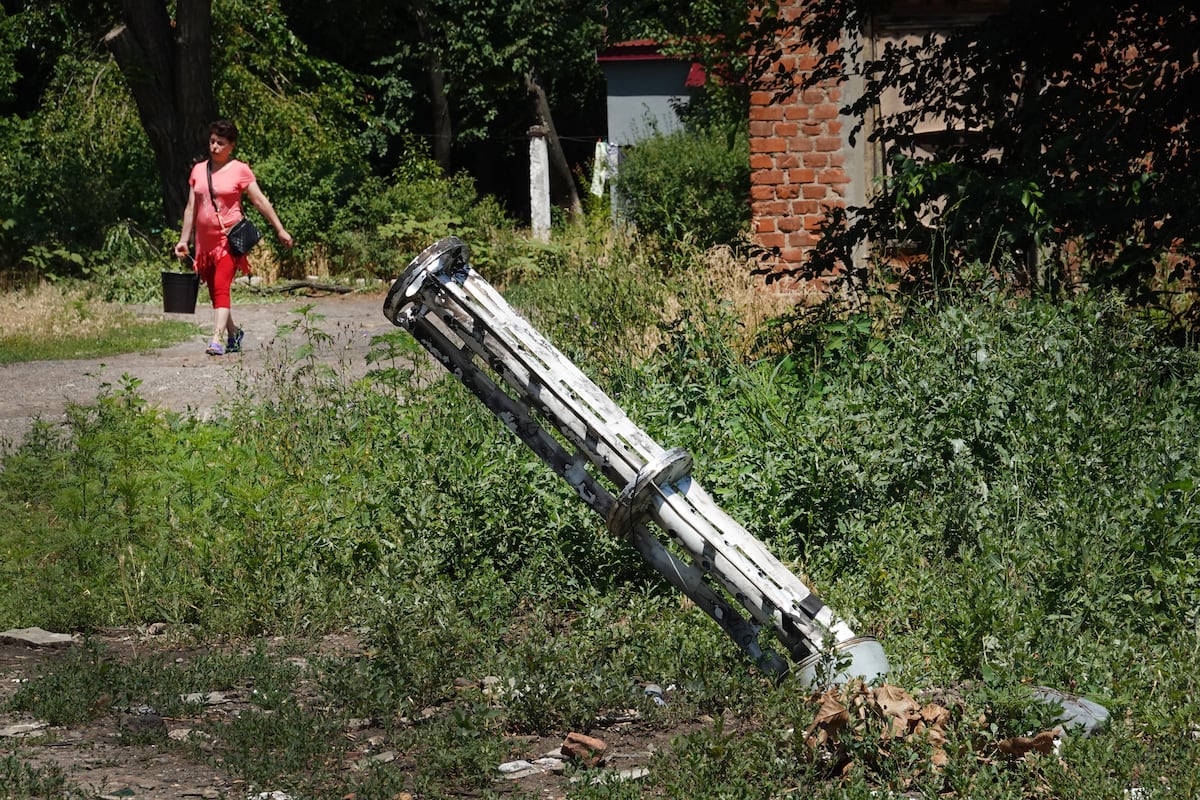
The Defense News opinion piece of 10 Aug. by John Nagl and Daniel Rice ignores the historical experience of cluster munition use while calling on the 23 NATO states currently party to the Convention on Cluster Munitions (CCM) to withdraw and resume production of these horrific weapons.
To do so would irreparably damage the credibility of these countries, set back decades of progress towards better legal protection of civilians in armed conflict and betray the commitment to a rules-based international order which NATO countries and many others seek to defend, including in the current Russia-Ukraine conflict.
What is particularly unfortunate is that the authors argue for such a dramatic reversal without providing a facts-based analysis of the military effectiveness of cluster munitions, either historically or in the Ukraine conflict.
States Parties to the Convention on Cluster Munitions banned such weapons both because of the unacceptable harm they consistently inflict on civilians and due to the inaccuracy, unreliability, and limited military effectiveness of these antiquated area weapons. They are, in effect, a crude weapon of the Cold War period with most existing stocks approaching or past their intended period of use.
Since their peak production period during the Cold War, a wide array of more accurate and reliable weapons has become available . While a weapon that can spread 600-700 submunitions over thousands of square meters represents impressive destructive capacity, the reality is that most of these submunitions don’t hit anything. The UK Defense Ministry’s June 2000 report “Kosovo: Lessons from the Crisis” concluded that tens of thousands of British cluster submunitions had destroyed only a few dozen military objects and that “it would have been useful to have a capability to strike single vehicles more accurately,”
Similarly, a Dutch military representative in an April 2024 meeting in Oslo on explosive weapons stated that the Netherlands no longer has cluster munitions or other area weapons because it prefers munitions that will hit their targets directly.
A U.S. General Accounting Office report on the 1991 Gulf War concluded that cluster munitions significantly impeded military operations and “in some cases ground movement came to a halt because ground units were afraid of encountering unexploded ordnance.” In addition, they also killed or injured 100 US soldiers and another 100 clearance workers.
Following the 2003 Gulf War a “lessons learned” report by the U.S. Third Infantry Division, cited by Human Rights Watch, included cluster munitions among the “losers” of the war, asking pointedly, “Is the DPICM (cluster munition) a Cold War relic?” and reporting that commanders were “hesitant to use it” but “had to” in the absence of alternative weapons.
What is beyond a doubt is that the historically high failure rates of cluster munitions, from 5% to 40% depending on the model and age of munitions used, results in massive contamination for which civilians and their communities consistently pay the highest price. This lethal contamination is a result of the incredibly complex design of the munitions, deployment in the heat of battle at altitudes and airspeeds inconsistent with the design, and the decades-old age of most cluster munitions in existing stockpiles.
Failure rates are consistently higher than manufacturers claim, often due to the difference between failures under ideal testing conditions and those in the real world. In areas in which civilians and military are co-mingled, civilians inevitably are killed and injured due to the indiscriminate wide-area nature of cluster munitions.
Children, who are attracted by the small colorful canisters of unexploded submunitions, are common victims, along with civilians attempting to remove them to access the rubble of their homes, farmers attempting to remove them from their lands, and clearance personnel toiling for years to remove them from destroyed buildings, forests, hillsides, swamps, and agricultural areas.
According the 2023 Cluster Munition Monitor report, at least 95% of those killed or wounded by cluster munitions in 2022 were civilians, and children accounted for 71% of casualties from cluster munition remnants where the age was known.
The authors of the Defense News article not only welcome Lithuania’s regrettable decision in July 2024 to withdraw from the CCM but also call on NATO countries to resume production of cluster munitions. Such new production would be inconsistent with U.S. Defense Secretary Austin’s assurance in July 2023 that U.S. cluster munition transfers to Ukraine were but a “bridging capability” until production of other (presumably less objectionable) weapons picks up.
Do the authors really want to redirect European arms production away from more modern weapons to production of weapons that have been labelled a “Cold War relic”? In considering the authors’ misguided call for NATO States Party to the CCM to withdraw, European states should reflect long and hard about the grave implications of any such decision for the fabric of international humanitarian law, a body of norms built up over generations out of the rubble of the Second World War to better protect both civilians and combatants.
Despite hundreds of armed conflicts in past decades, no state has withdrawn from any of the key global treaties banning an entire category of weapons, from the landmark 1949 Geneva Conventions or their 1977 Additional Protocols. Respect for these norms has collectively prevented untold suffering in conflicts of past decades. A call to effectively dismantle any one of these conventions is unconscionable.
Heeding this call would also be a victory for Russia, further undermining the rule of law and creating dissent among NATO allies. Now is the time to recommit to the protection of civilians in armed conflict, not undermine it.
We therefore call on NATO States party to the CCM to deplore Lithuania’s decision to withdraw.
They must take the opportunity of the September 10-14 meeting of CCM States Parties in Geneva to call on Lithuania to suspend its withdrawal process and engage in dialogue with other States Parties, the International Committee of the Red Cross and civil society about the historic failure of cluster munitions and their unacceptable humanitarian impacts that led to the Convention in the first place.
Peter Herby is the head of Petersburg Partnerships, a consultancy on arms-related humanitarian issues based in Geneva. Previously he was head of the Arms Unit for the International Committee of the Red Cross (ICRC, 1997-2012). In this capacity Herby played an instrumental role in public advocacy on cluster munitions from 2001 and led the ICRC’s team that negotiated the CCM in Dublin in 2008.
Tamar Gabelnick is Director of the International Campaign to Ban Landmines – Cluster Munition Coalition (ICBL-CMC), a global civil society coalition seeking an end the suffering caused by landmines and cluster munitions. Previously she was Policy Director of ICBL-CMC (2005-2015), where she participated in the negotiations of the Convention on Cluster Munitions and led the coalition’ global advocacy work on convention implementation.
约翰·纳格尔和丹尼尔·赖斯于 8 月 10 日在《防务新闻》上发表的评论文章无视集束弹药的使用历史经验,同时呼吁目前加入《集束弹药公约》(CCM) 的 23 个北约成员国撤回并恢复生产这些可怕的武器。
这样做将对这些国家的信誉造成不可挽回的损害,使数十年来在武装冲突中更好地保护平民的法律方面取得的进展倒退,并背叛北约国家和许多其他国家(包括在当前的俄乌冲突中)所寻求捍卫的基于规则的国际秩序的承诺。
尤其令人遗憾的是,作者们在没有提供基于事实的集束弹药军事效能分析的情况下,就主张进行如此戏剧性的逆转,无论是从历史角度还是在乌克兰冲突中。
《集束弹药公约》缔约国禁止使用此类武器,原因在于它们持续对平民造成不可接受的伤害,以及这些过时的区域武器精度低、可靠性差、军事效能有限。实际上,它们是冷战时期粗糙的武器,现存的大部分库存已接近或超过其预期使用寿命。
自冷战时期生产高峰以来,各种更精确、更可靠的武器已经问世。虽然能够将600-700枚子弹药散布在数千平方米范围内的武器拥有惊人的破坏力,但现实情况是,这些子弹药中的大多数都未能击中目标。英国国防部2000年6月发布的报告《科索沃:危机中的教训》指出,数万枚英国集束子弹药仅摧毁了几十个军事目标,“如果能够更精确地打击单个目标,将会大有裨益”。
同样,一位荷兰军方代表在 2024 年 4 月于奥斯陆举行的爆炸性武器会议上表示,荷兰不再拥有集束弹药或其他区域性武器,因为它更喜欢能够直接击中目标的弹药。
美国总审计署关于1991年海湾战争的报告得出结论,集束弹药严重阻碍了军事行动,“在某些情况下,由于地面部队害怕遭遇未爆弹药,地面行动被迫停止”。此外,集束弹药还造成100名美军士兵和100名排雷人员伤亡。
2003 年海湾战争后,美国第三步兵师的一份“经验教训”报告(人权观察组织引用)将集束弹药列为战争的“失败者”之一,并尖锐地问道:“集束弹药是冷战遗物吗?”报告称,指挥官们“不愿使用它”,但在没有其他武器的情况下“不得不使用”。
毋庸置疑的是,集束弹药历来故障率极高,根据弹药型号和使用年限的不同,故障率在5%到40%之间,导致大规模污染,而平民及其社区为此付出的代价最为惨重。这种致命污染的根源在于弹药极其复杂的设计、在激烈的战斗中以与设计不符的高度和空速部署,以及现有库存中大多数集束弹药已使用数十年之久。
故障率始终高于制造商声称的数值,这通常是由于理想测试条件下的故障与实际环境中的故障存在差异。在平民和军人混杂的区域,由于集束弹药的无差别大范围杀伤特性,平民伤亡在所难免。
儿童容易被未爆炸子弹药的小彩色罐吸引,成为常见的受害者;平民为了进入自家废墟而试图移除这些罐子;农民为了从自己的土地上移除这些罐子;以及清理人员为了从被毁的建筑物、森林、山坡、沼泽和农业区移除这些罐子而辛勤工作多年。
根据 2023 年集束弹药监测报告,2022 年因集束弹药伤亡的人员中至少 95% 是平民,在已知年龄的集束弹药残骸伤亡人员中,儿童占 71%。
《防务新闻》文章的作者不仅对立陶宛在2024年7月退出集束弹药计划(CCM)这一令人遗憾的决定表示欢迎,还呼吁北约国家恢复集束弹药的生产。然而,这种新的生产与美国国防部长奥斯汀在2023年7月作出的保证相矛盾。奥斯汀当时保证,美国向乌克兰转让集束弹药仅仅是一种“过渡能力”,直到其他(想必不那么令人反感的)武器的生产恢复为止。
作者们真的希望欧洲的武器生产从更现代化的武器转向生产被贴上“冷战遗物”标签的武器吗?在考虑作者们错误地呼吁北约成员国退出《共同体条约》时,欧洲各国应该认真反思,任何此类决定对国际人道主义法体系——这套历经数代人在二战废墟中建立起来的规范体系,旨在更好地保护平民和战斗人员——将产生多么严重的后果。
尽管过去几十年间爆发了数百起武装冲突,但没有一个国家退出任何一项禁止整类武器的关键全球条约,包括具有里程碑意义的1949年《日内瓦公约》及其1977年《附加议定书》。对这些准则的尊重,共同避免了过去几十年冲突中无数的苦难。呼吁废除其中任何一项公约都是丧尽天良的。
响应这一呼吁也将是俄罗斯的胜利,进一步破坏法治,并在北约盟国之间制造分歧。现在正是重申在武装冲突中保护平民的承诺之时,而不是削弱这一承诺之时。
因此,我们呼吁北约共同军事条约缔约国对立陶宛退出该条约的决定表示遗憾。
他们必须利用 9 月 10 日至 14 日在日内瓦举行的集束弹药公约缔约国会议的机会,呼吁立陶宛暂停其退出进程,并与其他缔约国、红十字国际委员会和民间社会就集束弹药的历史性失败及其不可接受的人道主义影响展开对话,而这正是当初制定该公约的原因。
彼得·赫比是总部位于日内瓦的“圣彼得堡伙伴关系”咨询机构的负责人,该机构专注于与武器相关的人道主义问题。此前,他曾担任红十字国际委员会(ICRC,1997-2012年)武器部门负责人。在此期间,赫比自2001年起在集束弹药的公共宣传方面发挥了重要作用,并领导红十字国际委员会团队于2008年在都柏林参与了集束弹药谈判。
塔玛尔·加贝尔尼克是国际禁止地雷运动-集束弹药联盟(ICBL-CMC)的主任,该联盟是一个致力于消除地雷和集束弹药所造成苦难的全球民间社会联盟。此前,她曾担任ICBL-CMC的政策主任(2005-2015年),参与了《集束弹药公约》的谈判,并领导了该联盟在全球范围内开展的公约执行倡导工作。