Canada wants Saab early-warning aircraft under push to retool defense suppliers加拿大希望从萨博公司采购预警机,以推动国防供应商转型升级。
Prime Minister Mark Carney has pledged to diversify and localize defense production following continued threats by U.S. President Trump.
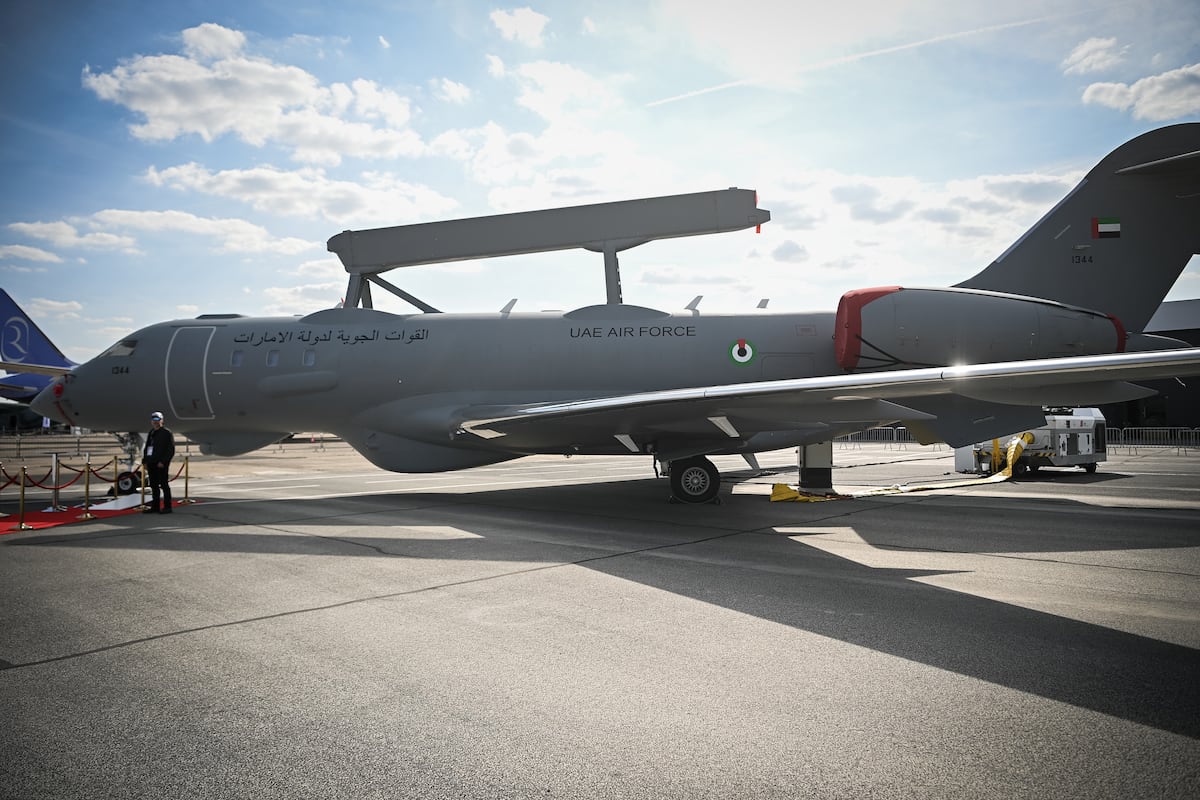
VICTORIA, British Columbia — Canada will purchase six GlobalEye early warning and control aircraft from Saab as part of deal to not only boost Canadian military capabilities but energize domestic defense production.
Prime Minister Mark Carney announced the news May 27 at the CANSEC defense trade show in Ottawa. It was the first time that a Canadian prime minister had appeared at the show, the country’s largest defense and security industry event.
Carney said the proposed GlobalEye purchase, estimated to cost more than $5 billion CAN (US$3.6 billion), will not only expand the country’s military capabilities but support his government’s initiatives to use defense purchases to support domestic firms.
“With a suite of advanced sensors and mission systems, Saab’s GlobalEye will be a key resource for the Canadian Armed Forces to detect and deter threats across the Arctic,” Carney said in a speech to CANSEC delegates. “It builds Canadian strategic autonomy, creates Canadian jobs and reinforces Canada’s position as a global leader.”
GlobalEye is based on a Bombardier 6500 executive jet, an aircraft that is manufactured in Toronto. Carney said that at least one-third of the projected GlobalEye aircraft orders for various allies will be built in Canada. That is expected to be 40 aircraft over the next 15 years.
Carney’s announcement that Saab is the preferred supplier for Canada’s Airborne Early Warning and Control project signaled the start of negotiations with the company. No details were provided on when a contract could be signed.
With it airborne surveillance capability, GlobalEye can track objects up to 650 kilometers away and collect real-time intelligence for the Canadian Armed Forces, according to the Canadian government.
Government officials also noted the new capability would strengthen Canada’s contributions to the joint U.S. -Canadian North American Aerospace Defense Command (NORAD) and improve operational reach in remote regions, particularly the Arctic.
Canadian Prime Minister Mark Carney speaks at the Cansec arms fair in Ottawa on May 27, 2026. (Kay Nietfeld/picture alliance via Getty Images)
Canada embarked on a major defense-spending initiative in 2025, with a commitment to spend $180 billion CAN on defense procurement in the next ten years and another $290 billion CAN on defense and security-related infrastructure. The purchase of new self-propelled howitzers, submarines, armored vehicles and fighter jets are part of that procurement initiative.
Carney’s push to spend more on defense has also transformed CANSEC. Usually the show attracts around 14,000 but organizers say this year some 20,000 visitors are expected over a two-day period. Attendance at CANSEC is limited to industry and military personnel.
Canada’s boost in defense spending was, in part, fueled by pressure from U.S. president Donald Trump’s administration. Trump has continually complained that Canada does not do enough in defense. In addition, he has hit Canada with significant tariffs as well as other threats of economic punishment. Trump has warned that the only way Canada could escape such economic measures would be to become a U.S. state.
Carney responded by embarking on a program to focus defense spending on domestic companies as well as seeking new alliances with European and other nations. He also noted that Canada needed to reduce its reliance on the United States, particularly in regard to U.S.-built military equipment. “We should no longer send three-quarters of our defense capital spending to America,” Carney said June 9, 2025.
In response to ongoing U.S. economic threats, Carney also ordered a review of Canada’s purchase of the Lockheed Martin F-35 fighter jet. The Canadian government announced in January 2023 it planned to spend $13.2 billion for the purchase of 88 F-35s from the U.S. government. But at this point it has only paid for and committed to buy 16 of the aircraft.
Saab has offered its Gripen fighter jet to Canada, with the promise that the aircraft could be produced in the country. The Canadian review of the F-35 purchase, and the Saab Gripen proposal, is still ongoing.
During a televised news conference at CANSEC, Carney was asked whether the GlobalEye purchase was part of larger package that would include the acquisition of Saab Gripen fighter jets. He declined to comment.
Both Saab and Bombardier greeted Carney’s announcement as a sign that domestic firms would play a greater role in defense procurement.
“We welcome Canada’s decision to enter into discussions with Saab as the preferred supplier of the future Canadian AEW&C capability,” Micael Johansson, President and CEO of Saab noted in a statement. “GlobalEye offers proven capability for the Royal Canadian Air Force, sovereign ownership for Canada and comprehensive and skilled work for Canadian industry.”
David Pugliese is the Canada correspondent for Defense News.
加拿大不列颠哥伦比亚省维多利亚市——加拿大将从萨博公司购买六架GlobalEye预警和控制飞机,这笔交易不仅旨在提升加拿大的军事能力,而且旨在促进国内国防生产。
加拿大总理马克·卡尼于5月27日在渥太华举行的CANSEC防务展上宣布了这一消息。这是加拿大总理首次出席该展会,这是加拿大规模最大的国防和安全行业盛会。
卡尼表示,拟议中的 GlobalEye 采购预计将耗资超过 50 亿加元(36 亿美元),不仅将扩大该国的军事能力,还将支持其政府利用国防采购扶持国内企业的举措。
卡尼在对加拿大安全与环境大会(CANSEC)代表发表讲话时表示:“凭借一系列先进的传感器和任务系统,萨博公司的‘全球之眼’系统将成为加拿大武装部队在北极地区探测和威慑威胁的关键资源。它有助于增强加拿大的战略自主性,创造就业机会,并巩固加拿大作为全球领导者的地位。”
GlobalEye系统基于庞巴迪6500公务机,该机型在多伦多生产。卡尼表示,预计为各盟友订购的GlobalEye飞机中,至少有三分之一将在加拿大生产。预计未来15年内,这部分订单将达到40架。
卡尼宣布萨博公司是加拿大空中预警与控制项目的首选供应商,这标志着与该公司谈判的开始。但并未透露何时能签署合同。
据加拿大政府称,凭借其空中监视能力,GlobalEye 可以跟踪远达 650 公里外的物体,并为加拿大武装部队收集实时情报。
政府官员还指出,这项新能力将加强加拿大对美加联合北美防空司令部 (NORAD) 的贡献,并提高在偏远地区,特别是北极地区的作战范围。
2026年5月27日,加拿大总理马克·卡尼在渥太华举行的Cansec武器展上发表讲话。(图片来源:Kay Nietfeld/picture alliance via Getty Images)
加拿大于2025年启动了一项重大的国防开支计划,承诺在未来十年内投入1800亿加元用于国防采购,并另投入2900亿加元用于国防和安全相关基础设施建设。采购新型自行榴弹炮、潜艇、装甲车和战斗机均包含在该采购计划中。
卡尼推动增加国防开支的举措也改变了CANSEC展会的格局。该展会通常吸引约14,000人,但主办方表示,今年为期两天的展会预计将吸引约20,000名参观者。CANSEC展会仅限业内人士和军方人员参加。
加拿大增加国防开支的部分原因是受到美国总统特朗普政府的压力。特朗普一直抱怨加拿大在国防方面投入不足。此外,他还对加拿大加征高额关税,并威胁要采取其他经济制裁措施。特朗普警告说,加拿大要想摆脱这些经济制裁,唯一的办法就是成为美国的一个州。
卡尼的回应是启动一项计划,旨在将国防开支集中用于国内企业,并寻求与欧洲和其他国家建立新的联盟。他还指出,加拿大需要减少对美国的依赖,尤其是在美国制造的军事装备方面。“我们不应该再将四分之三的国防资本支出都花在美国,”卡尼在2025年6月9日表示。
为应对美国持续的经济威胁,卡尼还下令重新审查加拿大购买洛克希德·马丁公司F-35战斗机的计划。加拿大政府于2023年1月宣布计划斥资132亿美元从美国政府购买88架F-35战斗机。但截至目前,加拿大仅支付了16架飞机的款项并承诺购买。
萨博公司已向加拿大推销其“鹰狮”战斗机,并承诺该机型可在加拿大生产。加拿大对F-35战斗机采购计划以及萨博“鹰狮”战斗机方案的审查仍在进行中。
在加拿大防务展(CANSEC)期间举行的新闻发布会上,卡尼被问及收购GlobalEye是否是包括采购萨博“鹰狮”战斗机在内的更大计划的一部分。他拒绝置评。
萨博和庞巴迪都对卡尼的声明表示欢迎,认为这表明国内企业将在国防采购中发挥更大的作用。
萨博公司总裁兼首席执行官米凯尔·约翰逊在一份声明中表示:“我们欢迎加拿大决定与萨博公司就未来加拿大预警机能力的首选供应商展开磋商。GlobalEye项目为加拿大皇家空军提供成熟的技术能力,为加拿大提供自主所有权,并为加拿大工业提供全面且专业的服务。”
David Pugliese 是《国防新闻》的加拿大通讯员。