Let’s Talk About The Rumor That F-117s Have Flown Missions In The Middle East Recently我们来聊聊最近F-117战机在中东执行任务的传闻吧。
The rumor isn't new and there is certainly some highly relevant logic to back it up, but is it actually true?
Updated Dec 1, 2019 6:45 AM EST
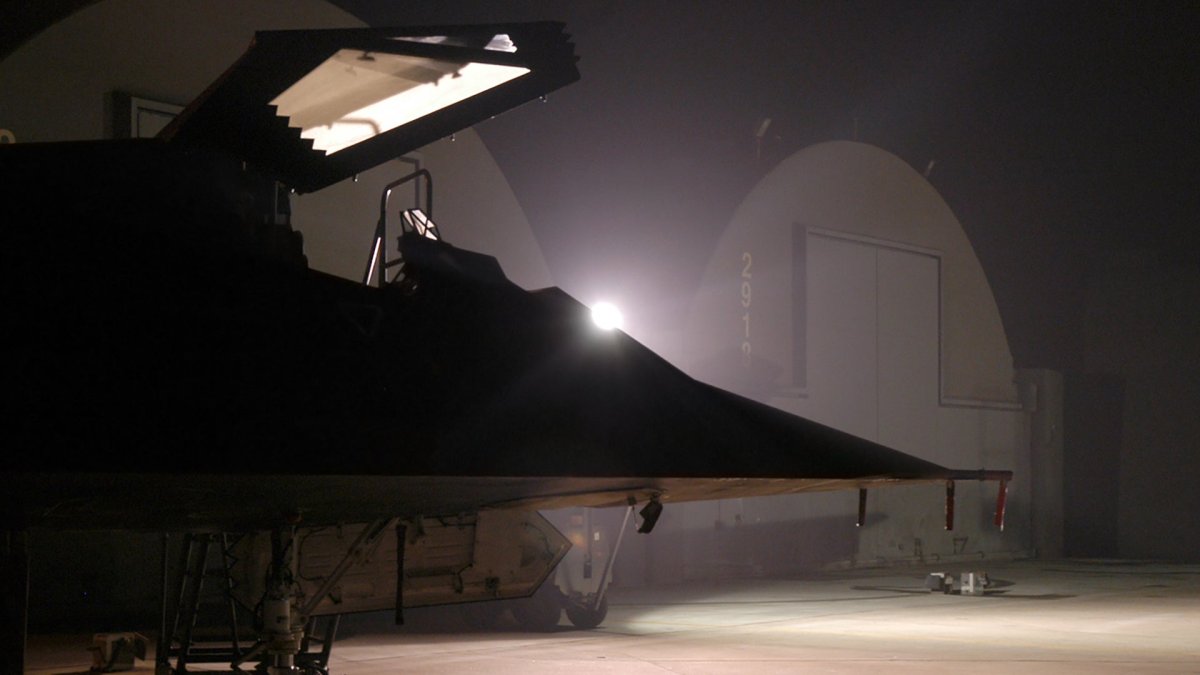
After a fairly amazingly well documented week of F-117 Nighthawk action over desolate Death Valley, the Facebook page of an established aviation enthusiast’s website from the Netherland’s featured a post that has raised a remarkable amount of attention. In it, they state that the F-117 Nighthawk—an aircraft that had supposedly been retired from operational service for over a decade —was sent back into combat as recently as 2017, albeit in very small numbers. This claim was quickly parroted by military aviation websites around the globe, leaving many asking what they should believe.
Here is the post from Scramble Magazine’s Facebook page that fired up the rumor mill:
Beyond recapping the same encounter we posted about earlier in the week and sharing some lovely photos of the F-117 over Death Valley, this is the section of the post that has garnered so much attention:
Back in 2017, and not published by any other source so far, Scramble received very reliable information that at least four F-117s were deployed to the Middle East as an operational need emerged for the USAF to resurrect the stealth F-117 for special purposes. One of the deployed aircraft was involved in an in-flight emergency and landed far away from its temporary home base that was likely located in Saudi Arabia, the UAE or Qatar. During this extremely covert deployment, the four Nighthawks flew missions over Syria and Iraq with Small Diameter Bombs (SDBs).
Back in 2017, and not published by any other source so far, Scramble received very reliable information that at least four F-117s were deployed to the Middle East as an operational need emerged for the USAF to resurrect the stealth F-117 for special purposes. One of the deployed aircraft was involved in an in-flight emergency and landed far away from its temporary home base that was likely located in Saudi Arabia, the UAE or Qatar.
During this extremely covert deployment, the four Nighthawks flew missions over Syria and Iraq with Small Diameter Bombs (SDBs).
These claims are not new. I have heard rumors about the USAF regenerating a portion of the F-117 force to combat capable status for use in Syria dating back to 2016. These rumors have come from good sources, but none of them were confident they were actually true. As such, to my knowledge, nobody saw it worth betting their reputation as a journalist on reporting the claims as fact with their name directly attached to the byline. In fact, nobody found there to be enough evidence to even report them as rumors.
The latter claim that a handful of these aircraft were sent into the region and that one experienced an in-flight emergency also isn’t new. But that rumor has also been just that, a rumor.
Overall, I have seen zero actual evidence or direct sourcing that this deployment took place or that the F-117 force was ever spun-up in any meaningful way to support a limited deployment to the Middle East.
My readers know how seriously I take using undisclosed sources when making grand claims about aircraft programs and secretive projects . The problem with just buying something like this as fact is that we don’t even have an actual known person that is hanging their reputation on it as it comes from a website’s Facebook page. What is Scramble’s policy for using undisclosed sources? Is there one? Is “very reliable information” from a good source an official sharing classified info on a program or someone who is a friend and interested in the military aviation community?
This is not a knock of Scramble at all. I really like what they do and have shared their content before, but in those cases, it was not a big claim that has only been spread as rumor over the years, at least to my knowledge, and without any primary sourcing, or any attributed sourcing at all for that matter, nor from a named author.
With that being said, let’s take a look at the claim itself. Is there a reason the Pentagon would regenerate a small number of F-117s to work in the Middle East, and primarily Syria?
When the USAF retired the F-117 it lost a number of capabilities. A stealthy tactical platform that could drop 2,000lb class bombs for instance. As far as we know, only the B-2 could do that mission after 2008, and at the time there were only 21 of them and they are limited operationally, especially in regards to how they are deployed. The F-22 could only drop 1,000lb class bombs. But it’s not the weight of the weapons it could employ that was the biggest loss when the F-117 was put into mummified storage at Tonopah Test Range Airport, it was how it could employ its weapons.
With the retirement of the F-117, the USAF gave up the ability to drop laser-guided bombs (LGBs ) from a stealthy platform that was capable of designating its own targets. LGBs have their limitations. Bad weather being the biggest one of them. If the target is obscured by clouds or smoke, laser designation from the air becomes very troublesome if not impossible.
In addition, the attacking aircraft has to fly a profile near the target after the weapon is released in order to continue to guide it accurately to its precise impact point using its laser designator. This can leave the aircraft vulnerable as it has to stay near what is likely a highly defended target.
GPS guided munitions, such as the Joint Direct Attack Munition (JDAM) are fire-and-forget weapons—once released, the launch aircraft can move to a safer position as the weapon flies to its target on autopilot. The launching aircraft can also release the weapon farther from its target as it doesn’t have to designate the target itself. But GPS weapons have their limitations too. They don’t provide as precise and dynamic targeting capability as LGBs, and above all else, they can’t hit moving targets.
Some of that is changing now as the latest generation of GPS enabled weapons is being built with multi-mode seekers that can autonomously track their targets if they move away from the original target area during the weapon’s terminal attack phase. Networked weapons can also leverage offboard sensor data to remain honed in on their target even if it is moving to a new location. But these concepts are cutting-edge weapons technology today, and they really weren’t available even a year or two ago. They also have their own limitations and are less suitable for making direct precision strikes on highly mobilized targets, and especially those in complex and dynamic urban environments or that exist under strict rules of engagement.
Left-bombs are loaded into the F-117’s weapons bays. Note the FLIR and DLIR apertures are clearly visible. Right-the F-117 was built as a laser guided bomb delivery system, one that would be cut off from the outside world entirely when over enemy airspace. , USAF
The F-117 is really a flying laser-guided bomb delivery vehicle above all else. It was designed and built around this technology and concept of operations. Its pilots, which didn’t have radar for navigation, couldn’t even communicate with the outside world while over enemy territory, and above all else, didn’t have the help of GPS, had to navigate to their targets using a number of unique methods, and always in the pitch black of night.
They also had to do this while flying a painstakingly devised route that kept them as safe as possible from known enemy threats. Their infrared sensors, one forward-looking and one downward-looking, and their laser systems were essential in this task. They would ‘squirt’ landmarks along their route with the laser in range-finding mode to update their positions—a task that was much harder than it sounds—in hopes of finally arriving over their target at an exact point in time and space. They didn’t even have threat warning gear that would allow them to know if a missile system was about to fire at them. They were truly alone up there.
Towards the end of its career, the F-117 received GPS-guided JDAM capability, which offered a great advantage in survivability and when it came to reliably striking fixed targets in bad weather. But the laser and LGB combo was still the surgical scalpel that the Nighthawk community could employ on a level unlike any other.
F-117 releasing a 2,000lb JDAM during testing., USAF
So, how does any of this matter in a complex and modern aerial battlefield like Syria? The answer is fairly straightforward.
By early 2016, Russia and Syria had largely shut down the airspace in the western part of the country to any manned, non-stealthy, allied aircraft. Sure, the U.S. and its coalition could go there if they had to, but aside from the F-22 or using long-range standoff munitions, doing so would come at an elevated risk of the loss of an aircraft and the start of a major international incident. Drones, like the MQ-9 Reaper, are easily tracked and totally vulnerable to enemy air defenses and losing one doesn’t mean a pilot will be captured and used as a propaganda tool. They are, in essence, expendable, regardless of what the Pentagon will tell you.
So, what happens if the U.S. needed to strike a target with extreme accuracy and one that could very well be on the move without anyone knowing they were there? The F-22 couldn’t do it, its GPS-guided JDAMs and Small Diameter Bombs can only hit fixed targets. The MQ-9 couldn’t do that clandestinely. The RQ-170 Sentinel is not armed . So outside of any less than public capabilities, generally speaking, there wasn’t an apparent solution for striking say a high-value terrorist target that was on the run deep inside western Syria without the Russians and Syrians knowing an aircraft was stalking above and the general origin of that aircraft. And doing so would come at very great risk.
Well, that is aside from some mothballed first-generation stealth jets sleeping quietly in their hangars deep in the Nevada desert. Oh, and of that lot there are roughly four to six jets that are in flying shape at any time. So, resuscitation of stored airframes may have not even of been necessary.
The F-117 has other advantages as well. Its radar signature and the technologies behind its design are far better known by the enemy than those of 5th generation fighters or cutting-edge stealth drones. Losing one in combat wouldn’t result in a massive dump of extremely high-value intellectual property right into the enemy’s hands. In fact, an F-117 has already been lost in combat and its carcass exploited for intelligence purposes.
The F-117 also features a very low infrared signature, which would better hide them from patrolling Russian fighters and point air defense systems that now pack advanced infrared search and track capabilities. Also, their low-observability may not be able to get right up to Russia’s latest air defense systems, but until recently, Syria employed far less sophisticated systems, ones from the Cold War-era that the F-117 was designed specifically to evade. And paired with electronic warfare, the F-117 would still be a challenge for Russia’s most advanced systems to reliably track at a distance.
The F-117’s unique concept of operations also means that disruptions in GPS, something Russia has become quite capable of and it is actively employing these capabilities against American assets in Syria, really don’t matter when it comes both to its ability to navigate and strike targets with pinpoint precision.
The F-117s could also be beneficial for intruding into other areas in the Middle East for the exact same reasons as those stated above. Even into the backyards of countries who are deemed allies of the United States. But Syria is where the real tactical problem has lied.
So, with all this in mind, was the F-117 brought back into service by the USAF to fill a glaring and urgent gap in America’s ability to strike very high-value targets in contested airspace that may not be of a fixed nature?
The answer to that question is possibly .
Quite frankly, it’s also quite possible that if the F-117s were put back into service, the USAF wasn’t who did it. A particular American agency may have instead. One that would have very limited, but essential use for such a unique assassination tool.
While all of this sounds relevant and plausible, actually paying to get just a handful of these jets fully combat capable with at least some updated sensors (it’s DLIR in particular) and other systems and deploying them halfway around the globe for very special and limited missions seems like a reach, but not one too far to fathom.
Fast forward to 2019 and the Pentagon has once again regained its ability to laser-designate and attack targets with a stealthy penetrating airframe—the F-35. Not just that, but it also regained its ability to employ 2,000lb class weapons in a similar manner from that same 5th generation stealth tactical jet. As such, the need for F-117s would have come and gone, but this doesn’t impact the timing of the Middle East deployment rumors, it actually fortifies them.
Still, in the end, there is no evidence that the F-117 was sent back into combat in any form or magnitude. Zero . At the same time, there seems to have been a fairly good reason to do so, at least in small numbers. And these aircraft were mandated by Congress to be preserved at great cost for operational contingencies. Why do that if their unique capabilities couldn’t be leveraged when needed. But without any evidence, all this is speculation, and it seems hopeful speculation at that.
Clearly, there is an amazing amount of infatuation with the F-117 even a decade after it was officially retired. The fact that it is still flying in some form has only turbocharged that interest. So, we have to remain very skeptical of any grand claims or when rumors that didn’t have enough evidence to justify printing them years ago are stated as fact when the F-117 hype is at its pinnacle today.
We have multiple Freedom Of Information Act (FOIA) requests, both old and new, in regarding this matter, so it is possible new details will eventually emerge.
In the meantime, there is another facet to this story that hasn’t been told, one that ties into the Pentagon’s ability to deliver laser-guided weapons on target even in contested airspace long after the F-117 was retired. We will tell that shadowy story in our next installment.
Author’s note: You can find links to much of my highly diverse F-117 coverage in this story . They include everything from futuristic hand scanners used as security devices for the program to the F-117’s ‘Klingon Cloaking Device,’—yes it actually had one… Well, at least sort of!
Contact the author: Tyler@thedrive.com
Comments couldn’t be loaded. Please refresh the page.
更新于美国东部时间2019年12月1日上午6:45
在F-117“夜鹰”战斗机在荒凉的死亡谷上空进行了一周的精彩实战演练并被详细记录之后,一家荷兰知名航空爱好者网站的Facebook页面上发布了一篇帖子,引发了广泛关注。帖子中称,F-117“夜鹰”——一种据称已退役十余年的战机——在2017年曾以极小的数量重新投入战斗。这一说法迅速被全球各地的军事航空网站转载,令许多人不知该相信谁。
以下是Scramble杂志Facebook页面上引发谣言的帖子:
除了回顾我们本周早些时候发布的同一事件,并分享一些F-117战斗机飞越死亡谷的精美照片之外,这篇文章的这一部分引起了广泛关注:
早在2017年,Scramble就收到了一份极其可靠的情报,此前没有任何消息来源披露过,称至少有四架F-117战斗机被部署到中东,原因是美国空军出于特殊作战需要,重新启用隐形F-117战机执行任务。其中一架部署的战机在飞行途中发生紧急情况,被迫降落在远离其临时基地的地方,该基地很可能位于沙特阿拉伯、阿联酋或卡塔尔。在这次极其隐秘的部署期间,这四架“夜鹰”战机携带小直径炸弹(SDB)飞越叙利亚和伊拉克执行任务。
早在2017年,Scramble就收到了一份非常可靠的消息,迄今为止,其他任何消息来源都未曾披露过该消息。消息称,至少有四架F-117战斗机被部署到中东,原因是美国空军出于特殊作战需要,重新启用隐形F-117战机执行任务。其中一架部署的战机在飞行途中发生紧急情况,最终降落在远离其临时基地的地方,该基地很可能位于沙特阿拉伯、阿联酋或卡塔尔。
在这次极其隐秘的部署期间,四架夜鹰战机携带小直径炸弹(SDB)飞越叙利亚和伊拉克执行任务。
这些说法并非新鲜事。早在2016年,我就听说美国空军正在重建一部分F-117战机,使其恢复作战能力,以备在叙利亚使用。这些传闻来源可靠,但没有人确信其真实性。因此,据我所知,没有人觉得值得冒着身价风险,以记者的身份将这些说法作为事实发表,并署上自己的名字。事实上,甚至没有人发现有足够的证据来将其作为传闻报道。
后一种说法,即有几架此类飞机被派往该地区,其中一架在飞行途中发生紧急情况,也并非什么新鲜事。但这种传言也仅仅是传言而已。
总的来说,我没有看到任何实际证据或直接来源证明这次部署发生过,也没有看到 F-117 部队以任何有意义的方式启动以支持向中东的有限部署。
我的读者都知道,在对飞机项目和秘密计划做出重大断言时,我对使用未公开的消息来源有多么重视。但问题在于,如果仅仅因为某个网站在Facebook页面上发布了这样的信息就将其视为事实,我们甚至找不到任何一位真正知情人士为其担保。Scramble在使用未公开消息来源方面有什么政策?或者说,他们真的有这样的政策吗?所谓“非常可靠的信息”,是指官方人员分享的关于某个项目的机密信息,还是指一位对军事航空界感兴趣的朋友提供的信息?
这完全不是在贬低Scramble。我非常喜欢他们的工作,之前也分享过他们的内容,但那些时候,他们提出的说法并非像现在这样,只是多年来以谣言的形式流传,至少据我所知,没有任何一手资料,甚至没有任何署名来源,也没有出自任何署名作者之手。
话虽如此,我们还是来看看这个说法本身。五角大楼有什么理由要重新生产少量F-117战机,用于在中东,主要是叙利亚作战呢?
美国空军退役F-117战斗机时,它失去了许多能力。例如,它不再是一款能够投掷2000磅级炸弹的隐形战术平台。据我们所知,2008年以后只有B-2轰炸机能够执行这项任务,而当时B-2轰炸机只有21架,其作战能力也受到限制,尤其是在部署方式方面。F-22战斗机只能投掷1000磅级炸弹。但是,当F-117被封存在托诺帕试验场机场时,它最大的损失并非在于其武器的重量,而在于其武器的使用方式。
随着F-117的退役,美国空军失去了从能够自主指示目标的隐形平台上投掷激光制导炸弹(LGB)的能力。激光制导炸弹也有其局限性,其中最大的限制是恶劣天气。如果目标被云层或烟雾遮蔽,从空中进行激光指示将变得非常困难,甚至不可能。
此外,攻击机在投弹后必须贴近目标飞行,才能利用激光指示器继续精确引导弹道落点。由于必须保持在防御严密的目标附近,这可能会使飞机处于易受攻击的状态。
GPS制导武器,例如联合直接攻击弹药(JDAM),属于发射后不管的武器——一旦投放,发射飞机就可以转移到更安全的位置,武器会在自动驾驶模式下飞向目标。由于无需自行指定目标,发射飞机还可以将武器投放在距离目标更远的地方。但GPS武器也有其局限性。它们不像激光制导炸弹(LGB)那样具有精确和动态的瞄准能力,而且最重要的是,它们无法击中移动目标。
如今,部分情况正在发生改变。最新一代配备GPS的武器采用了多模式导引头,即使目标在武器的末段攻击阶段偏离了初始目标区域,也能自主追踪目标。联网武器还可以利用外部传感器数据,即使目标移动到新的位置,也能保持对目标的精确锁定。但这些概念目前仍属于尖端武器技术,甚至在一两年前都还无法实现。它们也存在自身的局限性,不太适合对高度机动的目标进行直接精确打击,尤其是在复杂多变的城市环境中或在严格的交战规则下作战的目标。
左图:炸弹被装入F-117的武器舱。请注意,前视红外(FLIR)和后视红外(DLIR)瞄准器清晰可见。右图:F-117被设计为激光制导炸弹投放系统,在敌方领空飞行时,它将完全与外界隔绝。(美国空军)
F-117 本质上是一款飞行激光制导炸弹投放器。它的设计和制造都围绕着这项技术和作战理念。它的飞行员没有雷达导航,在敌方领空飞行时甚至无法与外界联系,更重要的是,他们没有 GPS 的帮助,只能依靠一系列独特的导航方法,在漆黑的夜色中飞往目标。
他们还必须沿着精心设计的航线飞行,尽可能避开已知的敌方威胁。他们的红外传感器(一个前视传感器和一个下视传感器)和激光系统在这项任务中至关重要。他们会用激光测距仪沿途照射地标来更新位置——这项任务远比听起来要难得多——希望最终能在精确的时间和空间抵达目标上空。他们甚至没有威胁预警设备来判断导弹系统是否即将向他们发射导弹。他们真的孤身一人。
在服役生涯末期,F-117 获得了 GPS 制导的联合直接攻击弹药 (JDAM) 能力,这极大地提升了其生存能力,并使其在恶劣天气下也能可靠地打击固定目标。但激光制导和激光制导炸弹 (LGB) 的组合仍然是“夜鹰”战机部队能够发挥其无与伦比的精准打击能力的利器。
美国空军F-117战斗机在测试中投放了一枚2000磅重的联合直接攻击弹药(JDAM)。
那么,在叙利亚这样复杂而现代化的空中战场上,这一切又有什么意义呢?答案很简单。
到2016年初,俄罗斯和叙利亚基本上已经封锁了该国西部空域,禁止任何有人驾驶的非隐形盟军飞机进入。当然,美国及其盟军如果必须的话也可以进入那里,但除了F-22战斗机或使用远程防区外弹药之外,这样做会大大增加飞机损失的风险,并可能引发重大的国际事件。像MQ-9“死神”这样的无人机很容易被追踪,而且完全暴露在敌方防空系统的攻击之下,损失一架无人机并不意味着飞行员会被俘虏并用作宣传工具。从本质上讲,无论五角大楼怎么说,它们都是可以牺牲的。
那么,如果美国需要以极高的精度打击一个可能正在移动且无人察觉的目标,该怎么办?F-22战机无法胜任,其GPS制导的联合直接攻击弹药(JDAM)和小直径炸弹只能攻击固定目标。MQ-9无人机也无法秘密执行此类任务。RQ-170“哨兵”无人机则没有武器。因此,除了那些尚未公开的能力之外,一般来说,要想在不让俄罗斯和叙利亚察觉到有飞机在空中盘旋以及飞机大致来源的情况下,打击例如深入叙利亚西部腹地的高价值恐怖分子目标,似乎没有其他显而易见的解决方案。而且,这样做风险极大。
当然,这还不包括那些封存于内华达沙漠深处机库中、静静沉睡的第一代隐形战机。哦,对了,这些战机中,任何时候都只有大约四到六架处于适航状态。所以,或许根本就没有必要重启这些封存的飞机。
F-117还有其他优势。与第五代战斗机或尖端隐形无人机相比,敌方对其雷达特征和设计技术了解得更为透彻。即使战损一架,也不会导致大量极具价值的知识产权落入敌手。事实上,已有F-117战损一架,其残骸已被用于情报收集。
F-117战斗机还拥有极低的红外特征,这使其能够更好地躲避巡逻的俄罗斯战斗机和目前配备先进红外搜索和跟踪能力的点防空系统。此外,其低可探测性或许无法让俄罗斯最新的防空系统近距离探测到它,但直到最近,叙利亚使用的防空系统远不如现在先进,是冷战时期遗留下来的,而F-117的设计初衷正是为了规避这些系统。即使配合电子战,F-117仍然能够给俄罗斯最先进的防空系统带来远距离可靠跟踪的挑战。
F-117 独特的作战概念也意味着,GPS 信号中断(俄罗斯已经相当擅长利用这种能力攻击驻叙利亚的美国资产)对其导航和精确打击目标的能力而言,实际上并不重要。
F-117战机也可能出于与上述完全相同的原因,用于入侵中东其他地区,甚至包括那些被视为美国盟友的国家的“后院”。但真正的战术难题在于叙利亚。
综上所述,美国空军重新启用 F-117 是否是为了填补美国在对抗空域打击高价值目标(这些目标可能并非固定不变)的能力方面存在的明显而紧迫的缺口?
这个问题的答案可能是肯定的。
坦白地说,如果F-117战机真的重新服役,很可能并非美国空军所为,而是某个特定的美国机构所为。这个机构对这种独特的暗杀工具的需求虽然非常有限,但却至关重要。
虽然这一切听起来都很有道理,但实际上要花钱让少数几架这样的喷气式飞机具备完全的作战能力,并配备至少一些更新的传感器(特别是DLIR)和其他系统,然后将它们部署到地球的另一端执行非常特殊和有限的任务,这似乎有点异想天开,但并非完全不可能。
时间快进到2019年,五角大楼再次获得了使用隐形穿透型战机——F-35——进行激光指示和攻击目标的能力。不仅如此,它还重新获得了使用同一款第五代隐形战术战机以类似方式使用2000磅级武器的能力。因此,对F-117的需求本应已经消失,但这并没有影响有关中东部署的传闻,反而强化了这些传闻。
然而,最终没有任何证据表明F-117以任何形式或规模重返战场。零。与此同时,似乎有相当充分的理由这样做,至少少量部署。国会曾斥巨资强制保留这些飞机以备作战之需。如果它们的独特性能在需要时无法发挥作用,那又何必如此呢?但没有任何证据,这一切都只是猜测,而且似乎还是一厢情愿的猜测。
显然,即使在F-117正式退役十年后,人们对它的热情依然不减。它以某种形式仍在服役的事实,更是火上浇油。因此,我们必须对任何夸大其词的说法,以及那些多年前缺乏足够证据支持、如今却被当作事实传播的传言保持高度警惕,尤其是在F-117热度正盛之时。
关于此事,我们收到了多份《信息自由法》(FOIA) 申请,包括旧的和新的,因此最终可能会出现新的细节。
与此同时,这个故事还有另一个尚未被提及的层面,它与五角大楼在F-117退役多年后,依然能够在敌对空域精准投放激光制导武器的能力息息相关。我们将在下一期节目中讲述这个鲜为人知的故事。
作者注:您可以在这篇文章中找到我撰写的关于F-117的各种报道链接。这些报道涵盖了从该项目用作安全设备的未来主义手部扫描仪到F-117的“克林贡隐形装置”——没错,它确实有一个……好吧,至少有点像!
联系作者:Tyler@thedrive.com
评论加载失败,请刷新页面。