China’s Lunar Satellites Could Stab U.S. Early Warning Satellites In The Back中国的月球卫星可能会从背后袭击美国的预警卫星
China has chosen to head to the dark side of the moon and capabilities to support that cause are raising some eyebrows within the DoD.
Updated Dec 1, 2019 7:11 AM EST
China continues to push forward with its ambitious lunar base program, one that supposedly aims for a manned lunar landing by around 2030. But there are emerging concerns that the satellites being sent to support this initiative could also have a far darker purpose—attacking the Pentagon’s most critical space-based assets that live in geosynchronous orbit, beginning roughly 22,000 miles above the Earth’s surface. These include strategic surveillance platforms, like America’s space-based infrared early warning satellite network that detects and tracks ballistic missile launches during their early boost stages and possibly beyond.
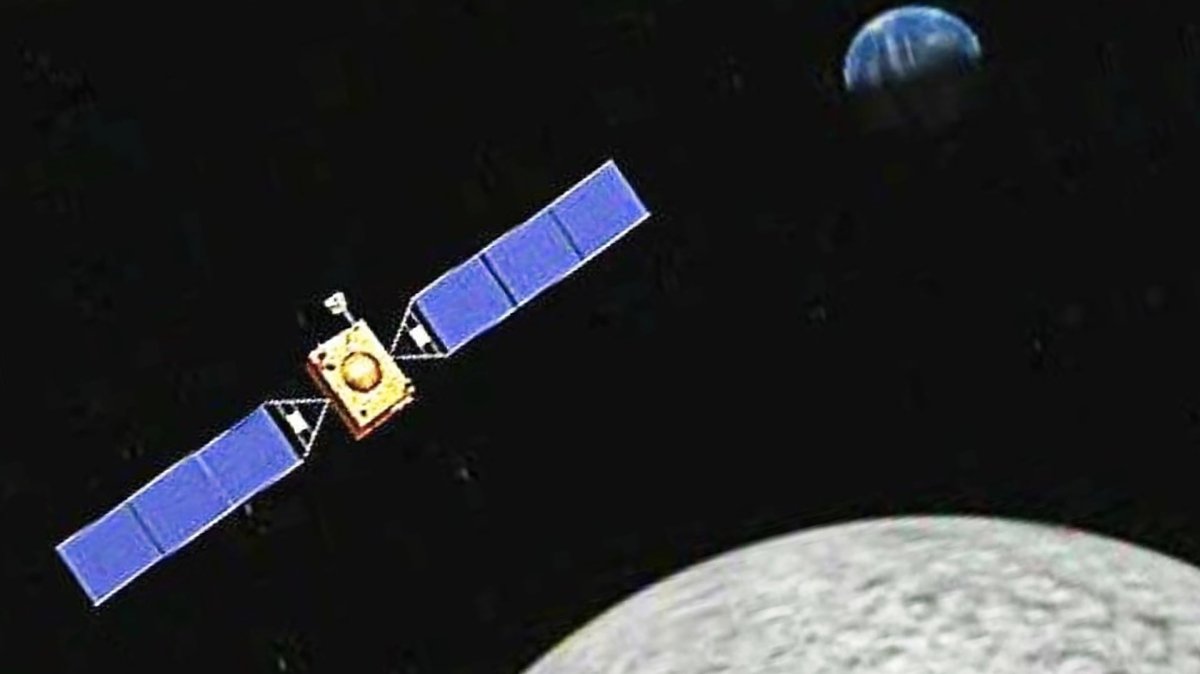
Defense One’s Patrick Tucker broke the story after noting comments made by Jeff Gossel, the top intel engineer within the Space and Missile Analysis Group that reports to the USAF’s National Air And Space Intelligence Center, at an Air Force Association gathering that took place last Friday. Gossel said that China’s Queqiao relay satellite, part of its larger Chang’e 4 lunar exploration mission to the dark side of the moon, took a ‘lunar swing-by’ path on its way to its final destination at Lagrangian Point Two. He is concerned that the satellite, or future satellites like it, may have a secondary mission that could include supporting craft that are anti-satellite weapons, not lunar surveyors or landing craft.
Gossel described the potential threat as such:
“You could fly some sort of a weapon around the moon and it comes back — it could literally come at [objects] in GEO… And we would never know because there is nothing watching in that direction… Why do you need a relay satellite flying around L2? So you can communicate with something that’s going to land on the other side of the moon—or so you can fly around the other side of the moon? And what would that mean for our assets at GEO?”
Gossel notes that the actual threat from Chang’e 4 remains small, but that it’s his job to identify these types of potential threats so that Pentagon can be better prepared in potential future conflicts.
China and Russia are racing to develop new anti-satellite capabilities. Just last month, we broke the story of what appeared to be a new Russian direct-ascent, air-launched, anti-satellite weapon, and it is just one facet of a layered anti-satellite approach Russia is taking when it comes to countering U.S. capabilities in space. China is also doing the same. You can read all about these emerging threats in this past feature of ours .
It is clear that America’s high-flying strategic satellites in geosynchronous orbit are increasingly vulnerable to attack. These include the aforementioned early warning satellites that serve a crucial role when it comes to ensuring America’s strategic deterrent. They not only warn of potential incoming ballistic missile attacks, but are sensitive enough to detect other significant heat-related events within Earth’s atmosphere. Other intelligence-gathering spacecraft, as well as weather, communications, navigational satellites, and more, that leverage the ability to stare persistently at one part of the globe also call the orbital region home. In total, roughly 600 satellites are up there, but not all of them are functioning.
While some may outright discount the possibility that China’s lunar space program is being used to also develop key military applications, I would tell them to look at all the other work being done in the anti-satellite space by China, much of which has to do with countering satellites in lower orbits. The ability to launch a sudden attack from behind on multiple strategic satellites that are built to provide early warning themselves seems like a highly relevant capability for the PLA to possess. Future space-based sensors that are now among the USAF’s highest priorities, such as those that can track ‘colder objects’ as they race through or above the upper atmosphere during the mid-course part of their flight, most notably hypersonic weapons, will call this orbital band home.
This, and China’s deep investment in hypersonic weaponry , in particular, is likely to press Beijing’s anti-satellite programs into high-gear. The Pentagon is open and clear about the fact that they see space-based sensors as the way to detect, track, and effectively counter hypersonic threats . And they are putting their money where their mouth is, with the objective of fielding the first of these satellites by early 2021 . Possessing the ability to swat these sensors down during a conflict would be highly important to the PLA, not just when it comes to sapping America of its panoptic situational awareness, but also just to ensure China’s own high-end weaponry can be successfully employed.
If anything else, this also serves as yet another reminder of how America’s most unguarded flank is space. It also adds credence to initiatives that aim at moving away from large, expensive, hard-to-build and largely vulnerable satellites, to constellations of rapidly deployable smaller ones that are far more resilient when it comes to anti-satellite weapons attacks.
The very idea that the U.S. could have some of its most important space-based eyes suddenly poked out, leaving commanders in the dark when it comes to strategic events across an entire region of the globe, is and should be troubling. The Chinese have proven to be incredibly cunning when it comes to precisely identifying the Pentagon’s warfighting weak spots and exploiting them . Knowing just how much U.S. forces depend on space for their asymmetric combat advantage makes investing in elaborate capabilities to deny such an advantage make total sense. The fact that China could potentially be doing so while also pushing forward a moon shot initiative is a win-win, both in terms of deniability and in terms of return on investment.
With all the talk now being that the U.S. and China have entered into a new Cold War , only expect more suspicious and potentially ‘dual use’ Chinese space exploration initiatives in the future.
Contact the author: Tyler@thedrive.com
Comments couldn’t be loaded. Please refresh the page.
更新于美国东部时间2019年12月1日上午7:11
中国正持续推进其雄心勃勃的月球基地计划,该计划据称旨在2030年前后实现载人登月。但人们逐渐担忧,为支持该计划而发射的卫星可能另有不可告人的目的——攻击五角大楼位于地球同步轨道(距地球表面约22000英里)的最关键天基资产。这些资产包括战略监视平台,例如美国的天基红外预警卫星网络,该网络能够探测并跟踪弹道导弹在早期助推阶段乃至更远阶段的发射。
《防务一号》的帕特里克·塔克率先报道了此事。他注意到,美国空军国家航空航天情报中心下属空间与导弹分析小组的首席情报工程师杰夫·戈塞尔在上周五举行的空军协会会议上发表了评论。戈塞尔表示,中国嫦娥四号探月任务的中继卫星“鹊桥”在前往最终目的地拉格朗日点二的途中,采用了“月球绕飞”轨道。他担心这颗卫星,或者未来类似的卫星,可能还有其他次要任务,例如搭载反卫星武器,而非月球勘测器或着陆器。
戈塞尔这样描述这种潜在威胁:
“你可以让某种武器绕月飞行,然后它返回——它真的可以攻击地球同步轨道上的[目标]……而我们永远不会知道,因为那个方向没有任何监视……为什么需要一颗中继卫星绕着L2轨道飞行?是为了与即将降落在月球背面的物体通信——还是为了绕着月球背面飞行?这对我们在地球同步轨道上的资产意味着什么?”
戈塞尔指出,嫦娥四号带来的实际威胁仍然很小,但他的职责是识别这类潜在威胁,以便五角大楼能够更好地为未来可能发生的冲突做好准备。
中国和俄罗斯正在竞相研发新型反卫星能力。就在上个月,我们独家报道了俄罗斯疑似研制出一种新型的直接上升式空射反卫星武器,而这仅仅是俄罗斯为应对美国太空能力而采取的多层次反卫星战略的一个方面。中国也在进行类似的研发。您可以在我们之前的专题报道中详细了解这些新兴威胁。
显然,美国在地球同步轨道上运行的高空战略卫星越来越容易受到攻击。这其中包括前文提到的预警卫星,它们在确保美国战略威慑方面发挥着至关重要的作用。这些卫星不仅能预警潜在的来袭弹道导弹攻击,而且灵敏度极高,能够探测地球大气层内其他与热相关的重大事件。其他情报收集卫星,以及气象卫星、通信卫星、导航卫星等,也利用其持续观测地球特定区域的能力,部署在该轨道区域。总共有大约600颗卫星在该轨道上运行,但并非所有卫星都在正常工作。
尽管有些人可能完全否认中国探月计划也被用于开发关键军事应用的可能性,但我认为他们应该关注中国在反卫星领域开展的其他工作,其中很多都与对抗低轨道卫星有关。解放军似乎拥有从后方对多颗旨在提供预警的战略卫星发动突袭的能力,这至关重要。未来一些天基传感器,例如能够追踪飞行中段穿过或飞越高层大气的“冷目标”(尤其是高超音速武器)的传感器,都将部署在这一轨道频段,而这些传感器目前也是美国空军的重点发展方向之一。
这一点,尤其是中国对高超音速武器的大量投入,很可能促使北京的反卫星计划加速推进。五角大楼公开明确地表示,他们认为天基传感器是探测、跟踪和有效应对高超音速威胁的途径。他们也正在言行一致,目标是在2021年初部署首批此类卫星。在冲突中,拥有拦截这些传感器的能力对解放军至关重要,这不仅能削弱美国的全面态势感知能力,还能确保中国自身的高端武器能够有效发挥作用。
除此之外,这也再次提醒人们,太空是美国最薄弱的环节。这也进一步印证了那些旨在摒弃大型、昂贵、难以建造且极易受损的卫星,转而采用可快速部署的小型卫星星座的倡议的合理性。这些小型卫星在抵御反卫星武器攻击方面更具韧性。
美国最重要的太空观测能力可能突然被削弱,导致指挥官对整个地区的战略动态一无所知,这种想法本身就令人担忧,而且理应如此。中国在精准识别并利用五角大楼的作战弱点方面,已经展现出惊人的狡猾。鉴于美军在非对称作战中对太空的依赖程度,投资建设精密的太空能力来削弱这种优势完全合情合理。中国有可能在推进登月计划的同时,也进行类似的太空能力建设,这对于中国来说可谓一举两得,既有利于否认行动,又有利于投资回报。
现在到处都在谈论中美两国已经进入新冷战,未来中国太空探索计划只会更加可疑,甚至可能具有“军民两用”性质。
联系作者:Tyler@thedrive.com
评论加载失败,请刷新页面。