What 9/11 Was Like For The Only American That Watched It From Space唯一一位从太空目睹9/11事件的美国人的感受
The only American in space on 9/11 had no idea the towers were hit until he made a call to NASA. He soon saw ground zero for himself from orbit.
新闻视频
By Joseph Trevithick
Published Sep 11, 2021 1:33 PM EDT
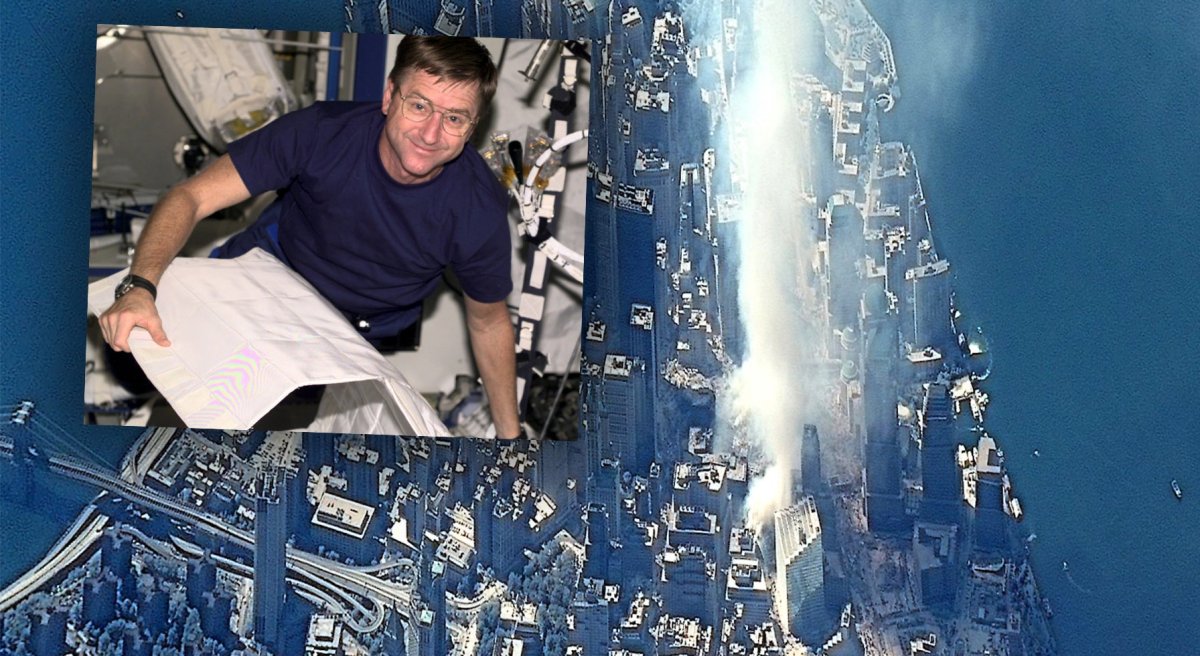
This year marks the 20th anniversary of the world-changing 9/11 terrorist attacks in New York City and Washington, D.C. It is always a solemn occasion that is often fraught with conflicting emotions. It is also typically a time for very personal reflections on the attacks, the immediate aftermath, and the far-reaching impacts that continue to be felt today. Every American who is old enough to remember has a story about where they were when it happened. Only one American, though, former NASA astronaut Frank Culbertson, was not on Earth at the time and bore witness to the tragedy from the International Space Station , not always knowing exactly what was going on.
Culbertson shared his recollections about that fateful day with Rich Cooper, the Space Foundation’s Vice President of Communications and co-host of that organization’s Space4U podcast , on the sidelines of the 36th annual Space Symposium , which was held in Colorado Springs, Colorado in August. You can listen to the full 9/11 edition of the Space4U podcast featuring Culbertson here .
A picture of New York City taken from the International Space Station in the aftermath of the 9/11 terrorist attacks., NASA
In addition to being a former astronaut, Culbertson is a retired U.S. Navy aviator who served during the Vietnam War and who is also a graduate of the Naval Test Pilot School. Prior military service is not at all uncommon among NASA astronauts . He recently retired as President of the Space Systems Group at Northrop Grumman Innovation Systems, but continues to run his own company, Higher Flight LLC, and is also currently a member of the Space Foundation’s Executive Committee.
“The 10th was just a regular day. We were preparing to receive a new module,” Culbertson told Cooper to start his story. “And so we’d been going through the checklist for that and making sure that everything was ready on the station for that went through our normal routines, you know, worked out some experiments and, and did some communications with the ground.”
At the time, Culbertson was the mission commander of Expedition 3 to the International Space Station (ISS). Of the three individuals on the station, he was the only American. The other two people on board, Vladimir Dezhurov and Mikhail Tyurin, were Russian cosmonauts. This was Culbertson’s third trip into space, having also been part of Space Shuttle missions in 1990 and 1993.
The members of Expedition 3 to the ISS, from left to right, Mikhail Tyurin, Frank Culbertson, and Vladimir Dezhurov., NASA
“On the 11th, my first task of the day was to, after normal stuff, you know, maintenance and things, was to… conduct physicals, medical physicals on all the crew,” Culbertson recalled. “I was basically the flight surgeon, yeah, the commander and the flight surgeon, but my dad was a physician so I think that justified it.”
Culbertson explained to Cooper that, at the time, this medical data was collected every 30 days or so during missions to the ISS. As it turned out, Sept. 11, 2001, was their 30th day in orbit.
Frank Culbertson works on the ISS during the Expedition 3 mission., NASA
“So the plan was to call the ground on the secure circuit and encrypted circuit, so that, because it was private medical information, and talk to the flight surgeon. Uh, Dr. Steve Hart,” Culbertson said. “And so I called the ground and they finally connected me to him and I said, ‘Hey, Steve, how’s it going?’ And, you know, [I was] ready to give him the information and just catch up.”
“Cause he’s a good friend, Steve said, ‘well, Frank, we’re not having a very good day down here on Earth,'” he continued. “And my first thought was there must’ve been an accident or some family member has a problem, or who knows what, but I’m sure he’s gonna tell me, but I was a little leery of what it might be.”
When Culbertson first called Hart, two hijacked airliners had already struck the Twin Towers in New York City, while a third had slammed into the Pentagon in Washington, D.C. While the two men were on the phone, news broke that a fourth had crashed in Pennsylvania. That aircraft, a Boeing 757 flying that day as United Airlines Flight 93, was the only one not to reach its intended target, which had been the Capitol building in Washington, after passengers overpowered their captors .
A satellite image of the Pentagon in Washington, D.C., in the aftermath of the 9/11 terrorist attacks., Maxar Technologies
A satellite image of the area in Somerset County, Pennsylvania, where United Airlines Flight 93 crashed., Maxar Technologies
It eventually emerged that these attacks were part of an elaborate plot carried out by the terrorist group Al Qaeda. A total of 2,977 people died.
“The other odd thing was I was halfway through Tom Clancy’s A [sic; The] Sum of All Fears on an audiobook. Fabulous book,” Culbertson said, remarking on how surreal it all felt. “I thought, am I in a book? Is this a movie? I mean, is this real? And just kind of fleeting thoughts and as he’s [Hart’s] describing it and, you know, asked a few questions, I call my crewmates in to where we were talking in the laboratory.”
“They needed to hear what was going on. And of course, they were very concerned and very serious. Russia had been attacked by terrorists several times in the preceding couple of years,” he noted, adding that 94 Russians died in the World Trade Center towers. “And, uh, you know, we had no idea how widespread this attack was going to be, how many countries might be involved.”
Culbertson eventually realized the station’s orbit was taking it over Canada and that the northeastern portion of America, including New York City, would soon be visible. As the ISS continued on its course, some 230 miles above the surface of the Earth, the tragedy came into view.
“It actually was Michael’s bedroom window that I was looking out of. And [I] clearly see the smoke rising out of New York, out over Long Island, over the Atlantic,” the former astronaut recalled. “So it made it easy to zoom in with the camera and look at what was happening. And as I zoomed in, a big gray blob, enveloped Southern Manhattan, and it turned out, I found out later, what I was seeing was the second tower come down.”
Another picture of the aftermath of the 9/11 terrorist attacks taken from the ISS., NASA
“To me, it was just explosions. And, and again, you’re 230 miles above the Earth… And traveling at five miles a second. So it’s going away pretty quickly and I stayed focused on it as long as I could,” he continued. “I made some comments and said some words about bringing these people to justice and how much it hurt me to see my country under attack.”
The ISS completed one orbit around the Earth every 90 minutes or so. Culbertson, together with Dezhurov and Tyurin, used that time to set up more still and video cameras to be able to get more shots of what happening down below on the next pass. The second time around they also saw smoke coming from Washington, D.C., where the Pentagon had been hit. Culbertson also remarked to Cooper about what they didn’t see.
“Almost all of the contrails that are normally a spiderweb over the United States had disappeared because they had grounded all the airplanes,” he explained. “Except for one airplane that I saw streaking across the country, which, for a long time, I thought was Air Force One, trying to get the president back.”
One of the U.S. Air Force’s VC-25A presidential aircraft, commonly referred to as Air Force , carrying President George W. Bush and others, was one of the only planes in the sky over America after the attacks. Culbertson says, based on a conversation he subsequently had with a U.S. military pilot who had been flying that day, that he now believes the plane he saw was an “airborne command post” aircraft, possibly an E-3 Sentry Airborne Warning and Control System (AWACS) jet, that was diverted from a training mission to “control the fighters on the east coast.” E-4B Nightwatch National Airborne Operations Centers (NAOC), commonly referred to as “ Doomsday Planes ,” were also in the air.
President George W. Bush speaks on the phone from Air Force One after the 9/11 terrorist attacks., Eric Draper/George W. Bush Presidential Library and Museum
Culbertson, along with the Russian cosmonauts on the ISS, continued to get other sporadic updates on the situation over the course of the day and into the next. The day after he wrote a letter with his immediate reactions that NASA subsequently published , along with a second one two days later.
“It’s horrible to see smoke pouring from wounds in your own country from such a fantastic vantage point,” he had written. “The dichotomy of being on a spacecraft dedicated to improving life on the earth and watching life being destroyed by such willful, terrible acts is jolting to the psyche, no matter who you are.”
It was also on Sept. 12 that he received word of a more personal detail regarding the attacks. Culbertson had attended the Naval Academy with Chic Burlingame, who had also become a naval aviator, and the two had been friends since 1967. On Sept. 11, Burlingame had been the pilot of American Airlines Flight 77, the Boeing 757 that smashed into the Pentagon.
“We played the drum and bugle Corps together. We both were trying to fly the F-4 Phantom at the same time,” Culbertson said. “And we’d known each other since 1967. And so it became very personal.”
With no one really knowing at that point whether the 9/11 attacks were a singular incident or the start of something broader, Culbertson’s remarks to Cooper seem to suggest that speculation about what might happen next was rife. Don Pettit, one of the individuals supporting Expedition 3 back on Earth, decided to send an Email about the potential for a ballistic missile attack on the ISS.
“He sent me an email and said, ‘Hey Frank, I just want you to know I’ve done the calculations and they actually could hit you with a Scud missile if they got lucky, because they can get to that altitude. It’s not guided, but you know, they might get lucky,'” Culbertson recalled. “And I said, ‘thanks for [that] Don. Thanks a lot for that.’… I gave him grief about that when I got back.”
The Space Foundation’s Cooper also pointed out that astronauts often do remote engagements with schools and others in the community from the ISS. Culbertson said that he was scheduled to do a number of these kinds of events beforehand. In November, before coming back, he had spoken to kids from a public school just blocks from Ground Zero in New York City.
“They had to change schools three times over the next week because of all the rescue and recovery operations that were going on,” he remembered, adding that it was not clear if it was going to be possible to make contact with them in the end. “I did make contact with the, with the school, answered their questions as thoroughly as I could.”
Expeditionary 3 to the ISS ultimately ended, as scheduled, on Dec. 15, 2001. Culbertson, Dezhurov, and Mikhail Tyurin all made it safely back to Earth. By that point, personnel from the Central Intelligence Agency and U.S. Army Special Forces units had already moved into Afghanistan, where Al Qaeda had its main base of operations. Providing local groups with American airpower and other resources, they had helped unseat the nominal government in the country at the time, led by the Taliban, before the year was out.
The Taliban have, of course, just returned to power after the stunningly collapse of the U.S.-backed government in Afghanistan amid the planned withdrawal of American troops after nearly two decades, which subsequently turned into a controversially chaotic and deadly evacuation mission . The group now looks set to announce the formal establishment of its new government on Sept. 11, which will only add a new layer to the many emotions that the anniversary always stirs up.
For Culbertson, he came back to an Earth that was already shifting in monumental ways. “I was prepared for it. I mean, people have been sending me pictures and descriptions of what had happened in the days and weeks afterwards, and what changes have been made in security and with the airports, et cetera, and how a lot of things just weren’t accessible anymore,” he explained. Still, “we did, we did come back to a different world and as we reacclimated and, you know, had to travel around the country around the world to, you know, for post-flight or to do our business or go anywhere. We saw it clearly. So for us, it was a big change.”
Frank Culbertson gives two thumbs up around the start of Expedition 3 to the ISS in August 2001., NASA
“The, the events of … this past week in Afghanistan remind us of how fragile peace can be and how fragile our nation and civilization and constancy can be, if we don’t maintain security the way we should,” Culbertson further told Cooper in a concluding statement on the podcast. “So I’m concerned about where things are going right now and whether anything else will happen.”
“We need to value those freedoms, as well as value our security, and pay attention, as things change around the world,” he added. “By the same token, when you accomplish great things together, as international partners, it strengthens all the countries involved and sets a good example for how people should, should behave.”
Though this year’s 9/11 anniversary does seem to come at a time of particular uncertainty in many respects around the world, we here at The War Zone are certainly grateful that Culbertson has been willing and able to share his unique perspective on the infamous moment in human history. These kinds of very personnel recollections are key to ensuring that, whatever the future might hold, no one forgets what happened on that terrible day.
Contact the author: joe@thedrive.com
Comments couldn’t be loaded. Please refresh the page.
作者:约瑟夫·特雷维西克
发布于美国东部时间2021年9月11日下午1:33
今年是改变世界的“9·11”恐怖袭击事件20周年,该事件发生在纽约市和华盛顿特区。这始终是一个庄严肃穆的日子,人们往往百感交集。同时,这也是人们反思袭击事件、其直接后果以及至今仍在持续的深远影响的时刻。每个有足够记忆的美国人都有一段关于事发时自己身在何处的故事。然而,只有一位美国人——前NASA宇航员弗兰克·卡尔伯特森——当时不在地球上,而是在国际空间站目睹了这场悲剧,尽管他并非总是完全了解当时的情况。
在8月于科罗拉多州科罗拉多斯普林斯举行的第36届年度太空研讨会间隙,库尔伯特森与太空基金会通讯副总裁兼该组织Space4U播客联合主持人里奇·库珀分享了他对那个悲剧日子的回忆。您可以在这里收听库尔伯特森参与的Space4U播客9/11特辑完整版。
这是美国国家航空航天局(NASA)在9·11恐怖袭击事件后,从国际空间站拍摄的纽约市照片。
除了曾是宇航员之外,库尔伯特森还是一位退役的美国海军飞行员,曾在越南战争期间服役,并毕业于海军试飞员学校。在NASA宇航员中,有服役经历并不罕见。他最近从诺斯罗普·格鲁曼创新系统公司空间系统集团总裁的职位上退休,但仍然经营着自己的公司Higher Flight LLC,并且目前还是太空基金会执行委员会的成员。
“10号那天一切如常。我们正在准备接收一个新的模块,”库尔伯特森告诉库珀,以此作为他故事的开篇。“所以我们一直在核对清单,确保空间站上的所有设备都准备就绪,然后进行一些日常操作,你知道,做一些实验,并与地面进行一些通信。”
当时,库尔伯特森是国际空间站(ISS)第三远征队的任务指挥官。空间站上的三名宇航员中,他是唯一一位美国人。另外两名宇航员,弗拉基米尔·杰茹罗夫和米哈伊尔·秋林,是俄罗斯宇航员。这是库尔伯特森第三次进入太空,他曾于1990年和1993年两次搭乘航天飞机执行任务。
国际空间站第三远征队成员,从左至右:米哈伊尔·秋林、弗兰克·卡尔伯特森和弗拉基米尔·杰茹罗夫。(美国国家航空航天局)
“11号那天,我当天的第一项任务,在完成一些日常维护工作之后,就是给所有机组人员进行体检,也就是医疗体检,”库尔伯特森回忆道。“我基本上就是飞行外科医生,没错,我是机长兼飞行外科医生,但我父亲是医生,所以我认为这是合理的。”
库尔伯特森向库珀解释说,当时,在国际空间站任务期间,大约每30天收集一次这类医疗数据。结果发现,2001年9月11日是他们在轨道上的第30天。
弗兰克·卡尔伯特森在国际空间站执行第三次远征任务期间工作。(美国宇航局)
“所以计划是通过安全加密线路联系地面,因为这是私人医疗信息,这样就可以和飞行外科医生史蒂夫·哈特医生通话了,”库尔伯特森说。“于是我拨通了地面电话,他们最终帮我接通了他,我说,‘嘿,史蒂夫,你好吗?’你知道,我准备把信息告诉他,顺便聊聊近况。”
“因为他是我的好朋友,史蒂夫说,‘弗兰克,我们今天在人间过得不太好,’”他继续说道。“我当时的第一反应是,肯定是出了什么意外,或者家里哪个人出了什么问题,谁知道呢,但我相信他会告诉我的,只是我有点担心到底发生了什么事。”
当库尔伯特森第一次给哈特打电话时,两架被劫持的客机已经撞向了纽约世贸双塔,第三架则撞向了华盛顿特区的五角大楼。两人通话期间,又传来消息,第四架飞机在宾夕法尼亚州坠毁。这架波音757客机,当天执飞的是联合航空93号航班,是唯一一架未能抵达预定目标——华盛顿国会大厦——的飞机,因为乘客制服了劫机者。
这是9/11恐怖袭击事件后,华盛顿特区五角大楼的卫星图像。(Maxar Technologies)
这是宾夕法尼亚州萨默塞特县的卫星图像,美联航93号航班在此坠毁。(图片来源:Maxar Technologies)
最终证实,这些袭击是恐怖组织基地组织精心策划的一部分。共有2977人死亡。
“还有一件怪事,当时我正在听汤姆·克兰西的《恐惧的总和》有声书,听了一半。那本书太棒了,”库尔伯特森说道,并感慨这一切有多么不真实。“我当时想,我是在书里吗?这是在拍电影吗?我是说,这是真的吗?这些念头转瞬即逝,就在他(哈特)描述着这一切,并问了我几个问题的时候,我叫我的船员们过来,我们当时正在实验室里聊天。”
“他们需要了解情况。当然,他们非常担忧,也非常重视。在前几年,俄罗斯曾多次遭受恐怖袭击,”他指出,并补充说,有94名俄罗斯人在世贸中心双塔中丧生。“而且,你知道,我们当时根本不知道这次袭击的范围会有多广,有多少国家可能牵涉其中。”
库尔伯特森最终意识到,空间站的轨道正使其飞越加拿大上空,包括纽约市在内的美国东北部地区很快就会出现在视野中。随着国际空间站继续其轨道运行,在距离地球表面约230英里(约370公里)的高度,悲剧的景象逐渐映入眼帘。
“当时我其实是从迈克尔的卧室窗户往外看的。我清楚地看到纽约上空升起浓烟,飘过长岛,飘过大西洋,”这位前宇航员回忆道。“所以很容易就能用相机放大画面,看看发生了什么。当我放大画面时,一大片灰色的云团笼罩了曼哈顿南部,后来我才知道,我看到的其实是第二座世贸中心大楼倒塌了。”
这是从国际空间站拍摄的9/11恐怖袭击事件后的另一张照片。(美国宇航局)
“对我来说,那只是爆炸声。而且,再说一遍,你当时在地球上方230英里处……以每秒5英里的速度飞行。所以它很快就消失了,我尽可能长时间地保持专注,”他继续说道。“我发表了一些评论,表达了将这些人绳之以法的决心,以及看到我的国家遭受攻击我有多么痛心。”
国际空间站大约每90分钟绕地球运行一周。库尔伯特森与德茹罗夫和秋林利用这段时间架设了更多照相机和摄像机,以便在下次飞越时拍摄更多地面情况。第二次飞越时,他们还看到华盛顿特区冒出浓烟,五角大楼在那里遭到袭击。库尔伯特森还向库珀讲述了他们没有看到的情况。
他解释说:“通常在美国上空形成一张蜘蛛网状的飞机尾迹几乎全部消失了,因为所有飞机都停飞了。只有一架飞机飞速掠过全国,很长一段时间里,我都以为那是空军一号,正试图接总统回来。”
一架美国空军VC-25A总统专机(通常被称为“空军飞机”),载着乔治·W·布什总统和其他乘客,是袭击事件发生后美国上空为数不多的几架飞机之一。库尔伯特森表示,根据他后来与一位当天执飞的美国军方飞行员的交谈,他现在认为他看到的飞机是一架“空中指挥所”飞机,可能是一架E-3“哨兵”空中预警与控制系统(AWACS)喷气式飞机,它原本执行的是训练任务,后来被调来“指挥东海岸的战斗机”。E-4B“夜视”国家空中作战中心(NAOC)(通常被称为“末日飞机”)也在空中飞行。
9·11恐怖袭击事件发生后,乔治·W·布什总统在空军一号上打电话。(图片来源:埃里克·德雷珀/乔治·W·布什总统图书馆和博物馆)
库尔伯特森与国际空间站上的俄罗斯宇航员一起,在当天及第二天继续收到关于局势的零星更新。第二天,他写了一封信,表达了他当时的直接反应,美国宇航局随后公布了这封信;两天后,他又写了第二封信。
“从如此绝佳的视角看到自己国家的伤口冒出滚滚浓烟,真是太可怕了,”他写道。“身处致力于改善地球生命的宇宙飞船上,却眼睁睁地看着生命被如此蓄意、可怕的行径摧毁,这种矛盾的感受无论对谁来说,都会造成巨大的精神冲击。”
也是在9月12日,他得知了有关袭击事件的一个更私人的细节。库尔伯特森曾与奇克·伯林盖姆一同就读于海军学院,伯林盖姆后来也成为了一名海军飞行员,两人自1967年以来一直是朋友。9月11日,伯林盖姆正是美国航空77号航班的飞行员,那架波音757客机撞向了五角大楼。
“我们曾一起在鼓号队演奏。我们俩当时都想同时驾驶F-4‘鬼怪’战斗机,”库尔伯特森说。“而且我们从1967年就认识了。所以这件事对我们来说意义非凡。”
当时没有人真正知道9/11袭击事件是孤立事件还是更大规模事件的开端,库尔伯特森对库珀说的话似乎表明,关于接下来可能发生的事情的猜测甚嚣尘上。唐·佩蒂特是地球上支持第三远征队的成员之一,他决定就国际空间站可能遭受弹道导弹袭击一事发送一封电子邮件。
“他给我发了封邮件,说:‘嘿,弗兰克,我只是想让你知道,我已经算过了,如果他们运气好,飞毛腿导弹真的能打中你,因为他们能飞到那个高度。虽然它没有制导,但你知道,他们或许能走运,’”库尔伯特森回忆道。“我说:‘谢谢你啊,唐。真是太感谢你了。’……我回去后就拿这件事好好嘲笑了他一番。”
太空基金会的库珀也指出,宇航员经常从国际空间站与学校和其他社区组织进行远程互动。库尔伯特森表示,他此前就计划进行多次此类活动。去年11月,在返回地球之前,他曾与纽约市世贸中心遗址附近一所公立学校的孩子们交流。
“由于救援和善后工作正在进行,他们在接下来的一周内不得不转学三次,”他回忆道,并补充说,当时还不确定最终是否能与他们取得联系。“我最终联系上了他们,也联系上了学校,并尽可能详尽地回答了他们的问题。”
国际空间站第三次远征任务最终按计划于2001年12月15日结束。库尔伯特森、德茹罗夫和米哈伊尔·秋林均安全返回地球。此时,中央情报局和美国陆军特种部队的人员已经进入阿富汗,那里是基地组织的主要行动基地。他们向当地武装组织提供美国空中力量和其他资源,并在当年年底前帮助推翻了当时由塔利班领导的名义上的阿富汗政府。
当然,在美军计划结束近二十年的驻阿美军撤离之际,阿富汗政府因美国支持的政府的突然垮台而重掌政权。而美军撤离行动最终演变成一场充满争议、混乱且伤亡惨重的撤离行动。如今,塔利班似乎准备在9月11日正式宣布成立新政府,这无疑将为这个周年纪念日所引发的诸多复杂情绪再添一层新的色彩。
对库尔伯特森来说,他回到地球时,世界已经发生了翻天覆地的变化。“我对此早有准备。我的意思是,人们一直在给我发照片和描述,讲述之后几天几周发生的事情,以及安保、机场等方面的变化,还有很多事情变得无法再去了,”他解释道。尽管如此,“我们确实回到了一个截然不同的世界,当我们重新适应,并且不得不为了下飞机后的行程、处理公务或去任何地方而奔波于全国各地乃至世界各地时,我们清楚地看到了这一切。所以对我们来说,这是一个巨大的变化。”
2001年8月,在国际空间站第三次远征任务开始之际,弗兰克·卡尔伯特森竖起了两个大拇指。(美国国家航空航天局)
“过去一周在阿富汗发生的事件提醒我们,和平是多么脆弱,如果我们不以应有的方式维护安全,我们的国家、文明和稳定又是多么脆弱,”库尔伯特森在播客的结尾处对库珀说道。“所以我很担心事态的发展方向,以及是否还会发生其他事情。”
他补充道:“我们需要珍视这些自由,也需要珍视我们的安全,并密切关注世界局势的变化。同样,当国际伙伴携手取得伟大成就时,这不仅能增强所有相关国家的力量,还能为人们树立良好的行为榜样。”
尽管今年的9/11事件周年纪念日似乎正值全球诸多方面充满不确定性之际,但我们“战区”栏目组非常感激库尔伯特森愿意并能够分享他对人类历史上这一臭名昭著的时刻的独特见解。这类极具个人色彩的回忆至关重要,它能确保无论未来如何,都不会有人忘记那可怕的一天所发生的一切。
联系作者:joe@thedrive.com
评论加载失败,请刷新页面。