Declassified: US Honors Swedish Pilots For Escorting Stricken SR-71 To Safety During Cold War解密:美国表彰瑞典飞行员在冷战期间护送受损的SR-71侦察机安全撤离
The Blackbird had suffered an engine failure during a mission over the Baltic Sea and its crew feared that Soviet jets might be hunting for them.
新闻视频
By Joseph Trevithick
Updated Dec 1, 2019 7:06 AM EST
Just the other day, four Swedish Air Force officers received Air Medals from the U.S. Air Force for a Cold War mission that had remained classified until just last year. On what might have been just any other day in 1987, they had helped escort a stricken SR-71 Blackbird spy plane through Sweden’s airspace and on its way to safety, potentially shielding it from any marauding Soviet aircraft.
Swedish Air Force Colonel Lars-Eric Blad, Major Roger Moller, Major Krister Sjoberg, and Lieutenant Bo Ignell got their medals during a ceremony at the U.S. Embassy in Stockholm, Sweden on Nov. 28, 2018 . The U.S. military as a whole awards Air Medals for singular acts of heroism or other particular meritorious achievements during a flight. Retired U.S. Air Force Lieutenant Colonels Duane Noll and Tom Veltri, the pilots aboard the SR-71 during the Cold War incident, were also present.
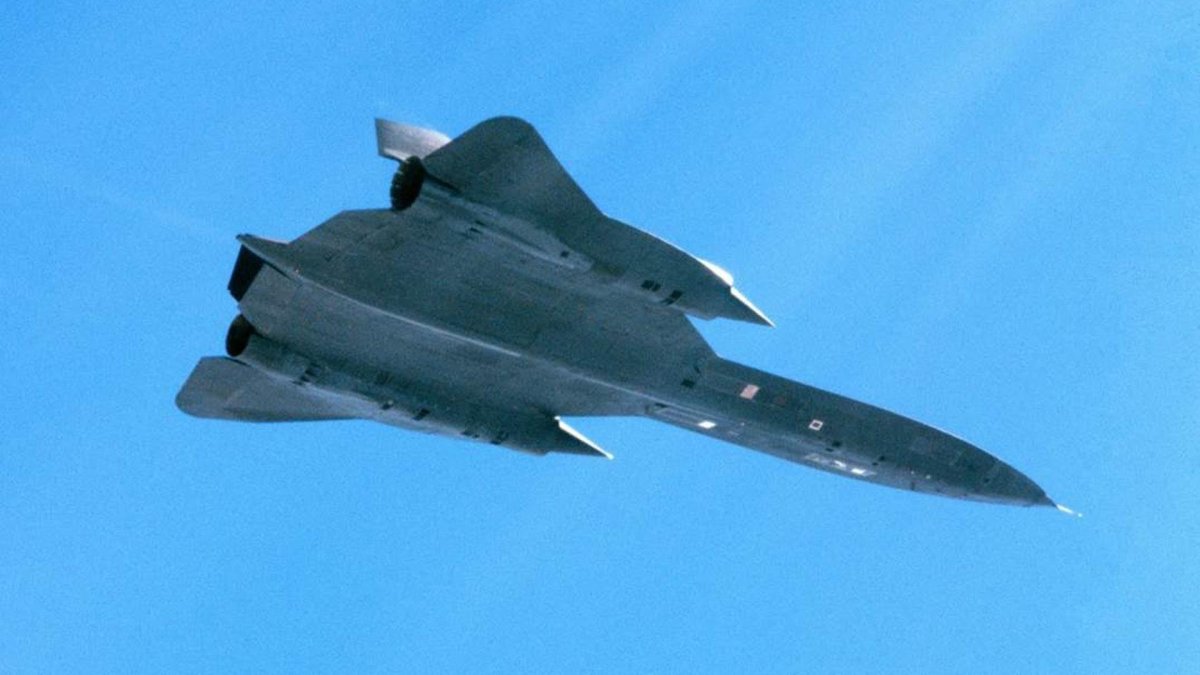
The Swedish aviators also received a painting depicting the event. The Swedish Armed Forces, or Forsvarsmakten , released a picture, seen at the top of this story, of the SR-71 that Ingell had taken at the time.
“We will never know what would or could have happened, but because of you, there was no international incident. The U.S. Air Force did not lose an irreplaceable aircraft, and two crew members’ lives were saved,” Noll said during the medal presentation ceremony. “Thank you for being highly skilled and dedicated patriotic fellow aviators.”
From left to right, Swedish Air Force Colonel Lars-Erik Blad, Major Roger Moller, Major Krister Sjober and Retired U.S. Air Force Lieutenant Colonel Tom Veltri during the medal ceremony at the US Embassy in Stockholm., USAF
On June 29, 1987, Noll and Veltri took off from RAF Mildenhall in the United Kingdom for missions in the Barents Sea and Baltic Sea, flying at high altitude and using a slanted flight path to gather imagery inside the Soviet Union from international airspace. This would allow the plane to grab imagery of various important sites, including Soviet military facilities in the Kola Peninsula and around the Baltic Sea .
During the “Baltic Express” portion of the mission, one of the SR-71’s engines suffered a catastrophic failure. It was not the first time one of the Air Force’s Blackbirds had experienced engine trouble while flying in the region.
The plane dropped more than 24,000 feet in a matter of minutes and ended up in Swedish airspace as it turned away from the Soviet Union, according to the Forsvarsmakten . The engine failure wasn’t the only issue the pilots were worried about, though.
An SR-71 Blackbird., NASA
The Soviet Union had long made it clear that it would shoot down American intelligence gathering aircraft if they penetrated its airspace, making the point particularly felt with the shootdown of CIA pilot Gary Powers in his U-2 in 1960 . Soviet fighter jets also aggressively challenged U.S. spy planes operating in international waters, something present-day Russia continues to do , as well. There is an inherent risk of airspace violations in the narrow confines of the Baltic Sea region in general and Soviets might have been able to argue that the SR-71 had intruded into their territory, if only briefly, as a justification for trying to bring the stricken plane down.
“We did not know who would find us first,” Veltri said , adding that he and Noll were concerned about marauding Russian fighters. He continued on to say that he and Noll were thrilled to see the Swedish pilots in their distinctive Saab Viggen fighter jets and were sure from that point on that Soviet jets would keep their distance. Sweden wasn’t and still isn’t a member of the NATO alliance, but has historically found itself more aligned with the bloc than not. During the Cold War, the Swedish military actively patrolled the country’s air, land, and sea borders for intrusions from either side, though.
“We were performing an ordinary peacetime operation exercise,” retired Swedish Air Force Major Moller said at the medal ceremony . “Our fighter controller then asked me, ‘are you able to make an interception and identification of a certain interest?’ I thought immediately it must be an SR-71, otherwise he would have mentioned it. But at that time I didn’t know it was the Blackbird.”
Moller and Sjoberg were the first on the scene, confirming that it was an SR-71 and that it appeared to be experiencing some sort of malfunction. Noll and Veltri also eventually switched their plane’s transponder to issue the code “7700,” indicating an in-flight emergency.
Running low on fuel, Moller and Sjoberg had to return to base, turning things over to Blad and Ignell who had scrambled to relieve them. The Viggens remained at a safe distance from the SR-71, but continued to follow the Blackbird as the crew descended and reduced speed. It was unclear, initially, to the Swedish pilots if their American counterparts would be able to maintain control or would have to bail out.
Noll and Veltri were able to get the plane out of Swedish airspace on one engine. After that, they flew into Denmark, a NATO country, and from there into what was then West Germany, another member of the bloc. The Air Force pilots were able to make an emergency landing at the German Navy’s Nordholz Naval Air Base , situated on the North Sea.
With the SR-71 safely recovered and the Swedes agreeing not to reveal the extent of the incident publicly, the event remained classified along with the Blackbird’s other operations. The details of the mission became unclassified in 2017 after a standard 30-year declassification period. This also meant that the Air Force could finally honor the Swedish pilots for rending assistance at the time.
“That day in 1987 showed us that we can always count on our Swedish partners in times of great peril,” U.S. Air Force Major General John Williams, who serves as the Mobilization Assistant to the head of U.S. Air Forces in Europe (USAFE) and Air Forces Africa (AFAFRICA), said at the ceremony , where he personally presented the medals. “Even when there was both political risk and great physical risk in the form of actual danger, there was no hesitation on your part to preserve the pilots on that day.”
U.S. Air Force Major General John Williams speaks during the medal ceremony in Stockholm., USAF
These sentiments are equally important today given Russia’s increasingly assertive actions in and around Scandinavia and the Baltic region, as part of that country’s shift to a more aggressive foreign policy in general. Russian jets have aggressively intercepted American intelligence aircraft in international airspace in the region in recent years , some of which fled into Swedish airspace .
The Kremlin has also violated Sweden’s airspace itself . All of this has increasingly led to discussions in Sweden about potentially joining NATO , which has, in turn, drawn sharp rebukes from Russia.
Regardless, the ties between the Swedish armed forces and the alliance have been and are continuing to grow. Sweden recently sent forces to take part in the massive NATO exercise Trident Juncture in Norway, which wrapped up earlier in November 2018.
But whatever happens on the geopolitical stage, it’s great to see these Swedish pilots finally receive the credit they deserve for coming to the aid of Noll’s and Veltri when it mattered most.
Contact the author: jtrevithickpr@gmail.com
Comments couldn’t be loaded. Please refresh the page.
作者:约瑟夫·特雷维西克
更新于美国东部时间2019年12月1日上午7:06
就在前几天,四名瑞典空军军官因一项冷战时期执行的任务而获得美国空军颁发的航空勋章。这项任务直到去年才被公开。在1987年一个看似平常的日子里,他们护送一架受损的SR-71“黑鸟”侦察机穿越瑞典领空,前往安全地带,并有可能保护它免受苏联飞机的袭击。
2018年11月28日,瑞典空军上校拉尔斯-埃里克·布拉德、少校罗杰·莫勒、少校克里斯特·舍贝里和中尉博·伊格内尔在位于瑞典斯德哥尔摩的美国大使馆举行的仪式上获颁勋章。美国军方授予空军勋章,以表彰在飞行中展现出的非凡英勇行为或其他特殊功绩。冷战时期SR-71事件中SR-71的飞行员、退役美国空军中校杜安·诺尔和汤姆·维尔特里也出席了仪式。
瑞典飞行员们还收到了一幅描绘此次事件的画作。瑞典武装部队(Forsvarsmakten)公布了一张照片,即本文开头所示的SR-71,这张照片是英格尔当时拍摄的。
“我们永远无法得知原本可能发生的事情,但正因为有了你们,才避免了国际事件的发生。美国空军没有损失一架不可替代的飞机,两名机组人员的生命也得以挽救,”诺尔在授勋仪式上说道。“感谢你们这些技艺精湛、忠诚敬业的爱国飞行员同僚。”
从左至右依次为:瑞典空军上校拉尔斯-埃里克·布拉德、少校罗杰·莫勒、少校克里斯特·肖伯以及美国空军退役中校汤姆·维尔特里,他们在位于斯德哥尔摩的美国大使馆举行的授勋仪式上。
1987年6月29日,诺尔和维尔特里从英国米尔登霍尔皇家空军基地起飞,执行巴伦支海和波罗的海的任务。他们高空飞行,采用倾斜航线,从国际空域获取苏联境内的图像。这将使飞机能够拍摄到包括科拉半岛和波罗的海周边苏联军事设施在内的多个重要地点的图像。
在执行“波罗的海快车”任务期间,SR-71的其中一台发动机发生灾难性故障。这并非空军的黑鸟侦察机首次在该地区飞行时遭遇发动机故障。
据瑞典国防军(Forsvarsmakten)称,这架飞机在几分钟内下降了超过24000英尺,最终在偏离苏联领空时进入了瑞典领空。不过,发动机故障并不是飞行员唯一担心的问题。
一架SR-71“黑鸟”侦察机,美国宇航局
苏联长期以来一直明确表示,如果美国情报飞机侵犯其领空,苏联将予以击落。1960年,美国中央情报局飞行员加里·鲍尔斯驾驶的U-2侦察机被击落,这一举动尤其凸显了苏联的这一立场。苏联战斗机也经常对在国际水域活动的美国侦察机进行挑衅,而如今的俄罗斯也依然如此。波罗的海地区领空狭窄,本身就存在侵犯领空的风险。苏联或许可以辩称,SR-71侦察机即使只是短暂地侵入了其领空,也足以成为其试图击落这架飞机的理由。
“我们不知道谁会先发现我们,”韦尔特里说道,并补充说他和诺尔当时很担心俄罗斯战机的袭击。他接着说,他和诺尔看到驾驶着独特的萨博维根战斗机的瑞典飞行员时非常兴奋,并且从那时起就确信苏联战机将会与他们保持距离。瑞典过去不是、现在也不是北约成员国,但历史上它与北约的联系远比疏远要紧密。冷战期间,瑞典军队积极巡逻该国的空中、陆地和海上边界,以防范来自任何一方的入侵。
“我们当时正在进行一次普通的和平时期作战演习,”瑞典空军退役少校莫勒在授勋仪式上说道。“我们的战斗机管制员问我:‘你能否拦截并识别某个目标?’我当时立刻想到那肯定是SR-71,否则他肯定会提到。但那时我并不知道那是黑鸟。”
莫勒和肖伯格最先到达现场,确认这是一架SR-71侦察机,并且似乎出现了某种故障。诺尔和韦尔特里最终也切换了他们飞机的应答器,发出代码“7700”,表明遇到了飞行紧急情况。
由于燃料即将耗尽,莫勒和舍伯格不得不返回基地,将任务交给紧急升空接替他们的布拉德和伊格内尔。维根斯飞机与SR-71保持安全距离,但随着机组人员下降并减速,他们继续跟踪着这架黑鸟侦察机。起初,瑞典飞行员并不确定他们的美国同行能否保持对飞机的控制,还是必须跳伞逃生。
诺尔和韦尔特里仅靠一台发动机就成功驾驶飞机飞离瑞典领空。之后,他们飞往北约成员国丹麦,然后又从丹麦飞往当时的西德——另一个欧盟成员国。空军飞行员最终在位于北海沿岸的德国海军诺德霍尔茨海军航空基地成功迫降。
由于SR-71被安全回收,且瑞典方面同意不公开事件的全部细节,该事件与黑鸟侦察机的其他行动一样,一直处于保密状态。经过标准的30年解密期后,任务细节于2017年解禁。这也意味着美国空军终于可以表彰当时提供援助的瑞典飞行员。
“1987年的那一天让我们明白,在危难之际,我们始终可以信赖我们的瑞典伙伴,”美国空军少将约翰·威廉姆斯在亲自颁发勋章的仪式上说道。威廉姆斯少将现任美国驻欧洲空军(USAFE)和驻非洲空军(AFAFRICA)司令的动员助理。“即使当时既有政治风险,又有实际的危险,你们也毫不犹豫地挺身而出,保护飞行员的安全。”
美国空军少将约翰·威廉姆斯在斯德哥尔摩举行的授勋仪式上发表讲话。
鉴于俄罗斯在斯堪的纳维亚半岛和波罗的海地区及其周边地区日益强硬的行动,以及其整体外交政策转向更具侵略性,这些观点在今天显得尤为重要。近年来,俄罗斯战机在该地区国际空域多次拦截美国情报飞机,其中一些飞机逃入瑞典领空。
克里姆林宫也曾侵犯瑞典领空。所有这些都日益引发瑞典国内关于加入北约的讨论,而这反过来又招致了俄罗斯的强烈谴责。
尽管如此,瑞典武装部队与北约之间的联系一直在加强,并且还在持续加强。瑞典最近派兵参加了在挪威举行的北约大规模“三叉戟接点”演习,该演习已于2018年11月初结束。
但无论地缘政治舞台上发生什么,很高兴看到这些瑞典飞行员在最关键的时刻帮助了诺尔和韦尔特里,最终获得了他们应得的赞誉。
联系作者:jtrevithickpr@gmail.com
评论加载失败,请刷新页面。